Feeders & Feed
The best chicken treats and supplements
Treats are the easiest way to wreck a carefully formulated ration. Here is what to buy, and the rule that stops it happening.
Chickens & Coops earns a commission when you buy through our links, at no extra cost to you. Prices come from Amazon and change; the date beside every price is when we last verified it. Full disclosure.
Best Chicken Treats
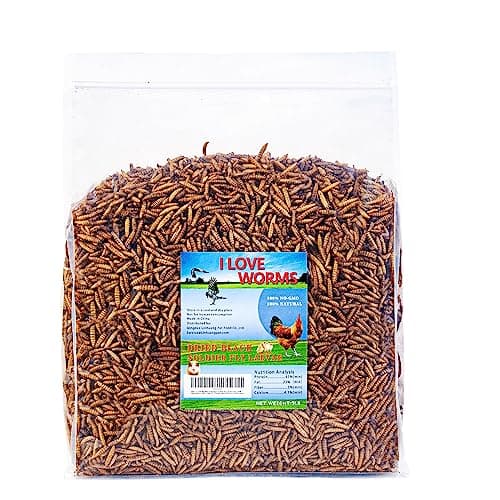
I LOVE WORMS Dried Black Soldier Fly Larvae, 5 lb
The better default than mealworms for a laying flock.
#ad How we are funded · Price as of November 8, 2026
Quick picks
| # | Product | Quantity | Score | Price |
|---|---|---|---|---|
| Rank 1 | I LOVE WORMS Dried Black Soldier Fly Larvae, 5 lb A treat that is not working against your laying hens | 5 lb | 9.3 | $25.99I LOVE WORMS, 5 lb |
| Rank 2 | 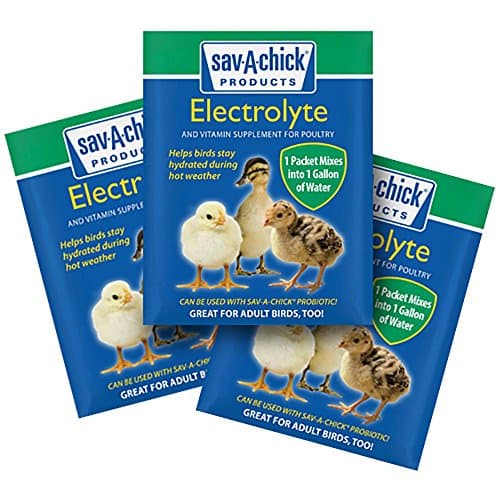 Sav-A-Chick Electrolyte and Vitamin Supplement, 9 Packets Heat waves, shipping stress and the first week of chicks | 9 packets | 9.6 | $7.89Sav-A-Chick, 9 Packets |
| Rank 3 | 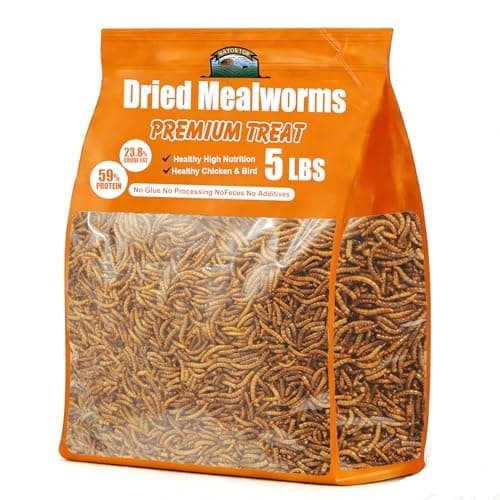 HATORTOP Dried Mealworms, 5 lb The treat that buys you a tame, catchable flock | 5 lb | 9.1 | $25.64HATORTOP Dried, 5 lb |
| Rank 4 | 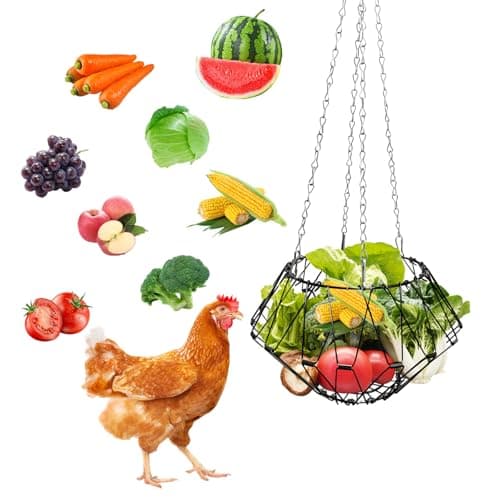 RRQKMBO Hanging Chicken Vegetable Treat Holder Ball, 9.25 in Winter boredom, with no calories added | Not published | 9.2 | $13.99RRQKMBO, 9.25 in |
| Rank 5 | 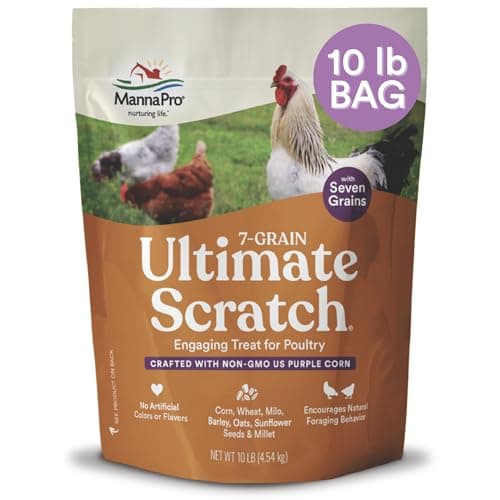 Manna Pro 7-Grain Ultimate Chicken Scratch Treat, 10 lb Scratching behavior, and a warm crop on a cold night | 10 lb | 8.9 | $15.49Manna Pro, 10 lb |
| Rank 6 | 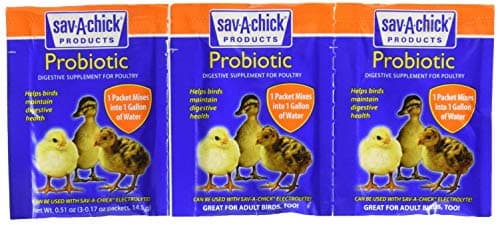 Sav-A-Chick Probiotic Supplement, 9 Packets After a course of treatment, or a gut upset you are watching | 9 packets | 8.9 | $16.09Sav-A-Chick, 9 Packets |
#ad Prices come from Amazon and change. How this site is funded. Scores are our own published rubric, not a lab test — see how we pick.
If you buy one thing on this page, make it dried black soldier fly larvae rather than mealworms: same training value, same price, and the listing's own claim is that they carry more calcium — which is exactly what a laying hen's diet is tight on. If you buy two, add a box of single-dose electrolyte packets, which is the only supplement here with a defined moment when it earns its keep.
Everything else on this page is optional, and that is the honest framing for the whole category. A hen on a complete layer feed with clean water and free-choice shell is a hen whose nutrition is already solved. Treats are for behavior, for occupation and for the narrow set of days when something has gone wrong — not for filling a nutritional gap that a bagged ration left open.
The 20-minute rule
Before any product: there is one piece of published guidance that governs this entire page, and almost nobody applies it. Extension's guidance on feeding chickens for egg production says to feed scratch grains "in the afternoon after birds have eaten complete feed, and then provide only as much scratch grains as chickens can finish in 15 to 20 minutes." Table scraps count against the same budget: "The total supplementation of table scraps and scratch grains should be no more than chickens can finish in 20 minutes."
The mechanism is worth understanding rather than just obeying. Extension's phrasing is blunt: "Scratch grains are like french fries — chickens that eat too many scratch grains have less of an appetite for more nutritious feed," and "when scratch grains are fed with complete feeds, they dilute the nutrition levels in the carefully formulated diets."
So the arithmetic. A layer ration needs "at least 14% protein to ensure continued egg production", with 16% more common, and laying mashes "typically contain 2.5% to 3.5% calcium". Every handful of grain or insects a hen eats instead of that ration pulls her day's average protein and calcium down. One handful is nothing. A generous scoop twice a day, every day, is a hen laying thin-shelled eggs on a diet you did not intend to design.
How we ranked these
The ranking is built from what each listing publishes, from the published extension guidance on what a laying hen's diet actually requires, and from the pattern of what verified owners report about storage, mess, waste and whether it survives a damp shed. Every card says what it relies on; how we pick sets out the method.
- Fit for purpose. Does this product do something a complete feed does not already do? Weighted hardest, and it is where most of the category fails.
- Mess and waste. Scattered grain feeds rodents, dried insects blow away, and additives in a drinker mean scrubbing it more often.
- Quality. Published analysis where there is one, honest labeling where there is not. Several listings here publish no guaranteed analysis at all, and we say so on the card.
- Value. Per useful dose, not per pound. The most expensive thing here is the one you will use nine times and be glad of.
The picks
Ranked on whether the product does a job the layer ration does not, then on what it costs you in mess and discipline.
#1 · A treat that is not working against your laying hens
#ad How we are funded · Price as of November 8, 2026
I LOVE WORMS Dried Black Soldier Fly Larvae, 5 lb
I LOVE WORMSThe better default than mealworms for a laying flock. Black soldier fly larvae are sold specifically on carrying more calcium than mealworms do — this listing's own claim — which matters because calcium is exactly what a laying hen's diet is tight on and what a treat usually dilutes.
| Quantity | 5 lb |
|---|---|
| Type | Dried black soldier fly larvae |
| Calcium | More calcium than mealworms (manufacturer claim) |
| Sourcing | 100% natural, non-GMO (manufacturer claim) |
| Published analysis | Not published by manufacturer |
Specifications per Manufacturer figures as published on the Amazon product listing, as published at the date above.
Why we picked it
- Works as a treat without pulling the diet away from the calcium a layer needs
- Birds take to them as readily as mealworms in most flocks
- Same dry storage and same training value as mealworms
- Priced level with mealworms rather than at a premium
Good to know — The calcium advantage is a manufacturer claim with no published analysis behind it on the listing
Our rubric
- Fit for purpose
- 9.8
- Mess and waste
- 8.9
- Quality
- 9.3
- Value
- 9.3
#2 · Heat waves, shipping stress and the first week of chicks
$8.75 10% off
#ad How we are funded · Price as of November 8, 2026
Sav-A-Chick Electrolyte and Vitamin Supplement, 9 Packets
Sav-A-ChickThe one genuinely useful supplement on this page, and the only one with a defined moment to use it. Single-dose packets mean you mix what you need and the rest stays sealed — which matters, because an opened tub of electrolyte powder in a damp coop shed is a wasted tub.
| Quantity | 9 packets |
|---|---|
| Type | Electrolyte and vitamin supplement |
| Format | Single-dose packets for drinking water |
| For | Poultry, chickens, ducks, turkeys |
| Guaranteed analysis | Not published by manufacturer |
Specifications per Manufacturer figures as published on the Amazon product listing, as published at the date above.
Why we picked it
- Single-dose packets do not go off between uses the way an opened tub does
- Covers the three moments it is actually indicated: extreme heat, transport stress, and newly arrived chicks
- Mixes into the drinker, so no feeding behavior has to change
- Cheap per dose, and you will not use many
Good to know — Extension's heat guidance is to run an electrolyte mix for only a few hours, then replace it with plain water — this is not a daily additive
Our rubric
- Fit for purpose
- 9.8
- Mess and waste
- 9.3
- Quality
- 9.3
- Value
- 9.8
#3 · The treat that buys you a tame, catchable flock
$26.99 5% off
#ad How we are funded · Price as of November 8, 2026
HATORTOP Dried Mealworms, 5 lb
HATORTOPDried mealworms are the standard bribe, and the reason to own them is behavioral rather than nutritional: a flock that comes running for a shaken tub is a flock you can put away at dusk, count, and catch when one needs looking at. Five pounds is months of supply at the rate these should be fed.
| Quantity | 5 lb |
|---|---|
| Type | Dried mealworms |
| For | Chickens and wild birds |
| Protein content | Not published by manufacturer |
| Calcium content | Not published by manufacturer |
Specifications per Manufacturer figures as published on the Amazon product listing, as published at the date above.
Why we picked it
- Nothing else trains a flock this fast — recall at dusk is worth the price on its own
- Dry, so it stores in a sealed tub without spoiling like a fresh treat does
- Easy to hand-feed, which is how a nervous bird becomes a handleable one
- Five pounds lasts a small flock a very long time at a sensible feeding rate
Good to know — Low in calcium relative to a layer ration — a hen filled with mealworms is a hen short on shell
Our rubric
- Fit for purpose
- 9.3
- Mess and waste
- 8.9
- Quality
- 8.9
- Value
- 9.3
#4 · Winter boredom, with no calories added
#ad How we are funded · Price as of November 8, 2026
RRQKMBO Hanging Chicken Vegetable Treat Holder Ball, 9.25 in
RRQKMBOA wire ball on a chain that holds a cabbage, a lettuce or a handful of greens at head height. It is the only item here that occupies a flock for an hour without adding anything to the diet — which makes it the right answer when the real problem is a bored, confined flock rather than a hungry one.
| Diameter | 9.25 in |
|---|---|
| Material | Metal wire, foldable |
| Hanging | 4 stainless chains included |
| Holds | Vegetables, fruit, greens |
| Weather rating | Not published by manufacturer |
Specifications per Manufacturer figures as published on the Amazon product listing, as published at the date above.
Why we picked it
- Occupies a confined flock for an hour with greens you already have
- Adds no grain and no fat, so it does not dilute the layer ration at all
- Hanging at head height keeps the food off wet litter
- A frozen block of greens in this is a genuinely useful hot-weather trick
Good to know — It is a holder, not food — you supply the cabbage
Our rubric
- Fit for purpose
- 9.8
- Mess and waste
- 8.9
- Quality
- 8.4
- Value
- 9.8
#5 · Scratching behavior, and a warm crop on a cold night
#ad How we are funded · Price as of November 8, 2026
Manna Pro 7-Grain Ultimate Chicken Scratch Treat, 10 lb
Manna ProA seven-grain scratch in a 10 lb bag, which is the right size — scratch should be a small part of the diet, so a 50 lb sack is a standing invitation to feed too much. Its real job is not nutrition but occupation: thrown on bedding it gets the flock digging instead of picking each other.
| Quantity | 10 lb |
|---|---|
| Type | 7-grain scratch treat |
| Sourcing | Non-GMO ingredients (manufacturer claim) |
| Protein content | Not published by manufacturer |
| Complete feed | No — a treat, not a ration |
Specifications per Manufacturer figures as published on the Amazon product listing, as published at the date above.
Why we picked it
- Scattered in litter it drives natural scratching, which is the cheapest boredom cure there is
- 10 lb is a sensible quantity for something that should be a minority of the diet
- Cheapest treat here per pound by a wide margin
- Useful late in the day in winter, when the flock goes to roost with a full crop
Good to know — Low in protein and not a complete feed — Extension compares scratch grains to french fries for a reason
Our rubric
- Fit for purpose
- 8.4
- Mess and waste
- 7.9
- Quality
- 8.9
- Value
- 10.0
#6 · After a course of treatment, or a gut upset you are watching
#ad How we are funded · Price as of November 8, 2026
Sav-A-Chick Probiotic Supplement, 9 Packets
Sav-A-ChickThe companion packet to the electrolyte, in the same sealed single-dose format. Worth keeping in the cupboard for the narrow set of occasions when a flock's digestion has been disrupted — and worth being honest that for a healthy flock on complete feed, it is insurance rather than nutrition.
| Quantity | 9 packets |
|---|---|
| Type | Probiotic supplement |
| Format | Single-dose packets |
| Packaging | 3 packages of 3 packets |
| Guaranteed analysis | Not published by manufacturer |
Specifications per Manufacturer figures as published on the Amazon product listing, as published at the date above.
Why we picked it
- Sealed doses, so the cupboard stock is still good a year later
- The sensible thing to reach for after a gut upset or a disrupted week
- Pairs with the electrolyte packets for new chicks arriving by mail
- No change to feeding routine — it goes in the water
Good to know — No published evidence on the listing that a healthy backyard flock benefits from routine use
Our rubric
- Fit for purpose
- 8.4
- Mess and waste
- 9.3
- Quality
- 8.9
- Value
- 8.9
How they compare
| Product | Size | What it is actually for | Published analysis | How often |
|---|---|---|---|---|
| Black soldier fly larvae | 5 lb | Training and protein without pulling calcium down | No — calcium claim only | A small handful, afternoons |
| Electrolyte packets | 9 packets | Heat stress, transport, new chicks | No | Hours at a time, rarely |
| Dried mealworms | 5 lb | Taming and recall | No | A small handful, afternoons |
| Hanging greens ball | 9.25 in | Boredom, with no calories added | Not applicable | Daily if you like |
| 7-grain scratch | 10 lb | Scratching behavior, winter crop fill | No | 20-minute rule, afternoons |
| Probiotic packets | 9 packets | After a gut upset | No | Occasional |
Insects: why larvae beat mealworms for a laying flock
Dried mealworms are the default backyard treat and they work — a flock that comes running for a shaken tub is a flock you can put away at dusk, count, and catch when one needs a look at her feet. That behavioral value is real and it is the main reason to own either product.
The argument for black soldier fly larvae instead is calcium. A laying hen needs it in quantity — Extension's figure for laying mashes is 2.5% to 3.5% calcium, against 1.2% for growing birds — and every treat that is low in calcium drags her daily average toward the growing-bird number. BSFL listings are sold specifically on carrying more calcium than mealworms do. That is a manufacturer claim rather than a published analysis, and we flag it as such on the card, but the direction of the claim matches what a layer actually needs and the price is the same.
Neither is a calcium source in the sense that matters. Free-choice oyster shell is, and that is a separate thing you should already have out — grit and oyster shell covers why they are two different products that get confused constantly, and why one of them becomes non-optional the moment you start feeding grain.
Scratch: the most overfed product in backyard poultry
Scratch is cheap, birds love it, and throwing it is satisfying. All three facts conspire against you. It is a grain mix, not a ration — low in protein, no added calcium, no vitamin premix — and the 20-minute rule exists because of exactly how easy it is to feed a flock half its daily intake in grain without noticing.
Used correctly it does two things nothing else does. Scattered in deep litter it gets the whole flock digging, which turns the bedding, keeps them occupied and interrupts the boredom cycle that leads to feather-pecking. And on a short winter afternoon a crop full of grain is a bird going to roost with fuel to burn overnight — which is a real and underrated part of keeping a flock warm in winter, and costs nothing.
One consequence people miss: Extension notes that "when feeding scratch grains to chickens, it is also important to provide grit to help the chickens grind and digest the grains properly." A bird on complete crumble alone can manage without grit. The day you start throwing grain, grit stops being optional. The full argument is in layer feed vs scratch.
Electrolytes: the one supplement with a real indication
Most poultry supplements are sold on vague promises. Electrolytes are different: there is a published, specific moment to use them, and Extension's guidance for managing chickens in extreme summer temperatures states it plainly — "Electrolyte mixes can be used. It's best to provide the mix in the chicken's water supply for only a few hours, then remove it and replace with fresh, plain water."
Read that twice, because it is the part people skip. Not a daily additive. Not something you leave in the drinker all summer. A few hours during the worst of a heat wave, then plain water. The same logic applies to chicks arriving after a day in transit and to birds that have had a stressful move.
The format matters more than the brand. Single-dose packets stay sealed in a cupboard for a year; an opened tub of powder in a damp coop shed clumps and is thrown out half-used. And whatever you add, remember you have just put sugar and minerals into a drinker in hot weather — keeping the water clean becomes a daily job rather than a weekly one while the additive is in there.
Probiotics, vitamins and the long tail of things sold to worried keepers
This is where the category gets soft. A probiotic packet after a course of treatment or a disrupted week is a reasonable thing to reach for, and the sealed single-dose format means a box lives in the cupboard for the two or three times a year you want one. That is the honest case for it, and it is the case we make on the card.
What we will not tell you is that a healthy flock on complete feed needs routine probiotics, daily vitamins, herbal blends or a supplement that promises more eggs. None of those listings publish evidence for a healthy backyard flock, and the site's position is that where there is no published figure we do not supply one. If a bird is genuinely unwell, she needs a diagnosis, not a tub — and on the diseases that actually matter, bird flu and salmonella are the two worth reading before you buy anything.
Greens, and the treat that adds nothing
The best winter treat for a confined flock is a cabbage on a chain, and it is the only thing on this page that occupies birds for an hour without touching their nutrition. A hanging holder keeps the greens off wet litter and at head height, which is the difference between an hour of entertainment and a trodden mess.
It is also the right answer in the other direction. Extension's summer guidance suggests that "freezing watermelon or other chopped fruits/veggies with water into an ice block works well to keep hens cool and busy without excessively filling them up" — the same principle, aimed at a heat wave instead of a January afternoon. Both cases are about occupation and hydration rather than calories, and both leave the layer ration untouched.
The underlying problem is nearly always space. A flock with room to range does not need entertaining. If treats are the main thing keeping your birds from picking each other, the real fix is more coop and run area per bird, and a dust bath costs less than a year of cabbages.
What we left off, and why
- Treat blocks and seed logs. They work as occupation and they are an expensive way to buy grain. If the goal is to keep a flock busy, greens in a holder does the same job without the calories; if the goal is grain, a bag of scratch is a fraction of the price.
- Layer boosters and egg-production supplements. None we looked at publish evidence that they raise lay rate in a flock already on complete feed. Why chickens stop laying is almost always daylight, molt, age or stress — and no tub fixes any of those.
- Herbal nest and feed blends. Pleasant, and not nutrition. The nesting herbs that make sense for a box live with the nest box bedding, not in the feed.
- Dewormers and medicated additives. Not treats, not supplements, and not something to use on a hunch. Worming decisions should follow a diagnosis, and that is a vet conversation rather than a shopping one.
- Grit and oyster shell. Both belong in every setup and neither is a treat — they are free-choice minerals that sit out permanently. Grit and oyster shell covers both properly.
Our answer
Buy a bag of black soldier fly larvae and a box of electrolyte packets. The larvae give you a tame, catchable flock without working against the calcium your layers need; the electrolytes sit in a cupboard until the first serious heat wave, which is the one day a year you will be very glad you have them.
Add scratch if you have deep litter to turn or cold afternoons to fill, buy the small bag rather than the sack, and hold yourself to the 20-minute rule. Add the greens holder if the flock is confined in winter. Treat the probiotics as cupboard insurance, and skip everything else. Then put the money you did not spend into the feed itself — a better ration does more for a flock than every supplement on this page combined.
Frequently asked questions
How many treats can I give my chickens?
Are mealworms good for chickens?
Do chickens need electrolytes?
Is scratch bad for chickens?
Do I need grit if I feed treats?
Do chickens need probiotic supplements?
What is the best winter treat for chickens?
Our recommendation
If you buy one thing from this page, buy the first one. The second is here because it is the alternative worth weighing against it, not because a list needs two entries.
Best Chicken Treats
I LOVE WORMS Dried Black Soldier Fly Larvae, 5 lb
A treat that is not working against your laying hens
#ad How we are funded · Price as of November 8, 2026
Runner-up
Sav-A-Chick Electrolyte and Vitamin Supplement, 9 Packets
Heat waves, shipping stress and the first week of chicks
#ad How we are funded · Price as of November 8, 2026
Sources
- Extension Poultry — Feeding Chickens for Egg Production in Small and Backyard Flocks
- University of Georgia Extension — Nutrition for the Backyard Flock (C954)
- Extension Poultry — Managing Backyard Chickens During Periods of Extreme Summer Temperature
- Penn State Extension — Management Requirements for Laying Flocks
- CDC — Backyard Poultry and Your Health (Salmonella guidance)
Read next
Feeders & Feed
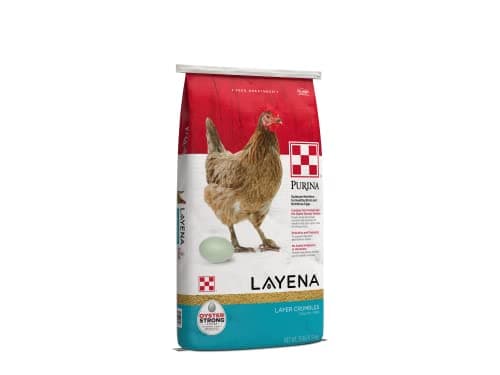
Layer feed vs scratch grain
Layer feed is the complete ration; scratch grain, cracked corn and all-flock are not substitutes for it. What each bag in the aisle is for, and the layer feeds we would buy.
Feeders & Feed
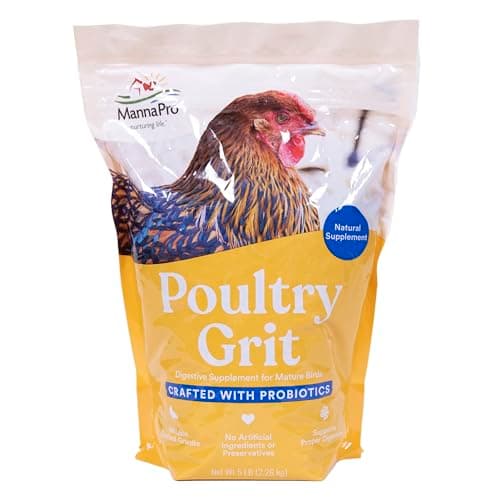
Grit and oyster shell: what each one actually does
Grit versus oyster shell, properly explained: who needs which, when, and why they go in separate dishes.
Feeders & Feed
The best chicken feed for laying hens
Complete layer feed options plus the grit and oyster shell that go alongside, and why those two are not the same thing.
Feeders & Feed
How much feed does a chicken eat per day?
The published figure, a table by flock size, and what makes real-world consumption differ from it.
Feeders & Feed
How to keep rats out of chicken feed
Five changes in order of effectiveness, why poison is the wrong first move, and the feeders that end the problem.