Waterers
The best chicken waterers
Water is the one thing hens cannot go a day without. Judge a waterer on how clean it stays, not how much it holds.
Chickens & Coops earns a commission when you buy through our links, at no extra cost to you. Prices come from Amazon and change; the date beside every price is when we last verified it. Full disclosure.
Quick picks
| # | Product | Capacity | Score | Price |
|---|---|---|---|---|
| Rank 1 | VEVOR 5 Gallon Automatic Waterer with 6 Cups Six automatic cups on one 5-gallon reservoir | 5 gallon | 7.2 | $38.90on Amazon |
| Rank 2 | 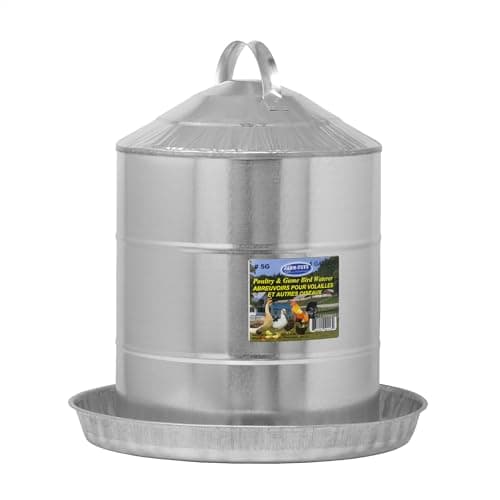 FARM-TUFF Galvanized Poultry Fountain, 5 Gallon A gravity waterer that lasts a decade | 5 gallon | 6.6 | $56.16on Amazon |
| Rank 3 | 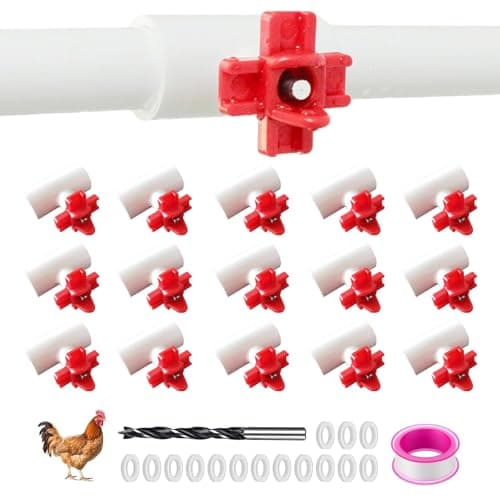 Horizontal Chicken Nipple Kit, 15-Pack with PVC Tee Fittings A DIY nipple system along a run wall | Not published | 6.8 | $16.99on Amazon |
| Rank 4 | 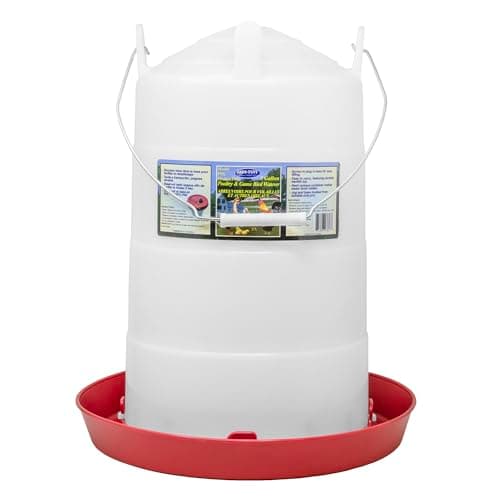 FARM-TUFF Easy Fill Plastic Poultry Waterer, 5 Gallon A cheap 5-gallon gravity fount you can actually clean | 5 gallon | 6.8 | $49.99on Amazon |
| Rank 5 | 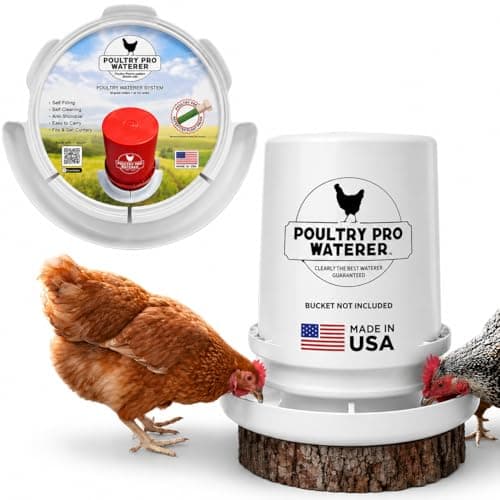 Poultry Pro Chicken Waterer for 5 Gallon Bucket Converting a bucket into a clean watering system | Depends on the bucket used | 7.2 | $29.95on Amazon |
| Rank 6 | 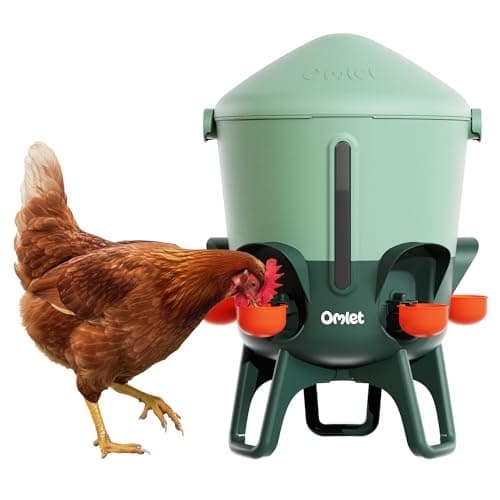 Omlet Insulated Chicken Waterer, 3 Gallon Slowing freezing without any electricity | 3 gallon | 7.0 | $109.99on Amazon |
#ad Prices come from Amazon and change. How this site is funded. Scores are our own published rubric, not a lab test — see how we pick.
A flock will tolerate a mediocre feeder for weeks. Water is different: hens drink roughly twice what they eat by weight, laying stops almost immediately if water runs short, and dirty water is one of the main ways disease moves through a backyard flock. So the criteria here are cleanliness first, then capacity, then how likely you are to actually keep it topped up.
How we ranked these
Stays clean first: can bedding, droppings and feet get into the water? Capacity second, matched to hot-weather consumption rather than cool. Freeze resistance third, scored separately because almost nothing unheated survives a real freeze. Ease of refill fourth, because a waterer that is a chore to fill gets filled less often than it should.
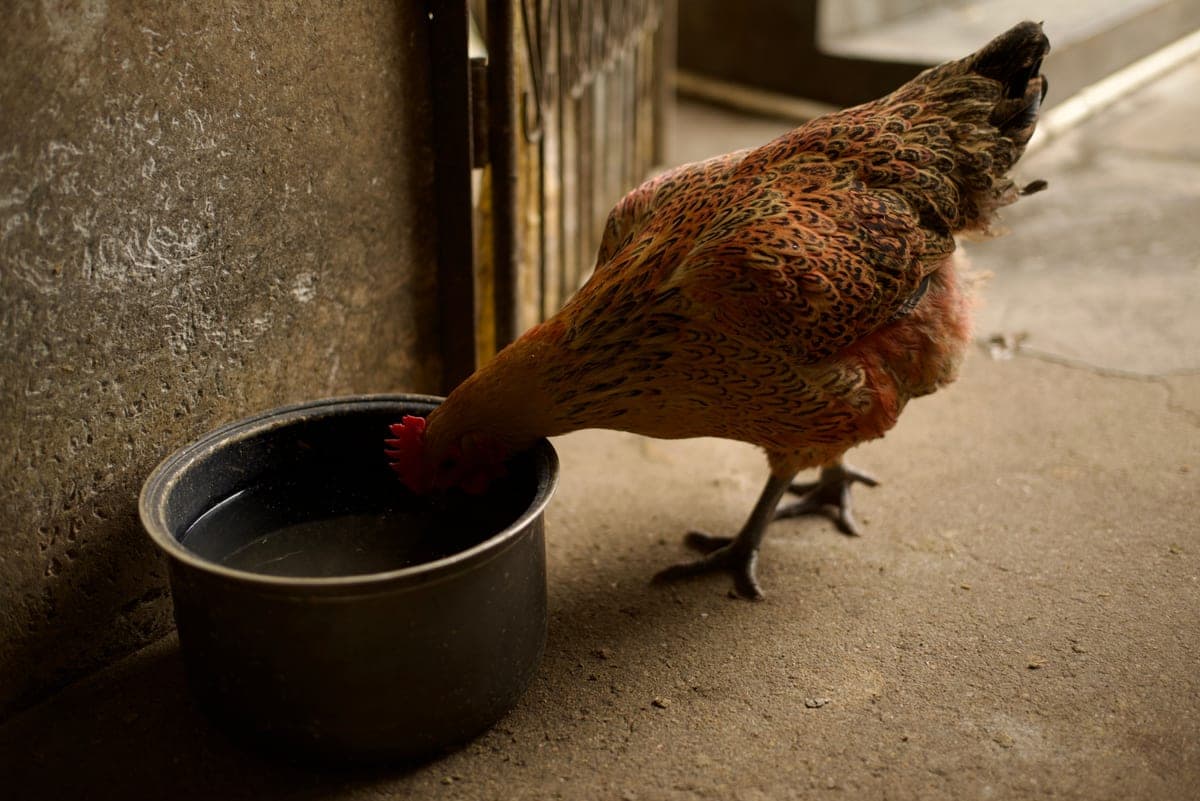
Three designs, three different problems solved
Open gravity founts
The traditional answer: a reservoir that keeps a shallow trough topped up. Hens understand it immediately and it needs no training, which matters with a new flock. The downside is that the trough is open, so bedding, droppings and algae all get in, and it needs rinsing every few days.
Cup systems
Small valve-operated cups fed from a sealed reservoir. The bulk of the water is enclosed and cannot be fouled, which is a large hygiene improvement. Cups still collect some bedding, and the valves occasionally stick with grit.
Nipple systems
Horizontal nipples fitted to a bucket or a run of pipe. The water is completely sealed — nothing can get into it at all — and horizontal nipples do not drip, so the bedding underneath stays dry. The trade-off is that hens have to learn them, and the small volume at each nipple freezes first.
The waterers
Ranked on how clean the water stays, then capacity and refill effort.
#1 · Six automatic cups on one 5-gallon reservoir
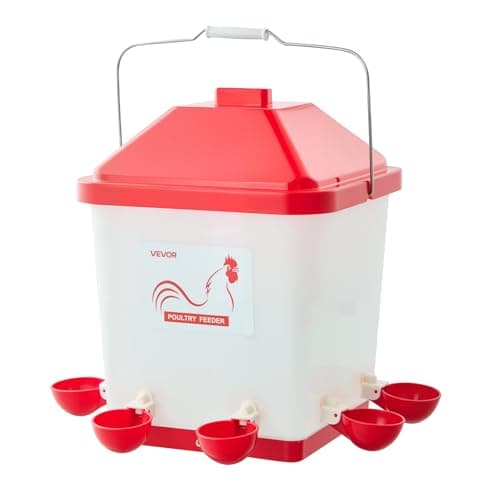
VEVOR 5 Gallon Automatic Waterer with 6 Cups
VEVORFive gallons feeding six auto-fill cups. Cups keep the bulk of the water sealed inside the drum, which is the main reason cup systems stay cleaner than open founts.
| Capacity | 5 gallon |
|---|---|
| Water ports | 6 automatic-fill cups |
| Operation | Automatic gravity, cup-fed |
| Handle | Carry handle fitted |
Specifications per Manufacturer figures as published on the Amazon product listing, as published at the date above.
What it does well
- Six cups means six hens drink at once without a queue
- The reservoir is sealed, so bedding and droppings cannot get into the bulk water
- 5 gallons on a carry handle is a sensible format for a shed-to-run trip
Where it falls short
- Cups freeze solid before the reservoir does — this is a summer solution
- Cup valves stick if grit gets into them; they need a weekly flick
- Plastic body, so no heated base
Our rubric
- Capacity
- 8.0
- Stays clean
- 9.0
- Freeze resistance
- 2.0
- Ease of refill
- 8.0
- Value
- 9.0
#2 · A gravity waterer that lasts a decade
#ad How we are funded · Price as of October 5, 2026
FARM-TUFF Galvanized Poultry Fountain, 5 Gallon
FARM-TUFFA double-wall galvanized cone-top fountain. Metal is the right choice if you will ever want a heated base under it — plastic founts cannot sit on one.
| Capacity | 5 gallon |
|---|---|
| Material | Galvanized steel, double wall |
| Top | Cone top |
| Operation | Automatic gravity feed |
| Heated base compatible | Yes — metal fount |
Specifications per Manufacturer figures as published on the Amazon product listing, as published at the date above.
What it does well
- Galvanized metal is the only fount body you can legitimately put on a heated base
- Cone top stops hens roosting on it and fouling the water
- Double wall construction means it will outlast several plastic waterers
- 5 gallons is roughly a week for a small flock in mild weather
Where it falls short
- Heavy when full — about 40 lb of water plus the fount
- Galvanized metal reacts with apple cider vinegar, so skip that additive with it
- Cone top makes it awkward to scrub inside
Our rubric
- Capacity
- 8.0
- Stays clean
- 8.0
- Freeze resistance
- 4.0
- Ease of refill
- 6.0
- Value
- 7.0
#3 · A DIY nipple system along a run wall
Horizontal Chicken Nipple Kit, 15-Pack with PVC Tee Fittings
GenericFifteen horizontal nipples with half-inch PVC tees, which is enough to plumb a whole run. Horizontal nipples beat the vertical kind: they do not drip, so the bedding underneath stays dry.
| Pack | 15 nipples |
|---|---|
| Fittings | 1/2" PVC tees included |
| Type | Horizontal side-mount nipples |
| Leakage | Leakproof (manufacturer claim) |
Specifications per Manufacturer figures as published on the Amazon product listing, as published at the date above.
What it does well
- Horizontal nipples do not drip the way vertical ones do, so litter stays dry
- Tee fittings included means you can build a run of pipe, not just one bucket
- Fifteen nipples covers a large flock with spares
- Completely sealed water: nothing can foul it
Where it falls short
- Hens have to learn nipples — keep the old waterer available for a week
- The pipe freezes faster than a bulk reservoir, so this is a warm-season system
- You supply the pipe, the reservoir and the labor
Our rubric
- Capacity
- 6.0
- Stays clean
- 10.0
- Freeze resistance
- 2.0
- Ease of refill
- 7.0
- Value
- 9.0
#4 · A cheap 5-gallon gravity fount you can actually clean
#ad How we are funded · Price as of October 5, 2026
FARM-TUFF Easy Fill Plastic Poultry Waterer, 5 Gallon
FARM-TUFFA gravity-fed plastic fount with a top fill. Top filling is the feature worth paying for: you refill it without inverting five gallons of water over your boots.
| Capacity | 5 gallon |
|---|---|
| Material | Plastic |
| Filling | Top fill |
| Operation | Gravity fed |
| Heated base compatible | No — plastic body |
Specifications per Manufacturer figures as published on the Amazon product listing, as published at the date above.
What it does well
- Top fill means no inverting a full fount, which is the main reason people stop refilling properly
- Translucent plastic lets you see the level at a glance
- Light enough to carry full
- Easy to scrub out, unlike a cone-top metal fount
Where it falls short
- Cannot be used on a heated base — plastic melts
- Sunlight through translucent plastic grows algae faster
- Plastic rims crack if left full through a hard freeze
Our rubric
- Capacity
- 8.0
- Stays clean
- 6.0
- Freeze resistance
- 2.0
- Ease of refill
- 9.0
- Value
- 9.0
#5 · Converting a bucket into a clean watering system
#ad How we are funded · Price as of October 5, 2026
Poultry Pro Chicken Waterer for 5 Gallon Bucket
Poultry ProA cup-and-fitting kit for a bucket you supply. Cheapest route to a sealed water system, and because you choose the bucket you can pick one with a lid that actually seals.
| Fits | 5 gallon bucket (not included) |
|---|---|
| Type | Bucket conversion waterer kit |
| Capacity | Depends on the bucket used |
| Ports | Not published by manufacturer |
Specifications per Manufacturer figures as published on the Amazon product listing, as published at the date above.
What it does well
- Lowest-cost sealed water system there is
- A lidded bucket keeps light out, which slows algae more than any additive
- Individual cups are replaceable for pennies
Where it falls short
- Port count is not published on the listing
- You have to drill the bucket squarely or it weeps
- Freezes like any unheated system
Our rubric
- Capacity
- 7.0
- Stays clean
- 9.0
- Freeze resistance
- 2.0
- Ease of refill
- 8.0
- Value
- 10.0
#6 · Slowing freezing without any electricity
#ad How we are funded · Price as of October 5, 2026
Omlet Insulated Chicken Waterer, 3 Gallon
OmletA 3-gallon insulated waterer with five cups and nipples included. Insulation does not stop a hard freeze, but it buys hours — which in a mild-winter climate can be enough.
| Capacity | 3 gallon |
|---|---|
| Drinkers | 5 cups and nipples included |
| Insulation | Insulated body |
| Material | BPA-free |
| Power required | None |
Specifications per Omlet published specifications, as published at the date above.
What it does well
- Insulated body genuinely delays freezing with no power at all
- Five drinkers included — nothing else to buy
- Also keeps water cooler in summer, which slows algae
- The right answer where running a cable to the coop is not practical
Where it falls short
- Insulation delays freezing; it does not prevent it below about 25 degrees F overnight
- Priced well above an uninsulated 3-gallon fount
- 3 gallons is a few days for a small flock, not a week
Our rubric
- Capacity
- 6.0
- Stays clean
- 9.0
- Freeze resistance
- 6.0
- Ease of refill
- 8.0
- Value
- 6.0
How much water, and therefore what capacity
| Flock size | Cool weather | Hot weather | 3 gal lasts (cool) | 5 gal lasts (cool) |
|---|---|---|---|---|
| 2 hens | About 13 fl oz/day | About 26 fl oz/day | weeks — too big | weeks — too big |
| 4 hens | About 26 fl oz/day | About 51 fl oz/day | about 2 weeks | about 3 weeks |
| 6 hens | About 2.4 qt/day | About 4.8 qt/day | about 5 days | about 8 days |
| 10 hens | About 1/2 gallon/day | About 1 gallon/day | about 6 days | about 10 days |
| 20 hens | About 1 gallon/day | About 2 gallons/day | about 3 days | about 5 days |
Those figures come from University of Minnesota Extension: about 6.4 fl oz per hen per day under normal conditions, roughly doubling in warm weather. Size for the hot-weather column. A waterer that is adequate in April and marginal in July is a waterer you will be refilling twice a day in a heatwave.
Height and position
- Set the drinking level at roughly the height of the hens' backs. Low enough that the smallest bird reaches; high enough that they cannot stand in it or kick bedding into it.
- Site it in the run, not the coop, if you possibly can. Spilled water in coop bedding is the number one cause of ammonia smell.
- In the shade in summer. Warm water grows algae faster and hens drink less of it.
- Raise it as litter builds up. A waterer at the right height in October is at floor level by February if you are running deep litter.
Cleaning, which is the part that matters
Rinse and scrub weekly with hot water and a brush. CDC's guidance is to clean poultry equipment outdoors only, never in a kitchen or utility sink, and to wash hands with soap and running water afterwards. Biofilm cannot be rinsed off — it needs physical scrubbing — and it is where bacteria live.
Frequently asked questions
What is the best type of chicken waterer?
How much water do chickens need per day?
What size waterer should I buy?
How often should I clean a chicken waterer?
Should the waterer be inside the coop?
Sources
Read next
Waterers
The best heated chicken waterers
Heated drinkers and heated bases, ranked on published wattage and thermostat control — the two figures that matter.
Waterers
The best chicken nipple waterers
Horizontal nipple kits: the cleanest water on the site, the cheapest parts, and the honest winter caveat.
Waterers
How to keep chicken water clean
The three causes of dirty chicken water and what actually fixes each — including the one you cannot buy your way out of.
Waterers
How much water do chickens drink?
The published water-intake figures, a table by flock size, and why hot weather is the number that matters.
Waterers
Nipple vs cup chicken waterers
The sealed-versus-open watering decision, with the cases where each one is clearly right.
About
How we pick
The published method behind every score here, and a plain statement of what we have not tested.