Predator Protection
Chicken wire vs hardware cloth
Chicken wire keeps chickens in. It does not keep predators out. These are two different products with confusingly similar names.
Chickens & Coops earns a commission when you buy through our links, at no extra cost to you. Prices come from Amazon and change; the date beside every price is when we last verified it. Full disclosure.
Quick picks
| # | Product | Mesh | Score | Price |
|---|---|---|---|---|
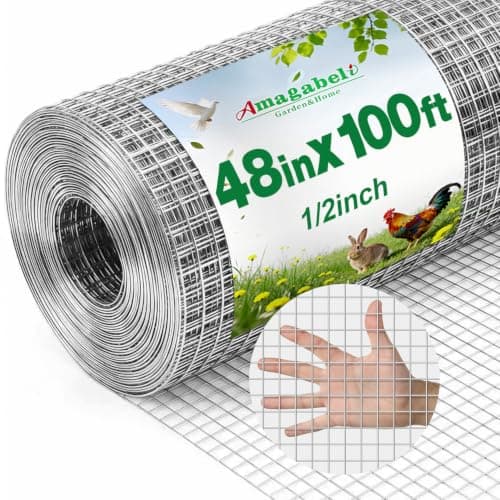
| Rank 1 | Amagabeli Hardware Cloth, 1/2in Mesh, 48in x 100ft, 19 Gauge The mesh that actually stops raccoons | 1/2 in | 8.4 | $79.99on Amazon |
| Rank 2 | 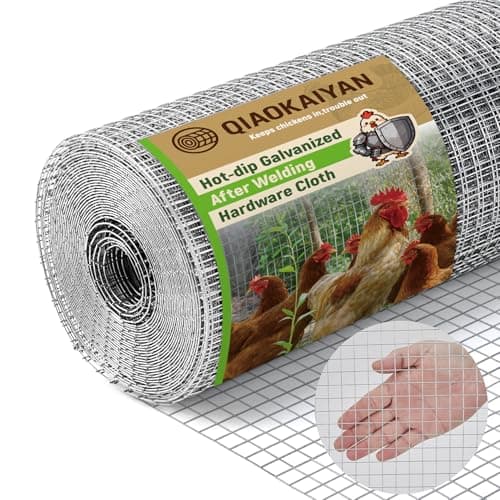 Hardware Cloth, 1/2in Mesh, 16in x 50ft, 19 Gauge A predator apron around an existing run | 1/2 in | 8.8 | $24.96on Amazon |
| Rank 3 | 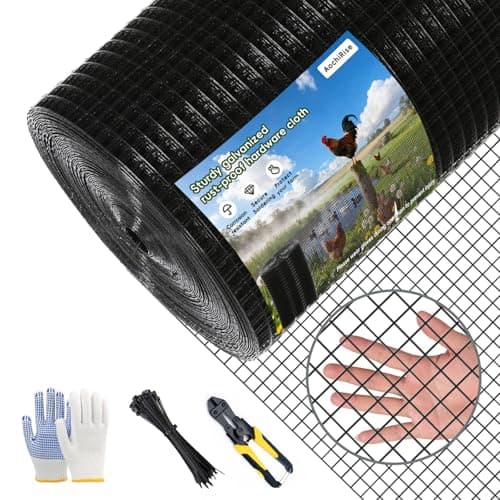 Black Vinyl Coated Hardware Cloth, 1/2in Mesh, 19 Gauge Mesh you can actually see through | 1/2 in | 8.4 | $59.99on Amazon |
| Rank 4 | 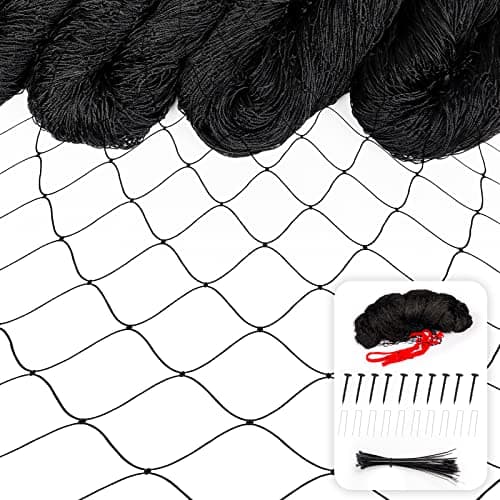 Bird Netting for Chicken Run, 50 x 50ft, 2.4in Mesh Covering a big run against hawks | 2.4 in square | 7.4 | $29.99on Amazon |
#ad Prices come from Amazon and change. How this site is funded. Scores are our own published rubric, not a lab test — see how we pick.
If you take one thing from this site, take this. Chicken wire is not a predator barrier. It is a lightweight twisted hexagonal netting designed to contain poultry, and it does that well. Hardware cloth is welded square mesh in a heavy gauge, and it is what actually stops an animal. The names suggest the first is the poultry product. It is not.
The comparison
| Hardware cloth | Hexagonal chicken wire | |
|---|---|---|
| What it is | Welded square mesh, galvanized | Twisted hexagonal netting |
| Typical opening | 1/2 in or 1/4 in | 1 in or 2 in |
| Gauge | 19 gauge and heavier | Much lighter |
| Stops raccoons reaching through | Yes | No |
| Stops weasels | Yes at 1/2 in; 1/4 in for certainty | No — they pass through |
| Stops a dog or fox pulling at it | Yes | No — twists open |
| Keeps chickens in | Yes | Yes |
| Keeps hawks out | Yes | Yes |
| Cost per sq ft | Several times higher | Lowest |
| Right use | Everything a predator can reach | Upper panels and roof only |
Why hex wire fails
Raccoons reach through it
A one-inch or two-inch hexagonal opening is large enough for a raccoon to get a hand through. Extension guidance notes that chicken wire's openings are large enough to let some ground predators reach in and do damage to the birds — which is exactly what happens, through intact wire, with no entry at all.
Weasels pass through it
Extension's predator management guidance states that least weasels can squeeze through holes as small as a quarter inch in diameter and can typically get through chicken wire. A weasel that gets into a coop can kill an entire flock in a night.
It twists open
Hexagonal netting is twisted, not welded. A dog or fox pulling and worrying at it opens the twists. Welded mesh in 19 gauge does not do this.
The specification to buy
- Half-inch openings. This stops raccoons reaching through and stops most weasels. Quarter-inch is the certain answer where least weasels are present, at the cost of more weight and price.
- 19 gauge or heavier. Lighter hardware cloth exists and is much less useful — the gauge is what resists being pulled apart.
- Galvanized after welding if available. It means the weld points are coated, so the mesh does not rust at the joints first, which is where cheap hardware cloth fails.
- Black vinyl coated if you care how it looks — it lasts longer and visually disappears, so you see your hens rather than a silver grid.
Where each one belongs
Extension guidance gives a practical and economical strategy: wrap the lower half of the enclosure in hardware cloth and fill in the upper half with ordinary poultry netting, because the netting is enough to keep birds and flying predators out while hardware cloth does the work on the lower half where ground predators reach.
| Location | Use | Why |
|---|---|---|
| Lower 3 ft of run walls | 1/2 in hardware cloth, 19 ga | Everything a ground predator can reach |
| Coop walls, vents, windows | 1/2 in hardware cloth | A vent is an opening; weasels use small gaps |
| Nest box openings and lids | 1/2 in hardware cloth behind any gap | A commonly overlooked route in |
| Perimeter apron | 1/2 in hardware cloth, 16 in wide, laid flat | Stops digging |
| Upper run walls | Poultry netting is acceptable | Only flying predators reach there |
| Run roof | Poultry netting or 2 in bird netting | Hawks; cheaper per sq ft |
What to buy
A full-height roll, the 16-inch apron roll, a vinyl-coated option, and the overhead netting for the roof.
#1 · The mesh that actually stops raccoons
Amagabeli Hardware Cloth, 1/2in Mesh, 48in x 100ft, 19 Gauge
AmagabeliHot-dipped galvanized-after-welding half-inch hardware cloth in 19 gauge. This is the specification to buy: half-inch openings keep weasels out, and galvanized-after-welding means the weld points do not rust first.
| Mesh | 1/2 in |
|---|---|
| Gauge | 19 |
| Size | 48 in x 100 ft |
| Coating | Hot-dipped galvanized after welding |
Specifications per Manufacturer figures as published on the Amazon product listing, as published at the date above.
What it does well
- Half-inch openings are small enough to stop weasels, which 1 in mesh is not
- Galvanized AFTER welding — the welds are coated, so the mesh does not rust at the joints first
- 19 gauge resists a raccoon's hands, which hexagonal chicken wire does not
- 400 sq ft covers the lower half of most runs
Where it falls short
- Several times the price of hexagonal chicken wire for the same area
- Stiff and sharp to work with — gloves are not optional
- Heavy: a 100 ft roll is a two-person lift
Our rubric
- Predator resistance
- 10.0
- Install effort
- 5.0
- Durability
- 10.0
- Reliability
- 10.0
- Value
- 7.0
#2 · A predator apron around an existing run
#ad How we are funded · Price as of October 5, 2026
Hardware Cloth, 1/2in Mesh, 16in x 50ft, 19 Gauge
GenericA narrow 16-inch roll of the same half-inch, 19-gauge hot-dipped mesh. Sixteen inches is exactly the width you want for a predator apron laid flat around the base of a run.
| Mesh | 1/2 in |
|---|---|
| Gauge | 19 |
| Size | 16 in x 50 ft |
| Coating | Hot-dipped galvanized |
Specifications per Manufacturer figures as published on the Amazon product listing, as published at the date above.
What it does well
- 16 in width is the right apron dimension — wide enough that a digging fox gives up
- Same half-inch, 19-gauge specification as the full-height rolls
- Cheap enough to apron a whole run without a second thought
- Narrow roll is far easier to handle alone than a 48 in one
Where it falls short
- Too short for run walls — this is an apron roll, not a fencing roll
- Still needs pinning down with landscape staples
- Sharp cut edges
Our rubric
- Predator resistance
- 9.0
- Install effort
- 6.0
- Durability
- 9.0
- Reliability
- 10.0
- Value
- 10.0
#3 · Mesh you can actually see through
Black Vinyl Coated Hardware Cloth, 1/2in Mesh, 19 Gauge
GenericThe same half-inch 19-gauge mesh with a black vinyl coating. The coating adds rust life, and black mesh visually disappears — you can see your hens instead of a silver grid.
| Mesh | 1/2 in |
|---|---|
| Gauge | 19 |
| Coating | Galvanized with black vinyl |
| Dimensions | Not published by manufacturer |
Specifications per Manufacturer figures as published on the Amazon product listing, as published at the date above.
What it does well
- Vinyl over galvanizing is the longest-lasting coating combination for a coop run
- Black mesh is far less visually obtrusive from the house
- Same predator-stopping half-inch, 19-gauge specification
Where it falls short
- Roll dimensions are not published on this listing
- Vinyl coating costs more than plain galvanized
- Cut edges expose bare steel and will rust unless painted
Our rubric
- Predator resistance
- 10.0
- Install effort
- 5.0
- Durability
- 10.0
- Reliability
- 10.0
- Value
- 7.0
#4 · Covering a big run against hawks
#ad How we are funded · Price as of October 5, 2026
Bird Netting for Chicken Run, 50 x 50ft, 2.4in Mesh
Generic2,500 square feet of 2.4-inch poultry netting. A covered run is the only thing that reliably stops a hawk, and at this size it covers a run most people would consider too big to net.
| Size | 50 x 50 ft |
|---|---|
| Area | 2,500 sq ft |
| Mesh | 2.4 in square |
| Type | Poultry / aviary netting |
Specifications per Manufacturer figures as published on the Amazon product listing, as published at the date above.
What it does well
- Covering the run is the only genuinely effective answer to hawks
- 2,500 sq ft is enough for a very large run with spare
- 2.4 in mesh stops raptors while letting rain and light through
- Cheapest per square foot of any barrier here
Where it falls short
- 2.4 in mesh does not stop anything smaller — it is a hawk net, not a predator net
- Needs a support structure or it sags onto the birds
- Snow load will tear netting that is not pitched
Our rubric
- Predator resistance
- 7.0
- Install effort
- 6.0
- Durability
- 6.0
- Reliability
- 8.0
- Value
- 10.0
Buying and working with it
- A 48 in x 100 ft roll covers the lower band of most runs. It is heavy — a two-person lift.
- A 16 in x 50 ft roll is the right format for an apron, and far easier to handle alone.
- Wear gloves. Cut hardware cloth is genuinely sharp and the edges are vicious.
- Fix with poultry staples or screws and washers, not with staples from a desk stapler. Every few inches, not every foot.
- Overlap joins by several inches and fix both layers.
- Paint cut edges if you want them to last — cutting exposes bare steel.
What about welded wire panels?
Heavier welded wire with 2 x 4 inch openings — the kind sold as fencing panels — is strong but the openings are far too large to stop anything reaching through. It makes a good structural frame for a run, with hardware cloth fixed over it. Used alone it is no better than hex wire for predator resistance.
Frequently asked questions
What is the difference between chicken wire and hardware cloth?
Does chicken wire keep predators out?
What gauge hardware cloth for a chicken coop?
Can I use chicken wire anywhere?
Should I bury hardware cloth or use an apron?
Sources
Read next
Predator Protection
How to fit a predator apron
The flat-apron method step by step, why it beats burying mesh, and the mesh specification to buy.
Predator Protection
The most predator-resistant chicken coops
The coops with the best predator record, plus the three upgrades almost every coop needs whatever the listing claims.
Predator Protection
The main chicken predators, and what stops each one
An identification guide: what each predator does, how to tell which one visited, and the one measure that stops it.
Chicken Coops
The best chicken coops with attached runs
Coop-and-run sets ranked on run space per bird — which is the figure these listings bury.
Predator Protection
How to keep raccoons out of a chicken coop
Five changes that stop raccoons, in order of effect, plus why the feed store is part of the problem.