Winter Heat
The safest chicken coop heaters
Ranked on fire safety first, because the real winter risk to a backyard flock is a coop fire, not cold.
Chickens & Coops earns a commission when you buy through our links, at no extra cost to you. Prices come from Amazon and change; the date beside every price is when we last verified it. Full disclosure.
Quick picks
| # | Product | Power | Score | Price |
|---|---|---|---|---|
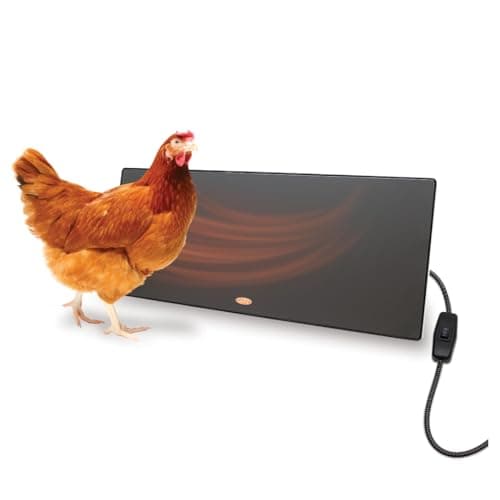
| Rank 1 | Cozy Products Cozy Coop Flat-Panel Heater, 150W The safest way to take the edge off a cold coop | 150 W | 7.2 | $54.69on Amazon |
| Rank 2 | 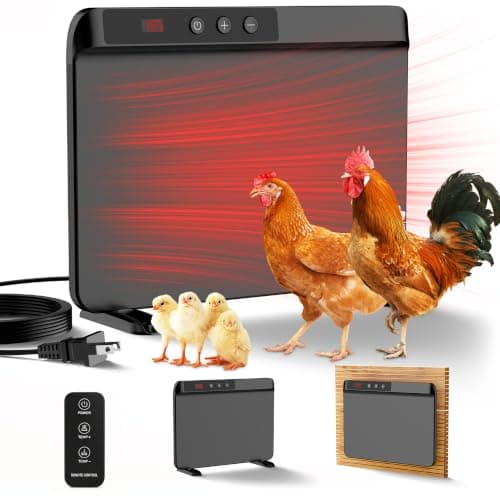 TIMEBAL Chicken Coop Heater, 200W UL Certified Radiant Panel A UL-certified panel at a sensible price | 200 W | 7.2 | $41.99on Amazon |
| Rank 3 | 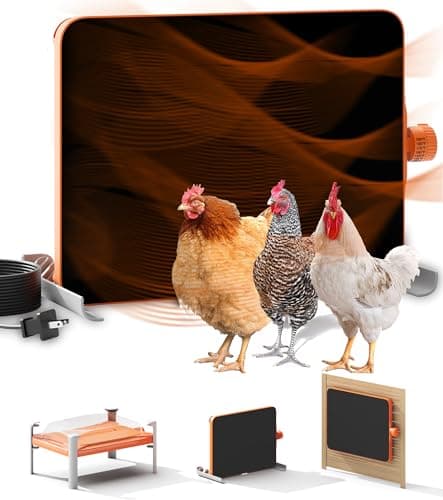 Smart Chicken Coop Heater, 200W Radiant Panel with Temperature Sensor A panel that switches itself off | 200 W | 8.2 | $59.99on Amazon |
| Rank 4 | 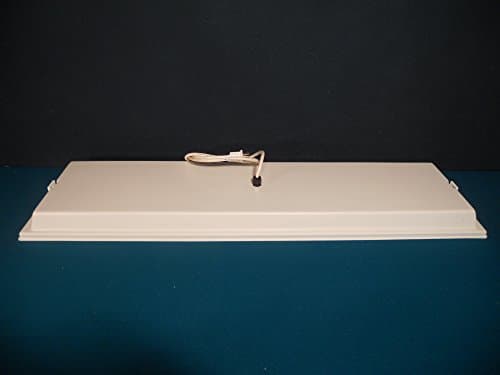 Sweeter Heater OH11x40, 150W Overhead Infrared A long-run radiant heater over a roost | 150 W | 7.0 | $161.00on Amazon |
| Rank 5 | 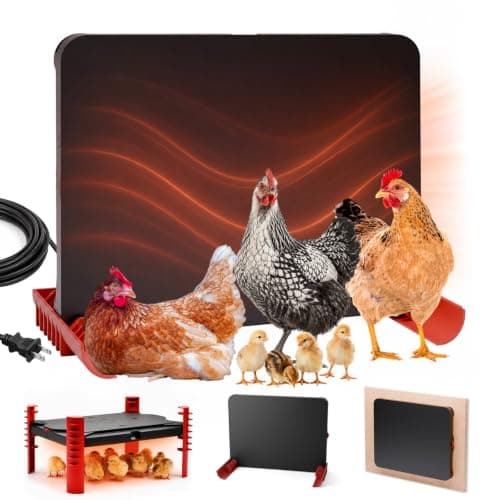 Smart Chicken Coop Heater, 150W Panel with Smart Thermostat Lower wattage with thermostat control | 150 W | 8.0 | $41.99on Amazon |
| Rank 6 | 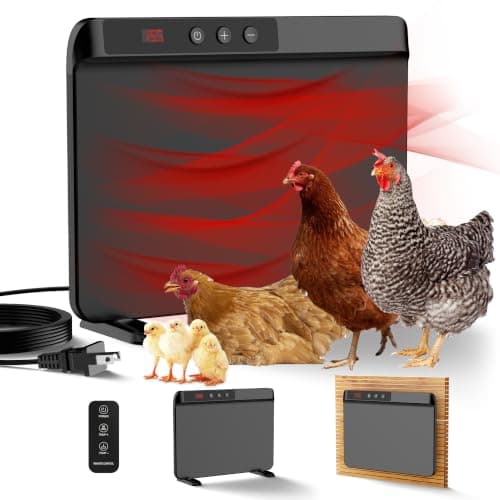 HOPOCO 200W Coop Heater, Timer and Controller Compatible Running coop heat on an external controller | 200 W | 7.8 | $41.99on Amazon |
#ad Prices come from Amazon and change. How this site is funded. Scores are our own published rubric, not a lab test — see how we pick.
If you have read that and still want a heater — because you are in a genuinely extreme climate, or you keep a breed with a large single comb, or you have a sick or very old bird — then the question becomes how to add heat with the least risk. That is what this ranking is for.
How we ranked these
Fire safety first and by a wide margin: no bulb to shatter, no exposed element, a stated safety certification where one exists, and a mounting method that cannot fall into the bedding. Temperature control second, because a heater with no thermostat runs at full draw on a mild November night. Heat output third, matched to coop size. Running cost fourth. Then value.
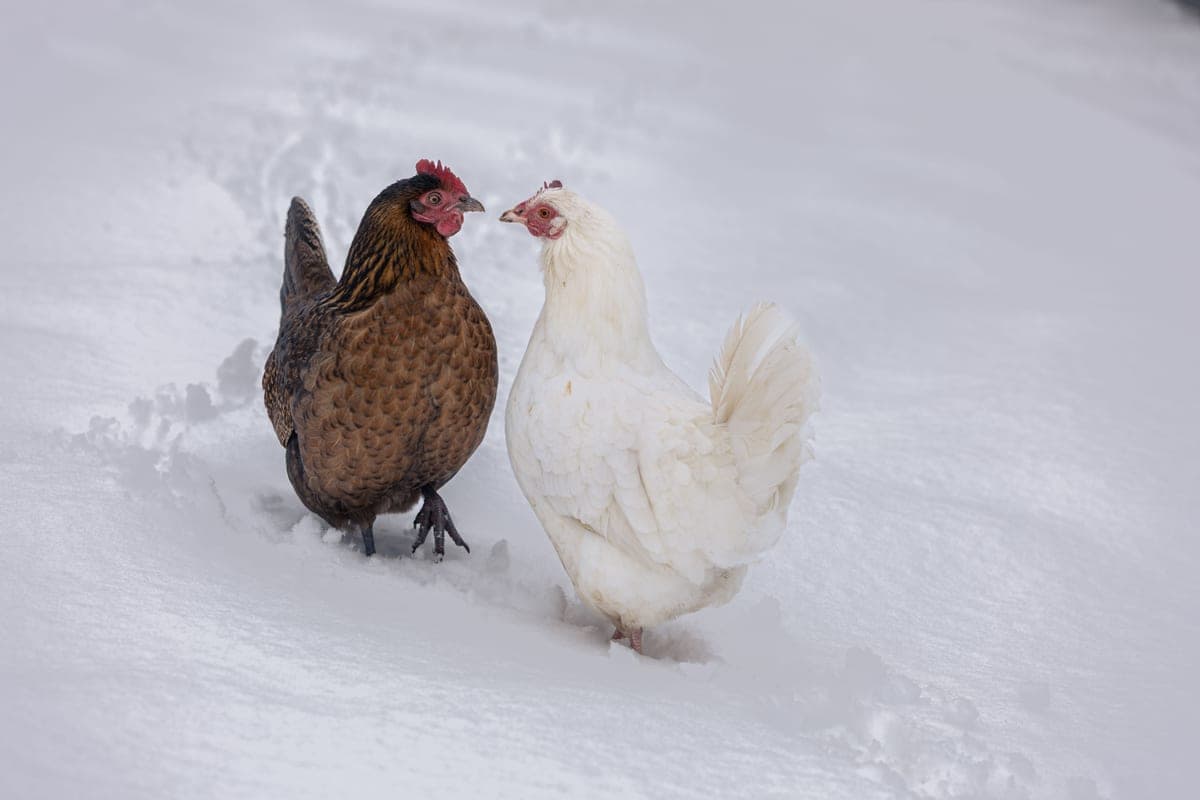
Radiant panels, not heat lamps
Every top pick here is a flat radiant panel. The reason is mechanical: a panel has no glass envelope to break, no filament, and no part hot enough to ignite bedding. A 250 W bulb in a clamp lamp has all three, and the clamp lamp is itself the usual point of failure — the clamp slips, the lamp falls into deep dry litter, and the result is the coop fire that extension guidance is warning about.
If you want lamp-style directional heat, a carbon-fiber or ceramic element is the sensible compromise: it hangs and aims like a lamp but has no glass to shatter. The full comparison is here.
The heaters
Ranked on fire safety and control, with wattage matched to coop size.
#1 · The safest way to take the edge off a cold coop
#ad How we are funded · Price as of October 5, 2026
Cozy Products Cozy Coop Flat-Panel Heater, 150W
Cozy ProductsA 150-watt flat radiant panel that mounts on a wall. There is no bulb to shatter and no element hot enough to ignite bedding, which is the whole argument against heat lamps.
| Power | 150 W |
|---|---|
| Type | Flat radiant panel |
| Mounting | Wall mount |
| Surface temperature | Not published by manufacturer |
Specifications per Manufacturer figures as published on the Amazon product listing, as published at the date above.
What it does well
- No bulb and no exposed element — it cannot shatter into dry bedding
- 150 W is a modest draw: cheap to run compared with a 250 W lamp
- Radiant warmth at bird level rather than heating the whole air volume
- Wall-mounted, so it cannot fall into the litter
Where it falls short
- Takes the chill off a small area; it will not warm a large coop
- No built-in thermostat — pair it with a thermostat outlet
- Surface temperature is not published
Our rubric
- Fire safety
- 9.0
- Temperature control
- 5.0
- Heat output
- 6.0
- Running cost
- 8.0
- Value
- 8.0
#2 · A UL-certified panel at a sensible price
#ad How we are funded · Price as of October 5, 2026
TIMEBAL Chicken Coop Heater, 200W UL Certified Radiant Panel
TIMEBALA 200-watt radiant panel that states UL certification. On an appliance that will be plugged in unattended in a dusty wooden building, a published safety certification is the specification that matters most.
| Power | 200 W |
|---|---|
| Certification | UL certified (manufacturer claim) |
| Type | Radiant panel |
| Finish | Black |
| Thermostat | Not published by manufacturer |
Specifications per Manufacturer figures as published on the Amazon product listing, as published at the date above.
What it does well
- States UL certification — the single most useful claim on a coop heater listing
- 200 W covers a real coop rather than just a brooder corner
- Radiant panel, so no bulb to break
- A fraction of the price of the premium sealed panels
Where it falls short
- Thermostat is not confirmed on the listing — budget for a thermostat outlet
- 200 W is a meaningful running cost if left on all winter
- Verify the UL listing number yourself before leaving it unattended
Our rubric
- Fire safety
- 8.0
- Temperature control
- 5.0
- Heat output
- 8.0
- Running cost
- 6.0
- Value
- 9.0
#3 · A panel that switches itself off
Smart Chicken Coop Heater, 200W Radiant Panel with Temperature Sensor
GenericA 200-watt radiant panel with a temperature sensor built in. The sensor is the feature worth paying for: without one, a coop heater runs at full draw on a mild night in November.
| Power | 200 W |
|---|---|
| Control | Built-in temperature sensor |
| Type | Radiant panel |
| Certification | Not published by manufacturer |
Specifications per Manufacturer figures as published on the Amazon product listing, as published at the date above.
What it does well
- Integrated sensor means it only draws power when the coop is actually cold
- Radiant panel — no bulb, no open element
- 200 W is enough for a normal backyard coop
Where it falls short
- No safety certification published, which on an unattended heater is a real gap
- Set-point range is not published
- Generic brand, so no spares path
Our rubric
- Fire safety
- 7.0
- Temperature control
- 9.0
- Heat output
- 8.0
- Running cost
- 8.0
- Value
- 9.0
#4 · A long-run radiant heater over a roost
#ad How we are funded · Price as of October 5, 2026
Sweeter Heater OH11x40, 150W Overhead Infrared
Sweeter HeaterAn 11 x 40 inch overhead infrared panel at 150 watts. The long format is the point: it warms a whole roosting bar rather than one spot, and it is a sealed panel, not a bulb.
| Power | 150 W |
|---|---|
| Dimensions | 11 x 40 in |
| Mounting | Overhead |
| Type | Sealed infrared panel |
Specifications per Manufacturer figures as published on the Amazon product listing, as published at the date above.
What it does well
- 40 inches of panel covers a full roosting bar, so no bird gets squeezed out of the warm spot
- Sealed panel construction — no glass, no filament, nothing to break
- 150 W for that coverage area is efficient
- The long-standing choice for brooders and coops where lamps are banned
Where it falls short
- Expensive — several times the price of a heat lamp
- Overhead mounting needs a solid ceiling joist in the coop
- No thermostat included
Our rubric
- Fire safety
- 10.0
- Temperature control
- 5.0
- Heat output
- 7.0
- Running cost
- 8.0
- Value
- 5.0
#5 · Lower wattage with thermostat control
#ad How we are funded · Price as of October 5, 2026
Smart Chicken Coop Heater, 150W Panel with Smart Thermostat
Generic150 watts with a thermostat. The combination most backyard coops actually want: enough radiant warmth for a roost, and the sense to switch off when it is not needed.
| Power | 150 W |
|---|---|
| Control | Smart thermostat |
| Type | Radiant panel |
| Certification | Not published by manufacturer |
Specifications per Manufacturer figures as published on the Amazon product listing, as published at the date above.
What it does well
- Thermostat plus a modest 150 W is the cheapest honest way to run coop heat
- Radiant panel rather than a lamp
- Cheaper to run than the 200 W panels for a small coop
Where it falls short
- No certification published
- 150 W is marginal in a large or drafty coop
- Thermostat accuracy is not specified
Our rubric
- Fire safety
- 7.0
- Temperature control
- 9.0
- Heat output
- 6.0
- Running cost
- 9.0
- Value
- 9.0
#6 · Running coop heat on an external controller
#ad How we are funded · Price as of October 5, 2026
HOPOCO 200W Coop Heater, Timer and Controller Compatible
HOPOCOA 200-watt panel explicitly stated as compatible with external timers and temperature controllers. Worth knowing, because many heaters with built-in electronics misbehave when switched at the plug.
| Power | 200 W |
|---|---|
| External control | Compatible with timers and temperature controllers |
| Type | Radiant panel |
| Certification | Not published by manufacturer |
Specifications per Manufacturer figures as published on the Amazon product listing, as published at the date above.
What it does well
- Explicitly works with a thermostat outlet, which many electronically-switched heaters do not
- 200 W radiant output for a normal coop
- Low price for the wattage
Where it falls short
- No certification published
- No thermostat of its own — the external controller is required, not optional
- Generic brand
Our rubric
- Fire safety
- 7.0
- Temperature control
- 7.0
- Heat output
- 8.0
- Running cost
- 8.0
- Value
- 9.0
Sizing by wattage
| Coop size | Sensible wattage | What it will do |
|---|---|---|
| Brooder or 2-bird box | 50-100 W | Takes the edge off a small volume |
| Small coop, 4-6 hens | 150 W | Warms the roost area, not the whole coop |
| Mid coop, 6-10 hens | 150-200 W | Noticeable warmth at the roost |
| Large walk-in, 10+ hens | 200 W+ | Still only warms a zone, not the building |
Always add a thermostat
A heater with no thermostat will run from the day you plug it in until the day you unplug it, including every mild autumn night. A thermostat outlet between the socket and the heater costs very little, cuts the running cost sharply, and adds a safety layer: a heater that cannot run in mild weather cannot overheat in mild weather.
Installing it properly
- Mount it to a solid surface — wall or ceiling joist, with the manufacturer's fixings. Never resting on or near bedding.
- Keep clearances. Observe the stated clearance to combustibles, and treat deep litter as combustible, which it is.
- Outdoor-rated cable on a GFCI outlet. Not an indoor extension lead run through a window.
- Keep connections off the ground and out of the litter.
- Inspect the cord every autumn for rodent damage before plugging it in. This is a common failure and a dangerous one.
- Dust it before the season. A coop is a dusty environment and dust on a heating element is a hazard.
What a heater cannot fix
- A damp coop. Heat with no ventilation raises humidity, and humidity plus cold is what causes frostbite. Ventilation first, always.
- A drafty roost. Air moving across birds at roost height strips heat faster than a panel adds it. Block drafts at bird level.
- Thin bedding. University of Minnesota Extension recommends 6-12 inches of dry bedding in winter because it insulates the birds' feet. That is cheaper and more effective than wattage.
- A coop that is too small. Crowding is a problem all year; heat does not address it.
Frequently asked questions
Do chickens need a heater in the coop?
What is the safest chicken coop heater?
How many watts does a coop heater need?
Do coop heaters need a thermostat?
Can a coop heater cause a fire?
Sources
Read next
Winter Heat
Do chickens need heat in winter?
The short answer is no, for healthy adult hens — and the reasons are about fire risk and moisture, not toughness.
Winter Heat
Coop heater fire safety
The checklist for running any mains appliance in a coop safely — and why extension guidance leans against heaters at all.
Winter Heat
The best radiant chicken coop heaters
Every radiant panel worth considering, from a 50 W brooder panel to a 200 W coop panel, with certification noted.
Winter Heat
Heat lamp vs radiant panel
The safety comparison that decides most coop heating decisions, with picks for both answers.
Winter Heat
Winterizing a chicken coop
The full autumn checklist: coop, run, water, electrics and flock, in the order that makes the winter easy.

About
How we pick
The published method behind every score here, and a plain statement of what we have not tested.