Hatching & Brooding
Incubating chicken eggs: a day-by-day schedule
Twenty-one days, three stages, and a small number of moments where it matters what you do.
Chickens & Coops earns a commission when you buy through our links, at no extra cost to you. Prices come from Amazon and change; the date beside every price is when we last verified it. Full disclosure.
Quick picks
| # | Product | Capacity | Score | Price |
|---|---|---|---|---|
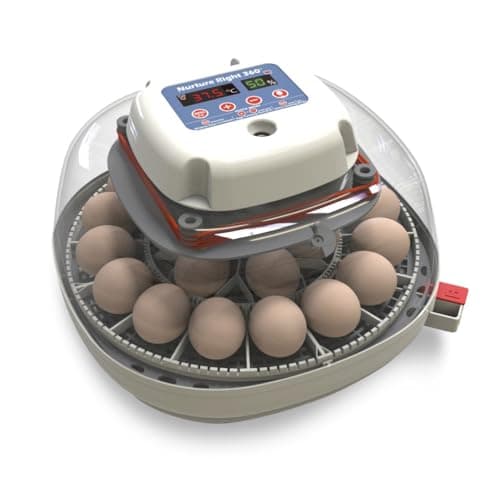
| Rank 1 | Harris Farms Nurture Right 360 Incubator, 22 Eggs The best first incubator for most people | 22 eggs | 8.2 | $124.99on Amazon |
| Rank 2 | 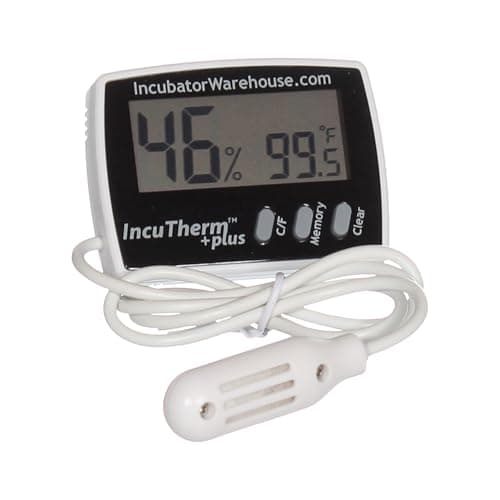 IncuTherm Plus Digital Thermometer and Hygrometer Checking what your incubator is actually doing | Not published | 9.0 | $28.99on Amazon |
| Rank 3 | 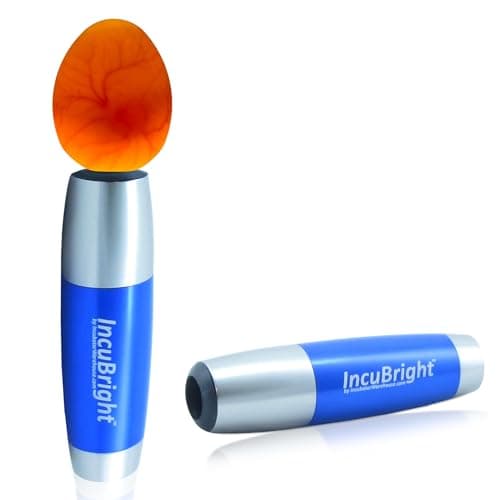 Incu-Bright Ultra Bright LED Egg Candler Candling brown and dark eggs | Not published | 8.5 | $21.99on Amazon |
| Rank 4 | 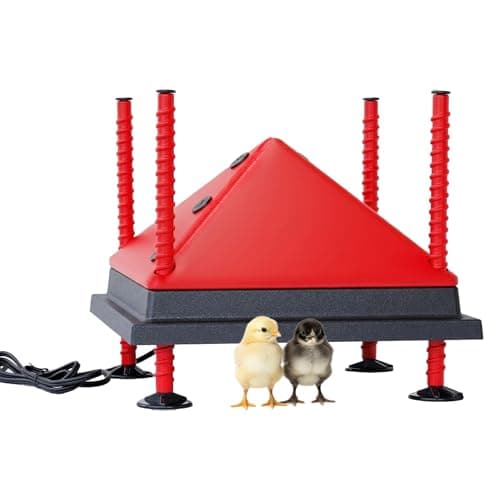 RentACoop 12x12in Adjustable Heating Plate with Anti-Roost Cone The safest brooder heat, with the roosting problem solved | Not published | 8.0 | $59.95on Amazon |
#ad Prices come from Amazon and change. How this site is funded. Scores are our own published rubric, not a lab test — see how we pick.
Incubation is mostly waiting, punctuated by a handful of decisions. This is the schedule, with the published figures at each stage and the three points where people most often go wrong.
The parameters
| Stage | Temperature (forced air) | Humidity | Turning |
|---|---|---|---|
| Days 1-18 | 99.5 F (acceptable 99-101 F) | 55-60% | At least 3 times a day, or automatic |
| Days 18-21 (lockdown) | 99.5 F | 65-70% | Stop turning |
| Hatch | 99.5 F | 65-70% | Do not open the incubator |
From NC State Extension and University of Nebraska-Lincoln Extension: a constant 99.5 F in a forced-air machine, acceptable between 99 and 101 F, never above 102 F; 55-60% humidity to day 18, then 65-70% through hatching.
Before day 1: setting up
- Run the empty incubator for 24 hours with your own thermometer and hygrometer at egg level. Adjust until it holds steady. Do not skip this.
- Site it somewhere thermally stable — an interior room, out of sun and drafts.
- Collect eggs over no more than about a week, stored pointed end down below room temperature.
- Do not wash them. Washing removes the protective cuticle. Brush off light dirt; discard heavily soiled or cracked eggs.
- Bring them to room temperature before setting.
Day 1: setting the eggs
- Place eggs pointed end down, or on their side in a turner that rolls them.
- If turning by hand, mark one side with a pencil X so you can see which have been turned.
- Close the lid and leave it closed. Expect the temperature to dip and recover — do not chase it with the thermostat.
- Write the hatch date on the calendar. Day 21 from the day after setting.
Days 1-18: the long stretch
- Hold 99.5 F and 55-60% humidity.
- Turn at least three times a day — an odd number, so the eggs do not spend every night on the same side. An automatic turner handles this.
- Top up the water channels as needed to hold humidity. Adjust the water surface area, not the depth, to change humidity.
- Open the lid as little as possible. Every opening drops humidity.
- Check the thermometer daily, not the built-in display alone.
Day 7: candling
Shine a bright candler against the shell in a dark room. You are looking for a spidery network of blood vessels and a dark spot. A clear egg is infertile or has not developed and should be removed — a dead egg in a warm humid box can spoil and contaminate the others.
Work quickly, a few eggs at a time, and put them straight back. Brown and dark eggs are much harder to candle, which is why candler brightness matters.
Day 14: optional second candling
A second check removes anything that has stopped developing since day 7. Development should now fill much of the egg with a clear air cell at the blunt end. Optional, and worth doing if you have a lot of eggs.
Day 18: lockdown
This is the most important single moment in the process:
- Stop turning. Remove or switch off the turner. The chick needs to orient itself for hatching.
- Raise humidity to 65-70%. Dry membranes are the main cause of chicks that pip and then fail to get out.
- Close the lid and leave it closed. Not for a quick look, not to help one chick.
- Add a non-slip surface if your tray is slippery — shelf liner works — so hatched chicks do not splay their legs.
Days 19-21: hatching
- Pipping — the first crack — then a rest, sometimes for many hours. This is normal.
- Zipping — the chick works a circle round the shell and pushes out.
- Do not open the incubator. The humidity drop can shrink-wrap the membrane onto a chick mid-hatch and kill it. This is the most common well-meaning mistake in hatching.
- Leave chicks in until dry and fluffed. They can go 24 hours or more on absorbed yolk; they do not need food immediately.
- Move them to the brooder once dry, in batches, as quickly as you can with the lid open as briefly as possible.
After day 21
Give late eggs another day or two — a slightly cool incubator delays hatching. After day 23 or so, a candle will usually tell you whether anything is still alive. Clean and dry the incubator thoroughly before storing it.
The equipment each stage needs
An incubator, the thermometer that verifies it, a candler for day 7, and the brooder plate for day 21.
#1 · The best first incubator for most people
Harris Farms Nurture Right 360 Incubator, 22 Eggs
Harris Farms22 eggs, an automatic turner and a 360-degree view, from an established poultry-equipment brand. It sits exactly where a first incubator should: enough capacity to be worth running, simple enough to get right.
| Capacity | 22 eggs |
|---|---|
| Turning | Automatic turner |
| Viewing | 360-degree window |
| Humidity control | Not published by manufacturer |
| Candler | Not published by manufacturer |
Specifications per Manufacturer figures as published on the Amazon product listing, as published at the date above.
What it does well
- 22 eggs is a realistic backyard hatch — enough that a 60% hatch rate still gives you a flock
- Automatic turning removes the three-times-a-day job that sinks most first hatches
- 360-degree viewing means you can watch without lifting the lid and dumping the humidity
- Made by a poultry brand with a long track record rather than a marketplace label
Where it falls short
- Humidity control detail is not published; expect to top water channels manually
- No candler stated as included
- Costs more than the generic 24-egg incubators
Our rubric
- Temperature stability
- 9.0
- Humidity control
- 7.0
- Capacity
- 8.0
- Beginner friendliness
- 10.0
- Value
- 7.0
#2 · Checking what your incubator is actually doing
#ad How we are funded · Price as of October 5, 2026
IncuTherm Plus Digital Thermometer and Hygrometer
IncuThermA thermometer and hygrometer built for incubators. The single highest-value accessory in hatching: budget incubator displays can be out by several degrees, and a few degrees decides a hatch.
| Type | Digital thermometer and hygrometer |
|---|---|
| Designed for | Egg incubators |
| Accuracy | Not published by manufacturer |
Specifications per Manufacturer figures as published on the Amazon product listing, as published at the date above.
What it does well
- Lets you verify the incubator's own display instead of trusting it
- Reads humidity as well as temperature — both matter and both drift
- Purpose-built for incubator ranges rather than room comfort ranges
Where it falls short
- Stated accuracy is not published
- One more probe cable through the incubator's vent
- An extra purchase on top of the machine
Our rubric
- Fit for purpose
- 10.0
- Mess and waste
- 9.0
- Quality
- 9.0
- Value
- 8.0
#3 · Candling brown and dark eggs
#ad How we are funded · Price as of October 5, 2026
Incu-Bright Ultra Bright LED Egg Candler
Incu-BrightA high-output LED candler for all egg sizes. Brightness is the whole specification: a weak candler cannot see through a brown Marans egg, which is exactly when you need it to.
| Type | LED egg candler |
|---|---|
| Brightness | Ultra bright (manufacturer claim) |
| Egg sizes | All egg sizes |
| Power | Portable |
Specifications per Manufacturer figures as published on the Amazon product listing, as published at the date above.
What it does well
- Bright enough for dark brown eggs, where cheap candlers fail
- Portable, so you can candle at the incubator rather than carrying eggs
- Pulling clear eggs at day 7 keeps rot out of the incubator
Where it falls short
- Output is not quantified on the listing
- An accessory you may only use twice a year
- Bright LEDs warm the egg if you linger — candle quickly
Our rubric
- Fit for purpose
- 9.0
- Mess and waste
- 9.0
- Quality
- 8.0
- Value
- 8.0
#4 · The safest brooder heat, with the roosting problem solved
#ad How we are funded · Price as of October 5, 2026
RentACoop 12x12in Adjustable Heating Plate with Anti-Roost Cone
RentACoopA 12 x 12 inch adjustable-height heat plate with a foldable anti-roost cone. The cone is why this one is worth the premium: without it, chicks roost on top and foul the plate within days.
| Plate size | 12 x 12 in |
|---|---|
| Height | Adjustable |
| Anti-roost | Foldable cone included |
| Type | Radiant brooder heating plate |
| Wattage | Not published by manufacturer |
Specifications per RentACoop published specifications, as published at the date above.
What it does well
- Mimics a broody hen: chicks go under for warmth and come out to eat, which is how they self-regulate
- Anti-roost cone stops the plate becoming a perch and a toilet
- Height adjusts as the chicks grow, which they do fast
- No bulb, no light, so chicks sleep on a normal day-night cycle
Where it falls short
- Wattage is not published
- Plates warm the chicks, not the room — a very cold garage still needs ambient heat
- More expensive than a clamp lamp and a bulb
Our rubric
- Fire safety
- 10.0
- Temperature control
- 8.0
- Heat output
- 7.0
- Running cost
- 9.0
- Value
- 6.0
Hygiene
CDC's backyard poultry guidance applies from hatch: wash hands with soap and running water after handling chicks or equipment, clean equipment outdoors, keep chicks out of food preparation areas, and do not let children under five handle them.
Frequently asked questions
How long does it take to hatch chicken eggs?
When should I candle chicken eggs?
What is lockdown in incubation?
Can I open the incubator during hatching?
How often should eggs be turned?
Do chicks need food as soon as they hatch?
Sources
Read next
Hatching & Brooding
Incubator temperature and humidity for chicken eggs
The published temperature and humidity targets, where they come from, and a troubleshooting table for missing them.
Hatching & Brooding
The best egg incubators for beginners
First-hatch incubators, chosen for the features that prevent beginner mistakes: auto-turning, humidity help, a candler.
Hatching & Brooding
What baby chicks need
The complete day-one-to-week-six checklist, with the CDC hygiene rules and the week-by-week changes.
Hatching & Brooding
The best chick brooders
Brooder heat plates, boxed kits and the chick feeder and waterer that go in — with the DIY option that works just as well.
Hatching & Brooding
Still air vs forced air incubators
Why the fan matters, where to put the thermometer in each type, and which to buy for a backyard hatch.