Nesting Boxes
How many nesting boxes do chickens need?
Two for the first four hens, then one more for every four after. They will still all queue for the same one.
Chickens & Coops earns a commission when you buy through our links, at no extra cost to you. Prices come from Amazon and change; the date beside every price is when we last verified it. Full disclosure.
Quick picks
| # | Product | Compartments | Score | Price |
|---|---|---|---|---|
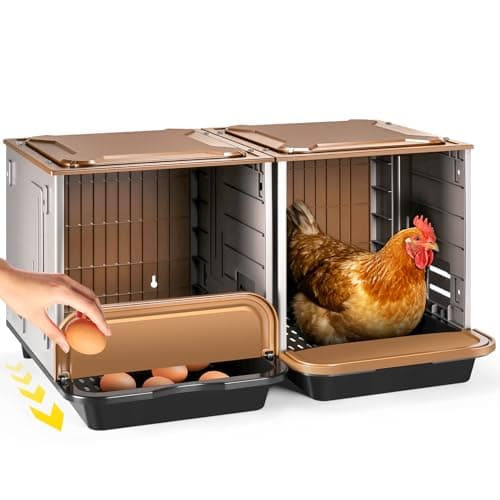
| Rank 1 | 2-Compartment Nesting Box with Egg Collection Two boxes and a collection tray for eight hens | 2 | 7.6 | $45.99on Amazon |
| Rank 2 | 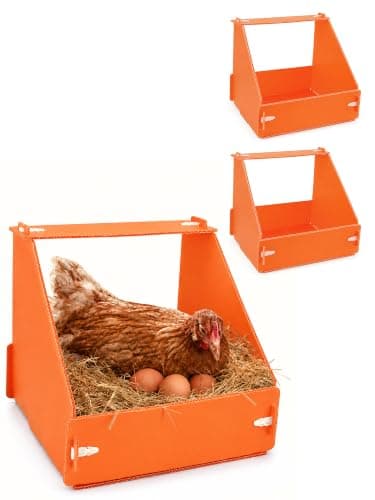 Touri Chicken Nesting Boxes, 3-Pack Three boxes for a flock of up to twelve | Not published | 7.8 | $21.99on Amazon |
| Rank 3 | 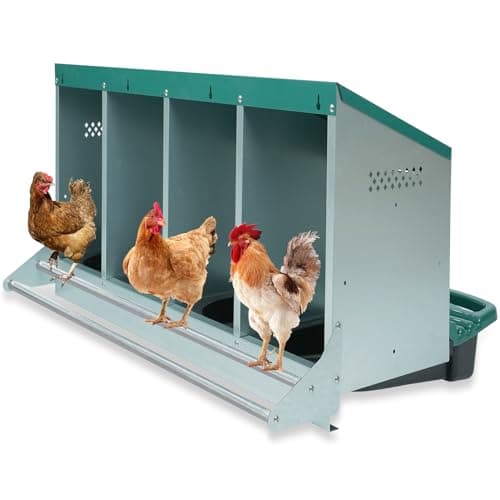 4-Hole Heavy Duty Metal Roll-Away Nesting Box Clean eggs from sixteen hens | Not published | 8.2 | $119.99on Amazon |
#ad Prices come from Amazon and change. How this site is funded. Scores are our own published rubric, not a lab test — see how we pick.
Two nests for the first four hens, then one more nest for every four additional hens. That is Penn State Extension's published figure, and it is slightly more generous than the folk rule of one box per four birds that circulates online.
By flock size
| Flock size | Nest boxes | Box size (standard hens) | Height above floor |
|---|---|---|---|
| 2-4 hens | 2 | 12 x 12 x 12 in | 18-24 in, below the roost |
| 5-8 hens | 3 | 12 x 12 x 12 in | 18-24 in, below the roost |
| 9-12 hens | 4 | 12 x 12 x 12 in | 18-24 in, below the roost |
| 13-16 hens | 5 | 12 x 12 x 12 in | 18-24 in, below the roost |
| 17-20 hens | 6 | 12 x 12 x 12 in | 18-24 in, below the roost |
They will queue anyway
Here is the thing that surprises every new keeper: provide four immaculate boxes for six hens and you will find all six using one of them, sometimes two hens in a box at once, while the other three sit empty. This is completely normal. Hens are drawn to a nest that smells and looks like other hens have laid there — it signals a safe place.
So the purpose of the box count is not to end the queue. It is to make sure that when a hen genuinely needs a nest and the favorite is occupied, there is somewhere acceptable to go. Adding a fifth box to the four will not change the queue; it will just give you another surface to clean.
When you actually need more boxes
- Hens are laying on the floor and the boxes are all occupied at peak times. Peak laying is usually mid-morning.
- Eggs are getting broken because hens are crowding into an occupied nest.
- A broody hen has taken a box out of service for three weeks, which effectively reduces your count by one.
- The flock has grown and you did not recalculate.
When more boxes are not the answer
If hens are laying on the floor, box count is usually not the cause. In order of likelihood:
- The boxes are too bright or exposed. Hens want dark and private. Move them, or hang a curtain across the front.
- The boxes are above the roost. Then the hens are sleeping in them and they are fouled. Lower the boxes below the roost.
- The existing nests are soiled. A hen will not lay in a dirty nest if she has an alternative.
- A hen has found somewhere she prefers. Block it, and put a dummy egg in the box you want her to use.
- Something frightened her in the box. A mite infestation in a nest box will drive hens out of it, and that is worth checking.
Boxes by count
A two-compartment box for up to eight hens, a three-pack for up to twelve, and a four-hole roll-away bank for up to sixteen.
#1 · Two boxes and a collection tray for eight hens
2-Compartment Nesting Box with Egg Collection
GenericA two-compartment box designed for egg collection — the eggs roll or sit where you can reach them without disturbing a sitting hen. Covers eight hens on the one-per-four rule.
| Compartments | 2 |
|---|---|
| Covers | Up to 8 hens at 1 box per 4 |
| Feature | Designed for egg collection |
| Material | Not published by manufacturer |
Specifications per Manufacturer figures as published on the Amazon product listing, as published at the date above.
What it does well
- Collection design means fewer eggs cracked by hens shuffling in the box
- Two compartments covers the commonest backyard flock size
- Compact enough for a small coop wall
Where it falls short
- Material and mounting are not published
- Collection trays need emptying daily or eggs pile up and crack anyway
- Two boxes will still have a queue — hens are like that
Our rubric
- Egg cleanliness
- 8.0
- Mounting options
- 7.0
- Cleaning access
- 7.0
- Build
- 7.0
- Value
- 9.0
#2 · Three boxes for a flock of up to twelve
#ad How we are funded · Price as of October 5, 2026
Touri Chicken Nesting Boxes, 3-Pack
TouriThree separate nest boxes in one pack, which on the one-box-per-four-hens rule covers up to twelve birds. Separate boxes beat a shared bank because you can site them where the hens already want to lay.
| Pack | 3 boxes |
|---|---|
| Type | Individual nesting boxes |
| Covers | Up to 12 hens at 1 box per 4 |
| Material | Not published by manufacturer |
Specifications per Manufacturer figures as published on the Amazon product listing, as published at the date above.
What it does well
- Three boxes is exactly right for a flock of nine to twelve hens
- Individual boxes can be moved to the dark corner the hens actually prefer
- Cheaper per box than a molded multi-compartment bank
Where it falls short
- Material is not published
- Separate boxes take more wall space than a stacked bank
- Hens will all queue for one box regardless — that is normal, not a fault
Our rubric
- Egg cleanliness
- 7.0
- Mounting options
- 8.0
- Cleaning access
- 7.0
- Build
- 7.0
- Value
- 10.0
#3 · Clean eggs from sixteen hens
#ad How we are funded · Price as of October 5, 2026
4-Hole Heavy Duty Metal Roll-Away Nesting Box
GenericFour roll-away holes in heavy-duty metal. Roll-away is the single best upgrade for egg cleanliness: the egg leaves the nest the moment it is laid, so it cannot be stood on, pecked or soiled.
| Holes | 4 |
|---|---|
| Covers | Up to 16 hens at 1 box per 4 |
| Material | Heavy duty metal |
| Type | Roll-away with egg collection |
Specifications per Manufacturer figures as published on the Amazon product listing, as published at the date above.
What it does well
- Eggs roll out of reach immediately — the end of dirty eggs and most egg-eating habits
- Metal construction leaves mites nowhere to hide and lasts far longer than ply
- Four holes covers a sixteen-hen flock
- Collecting from a tray rather than reaching under a hen is faster and calmer
Where it falls short
- Roll-away boxes are the most expensive nest option
- Needs the right slope: too flat and eggs stay, too steep and they crack
- Metal is cold in winter unless you line the pad area
Our rubric
- Egg cleanliness
- 10.0
- Mounting options
- 7.0
- Cleaning access
- 9.0
- Build
- 9.0
- Value
- 6.0
Do roosters need nest boxes?
No. Roosters do not lay and do not use nest boxes, though a rooster may inspect one and call a hen to it. Count only your hens when working out how many boxes you need.
A broody hen changes the maths
A broody hen will sit in one box for up to three weeks and defend it, which takes it out of service. If you have a persistently broody breed and a flock close to the box-count threshold, it is worth having one box more than the rule requires — or using a roll-away bank, where a hen cannot go broody at all.
Frequently asked questions
How many nesting boxes per chicken?
Why do all my hens use the same nesting box?
Do roosters need a nesting box?
Will more nesting boxes stop floor laying?
Does a broody hen affect how many boxes I need?
Sources
Read next
Nesting Boxes
Chicken nesting box size guide
Box dimensions by breed size, mounting height, and the design details that make a box get used.
Nesting Boxes
The best nesting boxes for chickens
Our main nest box ranking, from a single plastic box to an eight-hole roll-away bank, with the box-count rule.

Nesting Boxes
Why have my chickens stopped laying?
A diagnostic for a stopped flock: eight causes in order of likelihood, with what actually fixes each one.
Chicken Coops
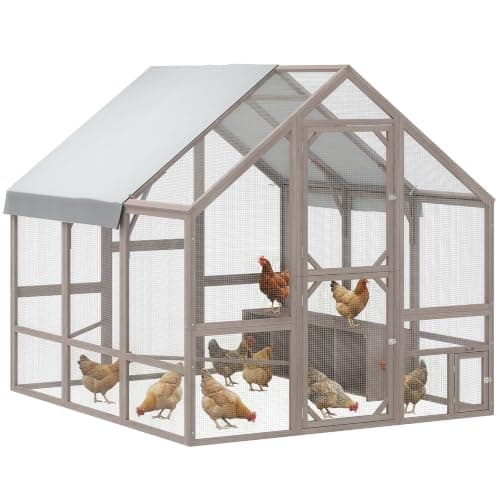
Chicken coop size per chicken: the real numbers
The sizing table the rest of this site is built on, with the extension sources and a method for checking any listing.
Nesting Boxes
The best roll-out nesting boxes
Roll-away banks from two to eight holes, ranked on build and hole count, with the slope and broody caveats.