Nesting Boxes
Why have my chickens stopped laying?
Work through these in order. The first three explain most cases and none of them is a problem you need to fix.
Chickens & Coops earns a commission when you buy through our links, at no extra cost to you. Prices come from Amazon and change; the date beside every price is when we last verified it. Full disclosure.
Quick picks
| # | Product | Type | Score | Price |
|---|---|---|---|---|
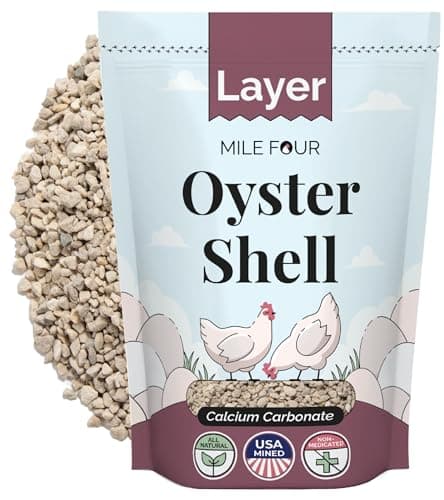
| Rank 1 | Mile Four Oyster Shell for Laying Hens, 4 lb Eggshell strength, offered free-choice | Crushed oyster shell | 8.8 | $19.99on Amazon |
| Rank 2 | 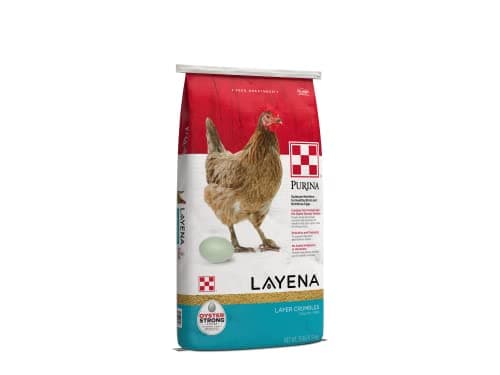 Purina Layena Layer Crumbles, 25 lb The standard bag for a six-hen flock | Layer crumbles, nutritionally complete | 8.3 | $35.98on Amazon |
| Rank 3 | 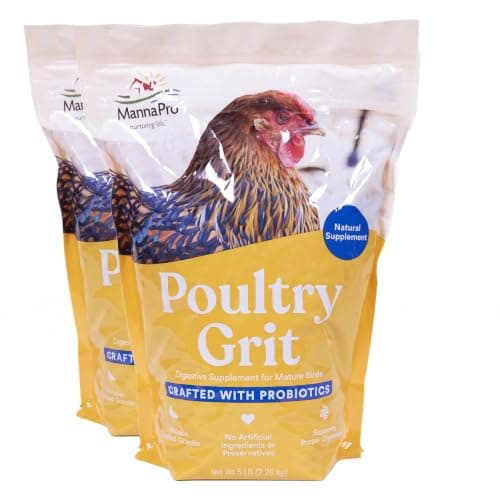 Manna Pro Poultry Grit with Probiotics, 5 lb Insoluble grit for hens eating anything but pellets | Insoluble crushed granite grit | 9.0 | $19.02on Amazon |
| Rank 4 | 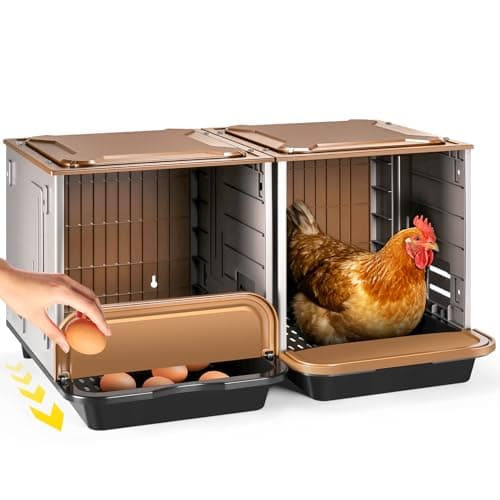 2-Compartment Nesting Box with Egg Collection Two boxes and a collection tray for eight hens | Not published | 7.6 | $45.99on Amazon |
#ad Prices come from Amazon and change. How this site is funded. Scores are our own published rubric, not a lab test — see how we pick.
A flock that stops laying is alarming the first time it happens and is usually entirely normal. Work through these in order — the first three cover the large majority of cases, and in two of the three the correct response is to do nothing.
1. Daylight — the commonest cause, and not a problem
Laying is driven by day length. As daylight shortens in autumn, laying slows and in many birds stops. It picks up again as the days lengthen in late winter. This is normal physiology, not illness and not a deficiency.
Supplemental light will restart laying, and there is a reasonable argument that a seasonal rest is good for a hen's long-term productivity. If you do add light, add it in the morning rather than the evening so birds are not plunged into darkness while away from the roost, and keep the total day length moderate.
2. The autumn moult — also normal
Once a year, usually in autumn, hens drop and regrow their feathers. Feathers are protein-expensive and laying stops almost entirely while it happens. A moulting flock looks dreadful — patchy, scruffy, feathers everywhere — and takes several weeks to come through it.
The useful response is nutritional: keep a complete layer feed available and resist the urge to add scratch grain, which is low in protein and dilutes the ration exactly when protein matters most.
3. Age
Laying peaks in the first year and declines each year after. An older hen lays fewer and larger eggs with thinner shells. Nothing reverses it, and no supplement changes it. A flock that has quietly slowed over three years is simply a flock that has got older.
4. Water — the one to check immediately
Laying stops quickly if water runs short, faster than it responds to almost any other factor. Check first:
- Is the waterer frozen? In winter this is the single most likely cause of a sudden stop.
- Is it fouled? Hens drink less from dirty water.
- Is it warm? Hens drink less warm water in a heatwave, exactly when they need more.
- Can every bird reach it? A dominant hen can monopolize a single drinking point.
A hen needs about 6.4 fl oz of water a day, roughly doubling in hot weather, per University of Minnesota Extension.
5. Nutrition and calcium
Check that the flock is actually eating a complete layer feed rather than mostly scratch, treats and kitchen scraps. Scratch grain is low in protein, and a flock eating a lot of it is on a diluted ration.
For shell quality specifically, offer oyster shell free-choice in a separate dish so the hens laying hardest can take more calcium. And remember that grit is a separate thing — any bird eating anything other than complete feed needs insoluble grit to digest it. The full explanation.
6. Stress
- A predator visiting at night, even unsuccessfully, will stop a flock laying.
- New birds introduced — expect a drop for a week or two while the pecking order resettles.
- A move or a rebuild.
- Mites or lice. A heavy infestation genuinely reduces laying, and nest boxes are where to look first.
- Dogs, children, or a neighbor's cat patrolling the run.
- Overcrowding, which is a chronic stressor rather than an event. Check the floor area.
7. Broodiness
A broody hen stops laying and sits. She will be flat in a nest box, puffed up, and cross about being moved. It resolves on its own in a few weeks, or sooner if you remove her from the box repeatedly and block access to it.
8. They are laying, somewhere else
Worth checking before you conclude anything. Hens that free-range find hedges, long grass, under decking and behind sheds. Confine the flock to the run for two or three days: if eggs appear in the boxes, they were laying all along. Look for a hidden clutch while you are at it — and do not eat eggs of unknown age.
The other version of this is egg eating, which is less pleasant. Signs are shell fragments in the nest and wet patches on bedding. A roll-away box removes the opportunity, which is the practical fix. Roll-away boxes.
What actually helps
Free-choice calcium, a complete layer feed, insoluble grit, and a nest box if the problem turns out to be where they are laying rather than whether.
#1 · Eggshell strength, offered free-choice
#ad How we are funded · Price as of October 5, 2026
Mile Four Oyster Shell for Laying Hens, 4 lb
Mile FourCrushed oyster shell as a free-choice calcium source. Layer feed already contains calcium; a separate dish of oyster shell lets the individual hens that need more take more.
| Type | Crushed oyster shell |
|---|---|
| Weight | 4 lb |
| Function | Calcium for egg-laying hens |
| Feeding | Free-choice |
Specifications per Manufacturer figures as published on the Amazon product listing, as published at the date above.
What it does well
- Free-choice calcium is self-regulating: hens laying hardest take the most
- Directly addresses thin and soft shells
- 4 lb lasts a small flock months
Where it falls short
- Not a substitute for grit — oyster shell dissolves, so it cannot grind
- Should never be fed to chicks or non-laying pullets
- Must go in its own dish, not mixed into the feed
Our rubric
- Fit for purpose
- 10.0
- Mess and waste
- 9.0
- Quality
- 9.0
- Value
- 7.0
#2 · The standard bag for a six-hen flock
#ad How we are funded · Price as of October 5, 2026
Purina Layena Layer Crumbles, 25 lb
Purina25 lb of complete layer crumble — roughly a month for six hens. Crumble suits mixed-age flocks and bantams that find full pellets awkward.
| Type | Layer crumbles, nutritionally complete |
|---|---|
| Weight | 25 lb |
| For | Laying hens |
| Protein | Not published by manufacturer |
Specifications per Manufacturer figures as published on the Amazon product listing, as published at the date above.
What it does well
- Complete layer ration from the most widely stocked brand in the US
- Crumble is easier for bantams and smaller breeds to eat than pellets
- 25 lb is about a month for six hens — fresh all the way down the bag
Where it falls short
- Crumble generates more dust and more billed-out waste than pellets
- Protein percentage is not stated on this listing
- Needs an airtight bin once opened or it absorbs moisture
Our rubric
- Fit for purpose
- 9.0
- Mess and waste
- 7.0
- Quality
- 9.0
- Value
- 8.0
#3 · Insoluble grit for hens eating anything but pellets
#ad How we are funded · Price as of October 5, 2026
Manna Pro Poultry Grit with Probiotics, 5 lb
Manna ProInsoluble crushed granite — the grinding stone a hen's gizzard needs to process grass, scratch and kitchen scraps. It is not a calcium supplement and does not replace oyster shell.
| Type | Insoluble crushed granite grit |
|---|---|
| Weight | 5 lb |
| Added | Probiotics |
| Function | Gizzard grinding material |
Specifications per Manufacturer figures as published on the Amazon product listing, as published at the date above.
What it does well
- States 'insoluble crushed granite', which is exactly what grit should be
- 5 lb lasts a small flock a very long time — it is offered free-choice, not mixed in
- Essential the moment hens eat anything other than a complete pellet
Where it falls short
- Routinely confused with oyster shell; they do different jobs and you need both
- Not needed at all for birds fed only complete crumble indoors
- Offer it in a separate small dish, not mixed into feed
Our rubric
- Fit for purpose
- 10.0
- Mess and waste
- 9.0
- Quality
- 9.0
- Value
- 8.0
#4 · Two boxes and a collection tray for eight hens
2-Compartment Nesting Box with Egg Collection
GenericA two-compartment box designed for egg collection — the eggs roll or sit where you can reach them without disturbing a sitting hen. Covers eight hens on the one-per-four rule.
| Compartments | 2 |
|---|---|
| Covers | Up to 8 hens at 1 box per 4 |
| Feature | Designed for egg collection |
| Material | Not published by manufacturer |
Specifications per Manufacturer figures as published on the Amazon product listing, as published at the date above.
What it does well
- Collection design means fewer eggs cracked by hens shuffling in the box
- Two compartments covers the commonest backyard flock size
- Compact enough for a small coop wall
Where it falls short
- Material and mounting are not published
- Collection trays need emptying daily or eggs pile up and crack anyway
- Two boxes will still have a queue — hens are like that
Our rubric
- Egg cleanliness
- 8.0
- Mounting options
- 7.0
- Cleaning access
- 7.0
- Build
- 7.0
- Value
- 9.0
A quick checklist
- Is it autumn or winter? Short days and moult explain most cases.
- How old are the hens? Laying declines every year.
- Is the water liquid, clean, cool and reachable by everyone?
- Are they eating a complete layer feed, with oyster shell and grit available separately?
- Has anything changed — new birds, a predator, a move, mites?
- Is anyone broody?
- Are they laying somewhere you have not found?
Frequently asked questions
Why did my chickens suddenly stop laying?
Do chickens stop laying in winter?
How long does the moult last?
Should I add light to keep hens laying through winter?
How long do hens lay for?
Could my hens be eating the eggs?
Sources
Read next
Feeders & Feed
Grit and oyster shell: what each one actually does
Grit versus oyster shell, properly explained: who needs which, when, and why they go in separate dishes.
Feeders & Feed
The best chicken feed for laying hens
Complete layer feed options plus the grit and oyster shell that go alongside, and why those two are not the same thing.
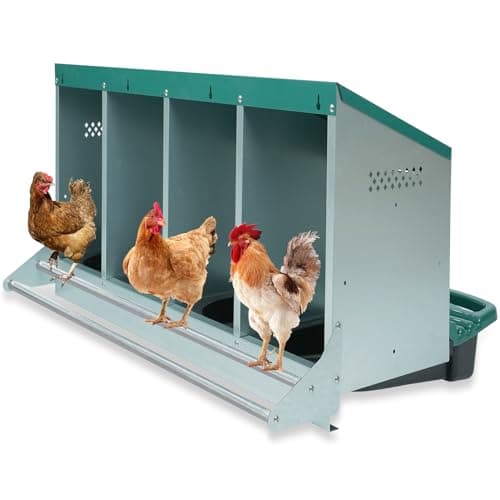
Nesting Boxes
The best roll-out nesting boxes
Roll-away banks from two to eight holes, ranked on build and hole count, with the slope and broody caveats.
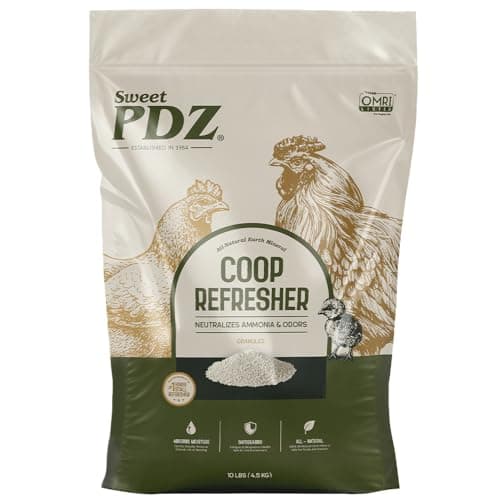
Chicken Coops
Chicken coop ventilation, done right
The single most misunderstood part of coop design: why you ventilate in winter, and where the vents actually go.
Start Here
How often do chickens lay eggs?
The daily, seasonal and lifetime pattern of laying, with the five factors that change it and no invented figures.