Best Overall
The best chicken coops for a backyard flock
Our main coop ranking, from a two-hen starter box to a twenty-bird shed, with the space maths done for you.
Most coops are sold for roughly twice the flock they can actually house. This section does the arithmetic before you spend anything.
Chickens & Coops earns a commission when you buy through our links, at no extra cost to you. Prices come from Amazon and change; the date beside every price is when we last verified it. Full disclosure.
Ranked on the specifications below. Prices are live and dated; where no live price resolves, the cell reads Check price.
| # | Product | Stated capacity | Score | Price |
|---|---|---|---|---|
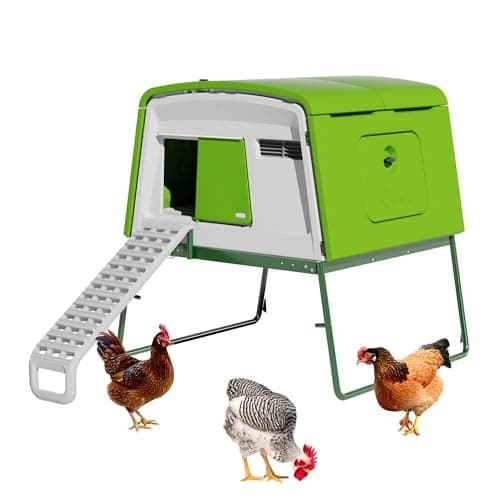
| Rank 1 | Omlet Eglu Cube Large Buy-it-once plastic, with the strongest predator record | Not published | 8.2 | $1,399.00on Amazon |
| Rank 2 | 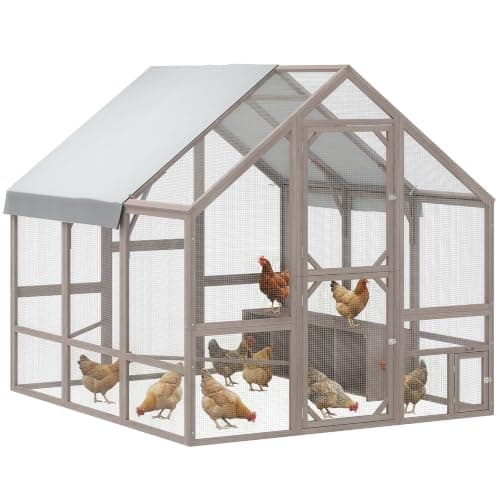 PawHut Large Wooden Chicken Coop, 83in x 73in x 73in Eight to ten hens in a coop you can walk into | 8-10 hens | 7.7 | $379.99on Amazon |
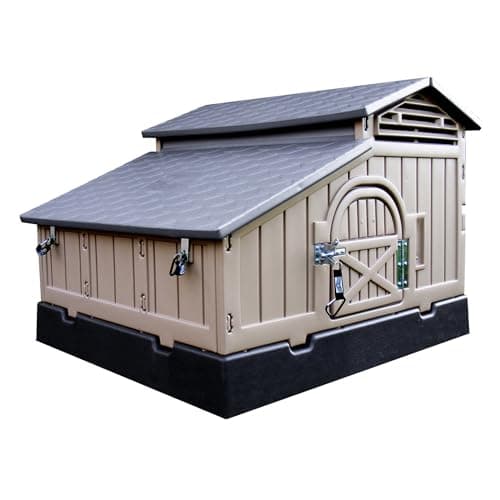
| Rank 3 | 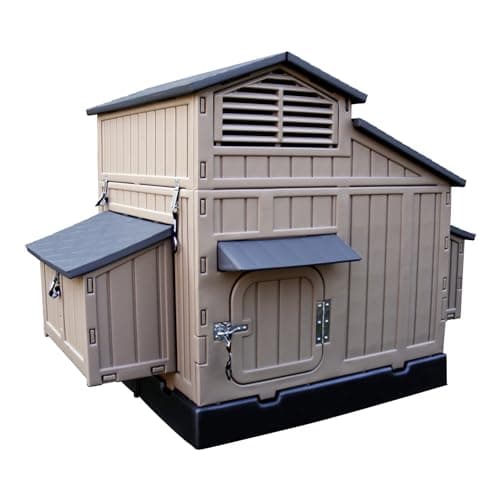 Hatching Time Formex Snap Lock Large Coop (4-6 hens) Six hens in a coop you can pressure-wash | 4-6 chickens | 7.7 | $824.99on Amazon |
| Rank 4 | 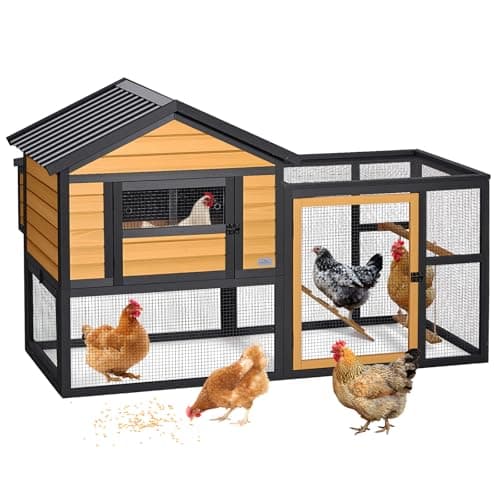 Petsfit Outdoor Chicken Coop with Run (4-6 hens) Four to six hens with a run already attached | 4-6 chickens | 6.7 | $159.99on Amazon |
| Rank 5 | 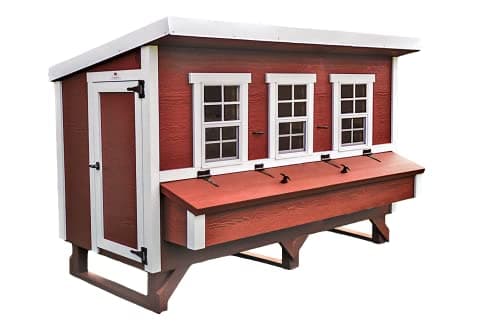 OverEZ Classic XL Chicken Coop Twenty hens, bought once | Up to 20 chickens | 7.8 | $3,299.00on Amazon |
#ad Prices come from Amazon and change. How this site is funded. Scores are our own published rubric, not a lab test — see how we pick.
There is one figure you need before you look at a single coop, and almost no listing gives it to you honestly. Penn State Extension puts a large chicken at 2 sq ft of coop floor and 10 sq ft of outside run, with laying hens of lighter breeds at 1.5 sq ft inside and 8 sq ft out. So six hens want roughly 12 sq ft of interior floor and 60 sq ft of run.
Now compare that with the market. A coop advertised as fitting six chickens routinely provides six or seven square feet of interior floor — enough that six hens physically fit on it overnight, which is what the manufacturer measured, and not enough to keep them healthy. The gap is roughly a factor of two, consistently, across brands and price points.
That is not a conspiracy, it is a measuring convention. But it means the single most valuable thing you can do before buying a coop is multiply its stated interior dimensions and divide by two. If the listing does not publish interior dimensions at all — and a large share do not — treat the capacity as unverified. Our spec tables say "Not published by manufacturer" rather than filling in a number we invented.
An undersized coop is not simply less pleasant. Crowded birds pick each other's feathers, and once feather-pecking starts in a flock it is genuinely hard to stop. They bully, so the lowest-ranked bird gets less feed and water. They lay on the floor rather than queueing for a box, which produces dirty and broken eggs. And the same volume of air carries twice the moisture and droppings, which means ammonia, which means respiratory irritation.
Almost every mysterious husbandry problem a first-time keeper writes about online resolves, on inspection, to a coop that was too small. It is the root cause hiding behind a lot of other symptoms.
Coop size by flock
Cheapest, warmest, and trivially easy to modify — adding a vent, a better latch or hardware cloth to a wooden coop is a Saturday job. It also rots, needs resealing, and its seams and end grain are exactly where red mite breeds. A good first coop, provided you accept the maintenance.
Several times the price and worth it for one specific reason: there is nowhere for mites to live, and the whole coop hoses out in minutes. Plastic coops also hold resale value in a way wooden ones do not. The Omlet Eglu and the Formex SnapLock are the two names you will keep meeting.
Mostly sold as walk-in runs rather than houses. Galvanized frames do not rot, and the better ones ship with hardware cloth rather than hexagonal netting — which is worth searching listings for, because it is the difference between a run that stops a raccoon and one that does not. A compact secure house inside a large metal run is often the best value at eight birds and above.
We have not assembled and lived with every coop in this section. The rankings come from published dimensions, materials, construction detail and the pattern of what verified owners report at the retailer — and every page says which of those it is relying on. How we pick sets out the method and its limits plainly, because the limits matter as much as the method.
20 pages in this section. Roundup tiles carry the live price and a buy link for their top pick.
Best Overall
Our main coop ranking, from a two-hen starter box to a twenty-bird shed, with the space maths done for you.
Best for Beginners
Coops chosen for a first flock: honest capacity, assembly you can finish in an afternoon, cleaning you will keep up with.
Best for 2 Hens
Two hens is the smallest sensible flock. These coops suit it without being cramped or oversized.
Best for 4 Hens
Four hens is the sweet spot for a suburban yard. These coops hit 8 sq ft of floor honestly.
Best for 6 Hens
Six hens is the most over-claimed size in the category. These coops genuinely clear 12 sq ft.
Best for 8 Hens
Eight hens is where walk-in access starts paying for itself. These coops are sized honestly for it.
Best for 10 Hens
Ten hens needs 20 sq ft inside and 100 outside. These coops and runs reach it without fantasy claims.
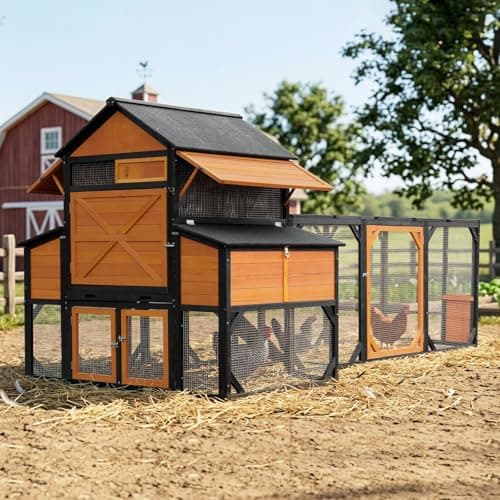
Best for 12 Hens
Twelve hens needs 24 sq ft of house and 120 of run. Here is what actually reaches those numbers.
Top pick: 135.7in Extra Large Wooden Coop with Run (10-15 hens)
Best for 20 Hens
At twenty birds, almost nothing flat-packed is big enough. Here is what honestly scales.
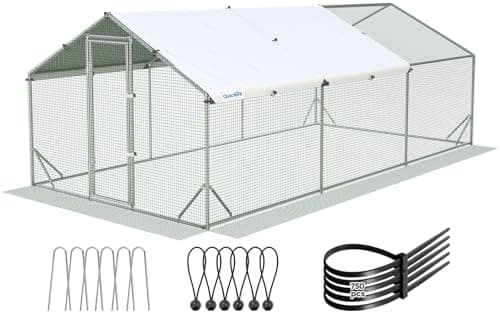
Best Walk-In
Coops and runs with standing headroom, ranked on height, floor area and whether the mesh is actually hardware cloth.
Top pick: Quictent 18 x 9 x 6.6ft Metal Coop Run with Hardware Cloth
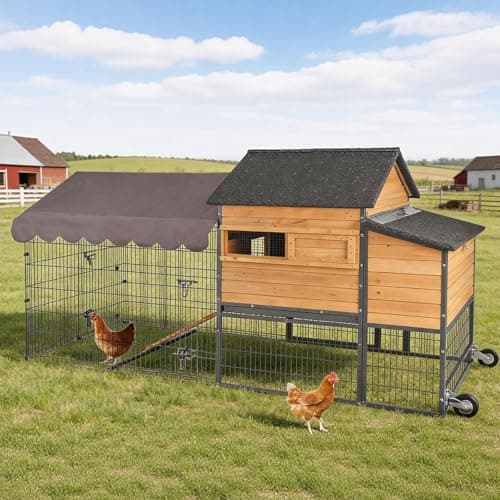
Best Mobile Coop
Wheeled coops and tractors, judged on whether they genuinely move and whether the ground recovers when they do.
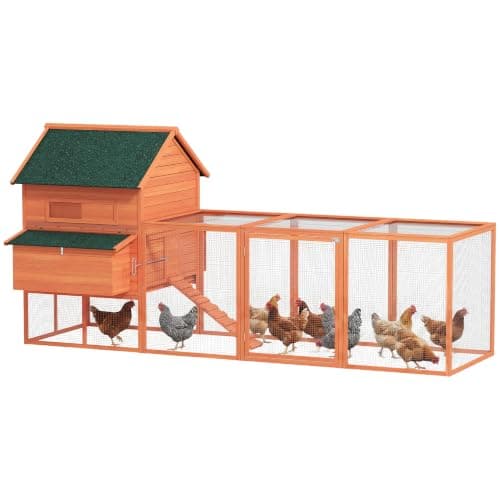
Best Coop With Run
Coop-and-run sets ranked on run space per bird — which is the figure these listings bury.
Top pick: PawHut 137in Chicken Coop with Extra Large Run (4-6 hens)
Comparison
The real trade-off: mite control and cleaning against price and modifiability. Picks for whichever answer fits you.
Comparison
Kit or self-build? The real comparison on cost, time, size and how good the finished coop is.
Guide
The sizing table the rest of this site is built on, with the extension sources and a method for checking any listing.
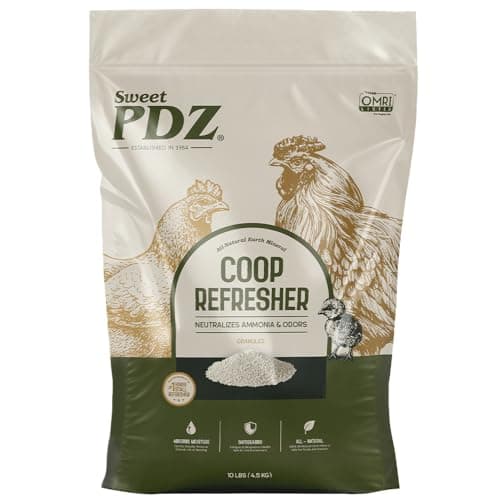
Guide
The single most misunderstood part of coop design: why you ventilate in winter, and where the vents actually go.
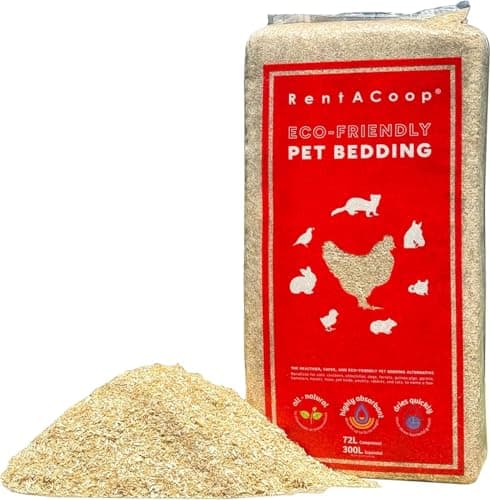
Best Bedding
Pine, hemp and the ammonia binder that makes either work. Ranked on absorbency and dust, not bag price.
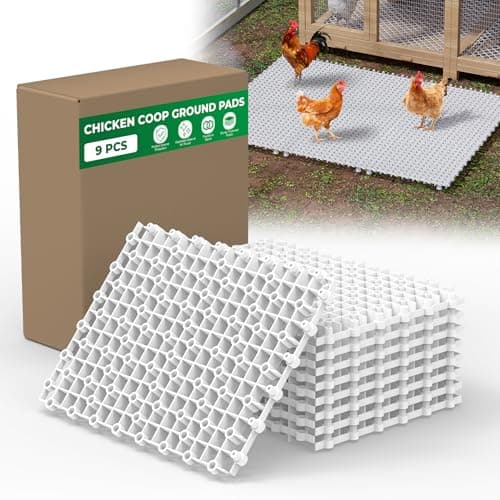
Best Flooring
Floor surfaces compared on cleaning, rot and foot health, with the interlocking pads and liners that protect bare timber.
Guide
The daily, weekly and twice-yearly routine, the products that help, and the hygiene rules CDC publishes for handling poultry.
Guide
A diagnostic for coop smell: four causes in order of likelihood, and what fixes each one. Masking it is not on the list.