Predator Protection
How to protect chickens from hawks
Overhead cover is the only reliable answer. Everything else helps at the margins, and some of it is illegal.
Chickens & Coops earns a commission when you buy through our links, at no extra cost to you. Prices come from Amazon and change; the date beside every price is when we last verified it. Full disclosure.
Quick picks
| # | Product | Size | Score | Price |
|---|---|---|---|---|
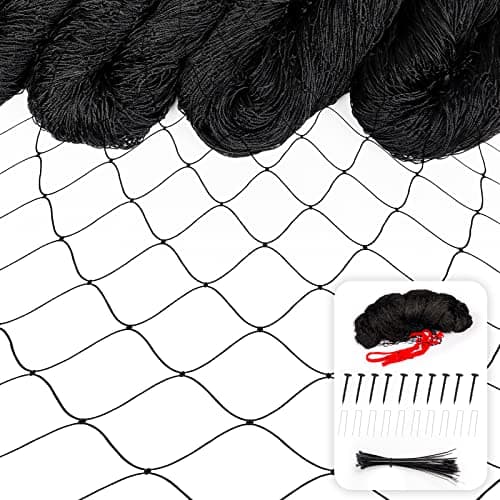
| Rank 1 | Bird Netting for Chicken Run, 50 x 50ft, 2.4in Mesh Covering a big run against hawks | 50 x 50 ft | 7.4 | $29.99on Amazon |
| Rank 2 | 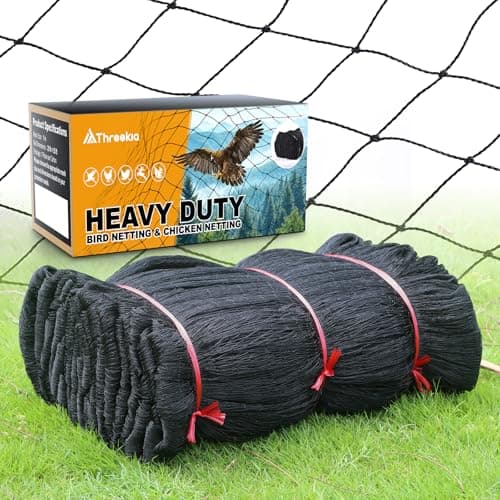 Heavy Knotted Poultry Netting, 2in Mesh, 50 x 50ft Netting that survives more than one winter | 50 x 50 ft | 7.8 | $69.99on Amazon |
| Rank 3 | 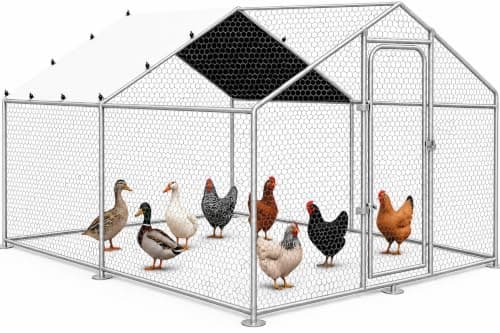 VAGGER 10 x 10 x 6.5ft Metal Chicken Run with Cover A square 100 sq ft run that fits most yards | Not published | 7.7 | $149.99on Amazon |
| Rank 4 | 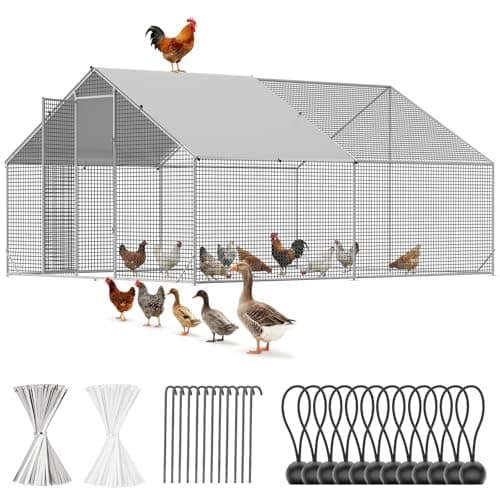 CAMMOO Walk-in Chicken Run, 13.1 x 9.8 x 6.6ft Maximum covered run area per dollar | Not published | 7.8 | $169.99on Amazon |
#ad Prices come from Amazon and change. How this site is funded. Scores are our own published rubric, not a lab test — see how we pick.
Hawks are a daylight problem, which makes them different from everything else in this hub. The coop is shut at night and the hawk hunts at midday, when your birds are out on grass. And unlike a raccoon, a hawk is not going to be deterred by a latch.
What reliably works: overhead cover
Netting or a solid roof over the run is the only measure that stops a hawk rather than discouraging it. Everything else on this page is a probability reduction.
- Net the whole run. 2 in or 2.4 in poultry netting is enough to stop a raptor while letting rain and light through. Knotted HDPE lasts longer than extruded because a tear stays a tear rather than running.
- Support it properly. Netting that sags onto the birds is both useless and a tangle hazard. Pitch it or support it on a frame so snow slides off.
- A solid roof over part of the run gives both shade and cover, and keeps the ground dry — which solves two problems at once.
- Buy a run with a cover included if you are starting from scratch. Several metal walk-in runs ship with one.
What helps at the margins
Cover at ground level
Hawks hunt from height and strike in the open. Birds with somewhere to dive under are far harder to catch. Shrubs, a table, pallets on blocks, a sheet of corrugated roofing on legs, or even a sheltering tree — anything that breaks the line of attack. This is the cheapest genuinely effective measure after netting, and the one most keepers underuse.
A rooster or a watchful hen
Roosters watch the sky and give an alarm call that sends the flock to cover. Experienced hens do the same. This genuinely reduces losses, which is one of the better arguments for keeping a rooster where you can — though rooster-keeping has its own considerations, including local ordinances.
Reducing time in the open
Shorter, supervised free-range sessions when you are in the garden. Hawks learn routines, and a flock that is out unattended all day in an exposed field is a reliable food source.
Reflective and visual deterrents
Streamers, reflective tape and scare-eye balloons are commonly suggested. Honestly: hawks habituate within days. They are worth trying as a temporary measure while you net the run, and they are not a solution.
What does not work
- Guinea fowl as guards. They are noisy and alert, which helps a little, and they are also hawk prey themselves.
- Scarecrows. Days of effect, at most.
- Keeping only dark-feathered birds. Light-colored birds are more visible from height, which is a real but small effect. It is not a protection strategy.
- Doing anything to the hawk. Illegal, and in any case another hawk will take over the territory.
What to buy
Two netting options at different durability levels, and two covered runs if you are building from scratch.
#1 · Covering a big run against hawks
#ad How we are funded · Price as of October 5, 2026
Bird Netting for Chicken Run, 50 x 50ft, 2.4in Mesh
Generic2,500 square feet of 2.4-inch poultry netting. A covered run is the only thing that reliably stops a hawk, and at this size it covers a run most people would consider too big to net.
| Size | 50 x 50 ft |
|---|---|
| Area | 2,500 sq ft |
| Mesh | 2.4 in square |
| Type | Poultry / aviary netting |
Specifications per Manufacturer figures as published on the Amazon product listing, as published at the date above.
What it does well
- Covering the run is the only genuinely effective answer to hawks
- 2,500 sq ft is enough for a very large run with spare
- 2.4 in mesh stops raptors while letting rain and light through
- Cheapest per square foot of any barrier here
Where it falls short
- 2.4 in mesh does not stop anything smaller — it is a hawk net, not a predator net
- Needs a support structure or it sags onto the birds
- Snow load will tear netting that is not pitched
Our rubric
- Predator resistance
- 7.0
- Install effort
- 6.0
- Durability
- 6.0
- Reliability
- 8.0
- Value
- 10.0
#2 · Netting that survives more than one winter
Heavy Knotted Poultry Netting, 2in Mesh, 50 x 50ft
GenericKnotted HDPE netting at 2-inch mesh. Knotted construction is the upgrade: extruded netting unravels from a single tear, and knotted netting does not.
| Size | 50 x 50 ft |
|---|---|
| Mesh | 2 in |
| Construction | Knotted HDPE |
| Use | Chicken run cover, hawk netting |
Specifications per Manufacturer figures as published on the Amazon product listing, as published at the date above.
What it does well
- Knotted construction means a tear stays a tear instead of running across the whole net
- 2 in mesh is tighter than standard poultry netting, so it stops smaller raptors
- HDPE resists UV better than cheap polypropylene
Where it falls short
- Costs roughly double the extruded nets
- Heavier, so it needs a stronger support frame
- Still not a barrier against climbing predators
Our rubric
- Predator resistance
- 8.0
- Install effort
- 6.0
- Durability
- 9.0
- Reliability
- 8.0
- Value
- 8.0
#3 · A square 100 sq ft run that fits most yards
#ad How we are funded · Price as of October 5, 2026
VAGGER 10 x 10 x 6.5ft Metal Chicken Run with Cover
VAGGERA hundred square feet of covered walk-in run in a square footprint, which fits more yards than a long narrow one. Straightforward, cheap, and sized for a ten-hen flock at ten sq ft each.
| Dimensions | 10 x 10 x 6.5 ft |
|---|---|
| Floor area | 100 sq ft |
| Cover | Included |
| Access | Walk-in |
| Mesh gauge | Not published by manufacturer |
Specifications per Manufacturer figures as published on the Amazon product listing, as published at the date above.
What it does well
- A clean 100 sq ft — the easiest number to plan a ten-hen flock around
- Square footprint fits awkward yards better than a long rectangle
- Cover included, so the run is hawk-proofed from day one
Where it falls short
- No mesh specification published
- Light frame; add bracing if you get real snow
- Still a run, not a secure overnight house
Our rubric
- Space per bird
- 9.0
- Predator resistance
- 5.0
- Ventilation
- 9.0
- Cleaning access
- 8.0
- Build
- 6.0
- Value
- 9.0
#4 · Maximum covered run area per dollar
#ad How we are funded · Price as of October 5, 2026
CAMMOO Walk-in Chicken Run, 13.1 x 9.8 x 6.6ft
CAMMOO128 sq ft of walk-in run with a cover, at a price per square foot nothing else here matches. Check the mesh before you trust it with birds overnight.
| Dimensions | 13.1 x 9.8 x 6.6 ft |
|---|---|
| Floor area | About 128 sq ft |
| Cover | Included |
| Access | Walk-in |
| Mesh gauge | Not published by manufacturer |
Specifications per Manufacturer figures as published on the Amazon product listing, as published at the date above.
What it does well
- 128 sq ft published, which is a large run for a mid-size flock
- Comes with a cover, so hawks and rain are both addressed
- By far the best run area per dollar in this group
Where it falls short
- No mesh gauge or type published — assume it needs a hardware-cloth skirt at minimum
- Thin-walled tube frames in this class bend under snow load
- Needs flat ground over a 128 sq ft area
Our rubric
- Space per bird
- 10.0
- Predator resistance
- 5.0
- Ventilation
- 9.0
- Cleaning access
- 8.0
- Build
- 6.0
- Value
- 9.0
Owls are a night problem
Great horned owls will take a chicken, and they hunt at night — which means the answer is the same as for every other night predator: the coop door, shut at dusk, on a secure coop. Birds roosting in a tree rather than in a coop are the ones that get taken.
If you lose a bird
- Identify what happened if you can. A hawk kill is typically in the open, plucked, with the carcass partly eaten on the spot. A mammal kill usually involves the bird being carried off or killed near cover.
- Get the rest under cover immediately — a hawk that has fed will return.
- Net the run before letting them out again if you possibly can.
- Do not interfere with the hawk. It is illegal and it does not solve the problem.
A note on free-ranging
The honest trade-off is that free-ranging is good for chickens and increases predation risk. Both are true. A netted run large enough to be interesting is the compromise most keepers settle on: Penn State Extension's figure of 8-10 sq ft of run per bird is a minimum rather than a target, and a generous covered run with ground cover and things to scratch gets most of the benefit of free-ranging with a fraction of the risk.
Frequently asked questions
How do I stop hawks taking my chickens?
Is it legal to shoot a hawk that attacks chickens?
Do scare devices keep hawks away?
Does a rooster protect hens from hawks?
Do owls take chickens?
Sources
Read next
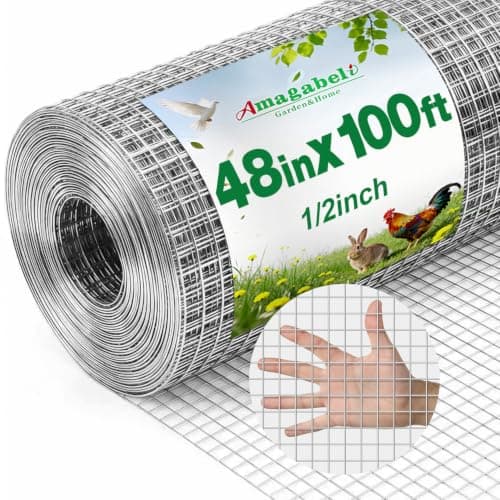
Predator Protection
The main chicken predators, and what stops each one
An identification guide: what each predator does, how to tell which one visited, and the one measure that stops it.
Predator Protection
Chicken wire vs hardware cloth
The single most useful distinction in predator protection, with the gauges, the openings and where each belongs.
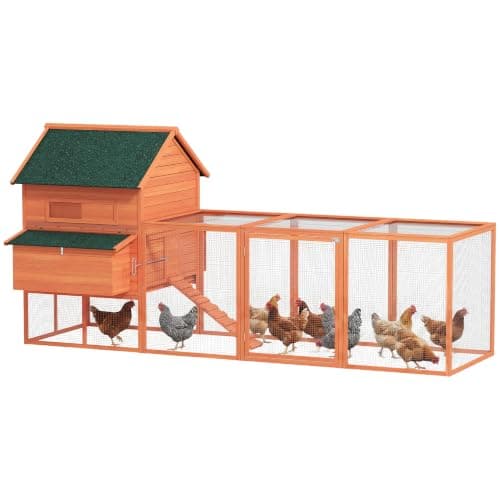
Chicken Coops
The best chicken coops with attached runs
Coop-and-run sets ranked on run space per bird — which is the figure these listings bury.
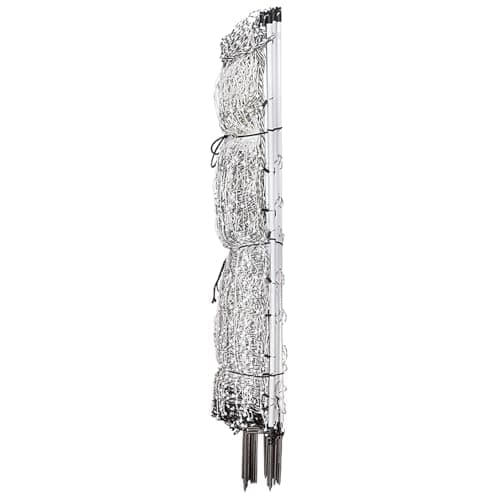
Predator Protection
The best electric fencing for chickens
Electric poultry netting and the energizers that drive it, with the joule figure that actually predicts performance.
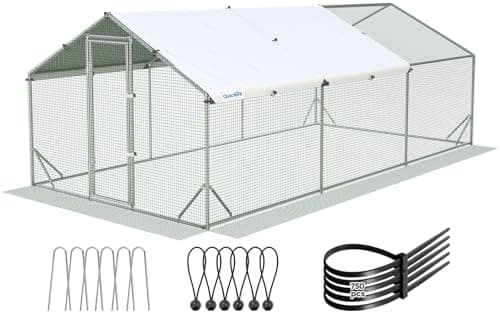
Chicken Coops
The best walk-in chicken coops and runs
Coops and runs with standing headroom, ranked on height, floor area and whether the mesh is actually hardware cloth.