Nesting Boxes
Chicken nesting box size guide
A 12-inch cube, 18 to 24 inches up, below the roost, in the darkest corner. The details after that are what make hens use it.
Chickens & Coops earns a commission when you buy through our links, at no extra cost to you. Prices come from Amazon and change; the date beside every price is when we last verified it. Full disclosure.
Quick picks
| # | Product | Compartments | Score | Price |
|---|---|---|---|---|
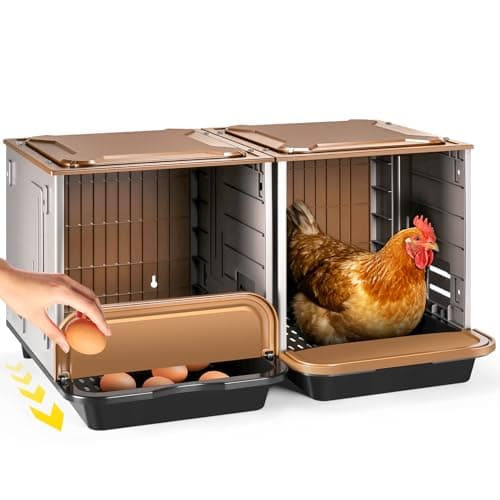
| Rank 1 | 2-Compartment Nesting Box with Egg Collection Two boxes and a collection tray for eight hens | 2 | 7.6 | $45.99on Amazon |
| Rank 2 | 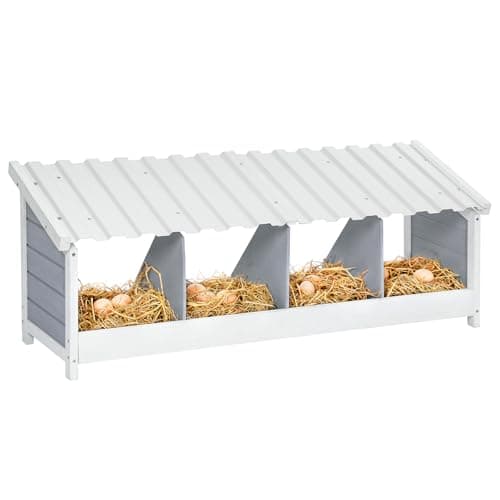 PETSFIT 4-Hole Nesting Box with PVC Waterproof Roof Boxes mounted on the outside of a coop | Not published | 8.2 | $69.06on Amazon |
| Rank 3 | 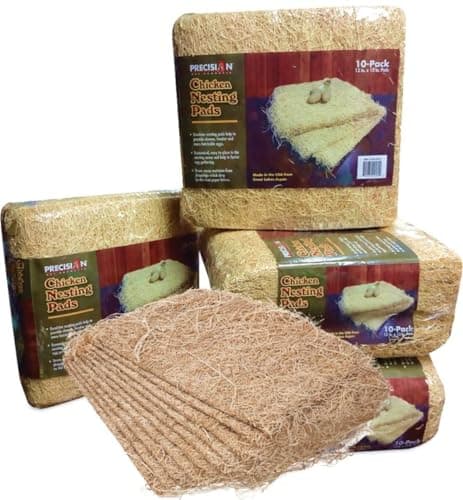 Precision Pet Chicken Nesting Pads, 13x13in, 10-Pack The standard nest pad | Not published | 8.3 | $24.99on Amazon |
#ad Prices come from Amazon and change. How this site is funded. Scores are our own published rubric, not a lab test — see how we pick.
A nest box has to be big enough that a hen can turn around in it and small enough that it feels enclosed. Too large and she does not feel safe; too small and she cannot settle. The conventional answer for standard-breed hens is a 12-inch cube, and it is conventional because it works.
Size by breed
| Bird size | Box footprint | Height | Examples |
|---|---|---|---|
| Bantam | 10 x 10 in | 10-12 in | Silkie, Sebright, bantam Cochin |
| Standard | 12 x 12 in | 12-14 in | Rhode Island Red, Australorp, Leghorn, Plymouth Rock |
| Large / heavy | 14 x 14 in | 14-16 in | Brahma, Jersey Giant, large Orpington |
How many
| Flock size | Nest boxes | Box size (standard hens) | Height above floor |
|---|---|---|---|
| 2-4 hens | 2 | 12 x 12 x 12 in | 18-24 in, below the roost |
| 5-8 hens | 3 | 12 x 12 x 12 in | 18-24 in, below the roost |
| 9-12 hens | 4 | 12 x 12 x 12 in | 18-24 in, below the roost |
| 13-16 hens | 5 | 12 x 12 x 12 in | 18-24 in, below the roost |
| 17-20 hens | 6 | 12 x 12 x 12 in | 18-24 in, below the roost |
Mounting height — and why it matters more than size
Hens sleep in the highest place available. If the nest boxes sit above the roost, they will roost in the boxes, which means the boxes are fouled every night and the eggs are laid in soiled bedding. This is the single most common nest box mistake and it is entirely a mounting problem.
- Mount boxes 18-24 inches above the floor, matching the roost height guidance.
- Always lower than the roost. If your roost is at 24 inches, the boxes go at 18.
- Add a landing perch or ledge across the front, a few inches out, so hens have somewhere to arrive.
- Make the perch narrow or hinged so it is not comfortable to sleep on — a wide ledge in front of a box becomes a roost.
The details that decide whether hens use a box
Darkness
Hens look for a dark, private place to lay. A box in a sunny corner with an open front will be ignored in favor of a dark spot behind the feed bin. Siting in the darkest part of the coop does more for box uptake than any other single change, and a strip of curtain across the front works well for a box that cannot be moved.
A lip at the front
A two to three-inch lip across the bottom of the opening keeps nest material and eggs in. Without one, a hen shuffling out takes half the bedding with her and the eggs end up on the floor.
A sloped roof
If the box has a flat top inside the coop, hens will stand on it. A roof sloped at about 45 degrees means they cannot, which keeps the top clean and stops droppings landing on the box fronts.
Privacy between boxes
Full dividers between compartments, not partial ones. A hen in a half-divided box can see her neighbor, which defeats the point.
Boxes that get the dimensions right
Two boxes with published compartment counts, and the 13-inch pad most boxes are built around.
#1 · Two boxes and a collection tray for eight hens
2-Compartment Nesting Box with Egg Collection
GenericA two-compartment box designed for egg collection — the eggs roll or sit where you can reach them without disturbing a sitting hen. Covers eight hens on the one-per-four rule.
| Compartments | 2 |
|---|---|
| Covers | Up to 8 hens at 1 box per 4 |
| Feature | Designed for egg collection |
| Material | Not published by manufacturer |
Specifications per Manufacturer figures as published on the Amazon product listing, as published at the date above.
What it does well
- Collection design means fewer eggs cracked by hens shuffling in the box
- Two compartments covers the commonest backyard flock size
- Compact enough for a small coop wall
Where it falls short
- Material and mounting are not published
- Collection trays need emptying daily or eggs pile up and crack anyway
- Two boxes will still have a queue — hens are like that
Our rubric
- Egg cleanliness
- 8.0
- Mounting options
- 7.0
- Cleaning access
- 7.0
- Build
- 7.0
- Value
- 9.0
#2 · Boxes mounted on the outside of a coop
#ad How we are funded · Price as of October 5, 2026
PETSFIT 4-Hole Nesting Box with PVC Waterproof Roof
PETSFITFour holes with a PVC waterproof roof and privacy covers. The roof is what makes it an external box: you can hang it on the coop's outside wall and collect without going in.
| Holes | 4 |
|---|---|
| Roof | PVC waterproof |
| Privacy | Privacy cover fitted |
| Mounting | External wall mount |
Specifications per Manufacturer figures as published on the Amazon product listing, as published at the date above.
What it does well
- Waterproof roof means it can hang outside the coop and free up interior floor space
- Privacy covers encourage hens to use the boxes rather than a corner of the floor
- Collecting from outside means not disturbing the whole flock for two eggs
Where it falls short
- External boxes are a predator access point unless the lid latches properly
- Cutting a pop-hole through a coop wall is a real job
- Material of the body is not published
Our rubric
- Egg cleanliness
- 8.0
- Mounting options
- 9.0
- Cleaning access
- 8.0
- Build
- 8.0
- Value
- 8.0
#3 · The standard nest pad
#ad How we are funded · Price as of October 5, 2026
Precision Pet Chicken Nesting Pads, 13x13in, 10-Pack
Precision Pet by PetmateTen 13 x 13 inch excelsior nest pads. Published dimensions matter here — 13 x 13 is the size most nest boxes are built around, so these drop straight in.
| Dimensions | 13 x 13 in |
|---|---|
| Pack | 10 pads |
| Material | Excelsior (wood wool) |
| Finish | Beige |
Specifications per Manufacturer figures as published on the Amazon product listing, as published at the date above.
What it does well
- 13 x 13 in is the de facto standard nest box size, so these fit without trimming
- Excelsior springs back under a hen instead of compacting flat like shavings
- Ten pads is a year of changes for three boxes
- Composts with the rest of the litter
Where it falls short
- More expensive per nest than a handful of shavings
- Excelsior still needs changing when it gets soiled; it is not permanent
- Loose strands can tangle around a chick's leg — use shavings in a brooder instead
Our rubric
- Fit for purpose
- 9.0
- Mess and waste
- 8.0
- Quality
- 8.0
- Value
- 8.0
External or internal?
| Internal boxes | External boxes | |
|---|---|---|
| Coop floor space | Takes some | Frees it up |
| Egg collection | Enter the coop | Lift a lid from outside |
| Predator risk | Lower | The lid must latch properly |
| Weather | Protected | Needs a waterproof roof |
| Installation | Easy | Requires cutting the coop wall |
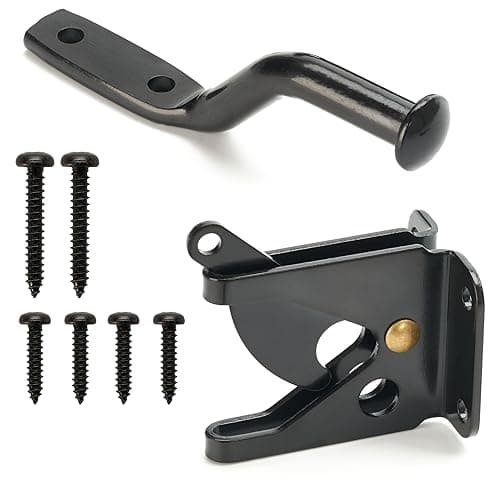
An external box is a hole in your coop wall with a lid on it. That is fine — many good coops are built that way — as long as the lid latches like a door rather than resting shut. A hook-and-eye on an external nest box lid is an invitation to a raccoon. Latches and predator hardware.
Frequently asked questions
What size should a chicken nesting box be?
How high should nesting boxes be mounted?
Do nesting boxes need a perch in front?
Should nesting boxes be dark?
Are external nesting boxes safe?
Sources
Read next
Nesting Boxes
How many nesting boxes do chickens need?
The published box-count rule with a table by flock size, and why adding more boxes does not stop the queue.
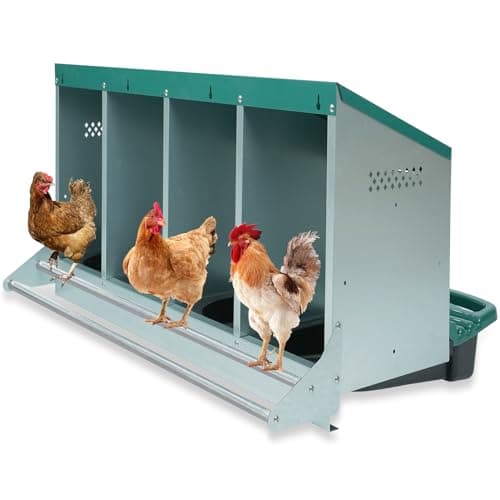
Nesting Boxes
The best nesting boxes for chickens
Our main nest box ranking, from a single plastic box to an eight-hole roll-away bank, with the box-count rule.
Chicken Coops
Chicken coop size per chicken: the real numbers
The sizing table the rest of this site is built on, with the extension sources and a method for checking any listing.
Nesting Boxes
The best nesting box pads
Excelsior, aspen and washable nest pads compared on cushioning, fit and running cost, plus the honest view on nesting herbs.
Predator Protection
The best chicken predator deterrents
Deterrents and small hardware ranked with an honest line between what deters and what physically stops an animal.