Start Here
Backyard chickens and Salmonella
CDC's rules are short, specific and worth following exactly. This page is them, in plain language, with no products attached.
Salmonella is the main human health consideration in keeping backyard chickens, and CDC notes that outbreaks linked to backyard poultry are common. The important thing to understand first is that healthy-looking birds can carry it — Salmonella lives in poultry intestines and a bird showing no sign of illness can be shedding it on its feathers, feet and in its environment.
None of that is a reason not to keep chickens. It is a reason to follow a short list of specific habits, which is what CDC's guidance is.
The hygiene rules, from CDC
- Wash your hands with soap and running water after touching poultry, their equipment or anything in their environment — including after collecting eggs. If soap and water are not available, use hand sanitizer, then wash properly as soon as you can.
- Keep dedicated shoes for poultry care and leave them outdoors.
- Do not bring poultry indoors, and especially not into areas where food is prepared, served, stored or eaten.
- Clean all poultry equipment outdoors only, using diluted bleach or a commercial disinfectant. Never in a kitchen sink or a utility sink used for household items.
- Keep the coop clean, including nests and perches, as part of normal routine.
- Do not kiss or cuddle poultry, and do not eat or drink around them.
Eggs, specifically
CDC notes that eggshells may become contaminated through poultry droppings or the nest environment. Its recommendations:
- Collect eggs often and clean and refrigerate them after collection.
- Discard cracked eggs.
- Cook eggs until both the yolk and the white are firm, at a minimum internal temperature of 160 degrees F.
- Wash hands after handling eggs.
A practical note that follows from this: the less an egg needs cleaning, the better, because washing removes the shell's protective cuticle. That is the real argument for clean nest boxes, prompt collection and roll-away boxes — it is a food-safety argument, not just a tidiness one.
Who is most at risk
CDC is specific that children under five should not handle poultry, and that all children should be supervised around birds and during handwashing. Young children are at higher risk because their immune systems are still developing and because they put their hands in their mouths.
Older adults and people with weakened immune systems are also at higher risk. That does not preclude keeping chickens; it means the hygiene habits above matter more, not less.
Signs of Salmonella infection in people
CDC describes diarrhoea, fever and stomach cramps, typically starting six hours to six days after exposure and lasting several days. Most people recover without treatment. Seek medical advice for severe symptoms, a high fever, prolonged diarrhoea, signs of dehydration, or if the affected person is very young, elderly or severely immune-suppressed — and tell the clinician that there is contact with backyard poultry, because that context materially changes what they test for.
A practical routine that covers it
- A pair of boots by the back door that only ever go to the coop.
- Soap and a towel somewhere outside, or a hand sanitizer at the coop and proper washing indoors immediately after.
- An egg basket that lives outdoors, not a kitchen bowl carried out.
- A dedicated brush and bucket for the waterer, kept outdoors.
- Eggs into the fridge when you come in, not onto the counter.
- A rule for children: nobody under five handles birds, everyone washes hands, nobody kisses a chicken.
Keeping the coop clean helps
The hygiene rules above protect you. Keeping the coop itself clean reduces the amount of contamination there is to encounter — droppings cleared from the board daily, dry litter, clean waterers, and nest boxes that keep eggs off soiled bedding. How to clean a chicken coop and how to keep chicken water clean cover the practice.
Frequently asked questions
Can backyard chickens give you Salmonella?
Do I need to wash fresh eggs from my own hens?
Can children handle backyard chickens?
What temperature should backyard eggs be cooked to?
Where should I clean chicken equipment?
Sources
Read next
Chicken Coops
How to clean a chicken coop
The daily, weekly and twice-yearly routine, the products that help, and the hygiene rules CDC publishes for handling poultry.
Waterers
How to keep chicken water clean
The three causes of dirty chicken water and what actually fixes each — including the one you cannot buy your way out of.
Start Here
Backyard chickens and bird flu
USDA's Defend the Flock biosecurity guidance in plain language, including how to report sick birds. No products, by policy.
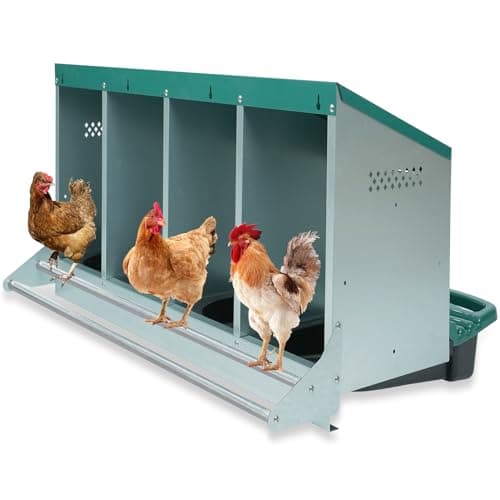
Nesting Boxes
The best nesting boxes for chickens
Our main nest box ranking, from a single plastic box to an eight-hole roll-away bank, with the box-count rule.
About
Editorial policy
How we source facts, handle corrections, and keep health content away from product links.