Start Here
How many chickens should I get?
Two is the floor, three to six is the sweet spot, and almost everyone adds more in year two. Plan for that now.
Chickens & Coops earns a commission when you buy through our links, at no extra cost to you. Prices come from Amazon and change; the date beside every price is when we last verified it. Full disclosure.
Quick picks
| # | Product | Stated capacity | Score | Price |
|---|---|---|---|---|
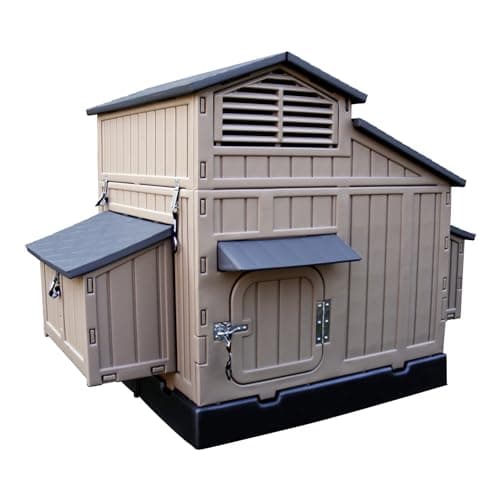
| Rank 1 | Hatching Time Formex Snap Lock Large Coop (4-6 hens) Six hens in a coop you can pressure-wash | 4-6 chickens | 7.7 | $824.99on Amazon |
| Rank 2 | 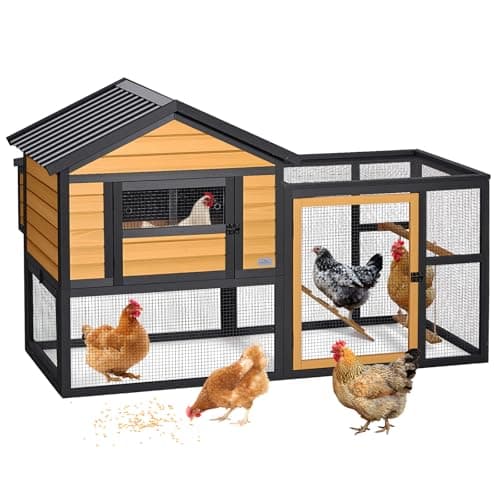 Petsfit Outdoor Chicken Coop with Run (4-6 hens) Four to six hens with a run already attached | 4-6 chickens | 6.7 | $159.99on Amazon |
| Rank 3 | 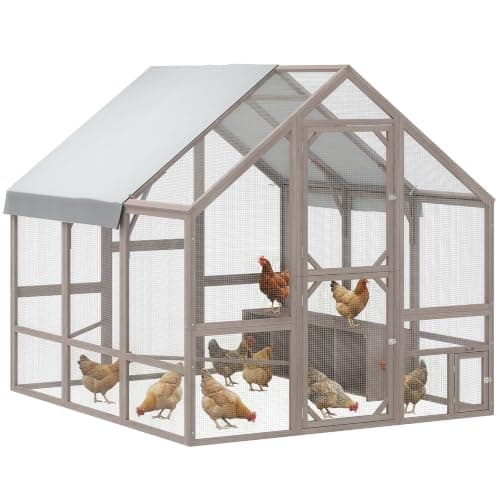 PawHut Large Wooden Chicken Coop, 83in x 73in x 73in Eight to ten hens in a coop you can walk into | 8-10 hens | 7.7 | $379.99on Amazon |
#ad Prices come from Amazon and change. How this site is funded. Scores are our own published rubric, not a lab test — see how we pick.
Two is the minimum, three to six is the sweet spot for a first flock, and you will probably want more within two years. That last part is the most useful thing on this page, because it changes which coop you buy today.
Why two is the floor
Chickens are flock animals with a real social structure. A single hen kept alone is stressed, vocal and does poorly. Two is the practical minimum; three is better, because if you lose a bird you are not left with a lone one — which is a situation that forces you to buy more birds in a hurry, and introducing a single hen to a single hen is harder than it sounds.
The constraints, in order
1. Your coop's floor area
This is the binding constraint for most people. Penn State Extension puts a large chicken at 2 sq ft of coop floor and 8-10 sq ft of run. Divide your coop's actual interior area by 2 and that is your honest ceiling, regardless of what the box said.
Flock size and the space it needs
- 2 hens4 sq ft coop, 20 sq ft run See the picks
- 4 hens8 sq ft coop, 40 sq ft run See the picks
- 6 hens12 sq ft coop, 60 sq ft run See the picks
- 8 hens16 sq ft coop, 80 sq ft run See the picks
- 10 hens20 sq ft coop, 100 sq ft run See the picks
- 12 hens24 sq ft coop, 120 sq ft run See the picks
- 20 hens40 sq ft coop, 200 sq ft run See the picks
2. Your household's egg consumption
We are not going to print an eggs-per-hen-per-year figure, because it varies enormously with breed, age and season and most published numbers are breeder marketing. What is reliable is the shape: laying is highest in a hen's first year, drops in autumn and winter, and stops entirely during the moult. So a flock sized to meet your peak-summer demand will leave you buying eggs in January, and one sized for January will drown you in July.
The practical approach: start at the lower end, see what your actual household egg use looks like against what your particular hens actually produce through a full year, and adjust. Which is another reason to buy a coop with room to grow.
3. Your yard, and your neighbors
- Run space at 8-10 sq ft per bird is the number, and more is better — a fixed run holding birds turns to bare earth.
- Noise. Hens are not loud but they are not silent either, particularly the egg song. Roosters are a different matter and are prohibited in many places.
- Smell. A well-managed small flock does not smell. A crowded or wet one does, and that is what neighbors notice.
- Flies, which follow wet litter. Same cause, same fix.
4. Local rules
Many municipalities cap flock size, prohibit roosters, or specify setbacks. Check the ordinance and any HOA covenant before you buy anything at all.
Why flocks grow — the thing to plan for
Nearly everyone adds birds. A neighbor rehomes a pair, a broody hen hatches a clutch, a feed store has chicks in spring, or you simply want a different breed. It happens so reliably that the sensible planning move is to buy a coop one size up from the flock you intend to keep. The marginal cost is small; the cost of buying a second coop is not.
Coops with room to grow
Three coops sized a step above a typical starting flock, which is where most people end up.
#1 · Six hens in a coop you can pressure-wash
#ad How we are funded · Price as of October 5, 2026
Hatching Time Formex Snap Lock Large Coop (4-6 hens)
Hatching TimeThe larger Formex coop, stated for 4-6 birds. Same argument as the standard model — a non-porous double wall, no mite harborage, hose-out cleaning — with room for a realistic six-hen flock.
| Stated capacity | 4-6 chickens |
|---|---|
| Material | Formex structural foam (double wall) |
| Assembly | Snap-together |
| Ventilation | Built-in vents |
| Floor area | Not published by manufacturer |
Specifications per Manufacturer figures as published on the Amazon product listing, as published at the date above.
What it does well
- Nothing for red mite to hide in, which is the problem wooden coops never fully solve
- Washes down to clean in minutes — the difference between cleaning weekly and meaning to
- Insulated wall moderates both winter cold and summer heat
- No rot, no repainting, no re-sealing, ever
Where it falls short
- Expensive next to a wooden coop of the same stated capacity
- Must be anchored — light enough to shift in strong wind
- No published floor area, so the 4-6 claim cannot be checked on paper
Our rubric
- Space per bird
- 7.0
- Predator resistance
- 7.0
- Ventilation
- 8.0
- Cleaning access
- 10.0
- Build
- 9.0
- Value
- 5.0
#2 · Four to six hens with a run already attached
#ad How we are funded · Price as of October 5, 2026
Petsfit Outdoor Chicken Coop with Run (4-6 hens)
PetsfitA coop-plus-run with three nest boxes stated for 4-6 birds. The attached run is the reason to buy it: most coops in this price band sell you a house and leave the enclosure to you.
| Stated capacity | 4-6 chickens |
|---|---|
| Nesting boxes | 3 |
| Run | Attached |
| Construction | Wood frame with wire run |
| Floor area | Not published by manufacturer |
Specifications per Manufacturer figures as published on the Amazon product listing, as published at the date above.
What it does well
- Three nest boxes comfortably covers six hens — they will all use one anyway
- Attached run makes it usable the day it is built
- Mid-price wooden coops in this size are the easiest to modify with hardware cloth
Where it falls short
- Run wire on coops at this price is usually hexagonal netting, not hardware cloth — budget to re-skin it
- No published floor area to verify the 4-6 claim
- Six hens in the house plus this run is tight; fine if they free-range by day
Our rubric
- Space per bird
- 6.0
- Predator resistance
- 5.0
- Ventilation
- 7.0
- Cleaning access
- 7.0
- Build
- 7.0
- Value
- 8.0
#3 · Eight to ten hens in a coop you can walk into
PawHut Large Wooden Chicken Coop, 83in x 73in x 73in
PawHutThe rare large coop that publishes all three dimensions: 83 x 73 x 73 inches for 8-10 hens. 73 inches of height is the number that matters — you can stand up inside it to clean.
| Stated capacity | 8-10 hens |
|---|---|
| Dimensions | 83 in L x 73 in W x 73 in H |
| Footprint | About 42 sq ft |
| Construction | Wood |
| Finish | Light brown |
Specifications per Manufacturer figures as published on the Amazon product listing, as published at the date above.
What it does well
- All three dimensions published, so the 8-10 claim is actually checkable — and it holds up
- 73 in internal height means cleaning standing up instead of on your knees
- About 42 sq ft of footprint covers ten standard hens at roughly 4 sq ft each
Where it falls short
- Large and heavy to assemble; two people and a free afternoon
- Supplied wire is unlikely to be hardware cloth — plan to re-skin the lower panels
- Needs a level base: a 42 sq ft timber frame on uneven ground will twist
Our rubric
- Space per bird
- 9.0
- Predator resistance
- 6.0
- Ventilation
- 8.0
- Cleaning access
- 8.0
- Build
- 7.0
- Value
- 8.0
Adding birds later
Introductions take care. The pecking order has to be renegotiated and it is genuinely rough for a week or two:
- Add two or more at a time, never one. A single newcomer takes all the pressure.
- Quarantine new birds for two to four weeks before introducing them, in a separate space. This is a biosecurity measure — USDA's Defend the Flock guidance covers why.
- Introduce through a barrier first, so they can see each other without contact for several days.
- Add them at night, into the coop, so they wake up together.
- Make sure there are two feeding and drinking points so a dominant bird cannot exclude the newcomers.
- Expect a laying drop for a week or two while it resettles.
Frequently asked questions
How many chickens should I start with?
Can I keep just one chicken?
How much space do chickens need?
How many eggs will my hens lay?
How do I add new chickens to an existing flock?
Sources
Read next
Chicken Coops
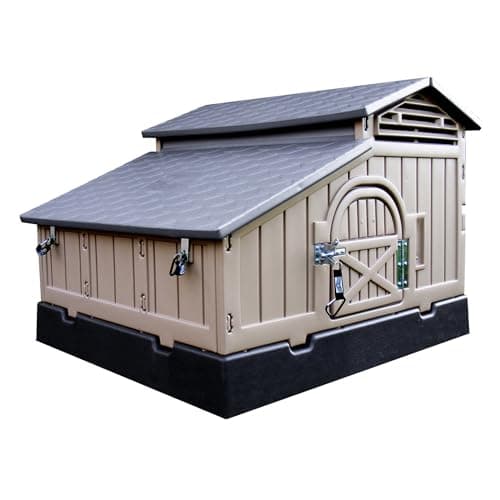
Chicken coop size per chicken: the real numbers
The sizing table the rest of this site is built on, with the extension sources and a method for checking any listing.
Start Here
Raising chickens for beginners
The pillar guide for a first flock: how many birds, what they need, what it costs, and what to get right first.
Start Here
The real cost of raising backyard chickens
A cost framework using live prices and published consumption figures, so the numbers are yours rather than ours.
Chicken Coops
The best chicken coops for 6 chickens
Six hens is the most over-claimed size in the category. These coops genuinely clear 12 sq ft.
Start Here
How often do chickens lay eggs?
The daily, seasonal and lifetime pattern of laying, with the five factors that change it and no invented figures.