Feeders & Feed
Layer feed vs scratch grain
One of these is a complete ration and one of them is candy. The feed aisle does not make that obvious, so here it is plainly.
Chickens & Coops earns a commission when you buy through our links, at no extra cost to you. Prices come from Amazon and change; the date beside every price is when we last verified it. Full disclosure.
Quick picks
| # | Product | Protein | Score | Price |
|---|---|---|---|---|
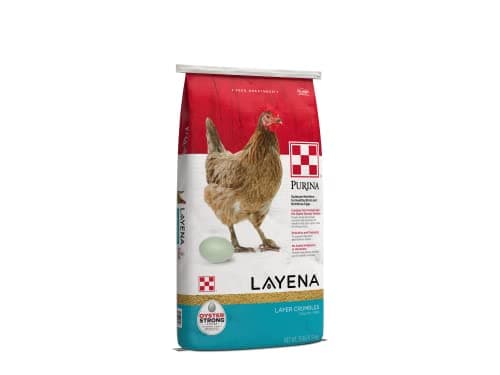
| Rank 1 | Purina Layena Layer Crumbles, 25 lb The standard bag for a six-hen flock | Not published | 8.3 | $34.89on Amazon |
| Rank 2 | 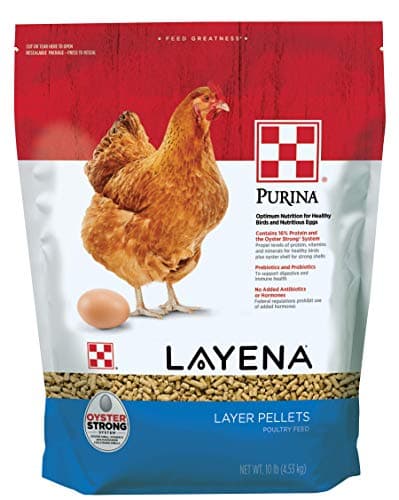 Purina Layena Layer Pellets, 10 lb A complete layer feed in a bag a small flock can finish | Not published | 8.3 | $23.99on Amazon |
| Rank 3 | 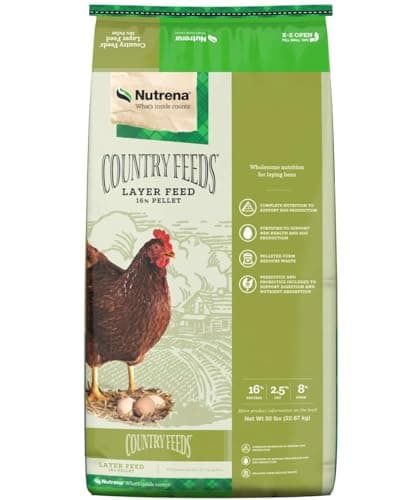 Nutrena Country Feeds 16% Layer Pellets, 50 lb The cheapest cost per pound for a bigger flock | 16% | 8.8 | $40.49on Amazon |
| Rank 4 | 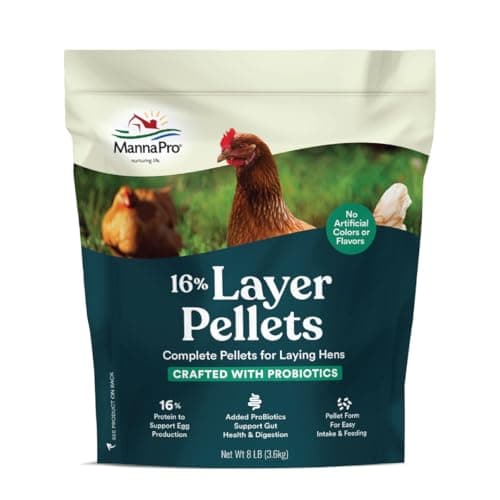 Manna Pro Layer Pellets, 16% Protein, 8 lb A published protein figure in a small bag | 16% | 7.8 | $15.20on Amazon |
#ad Prices come from Amazon and change. How this site is funded. Scores are our own published rubric, not a lab test — see how we pick.
Layer feed is the meal and scratch grain is the treat. A complete layer ration is formulated to supply everything a laying hen needs, protein and calcium included, in every mouthful. Scratch grain is a mix of whole and cracked grains, largely maize: energy with little protein and essentially no calcium. Feed scratch in place of layer feed and you get fewer eggs, thinner shells, and eventually a hen drawing calcium out of her own skeleton.
That is the whole answer, and it also settles most of the other bags in the aisle. The rest of this page explains why, and what each bag you will be offered is actually for.
What the two bags actually contain
| Complete layer feed | Scratch grain / cracked corn | |
|---|---|---|
| What it is | A formulated ration — ground grains, protein sources, vitamins, minerals | Whole and cracked grains, mostly maize |
| Protein | Formulated to the laying-hen target, commonly 16% | Low — grains are an energy feed, not a protein feed |
| Calcium | Added for shell formation | Essentially none |
| Share of the diet | Nearly all of it | A small share, as a treat |
| Needs grit alongside | Not if it is all she eats | Yes — whole grain has structure to grind |
| If it is the whole diet | Normal laying | Fewer eggs, thin shells, calcium drawn from bone |
Extension's guidance on feeding chickens for egg production is blunt about the mechanism: a complete feed is complete only if it is most of what the bird eats. Every handful of something else dilutes it.
The practical rule
Scratch does have real uses, and they are behavioral rather than nutritional. Thrown on the ground it gets a flock foraging, which reduces boredom and feather-pecking. Scattered into deep litter it makes the birds turn the bedding for you. On a bitter evening it gives them something to digest overnight. None of those are reasons to put it in the feeder.
Every other bag in the aisle
Layer pellets vs layer crumbles
Same formulation, different physical form. Pellets waste less, because they are too big to flick out of a port and hens cannot sort them. Crumbles suit smaller or younger birds and bantams, which sometimes struggle with a full-size pellet. Mash is the third form — the finest grind, the most waste and the most sorting. For most backyard flocks pellets are the better default and crumbles are the safe one.
Layer feed vs grower feed
Grower is for birds that are growing and not yet laying. The important difference is calcium: layer feed carries the extra calcium a hen needs to build shells, and that level is more than a young, non-laying bird should be handling for weeks on end. Move pullets onto layer feed when they start laying, or at about eighteen weeks — not before.
Layer feed vs chick starter
Starter is a higher-protein, low-calcium crumble for the first weeks of life. It is not interchangeable with layer feed in either direction: chicks on layer feed get far more calcium than they should, and hens on starter get too little. What baby chicks need covers the brooder end of this.
Layer feed vs all-flock
All-flock, sometimes sold as flock raiser, is formulated for mixed-age, mixed-species groups: moderate protein and low calcium, so it is safe for birds that are not laying. It is the right bag if you keep roosters, ducks, growing pullets and hens together. The catch is that the laying hens then need calcium separately, which means oyster shell offered free-choice — not optional with all-flock, the way it is merely advisable alongside layer feed.
The layer feeds we would buy
Two forms of the same well-documented layer ration, a small bag that publishes its protein figure, and the cheapest cost per pound for a bigger flock.
#1 · The standard bag for a six-hen flock
#ad How we are funded · Price as of October 10, 2026
Purina Layena Layer Crumbles, 25 lb
Purina25 lb of complete layer crumble — roughly a month for six hens. Crumble suits mixed-age flocks and bantams that find full pellets awkward.
| Type | Layer crumbles, nutritionally complete |
|---|---|
| Weight | 25 lb |
| For | Laying hens |
| Protein | Not published by manufacturer |
Specifications per Manufacturer figures as published on the Amazon product listing, as published at the date above.
What it does well
- Complete layer ration from the most widely stocked brand in the US
- Crumble is easier for bantams and smaller breeds to eat than pellets
- 25 lb is about a month for six hens — fresh all the way down the bag
Where it falls short
- Crumble generates more dust and more billed-out waste than pellets
- Protein percentage is not stated on this listing
- Needs an airtight bin once opened or it absorbs moisture
Our rubric
- Fit for purpose
- 9.0
- Mess and waste
- 7.0
- Quality
- 9.0
- Value
- 8.0
#2 · A complete layer feed in a bag a small flock can finish
#ad How we are funded · Price as of October 10, 2026
Purina Layena Layer Pellets, 10 lb
PurinaA nutritionally complete layer pellet in a 10 lb bag. Pellets waste less than crumble because hens cannot bill the fines out, and 10 lb is small enough that a three-hen flock finishes it fresh.
| Type | Layer pellets, nutritionally complete |
|---|---|
| Weight | 10 lb |
| For | Laying hens |
| Protein | Not published by manufacturer |
Specifications per Manufacturer figures as published on the Amazon product listing, as published at the date above.
What it does well
- Complete feed — no supplementing needed beyond grit and oyster shell
- Pellets produce far less billed-out waste than crumble
- 10 lb is the right bag for two or three hens: finished before it stales
Where it falls short
- Protein percentage is not stated on this listing
- Cost per pound is high compared with a 25 or 50 lb bag
- Pellets are too large for pullets under laying age
Our rubric
- Fit for purpose
- 9.0
- Mess and waste
- 9.0
- Quality
- 9.0
- Value
- 6.0
#3 · The cheapest cost per pound for a bigger flock
Nutrena Country Feeds 16% Layer Pellets, 50 lb
Nutrena50 lb of 16% layer pellets with the protein figure published. For eight or more hens this is the sensible format — provided you have a sealed bin to keep it in.
| Type | Layer pellets |
|---|---|
| Protein | 16% |
| Weight | 50 lb |
| For | Laying hens |
Specifications per Manufacturer figures as published on the Amazon product listing, as published at the date above.
What it does well
- Lowest cost per pound of any layer feed here
- 16% protein stated
- 50 lb is about six weeks for eight hens
Where it falls short
- 50 lb needs a rodent-proof metal bin, or you are feeding mice
- Heavy to move and awkward to pour
- Too much feed for a flock of three — it will stale before it is finished
Our rubric
- Fit for purpose
- 9.0
- Mess and waste
- 8.0
- Quality
- 8.0
- Value
- 10.0
#4 · A published protein figure in a small bag
#ad How we are funded · Price as of October 10, 2026
Manna Pro Layer Pellets, 16% Protein, 8 lb
Manna ProOne of the few layer feeds that states its protein level on the listing: 16%, which is the standard target for laying hens. 8 lb is a trial-size or very-small-flock bag.
| Type | Layer pellets with digestive aid |
|---|---|
| Protein | 16% |
| Weight | 8 lb |
| For | Laying hens |
Specifications per Manufacturer figures as published on the Amazon product listing, as published at the date above.
What it does well
- 16% protein stated outright — the figure you are actually shopping for
- Pellet form, so less waste than crumble
- Small bag is useful for trialling a feed change without committing 50 lb
Where it falls short
- 8 lb is under a fortnight for three hens; cost per pound is poor
- Includes a digestive aid, which is fine but is not a substitute for grit
- Small bags are not resealable
Our rubric
- Fit for purpose
- 9.0
- Mess and waste
- 8.0
- Quality
- 8.0
- Value
- 6.0
Choosing by what you keep
| Your flock | Buy | Plus |
|---|---|---|
| Laying hens only | Complete layer feed, pellets | Insoluble grit if they forage or get treats |
| Laying hens and bantams | Complete layer feed, crumbles | Insoluble grit, as above |
| Pullets not yet laying | Grower feed | Switch at the first egg, or about 18 weeks |
| Chicks under 8 weeks | Chick starter | Chick grit if they get anything but starter |
| Mixed ages, roosters or ducks | All-flock | Oyster shell free-choice, separately — required, not optional |
| Any of the above, in winter | The same feed | Scratch as an evening treat only |
The mistake this page exists to prevent
The expensive version of getting this wrong is slow. A flock fed heavily on scratch keeps laying for a while, then lays less, then lays eggs that crack in your hand. By the time shell quality is visibly poor the hen has been pulling calcium from her own bones for weeks. It is entirely avoidable, and it is one of the most common first-year mistakes — because scratch is cheaper per pound, the hens visibly prefer it, and nothing looks wrong for a month.
If you want to spend money on something that genuinely improves what a bag of feed does for you, spend it on the feeder rather than the feed: a no-waste feeder stops the share of feed that gets scratched onto the floor, which is a larger effect than any upgrade within the layer-feed aisle.
Frequently asked questions
Can chickens live on scratch grain alone?
How much scratch can I give chickens?
Layer pellets or crumbles: which is better?
Is all-flock feed the same as layer feed?
When do I switch from grower to layer feed?
Is cracked corn the same as scratch?
Sources
Read next
Feeders & Feed
The best chicken feed for laying hens
Complete layer feed options plus the grit and oyster shell that go alongside, and why those two are not the same thing.
Feeders & Feed
Grit and oyster shell: what each one actually does
Grit versus oyster shell, properly explained: who needs which, when, and why they go in separate dishes.
Feeders & Feed
How much feed does a chicken eat per day?
The published figure, a table by flock size, and what makes real-world consumption differ from it.
Nesting Boxes
Why have my chickens stopped laying?
A diagnostic for a stopped flock: eight causes in order of likelihood, with what actually fixes each one.
Feeders & Feed
The best no-waste chicken feeders
The port and treadle designs that stop billed-out waste, including the bucket kit that costs almost nothing.