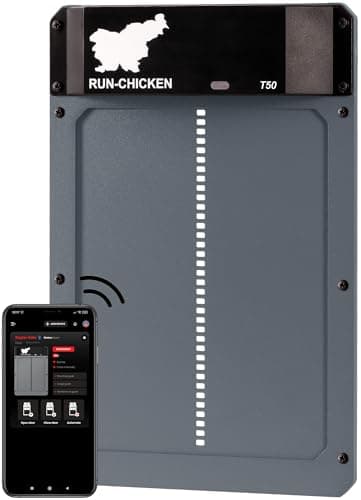
Best Automatic Door
The best automatic chicken coop doors
Automatic coop doors ranked on material and power source, with the one honest caution about shutting a bird out.
Chicken wire keeps chickens in. It does not keep predators out. That single distinction explains most backyard losses.
Chickens & Coops earns a commission when you buy through our links, at no extra cost to you. Prices come from Amazon and change; the date beside every price is when we last verified it. Full disclosure.
Ranked on the specifications below. Prices are live and dated; where no live price resolves, the cell reads Check price.
| # | Product | Mesh | Score | Price |
|---|---|---|---|---|
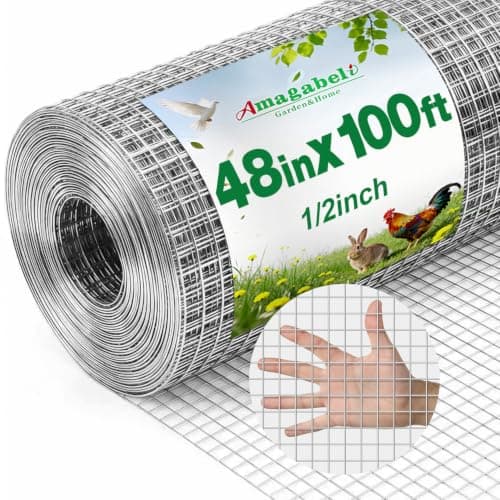
| Rank 1 | Amagabeli Hardware Cloth, 1/2in Mesh, 48in x 100ft, 19 Gauge The mesh that actually stops raccoons | 1/2 in | 8.4 | $79.99on Amazon |
| Rank 2 | RUN-CHICKEN Door T50 Automatic Coop Door The automatic door that has earned its reputation | Not published | 8.2 | $129.99on Amazon |
| Rank 3 | 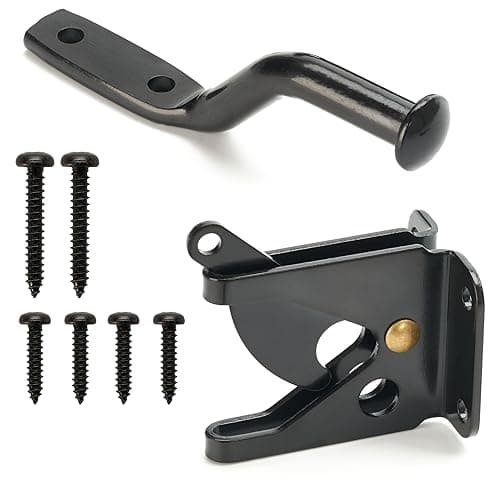 Self-Locking Gravity Gate Latch, Steel Replacing the hook-and-eye your coop came with | Not published | 8.6 | $8.99on Amazon |
| Rank 4 | 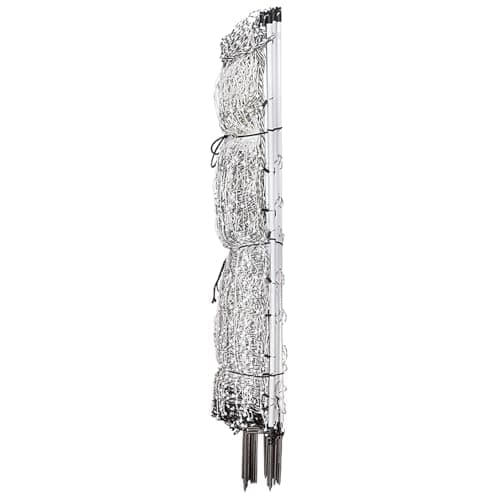 Premier 1 PoultryNet Plus Electric Fence, 48in x 100ft Keeping foxes and dogs out of the whole yard | Not published | 7.2 | $223.00on Amazon |
| Rank 5 | 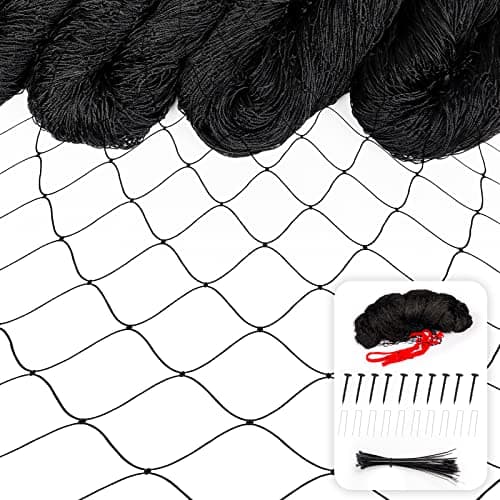 Bird Netting for Chicken Run, 50 x 50ft, 2.4in Mesh Covering a big run against hawks | 2.4 in square | 7.4 | $29.99on Amazon |
#ad Prices come from Amazon and change. How this site is funded. Scores are our own published rubric, not a lab test — see how we pick.
Hexagonal chicken wire is not a predator barrier. It is lightweight twisted netting designed to contain poultry, and it does that well. Hardware cloth is welded square mesh in a heavy gauge, and it is what actually stops an animal. The names imply the first is the poultry-protection product; it is not.
Extension's predator management guidance is specific about why. Least weasels can squeeze through holes as small as a quarter inch and typically get through chicken wire. Chicken wire's openings are large enough to let ground predators reach in and injure birds through intact mesh. And because it is twisted rather than welded, a dog or fox worrying at it opens the twists.
The standard recommendation is to wrap the lower half of an enclosure in half-inch, 19-gauge hardware cloth, with ordinary poultry netting acceptable above — because the netting is enough for birds and flying predators while hardware cloth does the work where ground predators reach.
Add electric poultry netting if you free-range over an area — it is the only measure that stops a fox, coyote or dog before it reaches the coop at all.
| Predator | How it gets in | What stops it |
|---|---|---|
| Raccoon | Opens latches; reaches through hex wire; climbs | Two-step latch; 1/2 in hardware cloth; door shut at dusk |
| Fox | Digs; takes free-ranging birds | Apron; electric netting; door shut at dusk |
| Weasel / mink | Passes through openings as small as 1/4 in | 1/2 in hardware cloth, 1/4 in where least weasels occur |
| Hawk | From above, in daylight | Overhead netting; ground-level cover |
| Owl | From above at night; takes birds roosting outside | Secure coop, door shut at dusk |
| Dog | Over or through fencing; often kills several | Solid perimeter fence; electric netting |
| Rat | Gnaws; takes eggs and chicks; eats feed | Treadle feeder; metal feed bin; hardware cloth |
| Snake | Small gaps; takes eggs and chicks | 1/4 in hardware cloth on openings; prompt collection |
Worth being precise about, because most of what is sold in this category is the second sold as the first. A barrier physically prevents entry and works while you are asleep and on a hungry animal. A deterrent makes the location less attractive and works until the animal decides the food is worth it.
Flashing solar lights, motion sprinklers and scent products are deterrents. They are a legitimate additional layer on a coop you have already hardened, and they are not a substitute for one. A hungry raccoon in February will test any of them.
A steel self-locking gravity latch, costing less than a bag of feed. It replaces the hook-and-eye catch most coops ship with, and the two-step action — lift, then pull — is beyond most raccoons. Do every opening, not just the main door: the pop-hole, the nest box lid, the cleaning hatch, the run gate. Raccoons find the one you forgot.
UNH Extension suggests burying hardware cloth at least 12 inches to deter diggers, and that works. A 16-inch band laid flat on the surface, pinned with landscape staples and grown over by grass, achieves the same thing with no digging — because a digging predator starts at the base of the wall, hits mesh, and does not reason its way further out. How to fit one.
10 pages in this section. Roundup tiles carry the live price and a buy link for their top pick.
Best Automatic Door
Automatic coop doors ranked on material and power source, with the one honest caution about shutting a bird out.
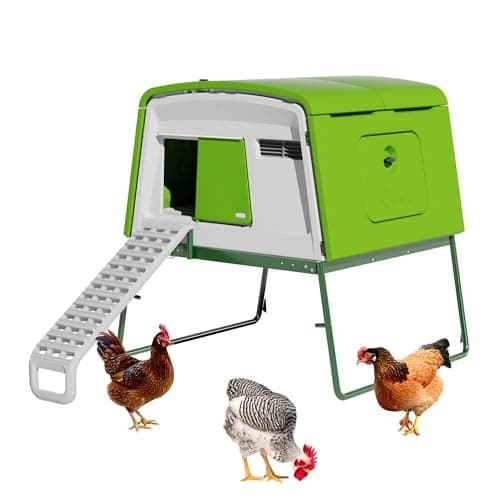
Most Predator-Resistant
The coops with the best predator record, plus the three upgrades almost every coop needs whatever the listing claims.
Best Electric Fencing
Electric poultry netting and the energizers that drive it, with the joule figure that actually predicts performance.
Top pick: Premier 1 PoultryNet Plus Electric Fence, 48in x 100ft
Best Deterrent
Deterrents and small hardware ranked with an honest line between what deters and what physically stops an animal.
Comparison
The single most useful distinction in predator protection, with the gauges, the openings and where each belongs.
Top pick: Amagabeli Hardware Cloth, 1/2in Mesh, 48in x 100ft, 19 Gauge
Comparison
Automatic door or a good latch closed by hand: an honest comparison of what the automation actually buys.
Guide
Overhead cover, cover at ground level, and a clear statement of what the law allows — hawks are federally protected.
Guide
Five changes that stop raccoons, in order of effect, plus why the feed store is part of the problem.
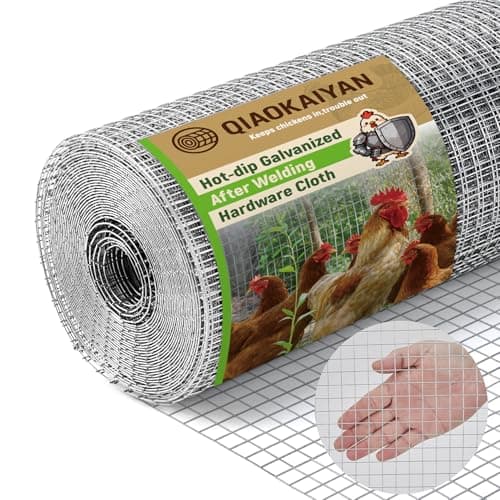
Guide
The flat-apron method step by step, why it beats burying mesh, and the mesh specification to buy.
Guide
An identification guide: what each predator does, how to tell which one visited, and the one measure that stops it.
Top pick: Amagabeli Hardware Cloth, 1/2in Mesh, 48in x 100ft, 19 Gauge