Winter Heat
Heat lamps for chickens, and the safer alternatives
If you need directional heat, get it from an element with no glass to break. The classic clamp lamp is the problem, not the solution.
Chickens & Coops earns a commission when you buy through our links, at no extra cost to you. Prices come from Amazon and change; the date beside every price is when we last verified it. Full disclosure.
Quick picks
| # | Product | Power | Score | Price |
|---|---|---|---|---|
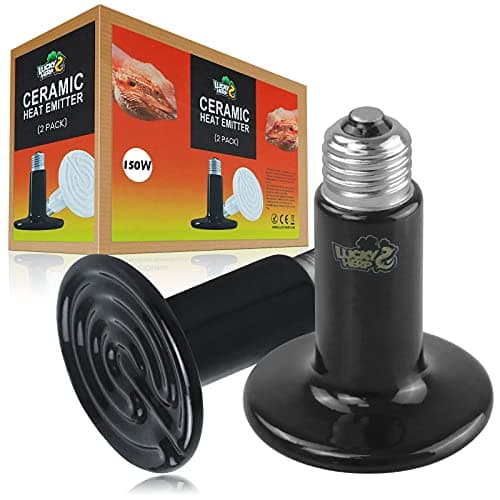
| Rank 1 | LUCKY HERP 150W Ceramic Heat Emitter A bulb-socket heat source with no light | 150 W | 6.6 | $15.99on Amazon |
| Rank 2 | 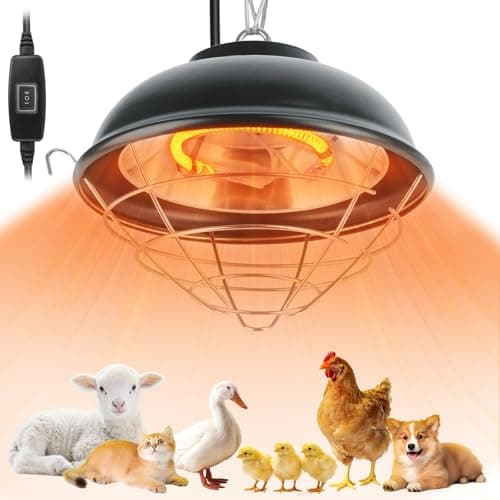 Poiyham 350W Carbon Fiber Coop Heater Lamp-style heat without a glass bulb | 350 W | 6.2 | $29.99on Amazon |
| Rank 3 | 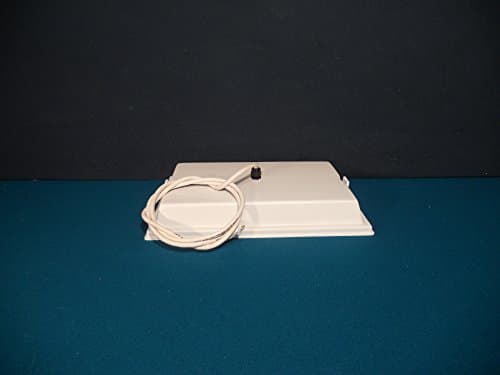 Sweeter Heater Overhead 11x16, 50W A brooder or a very small coop | 50 W | 6.8 | $122.00on Amazon |
| Rank 4 | 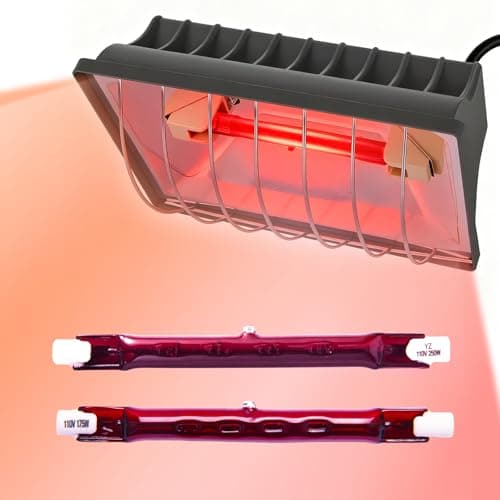 Homnebila 250W Heat Lamp with Guard Short-term brooder heat, with the guard fitted | 250 W | 6.4 | $29.99on Amazon |
| Rank 5 | 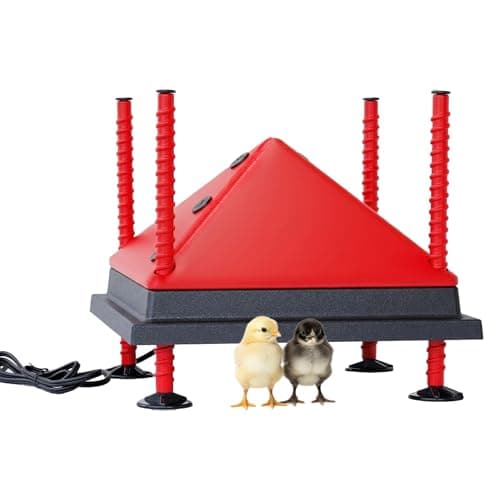 RentACoop 12x12in Adjustable Heating Plate with Anti-Roost Cone The safest brooder heat, with the roosting problem solved | Not published | 8.0 | $59.95on Amazon |
#ad Prices come from Amazon and change. How this site is funded. Scores are our own published rubric, not a lab test — see how we pick.
The traditional 250 W red bulb in a spring-clamp lamp is the most common supplemental heat source in backyard poultry and the most common cause of coop fires. The mechanism is always the same: the clamp slips or a bird knocks the lamp, the glass bulb lands in deep dry bedding, and the bedding ignites. The bulb is hot enough, the bedding is dry enough, and the clamp is not a fixing.
What to buy instead
Ceramic heat emitters
A ceramic element that screws into a standard lamp socket and radiates heat with no light at all. No filament, no glass envelope. No light is a genuine welfare benefit — a red bulb burning all night disrupts the birds' rest. Cheapest safe option by a wide margin.
Carbon-fiber elements
Hang and aim like a lamp, but the element is carbon fiber rather than a glass bulb. Higher output than a ceramic emitter, so this is the option when you genuinely need directional heat in a large cold space.
Sealed radiant panels
Not directional, but the safest of all and the right answer for most coops. Included here because many people searching for a heat lamp actually want a heat source and will be better served by a panel.
Brooder heat plates
For chicks specifically, a heat plate beats a lamp outright: chicks self-regulate by moving under and out, and there is no light. Extension's brooding guidance sets out the temperature requirements.
The picks
Ranked by how little can go wrong. The bulb lamp is included because it is sometimes genuinely the right tool — with its guard fitted.
#1 · A bulb-socket heat source with no light
#ad How we are funded · Price as of October 5, 2026
LUCKY HERP 150W Ceramic Heat Emitter
LUCKY HERPA 150-watt ceramic emitter that screws into a standard lamp socket and gives heat without light. No light is a genuine welfare advantage: a red bulb burning all night disrupts the birds' rest.
| Power | 150 W |
|---|---|
| Type | Ceramic heat emitter |
| Light output | None |
| Fitting | Standard screw socket |
| Fixture included | No |
Specifications per Manufacturer figures as published on the Amazon product listing, as published at the date above.
What it does well
- Heat with no light, so the flock's night is not disrupted
- Ceramic element has no filament or glass envelope to shatter
- Fits the lamp fixtures most people already own
- Cheapest heat source here
Where it falls short
- The fixture is the weak link: a cheap clamp lamp is the actual fire risk, not the emitter
- Gets extremely hot on the surface — mount it well clear of bedding and secure it with a chain
- No thermostat; it is on or off
Our rubric
- Fire safety
- 6.0
- Temperature control
- 3.0
- Heat output
- 6.0
- Running cost
- 8.0
- Value
- 10.0
#2 · Lamp-style heat without a glass bulb
#ad How we are funded · Price as of October 5, 2026
Poiyham 350W Carbon Fiber Coop Heater
PoiyhamA 350-watt carbon-fiber element in a lamp format. Carbon fiber is the sensible middle ground: it hangs and points like a heat lamp but there is no glass envelope to shatter.
| Power | 350 W |
|---|---|
| Element | Carbon fiber |
| Format | Hanging heat lamp style |
| Certification | Not published by manufacturer |
| Thermostat | Not published by manufacturer |
Specifications per Manufacturer figures as published on the Amazon product listing, as published at the date above.
What it does well
- No glass bulb to break, which removes the classic heat-lamp fire mechanism
- Directional heat you can aim at a roost or a brooder corner
- 350 W is real output for a cold, large coop
Where it falls short
- 350 W is the highest running cost on this page
- Still a hanging appliance — it must be secured with a chain, never just the cord
- No thermostat and no published certification
Our rubric
- Fire safety
- 6.0
- Temperature control
- 4.0
- Heat output
- 9.0
- Running cost
- 4.0
- Value
- 8.0
#3 · A brooder or a very small coop
#ad How we are funded · Price as of October 5, 2026
Sweeter Heater Overhead 11x16, 50W
Sweeter HeaterThe small 50-watt Sweeter Heater. Fifty watts is a brooder-scale heat source, not a coop heater — and for a brooder that is exactly right.
| Power | 50 W |
|---|---|
| Dimensions | 11 x 16 in |
| Mounting | Overhead |
| Type | Sealed infrared panel |
Specifications per Manufacturer figures as published on the Amazon product listing, as published at the date above.
What it does well
- 50 W is the lowest running cost of any heat source here
- Sealed panel, safe over a brooder full of dry bedding
- Small footprint suits a brooder box or a two-bird coop
Where it falls short
- 50 W will not make a dent in a full-size coop
- Still priced like a premium product despite the low wattage
- No thermostat
Our rubric
- Fire safety
- 10.0
- Temperature control
- 5.0
- Heat output
- 4.0
- Running cost
- 10.0
- Value
- 5.0
#4 · Short-term brooder heat, with the guard fitted
#ad How we are funded · Price as of October 5, 2026
Homnebila 250W Heat Lamp with Guard
HomnebilaA 250-watt heat lamp with a guard and adjustable temperature. A guard is the minimum acceptable specification on any bulb heater — but a hanging 250 W lamp in a wooden coop is still the highest-risk option on this page.
| Power | 250 W |
|---|---|
| Guard | Fitted |
| Control | Adjustable temperature |
| Type | Heat lamp |
Specifications per Manufacturer figures as published on the Amazon product listing, as published at the date above.
What it does well
- The guard is fitted, which is the single most important feature on a bulb heater
- Adjustable temperature rather than a bare on/off bulb
- 250 W is plenty of brooder heat for a large batch of chicks
Where it falls short
- Hanging bulb heaters remain the leading cause of coop fires — this one included
- 250 W all winter is an expensive way to warm hens that do not need warming
- Must be hung on a chain, never by the cord, and never above dry bedding
Our rubric
- Fire safety
- 4.0
- Temperature control
- 6.0
- Heat output
- 9.0
- Running cost
- 5.0
- Value
- 8.0
#5 · The safest brooder heat, with the roosting problem solved
#ad How we are funded · Price as of October 5, 2026
RentACoop 12x12in Adjustable Heating Plate with Anti-Roost Cone
RentACoopA 12 x 12 inch adjustable-height heat plate with a foldable anti-roost cone. The cone is why this one is worth the premium: without it, chicks roost on top and foul the plate within days.
| Plate size | 12 x 12 in |
|---|---|
| Height | Adjustable |
| Anti-roost | Foldable cone included |
| Type | Radiant brooder heating plate |
| Wattage | Not published by manufacturer |
Specifications per RentACoop published specifications, as published at the date above.
What it does well
- Mimics a broody hen: chicks go under for warmth and come out to eat, which is how they self-regulate
- Anti-roost cone stops the plate becoming a perch and a toilet
- Height adjusts as the chicks grow, which they do fast
- No bulb, no light, so chicks sleep on a normal day-night cycle
Where it falls short
- Wattage is not published
- Plates warm the chicks, not the room — a very cold garage still needs ambient heat
- More expensive than a clamp lamp and a bulb
Our rubric
- Fire safety
- 10.0
- Temperature control
- 8.0
- Heat output
- 7.0
- Running cost
- 9.0
- Value
- 6.0
When a bulb lamp is still the answer
There is a narrow legitimate case: short-term, high-output heat in a brooder you are supervising, early in the first week, with a large batch of chicks. Even then:
- Use a guard, always. A guard is the minimum acceptable specification.
- Hang it from a chain or wire, never from the cord and never from a spring clamp alone. Two independent supports is the standard.
- Never above dry bedding without a clear safe fall path.
- Use a dimmer or thermostat so you are controlling temperature rather than guessing.
- Replace it with a heat plate as soon as practical. Within days, not weeks.
Red light is not required
The traditional reason for a red bulb is that it is said to reduce pecking by making blood less visible. The cost is that it is light, all night, which disrupts sleep. A ceramic emitter or a heat plate gives you heat without that trade-off, which is a better answer than choosing a bulb color.
What this means in practice
- Adult hens in a coop: no heat at all, or a sealed radiant panel if your climate genuinely demands it.
- Chicks in a brooder: a heat plate. Always first choice.
- A very large brooder in a cold space: a carbon-fiber element or a ceramic emitter in a properly supported porcelain fixture.
- A sick or injured bird needing warmth: a low-wattage panel in a separate, supervised space.
Frequently asked questions
Are heat lamps safe for chickens?
What can I use instead of a heat lamp?
Do chicks need a red heat lamp?
How should a heat lamp be hung?
What wattage heat lamp for chicks?
Sources
Read next
Winter Heat
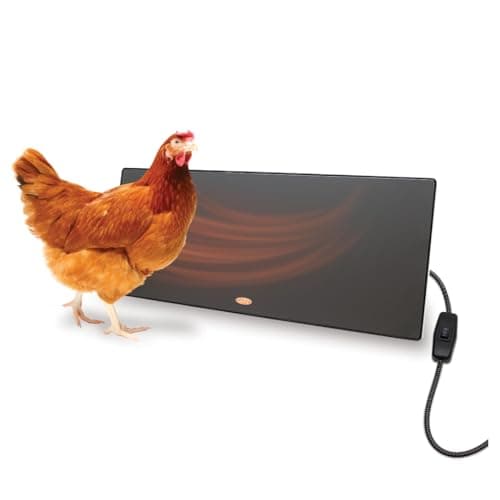
Heat lamp vs radiant panel
The safety comparison that decides most coop heating decisions, with picks for both answers.
Winter Heat
Coop heater fire safety
The checklist for running any mains appliance in a coop safely — and why extension guidance leans against heaters at all.
Hatching & Brooding
The best brooder heat plates
Heat plates ranked on published capacity, anti-roost design and height adjustment — the three things that differ.
Hatching & Brooding
Heat plate vs heat lamp for chicks
The brooder heat decision, with the narrow cases where a lamp is still the right tool.
Winter Heat
The best radiant chicken coop heaters
Every radiant panel worth considering, from a 50 W brooder panel to a 200 W coop panel, with certification noted.