Start Here
Choosing chickens for eggs
Breed matters less than age, daylight and feed. Here is what actually determines what lands in the nest box.
Chickens & Coops earns a commission when you buy through our links, at no extra cost to you. Prices come from Amazon and change; the date beside every price is when we last verified it. Full disclosure.
Quick picks
| # | Product | Type | Score | Price |
|---|---|---|---|---|
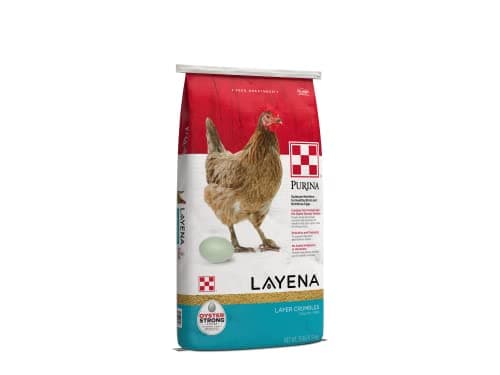
| Rank 1 | Purina Layena Layer Crumbles, 25 lb The standard bag for a six-hen flock | Layer crumbles, nutritionally complete | 8.3 | $35.98on Amazon |
| Rank 2 | 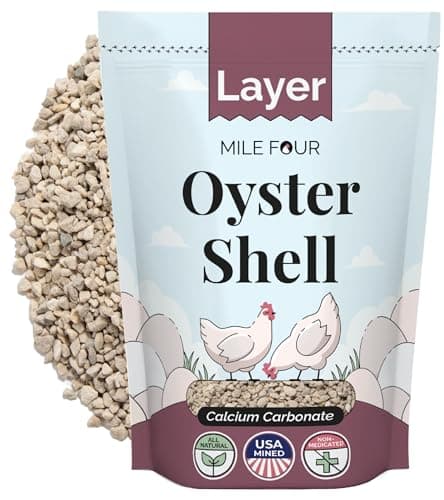 Mile Four Oyster Shell for Laying Hens, 4 lb Eggshell strength, offered free-choice | Crushed oyster shell | 8.8 | $19.99on Amazon |
| Rank 3 | 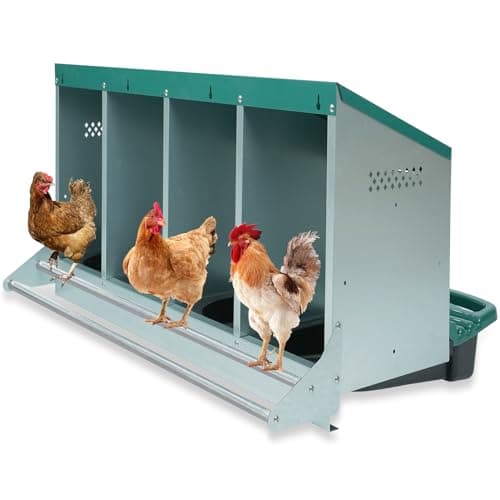 4-Hole Heavy Duty Metal Roll-Away Nesting Box Clean eggs from sixteen hens | Roll-away with egg collection | 8.2 | $119.99on Amazon |
| Rank 4 | 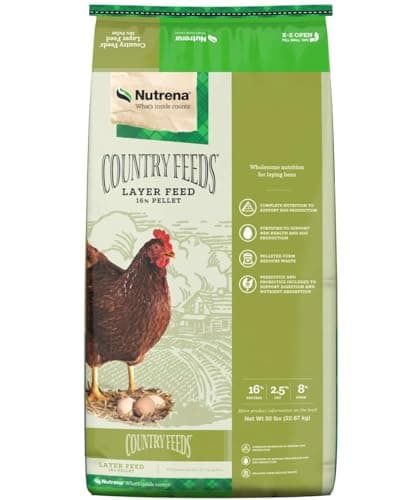 Nutrena Country Feeds 16% Layer Pellets, 50 lb The cheapest cost per pound for a bigger flock | Layer pellets | 8.8 | $41.39on Amazon |
| Rank 5 | 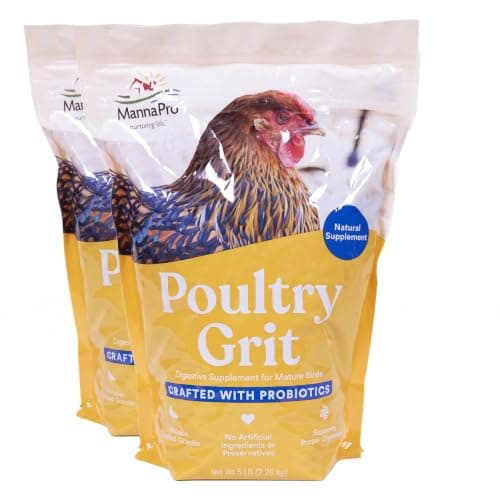 Manna Pro Poultry Grit with Probiotics, 5 lb Insoluble grit for hens eating anything but pellets | Insoluble crushed granite grit | 9.0 | $19.02on Amazon |
#ad Prices come from Amazon and change. How this site is funded. Scores are our own published rubric, not a lab test — see how we pick.
People choose a breed for eggs and then wonder why the numbers do not match the hatchery's claim. The reason is that breed is one of the smaller factors. Age, daylight, water, feed and the moult all have more influence on what you collect, and four of those five are things you can act on.
The five factors, in order of influence
1. Age — the biggest single factor
Laying peaks in a hen's first laying year and declines every year after. Eggs get fewer, larger, and thinner-shelled. Nothing reverses this and no supplement changes it. A flock that has quietly slowed over three years has simply got older, and the only answer is adding younger birds.
2. Daylight
Laying is driven by day length. It falls in autumn as days shorten, frequently stops entirely in midwinter, and resumes as days lengthen. This is normal physiology.
Supplemental light will maintain winter laying. If you use it, add it in the morning rather than the evening — so the birds are never plunged into darkness while off the roost — and keep total day length moderate. There is a reasonable argument that a seasonal rest benefits a hen's longer-term productivity, so this is a genuine choice rather than an obvious improvement.
3. Water
Laying stops quickly if water runs short, faster than it responds to almost anything else. An egg is about three-quarters water. A hen needs about 6.4 fl oz a day, roughly doubling in heat, per University of Minnesota Extension. Frozen, fouled, warm or monopolized water is the first thing to check when laying drops.
4. Feed, and calcium specifically
A complete layer feed at around 16% protein, forming most of what they eat. A flock filling up on scratch grain and kitchen scraps is on a diluted ration, and protein is what feathers and eggs are made of.
For shell quality, offer oyster shell free-choice in its own dish so the hens laying hardest can take extra calcium. And insoluble grit separately, because any bird eating grass or treats needs it to digest them. The full explanation.
5. Breed
Real, and smaller than the other four. Some breeds lay more than others; the published figures are mostly hatchery marketing and vary enormously in practice. If you want a genuinely productive flock, the reliable levers are young birds, liquid clean water, a complete ration and free-choice calcium — in that order, before breed.
What also matters
- Stress. A predator visit, new birds, a move, mites, or crowding all reduce laying. Why chickens stop laying.
- The moult. Once a year, usually autumn, laying stops entirely while feathers regrow. Keep the protein up and wait.
- Nest box quality. Hens that will not use the boxes lay on the floor or in hedges, and those eggs get dirty, broken or lost. Nest boxes.
- Collection frequency. Eggs left in the nest get stood on and broken, and a broken egg can teach egg-eating.
What supports laying
A complete layer feed, free-choice calcium, insoluble grit, and a roll-away nest box so the eggs arrive clean.
#1 · The standard bag for a six-hen flock
#ad How we are funded · Price as of October 5, 2026
Purina Layena Layer Crumbles, 25 lb
Purina25 lb of complete layer crumble — roughly a month for six hens. Crumble suits mixed-age flocks and bantams that find full pellets awkward.
| Type | Layer crumbles, nutritionally complete |
|---|---|
| Weight | 25 lb |
| For | Laying hens |
| Protein | Not published by manufacturer |
Specifications per Manufacturer figures as published on the Amazon product listing, as published at the date above.
What it does well
- Complete layer ration from the most widely stocked brand in the US
- Crumble is easier for bantams and smaller breeds to eat than pellets
- 25 lb is about a month for six hens — fresh all the way down the bag
Where it falls short
- Crumble generates more dust and more billed-out waste than pellets
- Protein percentage is not stated on this listing
- Needs an airtight bin once opened or it absorbs moisture
Our rubric
- Fit for purpose
- 9.0
- Mess and waste
- 7.0
- Quality
- 9.0
- Value
- 8.0
#2 · Eggshell strength, offered free-choice
#ad How we are funded · Price as of October 5, 2026
Mile Four Oyster Shell for Laying Hens, 4 lb
Mile FourCrushed oyster shell as a free-choice calcium source. Layer feed already contains calcium; a separate dish of oyster shell lets the individual hens that need more take more.
| Type | Crushed oyster shell |
|---|---|
| Weight | 4 lb |
| Function | Calcium for egg-laying hens |
| Feeding | Free-choice |
Specifications per Manufacturer figures as published on the Amazon product listing, as published at the date above.
What it does well
- Free-choice calcium is self-regulating: hens laying hardest take the most
- Directly addresses thin and soft shells
- 4 lb lasts a small flock months
Where it falls short
- Not a substitute for grit — oyster shell dissolves, so it cannot grind
- Should never be fed to chicks or non-laying pullets
- Must go in its own dish, not mixed into the feed
Our rubric
- Fit for purpose
- 10.0
- Mess and waste
- 9.0
- Quality
- 9.0
- Value
- 7.0
#3 · Clean eggs from sixteen hens
#ad How we are funded · Price as of October 5, 2026
4-Hole Heavy Duty Metal Roll-Away Nesting Box
GenericFour roll-away holes in heavy-duty metal. Roll-away is the single best upgrade for egg cleanliness: the egg leaves the nest the moment it is laid, so it cannot be stood on, pecked or soiled.
| Holes | 4 |
|---|---|
| Covers | Up to 16 hens at 1 box per 4 |
| Material | Heavy duty metal |
| Type | Roll-away with egg collection |
Specifications per Manufacturer figures as published on the Amazon product listing, as published at the date above.
What it does well
- Eggs roll out of reach immediately — the end of dirty eggs and most egg-eating habits
- Metal construction leaves mites nowhere to hide and lasts far longer than ply
- Four holes covers a sixteen-hen flock
- Collecting from a tray rather than reaching under a hen is faster and calmer
Where it falls short
- Roll-away boxes are the most expensive nest option
- Needs the right slope: too flat and eggs stay, too steep and they crack
- Metal is cold in winter unless you line the pad area
Our rubric
- Egg cleanliness
- 10.0
- Mounting options
- 7.0
- Cleaning access
- 9.0
- Build
- 9.0
- Value
- 6.0
#4 · The cheapest cost per pound for a bigger flock
Nutrena Country Feeds 16% Layer Pellets, 50 lb
Nutrena50 lb of 16% layer pellets with the protein figure published. For eight or more hens this is the sensible format — provided you have a sealed bin to keep it in.
| Type | Layer pellets |
|---|---|
| Protein | 16% |
| Weight | 50 lb |
| For | Laying hens |
Specifications per Manufacturer figures as published on the Amazon product listing, as published at the date above.
What it does well
- Lowest cost per pound of any layer feed here
- 16% protein stated
- 50 lb is about six weeks for eight hens
Where it falls short
- 50 lb needs a rodent-proof metal bin, or you are feeding mice
- Heavy to move and awkward to pour
- Too much feed for a flock of three — it will stale before it is finished
Our rubric
- Fit for purpose
- 9.0
- Mess and waste
- 8.0
- Quality
- 8.0
- Value
- 10.0
#5 · Insoluble grit for hens eating anything but pellets
#ad How we are funded · Price as of October 5, 2026
Manna Pro Poultry Grit with Probiotics, 5 lb
Manna ProInsoluble crushed granite — the grinding stone a hen's gizzard needs to process grass, scratch and kitchen scraps. It is not a calcium supplement and does not replace oyster shell.
| Type | Insoluble crushed granite grit |
|---|---|
| Weight | 5 lb |
| Added | Probiotics |
| Function | Gizzard grinding material |
Specifications per Manufacturer figures as published on the Amazon product listing, as published at the date above.
What it does well
- States 'insoluble crushed granite', which is exactly what grit should be
- 5 lb lasts a small flock a very long time — it is offered free-choice, not mixed in
- Essential the moment hens eat anything other than a complete pellet
Where it falls short
- Routinely confused with oyster shell; they do different jobs and you need both
- Not needed at all for birds fed only complete crumble indoors
- Offer it in a separate small dish, not mixed into feed
Our rubric
- Fit for purpose
- 10.0
- Mess and waste
- 9.0
- Quality
- 9.0
- Value
- 8.0
Egg handling, per CDC
CDC's backyard poultry guidance notes that eggshells can become contaminated through poultry droppings or the nest environment. Its recommendations:
- Collect eggs often and clean and refrigerate them after collection.
- Discard cracked eggs.
- Cook eggs until both the yolk and white are firm, at a minimum of 160 degrees F.
- Wash hands with soap and running water after collecting eggs.
A practical note on washing: it removes the protective cuticle, so eggs that arrive clean are better than eggs you had to clean. That is the real argument for good nest boxes and prompt collection.
A realistic expectation
Expect good production in the first laying year, a complete stop during the autumn moult, a substantial winter slowdown unless you add light, and a steady year-on-year decline after that. A flock that gives you more eggs than you can use in July and none in January is a normal flock, not a problem.
Frequently asked questions
What makes chickens lay more eggs?
Do chickens lay fewer eggs as they get older?
Should I use a light to keep hens laying in winter?
Do I need to wash fresh eggs?
How should fresh eggs be cooked?
Sources
- University of Minnesota Extension — Raising Chickens for Eggs
- Penn State Extension — Management Requirements for Laying Flocks
- University of Georgia Extension — Nutrition for the Backyard Flock (C954)
- CDC — Backyard Poultry and Your Health (Salmonella guidance)
- Extension Poultry — Feeding Chickens for Egg Production in Small and Backyard Flocks
Read next
Nesting Boxes
Why have my chickens stopped laying?
A diagnostic for a stopped flock: eight causes in order of likelihood, with what actually fixes each one.
Feeders & Feed
Grit and oyster shell: what each one actually does
Grit versus oyster shell, properly explained: who needs which, when, and why they go in separate dishes.
Start Here
How often do chickens lay eggs?
The daily, seasonal and lifetime pattern of laying, with the five factors that change it and no invented figures.
Nesting Boxes
The best nesting boxes for chickens
Our main nest box ranking, from a single plastic box to an eight-hole roll-away bank, with the box-count rule.
Start Here
The best chicken breeds for beginners
How to choose a first breed on the traits that matter, and the gear a beginner flock needs regardless.