Winter Heat
Winterizing a chicken coop
An autumn afternoon's work that decides how the whole winter goes. Here is the order to do it in.
Chickens & Coops earns a commission when you buy through our links, at no extra cost to you. Prices come from Amazon and change; the date beside every price is when we last verified it. Full disclosure.
Quick picks
| # | Product | Material | Score | Price |
|---|---|---|---|---|
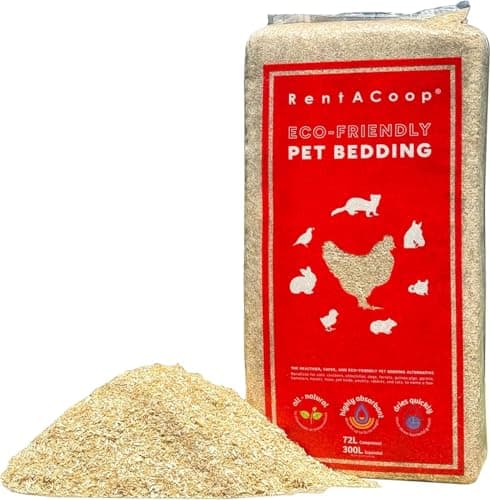
| Rank 1 | RentACoop Premium Hemp Bedding, 300L Low dust in a small or poorly ventilated coop | Hemp hurd | 8.0 | $74.95on Amazon |
| Rank 2 | 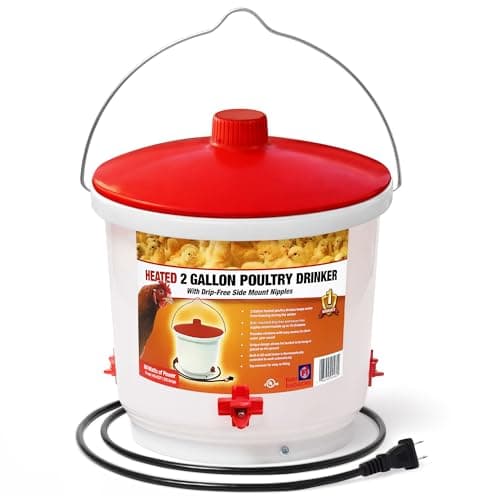 Farm Innovators HB-60P Heated Poultry Waterer, 2 Gallon 60W A purpose-built heated waterer that just works | Not published | 7.2 | $42.99on Amazon |
| Rank 3 | 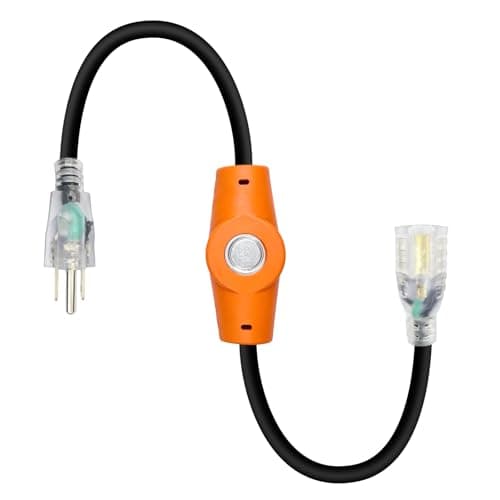 MAXKOSKO Thermostatically Controlled Outlet, 15A 120V Making any coop heater switch itself off | Not published | 7.8 | $16.82on Amazon |
| Rank 4 | 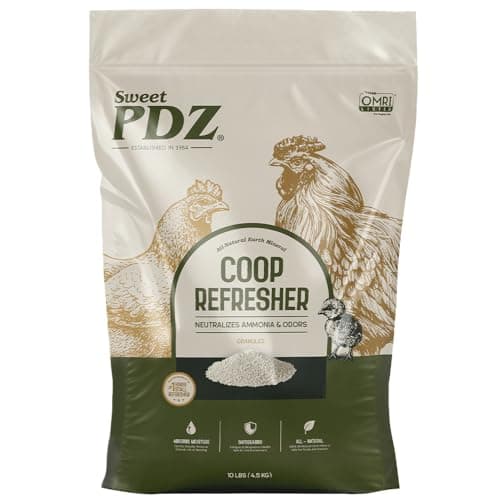 Sweet PDZ Coop Refresher, 10 lb Ammonia under the roosts | Not published | 8.8 | $24.95on Amazon |
#ad Prices come from Amazon and change. How this site is funded. Scores are our own published rubric, not a lab test — see how we pick.
Do this in October, before the first hard night. It is one afternoon, and it is the difference between a winter you barely think about and a winter of thawing waterers in the dark.
The coop
- Strip and clean it out. Full clear-out, scrub, dry completely. Going into winter on clean bedding is worth a lot, because you will be topping up rather than stripping out for months.
- Inspect for holes and cracks. MSU Extension recommends exactly this: sealing them prevents cold drafts and keeps rodents out over winter. Do it on a windy day with your hand at roost height.
- Check the roof. A leak you tolerate in September is a wet-litter and frostbite problem in January.
- Check and clear the vents. They stay open all winter. Add a baffle or overhang if rain gets in.
- Check the roosts. Wooden 2x4 or 2x2, flat side up. Replace any metal or plastic perch — those hold cold against feet.
- Lay deep bedding. 6-12 inches of dry material, per University of Minnesota Extension.
- Fit or clean the droppings board. You will be scraping it daily for months; make it easy.
The run
- Add a wind break on the prevailing-wind side. A tarp or boards. Birds use a sheltered run; they will not stand in the wind.
- Cover part of it if you can, so there is dry ground when there is snow.
- Top up with wood chip to manage mud. Winter runs turn to mud and mud is the start of foot problems.
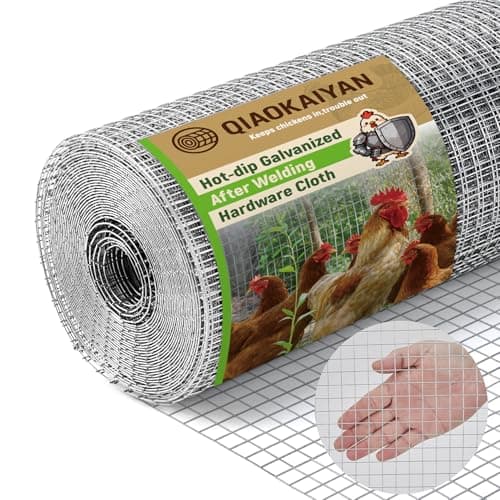
- Check the mesh and the apron. Predators get hungrier and bolder in winter, and frozen ground is easier to dig under at the thaw.
- Clear anything that will collapse under snow — sagging netting, a flat cover that will pool.
The water
- Drain and store any hose-fed system before the first freeze, or it will split.
- Get the heated waterer out and test it now, not on the first frosty morning.
- Add a thermostat outlet so it is not drawing power through a mild October.
- Inspect the cord end to end for rodent damage.
- Decide where it goes, ideally out of the coop, on a tray if it must be inside.
The electrics
- Outdoor-rated cable only, on a GFCI-protected outlet.
- Connections off the ground, out of the bedding, in a dry spot.
- Nothing run through a window on a domestic extension lead.
- Everything checked for rodent damage before it is plugged in. Full safety detail.
The flock
- Expect feed consumption to rise. Extension guidance notes intake increases in cold weather. Buy accordingly and keep feed continuously available.
- Expect laying to drop. Shorter days and the autumn moult both reduce it, in every breed. That is normal.
- Check feet, combs and vents before winter starts, so you know what normal looks like.
- Deal with mites now. A mite problem in an unventilated winter coop is much harder to resolve than one in September.
- Make sure the feed store is rodent-proof. Rodents move indoors in autumn, and the feed bin is where they are going.
The autumn shopping list
Bedding, a heated waterer, the thermostat outlet that cuts its running cost, and the ammonia binder for deep litter.
#1 · Low dust in a small or poorly ventilated coop
#ad How we are funded · Price as of October 5, 2026
RentACoop Premium Hemp Bedding, 300L
RentACoop300 liters of hemp hurd per 30 lb bale. Hemp costs more than pine up front but absorbs more per liter and throws far less dust — which is the thing that actually damages chicken lungs.
| Material | Hemp hurd |
|---|---|
| Volume | 300 L |
| Weight | 30 lb |
| Intended use | Chickens, rabbits, horses |
Specifications per Manufacturer figures as published on the Amazon product listing, as published at the date above.
What it does well
- Volume and weight both published, so the real cost per liter is comparable
- Markedly less dust than pine — the single biggest respiratory factor in a closed coop
- Absorbs more liquid per liter than shavings, so the litter stays drier between changes
- Composts readily
Where it falls short
- Costs several times what an equivalent volume of pine does
- Finer particles can sift through widely-spaced slatted floors
- Not stocked in most feed stores, so you are ordering it
Our rubric
- Fit for purpose
- 9.0
- Mess and waste
- 8.0
- Quality
- 9.0
- Value
- 6.0
#2 · A purpose-built heated waterer that just works
Farm Innovators HB-60P Heated Poultry Waterer, 2 Gallon 60W
Farm InnovatorsTwo gallons with a 60-watt thermostatically-controlled element built in. Published wattage, published capacity, and the heater is integrated rather than bolted on — the fewest failure points of any heated option.
| Capacity | 2 gallon |
|---|---|
| Heater | 60 W integrated |
| Control | Thermostatically controlled |
| Type | Heated drinker |
Specifications per Manufacturer figures as published on the Amazon product listing, as published at the date above.
What it does well
- 60 W is published, so you can work out the running cost rather than guess
- Thermostat means it only draws power when it is actually near freezing
- Integrated heater — no separate base to misalign or water to spill onto
- The most widely used heated poultry drinker in US backyards for a reason
Where it falls short
- 2 gallons is a daily refill for anything above about six hens in winter
- Needs an outdoor-rated extension run to the coop, properly protected
- A permanently plugged-in appliance in a dusty coop needs checking each season
Our rubric
- Capacity
- 5.0
- Stays clean
- 7.0
- Freeze resistance
- 10.0
- Ease of refill
- 7.0
- Value
- 7.0
#3 · Making any coop heater switch itself off
#ad How we are funded · Price as of October 5, 2026
MAXKOSKO Thermostatically Controlled Outlet, 15A 120V
MAXKOSKOA thermostat outlet that only passes power near freezing. Put this between the socket and any unthermostatted heater and you stop paying to heat a coop in October.
| Rating | 15 A, 120 V |
|---|---|
| Type | Thermostatically controlled outlet extension |
| Function | Freeze protection switching |
| Switching temperatures | Not published by manufacturer |
Specifications per Manufacturer figures as published on the Amazon product listing, as published at the date above.
What it does well
- Cuts the running cost of any un-thermostatted heater or de-icer to near zero outside freezing weather
- 15 A rating covers everything a backyard coop will plug into it
- Also an added safety layer: a heater that cannot run in mild weather cannot overheat in mild weather
Where it falls short
- Exact on/off temperatures are not published on this listing
- Not a substitute for an outdoor-rated, GFCI-protected supply
- One more connection in a damp environment to keep dry
Our rubric
- Capacity
- 6.0
- Stays clean
- 6.0
- Freeze resistance
- 8.0
- Ease of refill
- 9.0
- Value
- 10.0
#4 · Ammonia under the roosts
#ad How we are funded · Price as of October 5, 2026
Sweet PDZ Coop Refresher, 10 lb
Sweet PDZGranular zeolite that binds ammonia rather than masking it. Dusted on the poop board under the roosts it is the most effective single thing you can do about coop smell.
| Active material | Zeolite |
|---|---|
| Weight | 10 lb |
| Function | Ammonia and odor absorption |
| Scent added | None |
Specifications per Manufacturer figures as published on the Amazon product listing, as published at the date above.
What it does well
- Chemically binds ammonia instead of covering it with fragrance
- No added scent, which matters because fragrance oils irritate bird airways
- A thin layer on the poop board is all it takes — a 10 lb bag lasts a small flock months
- Safe to compost with the litter
Where it falls short
- It is a granular mineral: it will not fix a coop that is genuinely under-ventilated
- Needs topping up as it saturates
- Dusty to apply — worth doing with the hens outside
Our rubric
- Fit for purpose
- 10.0
- Mess and waste
- 7.0
- Quality
- 9.0
- Value
- 9.0
A short mid-winter routine
| When | What |
|---|---|
| Daily | Water liquid and drunk; scrape the droppings board; collect eggs; look at the flock |
| Weekly | Top up bedding; scrub the waterer; dust zeolite on the board; check feet and combs |
| After any storm | Check the roof, the run cover and the mesh |
| At a thaw | Check the apron and perimeter — frozen ground that softens is when digging starts |
Frequently asked questions
When should I winterize a chicken coop?
What is the most important winterizing step?
Should I close the coop vents for winter?
Do I need to insulate the coop?
What should I do about the run in winter?
Sources
- Michigan State University Extension — Preparing Your Chickens for Winter
- University of Minnesota Extension — Caring for Chickens in Cold Weather
- University of Illinois Extension — How to Care for Backyard Chickens in Winter
- UNH Extension — How Should I Take Care of Backyard Chickens in the Winter?
- Extension Poultry — Frostbite in Chickens
Read next
Winter Heat
How to keep chickens warm in winter
Six changes that keep a flock comfortable through winter, in order of effect, with the gear that actually helps.
Waterers
The best heated chicken waterers
Heated drinkers and heated bases, ranked on published wattage and thermostat control — the two figures that matter.
Chicken Coops
Chicken coop ventilation, done right
The single most misunderstood part of coop design: why you ventilate in winter, and where the vents actually go.
Winter Heat
Do chickens need heat in winter?
The short answer is no, for healthy adult hens — and the reasons are about fire risk and moisture, not toughness.
Predator Protection
How to fit a predator apron
The flat-apron method step by step, why it beats burying mesh, and the mesh specification to buy.