Nesting Boxes
What to put in chicken nesting boxes
A nest box needs a soft, dry, replaceable hollow a hen wants to sit in. That is a short list of materials and a shorter list of mistakes.
Chickens & Coops earns a commission when you buy through our links, at no extra cost to you. Prices come from Amazon and change; the date beside every price is when we last verified it. Full disclosure.
Top pick
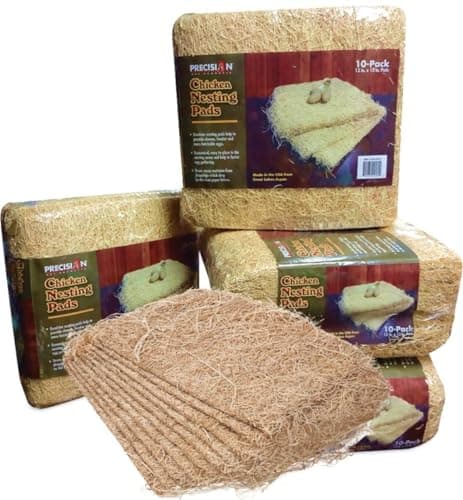
Precision Pet Chicken Nesting Pads, 13x13in, 10-Pack
Ten 13 x 13 inch excelsior nest pads.
#ad How we are funded · Price as of November 8, 2026
Quick picks
| # | Product | Material | Score | Price |
|---|---|---|---|---|
| Rank 1 | Precision Pet Chicken Nesting Pads, 13x13in, 10-Pack The standard nest pad | Excelsior (wood wool) | 9.5 | $24.99Precision Pet |
| Rank 2 | 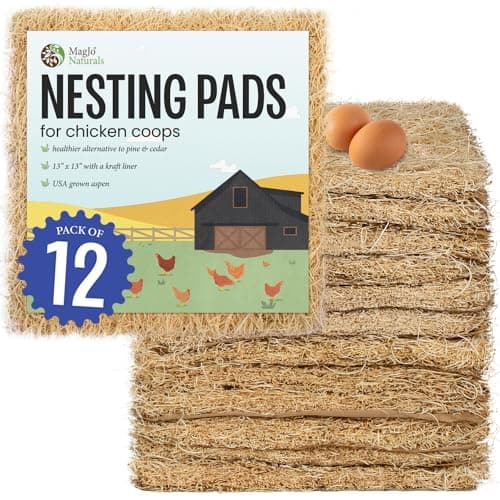 MagJo Aspen Nesting Pads, 13x13in, 12-Pack US-grown aspen pads in a larger pack | USA-grown aspen excelsior | 9.5 | $36.98MagJo Aspen Nesting |
| Rank 3 | 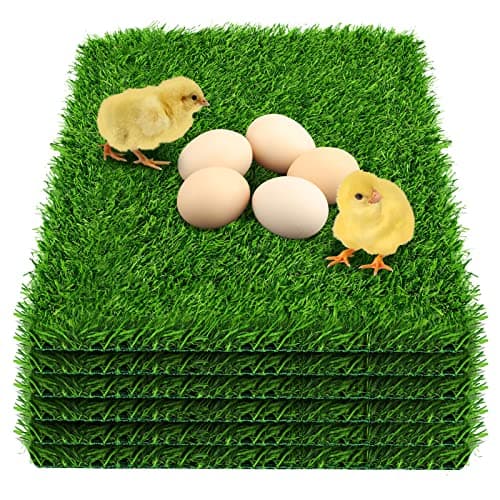 Washable Artificial Grass Nesting Pads, 6-Pack Reusable pads you rinse instead of replace | Washable artificial grass | 9.5 | $22.99Washable, 6-Pack |
| Rank 4 | 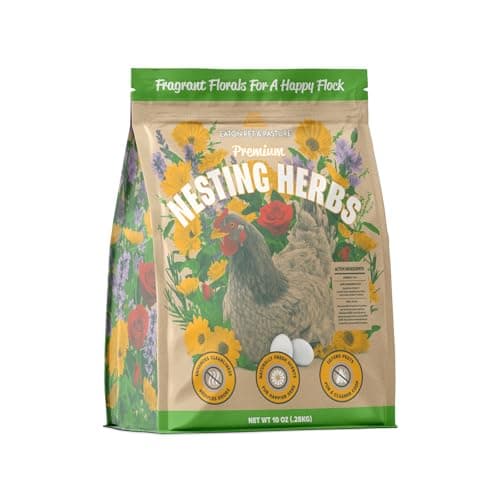 Eaton Pet and Pasture Premium Nesting Herbs A nest box that smells better, honestly described | Not published | 8.8 | $24.99Eaton Pet |
#ad Prices come from Amazon and change. How this site is funded. Scores are our own published rubric, not a lab test — see how we pick.
Put in a nest pad or a few inches of clean pine shavings — something soft, dry, deep enough to form a hollow, and quick to replace. An excelsior pad holds its shape and makes changing it a five-second job; loose shavings are cheaper and let a hen build the hollow herself. Either works. What matters more than the choice is that the material is dry, that there is enough of it to cushion an egg, and that you replace it before it becomes the dirtiest part of the coop.
A nest box is a different problem from a coop floor. The floor has to absorb a night's droppings; the nest has to protect an egg from a six-pound bird settling onto it, and stay clean enough that the egg comes out of it clean. Those are different jobs, which is why a material that is right on the floor is not automatically right in the box.
What the lining is actually for
- Cushioning the egg. An egg laid onto a hard surface cracks, and a cracked egg in a nest box teaches a hen to eat eggs — which is extremely difficult to unteach.
- Keeping the egg clean. Most of what makes an egg dirty is the nest, not the hen.
- Making a hen want to use the box. A hen chooses the most private, most comfortable, darkest spot available. If your boxes are bare and there is a nice corner behind the feed bin, she will use the corner.
- Being removable. Nest material is the fastest-soiling bedding in the coop. If changing it is awkward you will do it less often than you should.
The materials, compared
| Material | Cushioning | Stays clean | Cost | Notes |
|---|---|---|---|---|
| Excelsior nest pads | Very good | Good — lifts out whole | Low per pad | Standard 13 x 13 in fits most boxes |
| Pine shavings | Good if deep | Moderate — gets kicked out | Low | Hens enjoy arranging it; top up often |
| Hemp bedding | Good | Good — very absorbent | Higher | Lowest dust of the loose materials |
| Straw | Good | Poor | Low | Hollow stems harbor mites; mats and molds when damp |
| Hay | Moderate | Poor | Low | Molds readily — not a nest material |
| Washable artificial pads | Moderate | Good — rinse and replace | Higher up front | Pays back after a year of use |
| Shredded paper | Moderate | Poor | Free | Mats into a damp sheet; needs constant changing |
| Sand | Poor | Moderate | Low | Too hard for eggs; it belongs on a floor, not in a nest |
How much, and how often
- Three to four inches of loose material, or one pad plus a handful of shavings on top. A hen needs to be able to form a hollow that an egg will not roll out of.
- Check daily when you collect eggs. You are already there, and a soiled nest is obvious.
- Change the material in a box whenever it is soiled, rather than on a schedule. One broken egg means that box gets done now.
- Full change every two to four weeks even if nothing looks wrong, because nest material is where mites concentrate.
- Keep it dry. Damp nest material is the beginning of both dirty eggs and a mite problem.
What to keep out
Four things people put in nest boxes that cause problems:
- Straw, if you have ever had mites. Extension's guidance on external parasites is worth reading on where these parasites live between feeds, and the answer is cracks, crevices and nesting material. Hollow stems are ideal cover. Chicken mites treatment covers the response if you already have them.
- Anything scented or oily. Fragrance oils irritate bird airways, and the nest box is directly under a sitting hen's face.
- Hay. It is a feed, not a bedding, and it molds.
- Too little material. The commonest version of getting this wrong is not the wrong material but half an inch of it.
Herbs, honestly
Dried aromatic herbs in a nest box smell pleasant, and that is the whole claim this site will make for them. There is no reliable evidence that nest herbs do anything medicinal — not for mites, not for laying. If you enjoy the smell when you collect eggs, they are a small pleasant purchase. If you are buying them as parasite control, buy a coop treatment instead and spend the money where the parasites live.
What is worth buying
Two excelsior pad options at the standard 13 x 13 inch size, the washable pads that pay back over a year, and the herbs described for what they actually are.
#1 · The standard nest pad
#ad How we are funded · Price as of November 8, 2026
Precision Pet Chicken Nesting Pads, 13x13in, 10-Pack
Precision Pet by PetmateTen 13 x 13 inch excelsior nest pads. Published dimensions matter here — 13 x 13 is the size most nest boxes are built around, so these drop straight in.
| Dimensions | 13 x 13 in |
|---|---|
| Pack | 10 pads |
| Material | Excelsior (wood wool) |
| Finish | Beige |
Specifications per Manufacturer figures as published on the Amazon product listing, as published at the date above.
Why we picked it
- 13 x 13 in is the de facto standard nest box size, so these fit without trimming
- Excelsior springs back under a hen instead of compacting flat like shavings
- Ten pads is a year of changes for three boxes
- Composts with the rest of the litter
Good to know — More expensive per nest than a handful of shavings
Our rubric
- Fit for purpose
- 9.8
- Mess and waste
- 9.3
- Quality
- 9.3
- Value
- 9.3
#2 · US-grown aspen pads in a larger pack
#ad How we are funded · Price as of November 8, 2026
MagJo Aspen Nesting Pads, 13x13in, 12-Pack
MagJoTwelve 13 x 13 inch aspen excelsior liners. Aspen is lower in aromatic oils than pine, which matters in a confined nest box right under a hen's face.
| Dimensions | 13 x 13 in |
|---|---|
| Pack | 12 pads |
| Material | USA-grown aspen excelsior |
Specifications per Manufacturer figures as published on the Amazon product listing, as published at the date above.
Why we picked it
- Aspen has fewer aromatic oils than pine — gentler in an enclosed nest box
- Standard 13 x 13 in fit
- Twelve pads gives a longer run between orders
Good to know — Premium price for a consumable
Our rubric
- Fit for purpose
- 9.8
- Mess and waste
- 9.3
- Quality
- 9.8
- Value
- 8.9
#3 · Reusable pads you rinse instead of replace
#ad How we are funded · Price as of November 8, 2026
Washable Artificial Grass Nesting Pads, 6-Pack
DenForsteSix washable artificial-grass nest pads. The economics flip after a year or so: a pad you hose off and put back costs nothing after the first purchase.
| Pack | 6 pads |
|---|---|
| Material | Washable artificial grass |
| Reusable | Yes |
| Dimensions | Not published by manufacturer |
Specifications per Manufacturer figures as published on the Amazon product listing, as published at the date above.
Why we picked it
- Washable, so the running cost after purchase is close to zero
- Artificial turf cushions eggs well and does not compact
- Nothing for mites to live in, unlike loose organic bedding
Good to know — Dimensions are not published, so fit is a gamble on a non-standard box
Our rubric
- Fit for purpose
- 9.3
- Mess and waste
- 9.8
- Quality
- 8.9
- Value
- 9.8
#4 · A nest box that smells better, honestly described
#ad How we are funded · Price as of November 8, 2026
Eaton Pet and Pasture Premium Nesting Herbs
Eaton Pet and PastureA dried aromatic herb blend for nest boxes. It is a freshener, not a treatment: nice for the person collecting eggs, and there is no reliable evidence it does anything medicinal.
| Type | Dried aromatic herb blend |
|---|---|
| Use | Nesting boxes and coop |
| Weight | Not published by manufacturer |
Specifications per Manufacturer figures as published on the Amazon product listing, as published at the date above.
Why we picked it
- Genuinely makes a nest box pleasanter to reach into
- Dried herbs are harmless to hens
- A small handful per box goes a long way
Good to know — Marketed with health claims that are not supported by published evidence — treat it as a freshener
Our rubric
- Fit for purpose
- 8.4
- Mess and waste
- 9.3
- Quality
- 8.9
- Value
- 8.4
If hens are sleeping in the boxes
A hen that sleeps in a nest box fills it with droppings overnight, which no bedding choice can fix. Two causes and two fixes: the roost is not high enough above the boxes, or the boxes are more comfortable than the roost. Raise the roost so it is clearly the highest perch in the coop, and block the boxes at dusk for a week to break the habit. Penn State Extension's housing guidance gives six inches of perch space per standard bird with roosts 18 to 24 inches above the floor, which is the figure to check your coop against.
If eggs are dirty or broken
- Dirty eggs usually mean too little nest material, or hens sleeping in the box. Deepen the material, raise the roost.
- Broken eggs usually mean a hard nest floor or crowding. Add a pad under the loose material, and check you have enough boxes — Penn State Extension suggests two nests for the first four hens, then one more per four hens after that. How many nesting boxes works it through.
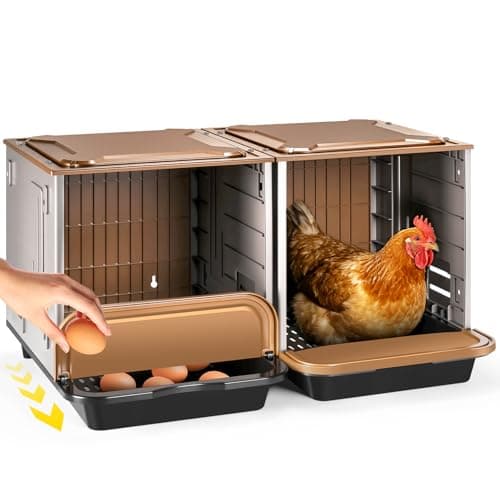
- Eggs eaten nearly always starts with one broken egg. Fix the cushioning and the crowding together, and consider roll-out boxes, which remove the egg from the nest the moment it is laid.
- Soft or thin shells are not a nest problem at all — that is calcium. Grit and oyster shell.
What we would use
A 13 x 13 inch excelsior pad in the base of each box, a couple of handfuls of pine shavings on top of it, and a dummy egg until the pullets have the idea. Pads lift out whole when a box needs doing, the shavings let the hen arrange her own hollow, and nothing in that combination gives mites anywhere good to hide. For the box itself, nest box size and nest box material cover the construction side.
Frequently asked questions
What do you put in a chicken nesting box?
Is straw good for nesting boxes?
How often should nesting box bedding be changed?
How deep should nesting box bedding be?
Do nesting herbs actually work?
Why are my chickens sleeping in the nesting boxes?
Our recommendation
If you buy one thing from this page, buy the first one. The second is here because it is the alternative worth weighing against it, not because a list needs two entries.
Top pick
Precision Pet Chicken Nesting Pads, 13x13in, 10-Pack
The standard nest pad
#ad How we are funded · Price as of November 8, 2026
Runner-up
MagJo Aspen Nesting Pads, 13x13in, 12-Pack
US-grown aspen pads in a larger pack
#ad How we are funded · Price as of November 8, 2026
Sources
Read next
Nesting Boxes
The best nesting box pads
Excelsior, aspen and washable nest pads compared on cushioning, fit and running cost, plus the honest view on nesting herbs.
Nesting Boxes
Chicken nesting box size guide
Box dimensions by breed size, mounting height, and the design details that make a box get used.
Nesting Boxes
How many nesting boxes do chickens need?
The published box-count rule with a table by flock size, and why adding more boxes does not stop the queue.
Nesting Boxes
The best nesting box material
Excelsior, shavings, straw and washable turf compared on cushioning, cleanliness and mite harborage.
Chicken Coops
Chicken mites: how to find them and get rid of them
Mites versus lice, where to look on the bird and in the coop, the re-treatment interval from Extension, and the clean-out that stops them coming back.
Nesting Boxes
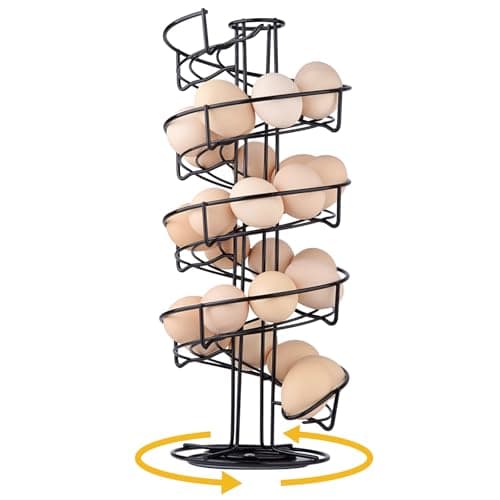
The best egg storage and handling gear
A spiral rack that rotates eggs for you, an auto-rolling FIFO holder, blank cartons, a lidded fridge bin and a gathering basket — ranked on rotation, protection and whether you can wash the thing.