Hatching & Brooding
The best small egg incubators
Seven to twelve eggs. Small enough to fit a kitchen counter, and small enough that you can actually house the chicks.
Chickens & Coops earns a commission when you buy through our links, at no extra cost to you. Prices come from Amazon and change; the date beside every price is when we last verified it. Full disclosure.
Quick picks
| # | Product | Capacity | Score | Price |
|---|---|---|---|---|
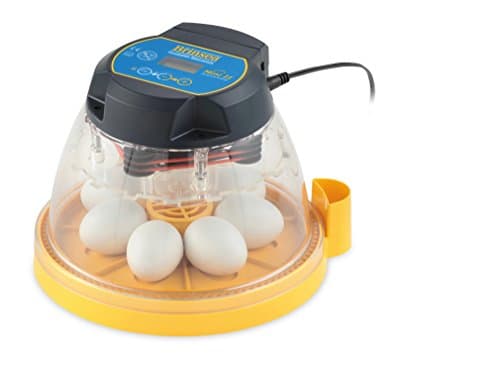
| Rank 1 | Brinsea Mini II Advance, 7 Eggs Seven eggs, hatched properly | 7 eggs | 7.0 | $249.99on Amazon |
| Rank 2 | 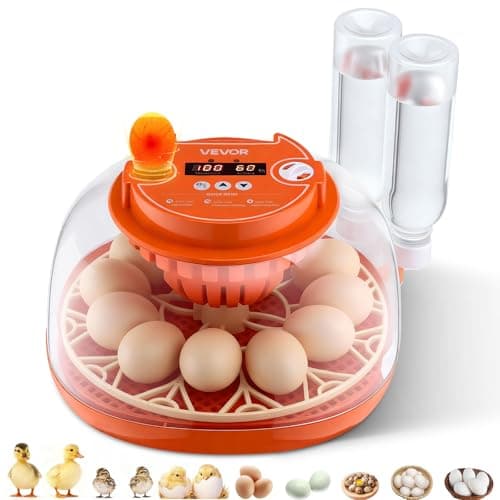 VEVOR 12 Egg Incubator with LED Candler A first, cheap hatch of a dozen | 12 eggs | 7.2 | $36.99on Amazon |
| Rank 3 | 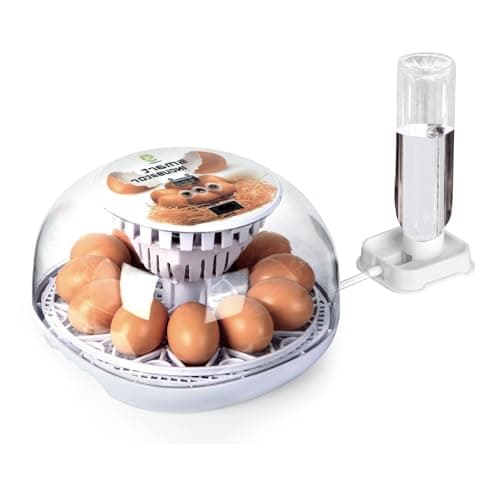 Series I 12 Egg Incubator for Beginners The simplest possible first incubator | 12 eggs | 7.6 | $25.99on Amazon |
| Rank 4 | 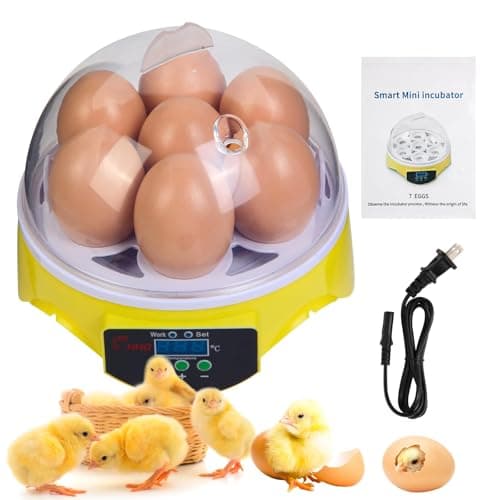 7-Egg Mini Incubator with 360-degree View A classroom or kitchen-table hatch | 7 eggs | 6.2 | $17.99on Amazon |
| Rank 5 | 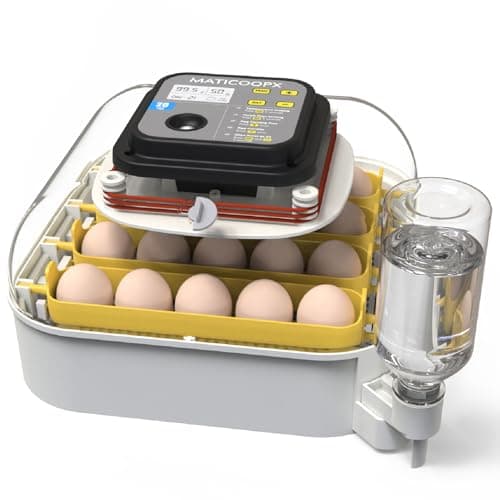 MATICOOPX 20 Egg Incubator with Candler Twenty eggs with the candler in the box | 20 eggs | 7.8 | $69.99on Amazon |
#ad Prices come from Amazon and change. How this site is funded. Scores are our own published rubric, not a lab test — see how we pick.
Small incubators get dismissed as toys, and some are. But there is a strong argument for a small machine: the limiting factor in backyard hatching is almost never how many eggs you can set, it is how many chicks you can brood, raise and house. Seven chicks is a manageable project. Forty is a commitment most people have not thought through.
Where small machines are genuinely the right answer
- Hatching from your own flock's eggs, where you only have a few fertile eggs at a time anyway
- Replacing one or two birds, not the whole flock
- A family or classroom project, where watching matters more than numbers
- Trying hatching for the first time before investing in a bigger machine
- Limited brooder space, which is the real constraint for most people
The picks
From a 7-egg Brinsea to a 20-egg mid-range machine.
#1 · Seven eggs, hatched properly
#ad How we are funded · Price as of October 5, 2026
Brinsea Mini II Advance, 7 Eggs
BrinseaThe reference small incubator. Seven eggs is a tiny batch, but Brinsea's temperature control is in a different class from the budget machines — and temperature stability is the whole ballgame.
| Capacity | 7 eggs |
|---|---|
| Turning | Automatic turner |
| Brand class | Specialist incubator manufacturer |
| Humidity control | Not published by manufacturer |
Specifications per Brinsea published specifications, as published at the date above.
What it does well
- Brinsea's temperature regulation is the benchmark small-incubator buyers compare against
- Automatic turning in a genuinely small footprint
- Supported product with available spares, unlike marketplace incubators
- Small batch suits anyone hatching from their own hens' eggs
Where it falls short
- Costs roughly ten times a generic 12-egg machine
- Seven eggs may yield only three or four chicks
- Humidity management is manual on this model
Our rubric
- Temperature stability
- 10.0
- Humidity control
- 8.0
- Capacity
- 4.0
- Beginner friendliness
- 9.0
- Value
- 4.0
#2 · A first, cheap hatch of a dozen
VEVOR 12 Egg Incubator with LED Candler
VEVORTwelve eggs with turning, humidity control and a candler. The right size for a first experiment, and cheap enough that a failed hatch is a lesson rather than a loss.
| Capacity | 12 eggs |
|---|---|
| Turning | Automatic |
| Control | Temperature and humidity control |
| Candler | LED candler included |
Specifications per Manufacturer figures as published on the Amazon product listing, as published at the date above.
What it does well
- A dozen eggs is the right first batch: enough to learn on, not enough to overwhelm a brooder
- Candler included at this price is unusual
- Cheap enough to be a low-stakes first attempt
Where it falls short
- A dozen eggs may yield only six or seven chicks
- Thermal stability is the usual budget-machine weak point
- Small water channels dry out quickly — check daily
Our rubric
- Temperature stability
- 6.0
- Humidity control
- 6.0
- Capacity
- 5.0
- Beginner friendliness
- 9.0
- Value
- 10.0
#3 · The simplest possible first incubator
Series I 12 Egg Incubator for Beginners
Series ITwelve eggs with auto-turning and self-regulating humidity, sold squarely at beginners. Self-regulating humidity is the claim worth having: humidity is where first hatches usually go wrong.
| Capacity | 12 eggs |
|---|---|
| Turning | Automatic |
| Humidity | Self-regulating (manufacturer claim) |
| Temperature | Consistent temperature control (manufacturer claim) |
Specifications per Manufacturer figures as published on the Amazon product listing, as published at the date above.
What it does well
- Self-regulating humidity removes the hardest judgment call for a first-timer
- Automatic turning included
- Among the cheapest incubators that still turn the eggs for you
Where it falls short
- 'Self-regulating' is a manufacturer claim with no stated tolerance
- Marketplace brand with no support path
- Twelve eggs is a small batch to justify running an incubator for 21 days
Our rubric
- Temperature stability
- 6.0
- Humidity control
- 7.0
- Capacity
- 5.0
- Beginner friendliness
- 10.0
- Value
- 10.0
#4 · A classroom or kitchen-table hatch
7-Egg Mini Incubator with 360-degree View
GenericA seven-egg educational incubator with automatic temperature. It is a teaching tool rather than a flock-building machine, and it is honest about that.
| Capacity | 7 eggs |
|---|---|
| Viewing | 360-degree |
| Temperature | Automatic temperature control |
| Turning | Not published by manufacturer |
| Intended use | Educational, classroom and family |
Specifications per Manufacturer figures as published on the Amazon product listing, as published at the date above.
What it does well
- Cheap enough to be a school or family project
- Full visibility is the point when children are watching
- Small footprint sits on a kitchen counter
Where it falls short
- Egg turning is not confirmed — expect to turn by hand three times a day
- Seven eggs may give two or three chicks
- No humidity control stated
Our rubric
- Temperature stability
- 5.0
- Humidity control
- 4.0
- Capacity
- 3.0
- Beginner friendliness
- 9.0
- Value
- 10.0
#5 · Twenty eggs with the candler in the box
MATICOOPX 20 Egg Incubator with Candler
MATICOOPX20 eggs, automatic turning, a humidity display and an included candler. The candler matters more than it sounds: without one you cannot tell at day 7 which eggs are developing.
| Capacity | 20 eggs |
|---|---|
| Turning | Automatic |
| Humidity | Humidity display |
| Candler | Included |
Specifications per Manufacturer figures as published on the Amazon product listing, as published at the date above.
What it does well
- Candler included, so you can pull clear eggs at day 7 instead of incubating duds
- Humidity display rather than guesswork
- 20 eggs at a mid-range price
Where it falls short
- Humidity is displayed, not controlled — you still add water by hand
- Marketplace brand, so spares and support are uncertain
- Styrofoam-class machines drift more in a cold room than a Brinsea does
Our rubric
- Temperature stability
- 7.0
- Humidity control
- 7.0
- Capacity
- 7.0
- Beginner friendliness
- 9.0
- Value
- 9.0
The small-incubator trade-off
A small volume of air has less thermal mass, so it responds faster to room temperature changes. That makes a cheap small incubator more sensitive to where you put it than a bigger one. Two consequences:
- Siting matters more. A thermally stable interior room, not a garage or a sunny windowsill.
- A separate thermometer matters more. Verify the display, at egg level, over 24 hours, before setting eggs.
This is also why the Brinsea Mini is on this list at many times the price of the generic 7-egg machines: its temperature control is in a different class, and in a small volume that matters most.
Check whether it turns the eggs
Several very cheap small incubators do not include an automatic turner, and the listing does not always say so clearly. Eggs need turning at least three times a day for the first eighteen days. Without a turner that is your job, by hand, every day — which is manageable for twelve eggs if you are at home, and a common reason first hatches fail if you are not.
| Stage | Temperature (forced air) | Humidity | Turning |
|---|---|---|---|
| Days 1-18 | 99.5 F (acceptable 99-101 F) | 55-60% | At least 3 times a day, or automatic |
| Days 18-21 (lockdown) | 99.5 F | 65-70% | Stop turning |
| Hatch | 99.5 F | 65-70% | Do not open the incubator |
Classroom and family hatching
Hatching with children is genuinely one of the better things you can do with an incubator, with two cautions. First, the hatch rate will not be 100% and that needs framing in advance. Second, CDC's backyard poultry guidance is specific that children under five should not handle poultry and that all children should be supervised around birds and during handwashing. Hatching chicks are poultry.
The other thing to settle before the eggs go in is where the chicks are going afterwards. Every hatch produces roughly half cockerels, and a classroom hatch with no plan for them is a problem you have created for somebody.
Frequently asked questions
Are small egg incubators any good?
Do small incubators turn the eggs?
How many eggs should a beginner set?
Is hatching eggs with children safe?
Sources
Read next
Hatching & Brooding
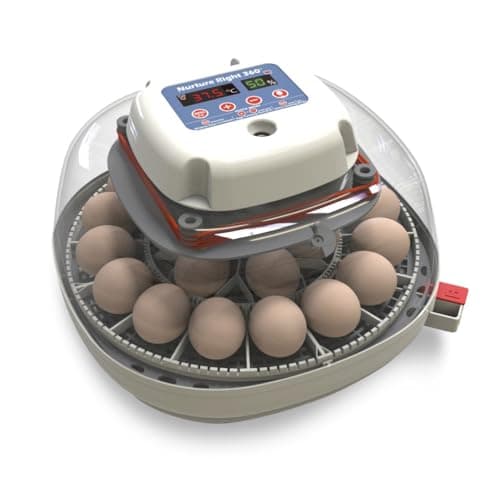
The best egg incubators
Our main incubator ranking, from a 7-egg Brinsea to a 56-egg budget machine, judged on stability first.
Hatching & Brooding
The best egg incubators for beginners
First-hatch incubators, chosen for the features that prevent beginner mistakes: auto-turning, humidity help, a candler.
Hatching & Brooding
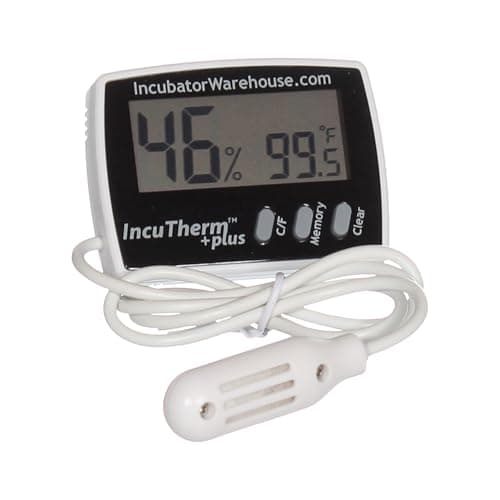
Incubator temperature and humidity for chicken eggs
The published temperature and humidity targets, where they come from, and a troubleshooting table for missing them.
Hatching & Brooding
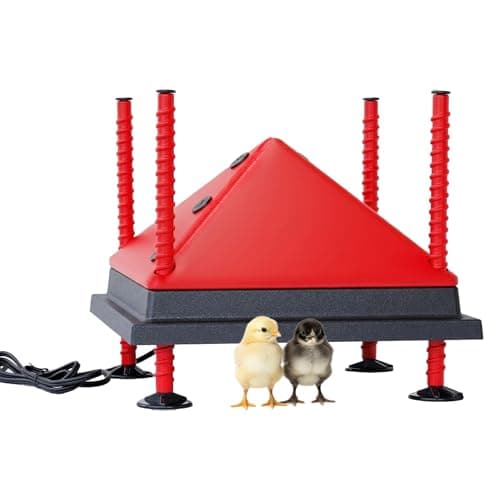
What baby chicks need
The complete day-one-to-week-six checklist, with the CDC hygiene rules and the week-by-week changes.
Hatching & Brooding
Incubating chicken eggs: a day-by-day schedule
The full 21-day schedule with the published temperature and humidity figures, plus the equipment each stage needs.