Feeders & Feed
How to keep rats out of chicken feed
Remove the food source and the rats leave. Everything else is treating a symptom.
Chickens & Coops earns a commission when you buy through our links, at no extra cost to you. Prices come from Amazon and change; the date beside every price is when we last verified it. Full disclosure.
Quick picks
| # | Product | Rodent resistance | Score | Price |
|---|---|---|---|---|
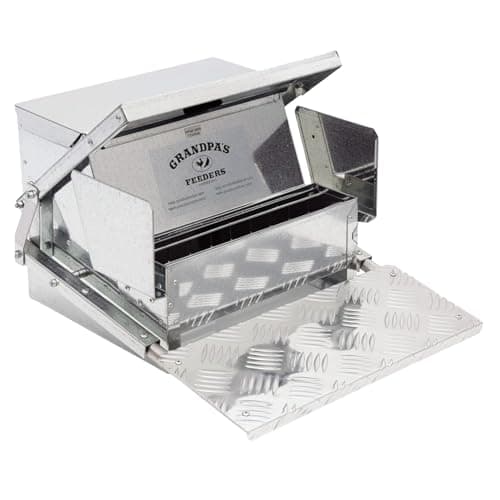
| Rank 1 | Grandpa's Feeders Automatic Chicken Feeder, 20 lb Stopping rats and wild birds outright | Rat and rodent proof (manufacturer claim) | 8.2 | $219.95on Amazon |
| Rank 2 | 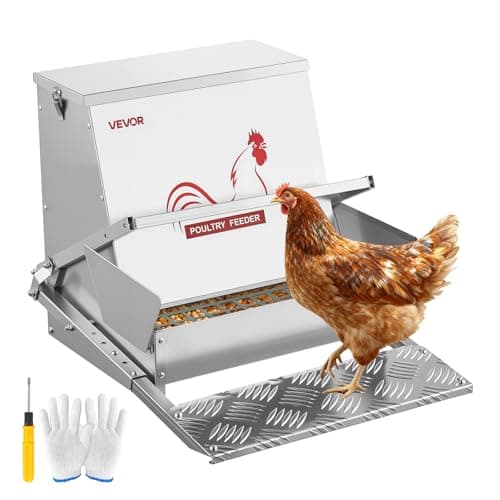 VEVOR Automatic Treadle Feeder, 40 lb Treadle performance at a third of the price | Not published | 9.0 | $94.90on Amazon |
| Rank 3 | 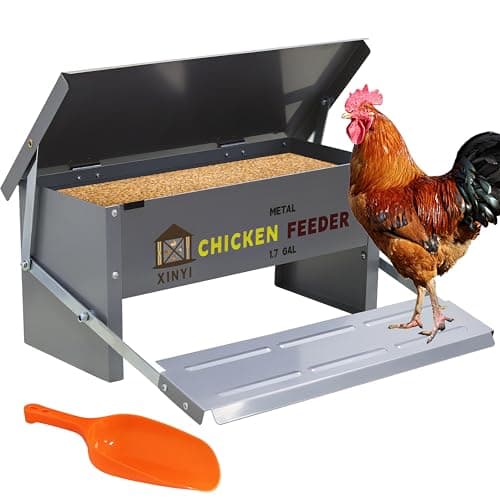 XINYI Metal Treadle Feeder, 12 lb A treadle feeder for two or three hens | Rodent proof (manufacturer claim) | 7.8 | $41.99on Amazon |
| Rank 4 | 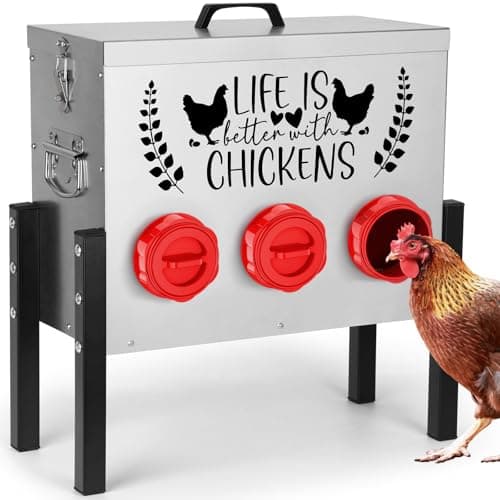 Tgeyd 30 lb Feeder with 6 No-Waste Ports Thirty pounds of feed in a lockable metal hopper | Not published | 8.2 | $29.98on Amazon |
#ad Prices come from Amazon and change. How this site is funded. Scores are our own published rubric, not a lab test — see how we pick.
Rats are not interested in your chickens. They are interested in an open hopper of grain, available every night, in a sheltered spot, next to a water source. Keeping chickens does not cause rats; the way most people store and serve feed does. The good news is that the fix is mechanical rather than a long campaign.
The five changes, in order of effect
1. Close the feeder at night
This is the single highest-impact change and everything else is secondary to it. Either fit a treadle feeder whose lid is closed except when a bird is standing on it, or physically bring the feeder indoors every single night. Partial compliance does not work — a feeder left out one night a week is a feeder.
2. Store feed in metal
A plastic tub is a container, not a barrier; rats chew through it, and through paper sacks, easily. A galvanized metal bin with a tight-fitting lid is a barrier. This is often a bigger food source than the feeder itself, because it holds 50 lb rather than 20.
3. Clear spilled feed daily
Feed on the ground under the feeder is as attractive as feed in it. Rake it up or let the hens finish it before dusk. A no-waste port or treadle feeder reduces how much lands there in the first place, which is a second reason to switch.
4. Remove the water
Rats need water as much as food. An open waterer at ground level overnight is part of the attraction. A nipple or cup system, or bringing the waterer in, removes it.
5. Remove harborage
Rats live somewhere and eat somewhere else. Woodpiles, pallet stacks, long grass against the coop, gaps under decking and old feed sacks are living space. Clearing a meter of ground around the coop and run makes the location much less attractive even if some food remains.
How to tell how bad it is
The most reliable test is arithmetic. Work out what your flock should eat: about 0.25 lb per hen per day, per Extension guidance. If you are going through dramatically more than that and the birds are not gaining weight, something else is eating it.
- Droppings along walls, in the feed store, under the coop. Rat droppings are much larger than mouse droppings.
- Runs — smooth, worn tracks through grass or along fences.
- Gnaw marks on plastic feeders, bins, or coop timber.
- Burrow holes near the coop, often under a slab or against a wall.
- Eggs or chicks disappearing, which happens with established populations.
The disease argument
Rodents and wild birds move pathogens. USDA's Defend the Flock program notes that avian diseases spread through contaminated equipment, feed and water, and that wild birds can introduce disease to domestic flocks. Closing the feed off is a biosecurity measure, not only an economy — and it is one of the simplest a backyard keeper can take.
The feeders that end it
All treadle, because a closed lid is the only mechanism that physically excludes a rat, plus one lockable-lid port feeder.
#1 · Stopping rats and wild birds outright
#ad How we are funded · Price as of October 5, 2026
Grandpa's Feeders Automatic Chicken Feeder, 20 lb
Grandpa's FeedersThe treadle feeder everything else copies. The hen's weight on the step opens the lid; a rat is too light and a sparrow cannot work it at all. 20 lb is right for up to about six hens.
| Capacity | 20 lb |
|---|---|
| Mechanism | Treadle — bird weight opens the lid |
| Rodent resistance | Rat and rodent proof (manufacturer claim) |
| Waste | No-waste design (manufacturer claim) |
| Material | Not published by manufacturer |
Specifications per Manufacturer figures as published on the Amazon product listing, as published at the date above.
What it does well
- A closed lid is the only feeder design that genuinely denies rodents and wild birds
- Keeps feed dry in rain, which no open hanging feeder does
- Eliminates the billing-out waste that makes chickens look like they eat twice what they do
- Hens learn the treadle in a day or two with the lid propped open
Where it falls short
- Several times the price of a hanging feeder of the same capacity
- Bantams and very young birds may be too light to open it reliably
- There is a training period, and it needs the lid propped during it
Our rubric
- Waste control
- 10.0
- Capacity
- 7.0
- Rodent resistance
- 10.0
- Weather resistance
- 9.0
- Value
- 5.0
#2 · Treadle performance at a third of the price
#ad How we are funded · Price as of October 5, 2026
VEVOR Automatic Treadle Feeder, 40 lb
VEVORA galvanized 40 lb rainproof treadle feeder with a lockable lid, at a fraction of the premium brands. The mechanism is cruder, but the principle — a closed lid rodents cannot open — is the same.
| Capacity | 40 lb |
|---|---|
| Mechanism | Treadle, rainproof |
| Lid | Lockable |
| Material | Galvanized steel |
| Waste | No-waste design (manufacturer claim) |
Specifications per Manufacturer figures as published on the Amazon product listing, as published at the date above.
What it does well
- Galvanized steel body, published — not plastic, so rodents cannot chew in
- Lockable lid stops a clever raccoon lifting it
- 40 lb capacity at roughly a third of the premium-brand price
- Rainproof, stated
Where it falls short
- Budget treadle mechanisms are stiffer, so the training period is longer
- Galvanized steel will rust at cut edges after a few seasons outdoors
- Heavier than plastic when full — about 40 lb of feed plus the feeder
Our rubric
- Waste control
- 9.0
- Capacity
- 9.0
- Rodent resistance
- 9.0
- Weather resistance
- 9.0
- Value
- 9.0
#3 · A treadle feeder for two or three hens
#ad How we are funded · Price as of October 5, 2026
XINYI Metal Treadle Feeder, 12 lb
XINYIA 12 lb metal treadle feeder with a weatherproof lid. The right capacity for a very small flock, where a 40 lb hopper would just let the feed go stale.
| Capacity | 12 lb |
|---|---|
| Mechanism | Treadle |
| Material | Metal |
| Lid | Weatherproof |
| Rodent resistance | Rodent proof (manufacturer claim) |
Specifications per Manufacturer figures as published on the Amazon product listing, as published at the date above.
What it does well
- 12 lb means a three-hen flock finishes the hopper before the feed stales
- Metal body, so nothing to chew through
- Cheapest route into treadle feeding
Where it falls short
- Light birds have the most trouble with treadles, and small flocks often mean bantams
- 12 lb needs refilling weekly even for three hens
- Small metal feeders dent easily in transit
Our rubric
- Waste control
- 9.0
- Capacity
- 5.0
- Rodent resistance
- 9.0
- Weather resistance
- 8.0
- Value
- 8.0
#4 · Thirty pounds of feed in a lockable metal hopper
Tgeyd 30 lb Feeder with 6 No-Waste Ports
TgeydA heavy-duty 30 lb metal feeder with six no-waste ports, adjustable height and a locking lid. The locking lid is what lifts it above an ordinary port feeder — it keeps rain and raccoons out of the hopper.
| Capacity | 30 lb |
|---|---|
| Feeding ports | 6 |
| Lid | Locking |
| Height | Adjustable |
| Material | Heavy-duty metal |
Specifications per Manufacturer figures as published on the Amazon product listing, as published at the date above.
What it does well
- Locking lid keeps the hopper dry and stops raccoons helping themselves
- 30 lb capacity means fortnightly refills for a six-hen flock
- Adjustable height lets you set the ports correctly as pullets grow
Where it falls short
- The ports themselves are still open at hen level, so rodents can reach the feed in them
- 30 lb of feed plus a metal hopper is heavy to reposition
- Port diameter is not published
Our rubric
- Waste control
- 9.0
- Capacity
- 8.0
- Rodent resistance
- 6.0
- Weather resistance
- 9.0
- Value
- 9.0
What does not work
- Ultrasonic repellers. No reliable evidence of effect on established rodent populations.
- Peppermint oil and similar deterrents. A rat with a reliable food source is not deterred by a smell.
- A cat. Cats catch mice readily; adult rats are a different proposition, and a cat near a flock brings its own issues.
- Hoping the chickens will deal with it. Hens will kill a young mouse. They will not control a rat population.
Frequently asked questions
How do I get rid of rats around my chicken coop?
Do chickens attract rats?
Is rat poison safe to use near chickens?
Will a treadle feeder stop rats completely?
Do ultrasonic rodent repellers work?
Sources
Read next
Feeders & Feed
The best rat-proof chicken feeders
The feeders that genuinely exclude rodents — all treadle, because nothing else does — plus what else has to change.
Feeders & Feed
The best treadle chicken feeders
Every treadle feeder worth considering, from a 12 lb model for three hens to a 40 lb hopper for a big flock.
Feeders & Feed
How much feed does a chicken eat per day?
The published figure, a table by flock size, and what makes real-world consumption differ from it.
Predator Protection
The main chicken predators, and what stops each one
An identification guide: what each predator does, how to tell which one visited, and the one measure that stops it.
Chicken Coops
How to clean a chicken coop
The daily, weekly and twice-yearly routine, the products that help, and the hygiene rules CDC publishes for handling poultry.