Waterers
How much water do chickens drink?
About 6.4 fluid ounces a hen a day, and roughly double that when it is hot. Size the waterer for the second number.
Chickens & Coops earns a commission when you buy through our links, at no extra cost to you. Prices come from Amazon and change; the date beside every price is when we last verified it. Full disclosure.
Quick picks
| # | Product | Capacity | Score | Price |
|---|---|---|---|---|
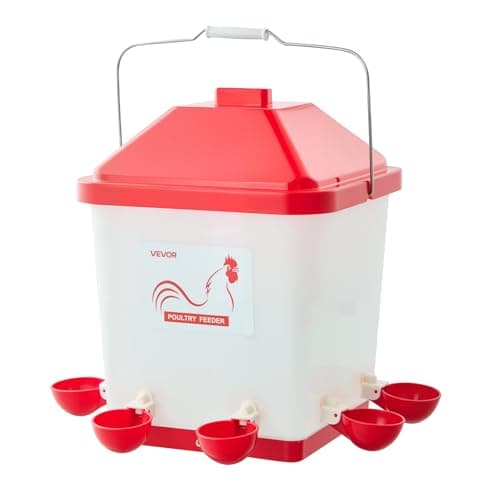
| Rank 1 | VEVOR 5 Gallon Automatic Waterer with 6 Cups Six automatic cups on one 5-gallon reservoir | 5 gallon | 7.2 | $38.90on Amazon |
| Rank 2 | 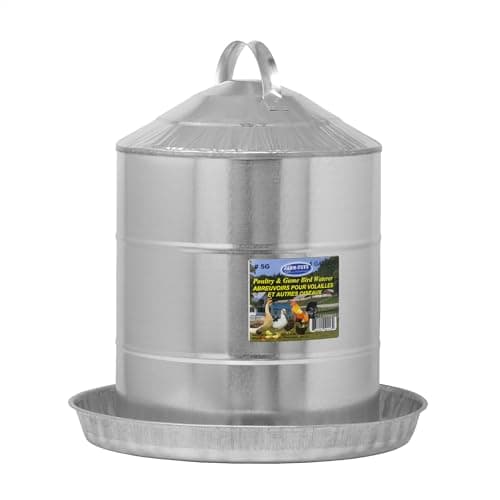 FARM-TUFF Galvanized Poultry Fountain, 5 Gallon A gravity waterer that lasts a decade | 5 gallon | 6.6 | $56.16on Amazon |
| Rank 3 | 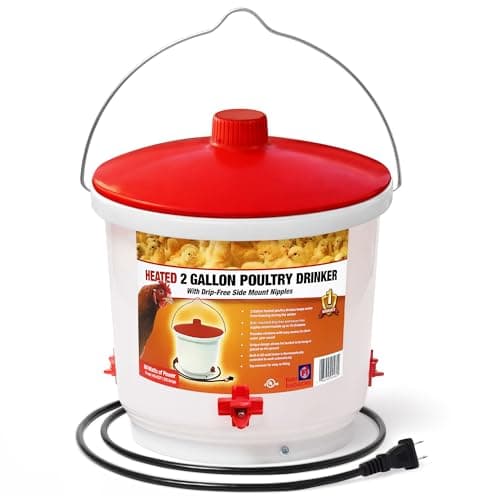 Farm Innovators HB-60P Heated Poultry Waterer, 2 Gallon 60W A purpose-built heated waterer that just works | 2 gallon | 7.2 | $42.99on Amazon |
#ad Prices come from Amazon and change. How this site is funded. Scores are our own published rubric, not a lab test — see how we pick.
A hen drinks about 6.4 fluid ounces of water a day under normal conditions, and roughly double that in warm weather. Those figures come from University of Minnesota Extension, which gives the worked example that ten hens need about half a gallon in cool weather and about a gallon when it is hot.
By flock size
| Flock size | Cool weather | Hot weather | 3 gal lasts (cool) | 5 gal lasts (cool) |
|---|---|---|---|---|
| 2 hens | About 13 fl oz/day | About 26 fl oz/day | weeks — too big | weeks — too big |
| 4 hens | About 26 fl oz/day | About 51 fl oz/day | about 2 weeks | about 3 weeks |
| 6 hens | About 2.4 qt/day | About 4.8 qt/day | about 5 days | about 8 days |
| 10 hens | About 1/2 gallon/day | About 1 gallon/day | about 6 days | about 10 days |
| 20 hens | About 1 gallon/day | About 2 gallons/day | about 3 days | about 5 days |
The rule of thumb worth remembering
Poultry drink roughly twice as much water as they eat by weight. At about 0.25 lb of feed per hen per day that is about 0.5 lb of water, which is close to the 6.4 fl oz figure. The practical use of this is diagnostic: if feed consumption is normal and water consumption has dropped sharply, something is wrong — a frozen or fouled waterer, a dominant bird blocking access, or illness.
What changes it
Heat — by far the biggest factor
Intake roughly doubles in warm weather and can go higher in a genuine heatwave. Chickens have no sweat glands and lose heat largely by panting, which costs water. Heat is harder on hens than cold, and water is the main defense: in hot weather, shade the waterer, add a second drinking point at the far end of the run, and check it twice a day.
Laying
An egg is about three-quarters water. A hen in full lay drinks more than one in moult or winter rest. Laying also stops very quickly if water runs short — faster than it responds to almost any other deficiency.
Feed form
Birds on dry pellets drink more than birds getting substantial fresh forage or wet scraps, which carry their own moisture.
Cold
Intake falls in cold weather but does not stop, which is exactly why a frozen waterer is a serious problem rather than a seasonal inconvenience.
Sizing the waterer
- Take the hot-weather column from the table above, not the cool one.
- Pick a capacity your flock turns over in about a week at that rate. Longer and biofilm becomes the problem.
- Add a second drinking point for flocks above about eight birds, so a dominant hen cannot monopolize access.
- For winter, size for the cool column but choose a heated model — the constraint shifts from volume to temperature.
Capacities that match common flocks
A 5-gallon cup system and a 5-gallon galvanized fount for summer, and a heated 2-gallon drinker for winter.
#1 · Six automatic cups on one 5-gallon reservoir
VEVOR 5 Gallon Automatic Waterer with 6 Cups
VEVORFive gallons feeding six auto-fill cups. Cups keep the bulk of the water sealed inside the drum, which is the main reason cup systems stay cleaner than open founts.
| Capacity | 5 gallon |
|---|---|
| Water ports | 6 automatic-fill cups |
| Operation | Automatic gravity, cup-fed |
| Handle | Carry handle fitted |
Specifications per Manufacturer figures as published on the Amazon product listing, as published at the date above.
What it does well
- Six cups means six hens drink at once without a queue
- The reservoir is sealed, so bedding and droppings cannot get into the bulk water
- 5 gallons on a carry handle is a sensible format for a shed-to-run trip
Where it falls short
- Cups freeze solid before the reservoir does — this is a summer solution
- Cup valves stick if grit gets into them; they need a weekly flick
- Plastic body, so no heated base
Our rubric
- Capacity
- 8.0
- Stays clean
- 9.0
- Freeze resistance
- 2.0
- Ease of refill
- 8.0
- Value
- 9.0
#2 · A gravity waterer that lasts a decade
#ad How we are funded · Price as of October 5, 2026
FARM-TUFF Galvanized Poultry Fountain, 5 Gallon
FARM-TUFFA double-wall galvanized cone-top fountain. Metal is the right choice if you will ever want a heated base under it — plastic founts cannot sit on one.
| Capacity | 5 gallon |
|---|---|
| Material | Galvanized steel, double wall |
| Top | Cone top |
| Operation | Automatic gravity feed |
| Heated base compatible | Yes — metal fount |
Specifications per Manufacturer figures as published on the Amazon product listing, as published at the date above.
What it does well
- Galvanized metal is the only fount body you can legitimately put on a heated base
- Cone top stops hens roosting on it and fouling the water
- Double wall construction means it will outlast several plastic waterers
- 5 gallons is roughly a week for a small flock in mild weather
Where it falls short
- Heavy when full — about 40 lb of water plus the fount
- Galvanized metal reacts with apple cider vinegar, so skip that additive with it
- Cone top makes it awkward to scrub inside
Our rubric
- Capacity
- 8.0
- Stays clean
- 8.0
- Freeze resistance
- 4.0
- Ease of refill
- 6.0
- Value
- 7.0
#3 · A purpose-built heated waterer that just works
Farm Innovators HB-60P Heated Poultry Waterer, 2 Gallon 60W
Farm InnovatorsTwo gallons with a 60-watt thermostatically-controlled element built in. Published wattage, published capacity, and the heater is integrated rather than bolted on — the fewest failure points of any heated option.
| Capacity | 2 gallon |
|---|---|
| Heater | 60 W integrated |
| Control | Thermostatically controlled |
| Type | Heated drinker |
Specifications per Manufacturer figures as published on the Amazon product listing, as published at the date above.
What it does well
- 60 W is published, so you can work out the running cost rather than guess
- Thermostat means it only draws power when it is actually near freezing
- Integrated heater — no separate base to misalign or water to spill onto
- The most widely used heated poultry drinker in US backyards for a reason
Where it falls short
- 2 gallons is a daily refill for anything above about six hens in winter
- Needs an outdoor-rated extension run to the coop, properly protected
- A permanently plugged-in appliance in a dusty coop needs checking each season
Our rubric
- Capacity
- 5.0
- Stays clean
- 7.0
- Freeze resistance
- 10.0
- Ease of refill
- 7.0
- Value
- 7.0
Signs of a water problem
- Laying drops suddenly across the flock with no other explanation — check water first
- Pale combs and lethargy in hot weather
- Panting with wings held away from the body — heat stress, and the water is probably warm or too far away
- A full waterer at dusk — either nobody drank, or it is frozen, or it is fouled
- One bird always last to the waterer — a dominance problem that a second drinking point fixes
Frequently asked questions
How much water does a chicken drink per day?
How much water do 10 chickens need?
Do chickens drink more than they eat?
How much water do chickens drink in winter?
Can chickens go a day without water?
Sources
Read next
Waterers
The best chicken waterers
Our main waterer ranking: open founts, cup systems and nipple kits, judged on cleanliness as much as capacity.
Feeders & Feed
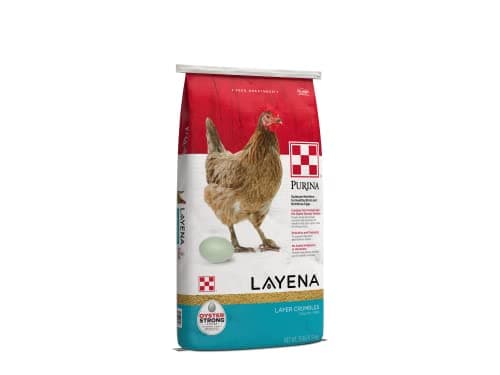
How much feed does a chicken eat per day?
The published figure, a table by flock size, and what makes real-world consumption differ from it.
Waterers
How to stop chicken water from freezing
Every method for keeping water liquid in winter, honestly ranked — including the four that do not work.
Waterers
How to keep chicken water clean
The three causes of dirty chicken water and what actually fixes each — including the one you cannot buy your way out of.
Nesting Boxes
Why have my chickens stopped laying?
A diagnostic for a stopped flock: eight causes in order of likelihood, with what actually fixes each one.