Hatching & Brooding
The best egg incubators
Temperature stability decides a hatch. Everything else on the box is secondary to holding 99.5 degrees for three weeks.
Chickens & Coops earns a commission when you buy through our links, at no extra cost to you. Prices come from Amazon and change; the date beside every price is when we last verified it. Full disclosure.
Quick picks
| # | Product | Capacity | Score | Price |
|---|---|---|---|---|
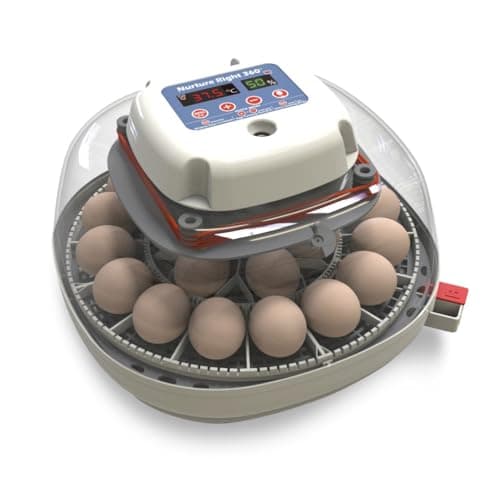
| Rank 1 | Harris Farms Nurture Right 360 Incubator, 22 Eggs The best first incubator for most people | 22 eggs | 8.2 | $124.99on Amazon |
| Rank 2 | 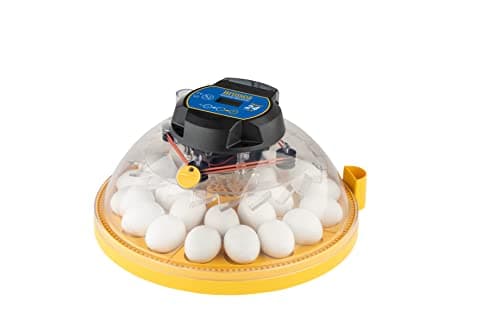 Brinsea Maxi 24 EX, 24 Eggs Serious hatching with automatic humidity | 24 eggs | 8.2 | $340.45on Amazon |
| Rank 3 | 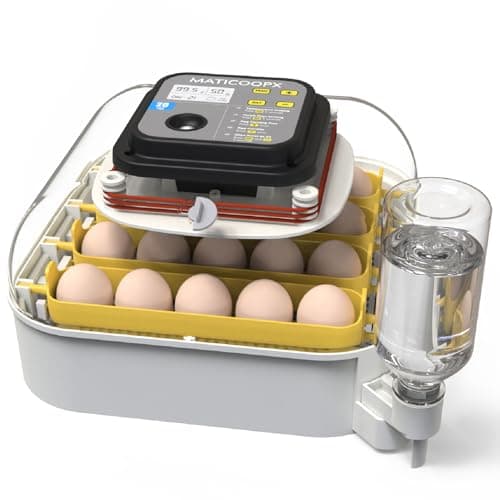 MATICOOPX 20 Egg Incubator with Candler Twenty eggs with the candler in the box | 20 eggs | 7.8 | $69.99on Amazon |
| Rank 4 | 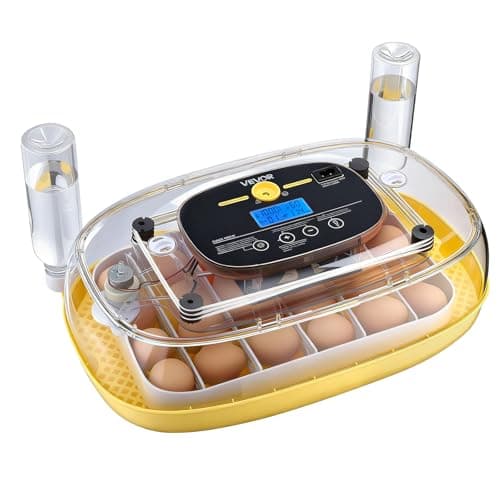 VEVOR 24 Egg Incubator with LED Candler Twenty-four eggs for the price of a bag of feed | 24 eggs | 7.6 | $42.99on Amazon |
| Rank 5 | 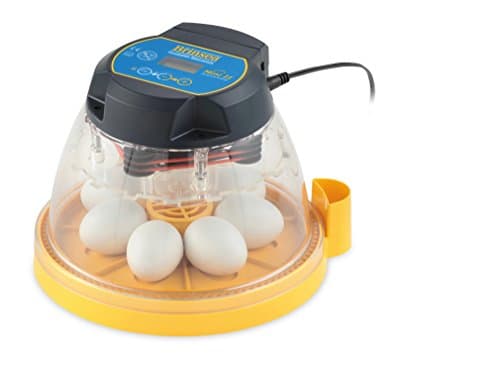 Brinsea Mini II Advance, 7 Eggs Seven eggs, hatched properly | 7 eggs | 7.0 | $249.99on Amazon |
| Rank 6 | 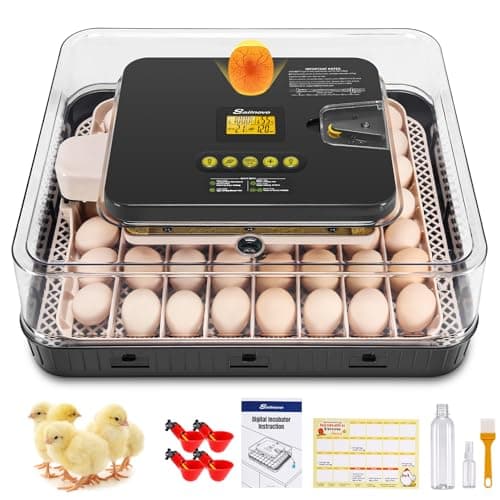 Sailnovo 56 Egg Incubator with Automatic Turning Fifty-six eggs without a specialist budget | 56 eggs | 7.8 | $64.99on Amazon |
#ad Prices come from Amazon and change. How this site is funded. Scores are our own published rubric, not a lab test — see how we pick.
An incubator has one job: hold 99.5 degrees Fahrenheit and a controlled humidity for twenty-one days without drifting. Everything else — the window, the candler, the app — is convenience. A machine that drifts two degrees in a cold room will give you a poor hatch no matter how good its feature list.
How we ranked these
Temperature stability first, inferred from build class and control type. Humidity control second, with automatic control scored well above a display that merely tells you what is happening. Capacity third, matched to what a backyard keeper actually wants. Beginner friendliness fourth. Then value.
The numbers every incubator has to hit
| Stage | Temperature (forced air) | Humidity | Turning |
|---|---|---|---|
| Days 1-18 | 99.5 F (acceptable 99-101 F) | 55-60% | At least 3 times a day, or automatic |
| Days 18-21 (lockdown) | 99.5 F | 65-70% | Stop turning |
| Hatch | 99.5 F | 65-70% | Do not open the incubator |
Those figures come from NC State Extension and University of Nebraska-Lincoln Extension: forced-air incubators should hold a constant 99.5 F with an acceptable range of 99-101 F and must not exceed 102 F, with humidity at 55-60% for days 1-18 and 65-70% for days 18-21.
The incubators
Ranked on stability and control. Live prices from Amazon, dated.
#1 · The best first incubator for most people
Harris Farms Nurture Right 360 Incubator, 22 Eggs
Harris Farms22 eggs, an automatic turner and a 360-degree view, from an established poultry-equipment brand. It sits exactly where a first incubator should: enough capacity to be worth running, simple enough to get right.
| Capacity | 22 eggs |
|---|---|
| Turning | Automatic turner |
| Viewing | 360-degree window |
| Humidity control | Not published by manufacturer |
| Candler | Not published by manufacturer |
Specifications per Manufacturer figures as published on the Amazon product listing, as published at the date above.
What it does well
- 22 eggs is a realistic backyard hatch — enough that a 60% hatch rate still gives you a flock
- Automatic turning removes the three-times-a-day job that sinks most first hatches
- 360-degree viewing means you can watch without lifting the lid and dumping the humidity
- Made by a poultry brand with a long track record rather than a marketplace label
Where it falls short
- Humidity control detail is not published; expect to top water channels manually
- No candler stated as included
- Costs more than the generic 24-egg incubators
Our rubric
- Temperature stability
- 9.0
- Humidity control
- 7.0
- Capacity
- 8.0
- Beginner friendliness
- 10.0
- Value
- 7.0
#2 · Serious hatching with automatic humidity
Brinsea Maxi 24 EX, 24 Eggs
Brinsea24 eggs with automatic turning and automatic humidity control. The humidity automation is what separates it from everything cheaper: no topping up water channels, no guessing.
| Capacity | 24 eggs |
|---|---|
| Turning | Automatic |
| Humidity control | Automatic |
| Brand class | Specialist incubator manufacturer |
Specifications per Brinsea published specifications, as published at the date above.
What it does well
- Automatic humidity control removes the biggest variable in a hatch after temperature
- 24 eggs is a real batch at full automation
- Built and supported as laboratory-grade equipment, not a consumer gadget
Where it falls short
- Among the most expensive incubators a backyard keeper will consider
- Overkill for one hatch a year
- Still needs a separate brooder once the chicks are dry
Our rubric
- Temperature stability
- 10.0
- Humidity control
- 10.0
- Capacity
- 8.0
- Beginner friendliness
- 9.0
- Value
- 4.0
#3 · Twenty eggs with the candler in the box
MATICOOPX 20 Egg Incubator with Candler
MATICOOPX20 eggs, automatic turning, a humidity display and an included candler. The candler matters more than it sounds: without one you cannot tell at day 7 which eggs are developing.
| Capacity | 20 eggs |
|---|---|
| Turning | Automatic |
| Humidity | Humidity display |
| Candler | Included |
Specifications per Manufacturer figures as published on the Amazon product listing, as published at the date above.
What it does well
- Candler included, so you can pull clear eggs at day 7 instead of incubating duds
- Humidity display rather than guesswork
- 20 eggs at a mid-range price
Where it falls short
- Humidity is displayed, not controlled — you still add water by hand
- Marketplace brand, so spares and support are uncertain
- Styrofoam-class machines drift more in a cold room than a Brinsea does
Our rubric
- Temperature stability
- 7.0
- Humidity control
- 7.0
- Capacity
- 7.0
- Beginner friendliness
- 9.0
- Value
- 9.0
#4 · Twenty-four eggs for the price of a bag of feed
VEVOR 24 Egg Incubator with LED Candler
VEVOR24 eggs, automatic turning, temperature and humidity control and an LED candler, at an entry-level price. The cheapest route to a meaningful batch, with the usual budget-machine caveat about stability.
| Capacity | 24 eggs |
|---|---|
| Turning | Automatic |
| Control | Temperature and humidity control |
| Candler | LED candler included |
| Viewing | 360-degree clear window |
Specifications per Manufacturer figures as published on the Amazon product listing, as published at the date above.
What it does well
- 24 eggs and a candler for roughly the price of two bags of layer feed
- Full 360-degree window means no lid-lifting to check progress
- Automatic turning included at this price
Where it falls short
- Budget machines drift with room temperature — site it somewhere thermally stable
- Verify the reading against a separate thermometer before you trust it with eggs
- No meaningful support if the controller fails
Our rubric
- Temperature stability
- 6.0
- Humidity control
- 6.0
- Capacity
- 8.0
- Beginner friendliness
- 8.0
- Value
- 10.0
#5 · Seven eggs, hatched properly
#ad How we are funded · Price as of October 5, 2026
Brinsea Mini II Advance, 7 Eggs
BrinseaThe reference small incubator. Seven eggs is a tiny batch, but Brinsea's temperature control is in a different class from the budget machines — and temperature stability is the whole ballgame.
| Capacity | 7 eggs |
|---|---|
| Turning | Automatic turner |
| Brand class | Specialist incubator manufacturer |
| Humidity control | Not published by manufacturer |
Specifications per Brinsea published specifications, as published at the date above.
What it does well
- Brinsea's temperature regulation is the benchmark small-incubator buyers compare against
- Automatic turning in a genuinely small footprint
- Supported product with available spares, unlike marketplace incubators
- Small batch suits anyone hatching from their own hens' eggs
Where it falls short
- Costs roughly ten times a generic 12-egg machine
- Seven eggs may yield only three or four chicks
- Humidity management is manual on this model
Our rubric
- Temperature stability
- 10.0
- Humidity control
- 8.0
- Capacity
- 4.0
- Beginner friendliness
- 9.0
- Value
- 4.0
#6 · Fifty-six eggs without a specialist budget
#ad How we are funded · Price as of October 5, 2026
Sailnovo 56 Egg Incubator with Automatic Turning
Sailnovo56 eggs with automatic turning at a budget price. If you are hatching to build a flock rather than for the experience, capacity per dollar is the number that matters and this wins it.
| Capacity | 56 eggs |
|---|---|
| Turning | Automatic |
| Finish | Gray |
| Humidity control | Not published by manufacturer |
Specifications per Manufacturer figures as published on the Amazon product listing, as published at the date above.
What it does well
- 56 eggs for a fraction of what a specialist 56-egg machine costs
- Automatic turning at full capacity
- Enough birds from one hatch to replace a whole flock
Where it falls short
- Humidity control is not detailed on the listing
- Fifty-six chicks need a very large brooder, which most people underestimate
- Budget electronics running for 21 continuous days is a real reliability question
Our rubric
- Temperature stability
- 6.0
- Humidity control
- 6.0
- Capacity
- 10.0
- Beginner friendliness
- 7.0
- Value
- 10.0
What separates a cheap incubator from an expensive one
| Budget (under ~$70) | Mid (~$70-130) | Specialist (Brinsea class) | |
|---|---|---|---|
| Temperature control | Basic thermostat, drifts with the room | Better thermostat, still room-sensitive | Precise, well compensated |
| Humidity | Manual water channels | Display, still manual top-up | Often fully automatic |
| Turning | Usually automatic | Automatic | Automatic |
| Build | Lightweight plastic | Plastic, better insulated | Engineered, serviceable |
| Spares and support | None | Limited | Available for years |
| Realistic use | One or two hatches a year | Annual hatching | Repeated, reliable hatching |
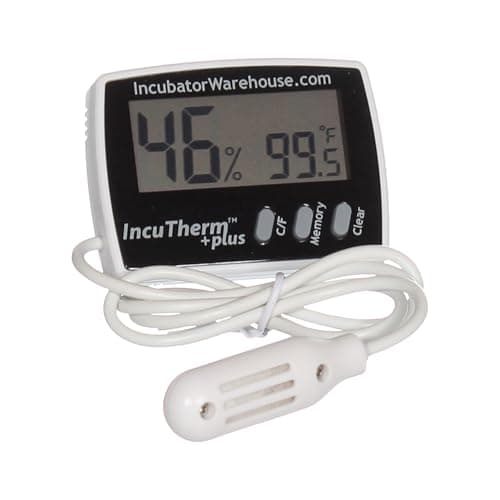
Buy a separate thermometer — this is not optional
A budget incubator's own display can be out by several degrees, and several degrees is the difference between a good hatch and no hatch. A separate incubator-grade thermometer and hygrometer placed at egg level is the highest-value accessory in hatching, and it costs a fraction of the machine. Verify the display before you trust it with eggs.
Capacity: smaller than you think
The temptation is a 56-egg machine. The question to ask is not how many eggs you want to set but how many chicks you can brood, house and keep. A 56-egg hatch at a 70% rate is nearly forty birds, needing a large brooder for six weeks and then 80 sq ft of coop floor. For most backyard keepers a 12 to 24-egg machine is the right size.
Still air or forced air?
Forced-air incubators have a fan that circulates air, so the temperature is even and the 99.5 F figure applies throughout. Still-air incubators have no fan, so air stratifies and the figure is measured at the top of the egg, which is higher. Forced air is easier to get right and is what almost every modern machine is. Full comparison.
Frequently asked questions
What temperature should a chicken egg incubator be?
What humidity do chicken eggs need?
How long do chicken eggs take to hatch?
What size incubator should I buy?
Do I need a separate thermometer for my incubator?
Sources
Read next
Hatching & Brooding
The best egg incubators for beginners
First-hatch incubators, chosen for the features that prevent beginner mistakes: auto-turning, humidity help, a candler.
Hatching & Brooding
Incubator temperature and humidity for chicken eggs
The published temperature and humidity targets, where they come from, and a troubleshooting table for missing them.
Hatching & Brooding
Incubating chicken eggs: a day-by-day schedule
The full 21-day schedule with the published temperature and humidity figures, plus the equipment each stage needs.
Hatching & Brooding
Still air vs forced air incubators
Why the fan matters, where to put the thermometer in each type, and which to buy for a backyard hatch.
Hatching & Brooding
The best chick brooders
Brooder heat plates, boxed kits and the chick feeder and waterer that go in — with the DIY option that works just as well.
About
How we pick
The published method behind every score here, and a plain statement of what we have not tested.