Start Here
The real cost of raising backyard chickens
Feed is the recurring cost and it is calculable. Setup is where people are surprised, and it is a one-off.
Chickens & Coops earns a commission when you buy through our links, at no extra cost to you. Prices come from Amazon and change; the date beside every price is when we last verified it. Full disclosure.
Quick picks
| # | Product | Weight | Score | Price |
|---|---|---|---|---|
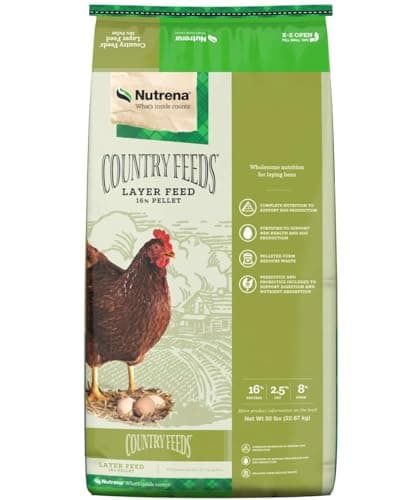
| Rank 1 | Nutrena Country Feeds 16% Layer Pellets, 50 lb The cheapest cost per pound for a bigger flock | 50 lb | 8.8 | $41.39on Amazon |
| Rank 2 | 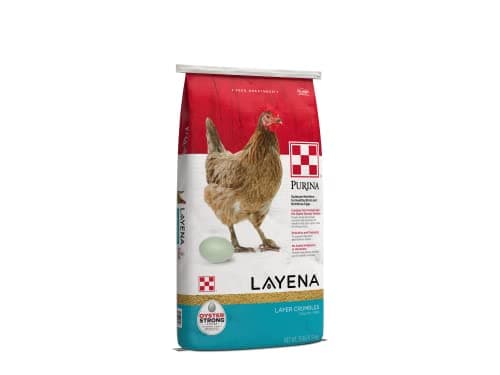 Purina Layena Layer Crumbles, 25 lb The standard bag for a six-hen flock | 25 lb | 8.3 | $35.98on Amazon |
| Rank 3 | 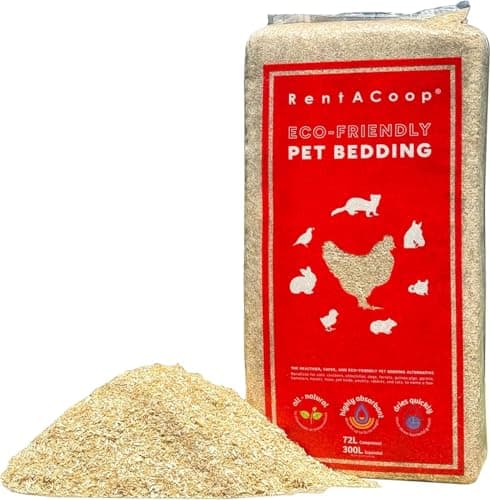 RentACoop Premium Hemp Bedding, 300L Low dust in a small or poorly ventilated coop | 30 lb | 8.0 | $74.95on Amazon |
| Rank 4 | 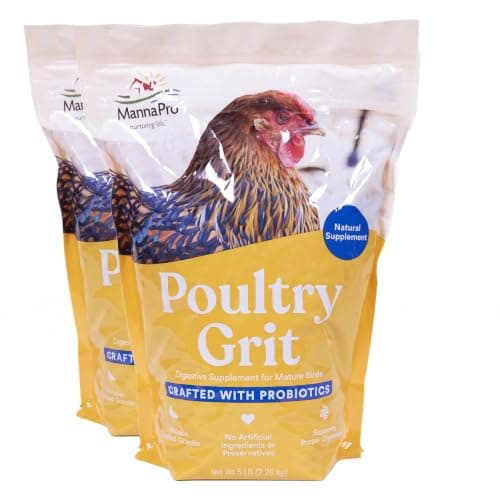 Manna Pro Poultry Grit with Probiotics, 5 lb Insoluble grit for hens eating anything but pellets | 5 lb | 9.0 | $19.02on Amazon |
#ad Prices come from Amazon and change. How this site is funded. Scores are our own published rubric, not a lab test — see how we pick.
We are not going to print a dollar figure for keeping chickens, because any number we wrote would be out of date by the time you read it and wrong for your region anyway. What we can give you is better: the consumption figures, which are published and stable, and live prices on this page, so you can do the arithmetic for today.
The one-off setup costs
This is where first-time keepers are surprised, and it is almost entirely the coop. The spread is enormous — a budget flat-pack coop and a shed-grade or premium plastic coop differ by more than ten times — and the cheap end needs upgrades the expensive end does not.
- Coop — the dominant cost, and the widest range. Coops by flock size.
- Run — either attached (included) or separate (cheaper per sq ft). Walk-in runs.
- Predator hardware — hardware cloth, a two-step latch, an apron. Cheap in absolute terms and the most commonly skipped line.
- Feeder and waterer — modest, unless you buy a treadle feeder, which is a real line item.
- A heated waterer if your winters freeze. Not optional in that case.
- A metal feed bin. Needed, and routinely forgotten.
- The birds themselves — point-of-lay pullets cost more than chicks, and chicks need a brooder setup.
The recurring costs, with the figures
Feed — the main one
| Flock size | Feed per week | Feed per month | 50 lb bags per year |
|---|---|---|---|
| 2 hens | 3.5 lb | about 15 lb | about 3.6 |
| 4 hens | 7 lb | about 30 lb | about 7.3 |
| 6 hens | 10.5 lb | about 45 lb | about 11 |
| 10 hens | 17.5 lb | about 76 lb | about 18 |
| 20 hens | 35 lb | about 152 lb | about 36 |
Six hens go through roughly eleven 50 lb bags a year. That is the number to multiply by whatever a bag costs where you are — and it is the single biggest recurring expense by a wide margin.
Bedding
Depends heavily on method. Deep litter — adding fresh material on top rather than stripping out — uses far less than frequent full changes. A 300-liter hemp bale or an equivalent volume of shavings covers a small coop for several months.
Grit and oyster shell
Genuinely minor. Consumption is low and erratic, and a 5 lb bag of each lasts a small flock months. Do not economize here.
Electricity, if you heat the water
A heated waterer draws 60-125 W and, if it is thermostatted, only runs near freezing. Multiply the wattage by your estimate of freezing hours and your electricity rate. It is a real cost and a small one.
The costs nobody budgets for
- Replacing the coop. A budget flat-pack coop does not last a decade. Plan on it.
- Veterinary care. Avian vets are not universal and not cheap. Worth knowing where yours is before you need one.
- Mite treatment, which most flocks need at some point.
- Replacing birds. Laying declines each year, and predators and illness happen.
- Fencing or netting after the first predator visit, which is when most people buy it.
Where the money actually goes
Two feed bag sizes, bedding, and grit — the four recurring purchases, with live prices.
#1 · The cheapest cost per pound for a bigger flock
Nutrena Country Feeds 16% Layer Pellets, 50 lb
Nutrena50 lb of 16% layer pellets with the protein figure published. For eight or more hens this is the sensible format — provided you have a sealed bin to keep it in.
| Type | Layer pellets |
|---|---|
| Protein | 16% |
| Weight | 50 lb |
| For | Laying hens |
Specifications per Manufacturer figures as published on the Amazon product listing, as published at the date above.
What it does well
- Lowest cost per pound of any layer feed here
- 16% protein stated
- 50 lb is about six weeks for eight hens
Where it falls short
- 50 lb needs a rodent-proof metal bin, or you are feeding mice
- Heavy to move and awkward to pour
- Too much feed for a flock of three — it will stale before it is finished
Our rubric
- Fit for purpose
- 9.0
- Mess and waste
- 8.0
- Quality
- 8.0
- Value
- 10.0
#2 · The standard bag for a six-hen flock
#ad How we are funded · Price as of October 5, 2026
Purina Layena Layer Crumbles, 25 lb
Purina25 lb of complete layer crumble — roughly a month for six hens. Crumble suits mixed-age flocks and bantams that find full pellets awkward.
| Type | Layer crumbles, nutritionally complete |
|---|---|
| Weight | 25 lb |
| For | Laying hens |
| Protein | Not published by manufacturer |
Specifications per Manufacturer figures as published on the Amazon product listing, as published at the date above.
What it does well
- Complete layer ration from the most widely stocked brand in the US
- Crumble is easier for bantams and smaller breeds to eat than pellets
- 25 lb is about a month for six hens — fresh all the way down the bag
Where it falls short
- Crumble generates more dust and more billed-out waste than pellets
- Protein percentage is not stated on this listing
- Needs an airtight bin once opened or it absorbs moisture
Our rubric
- Fit for purpose
- 9.0
- Mess and waste
- 7.0
- Quality
- 9.0
- Value
- 8.0
#3 · Low dust in a small or poorly ventilated coop
#ad How we are funded · Price as of October 5, 2026
RentACoop Premium Hemp Bedding, 300L
RentACoop300 liters of hemp hurd per 30 lb bale. Hemp costs more than pine up front but absorbs more per liter and throws far less dust — which is the thing that actually damages chicken lungs.
| Material | Hemp hurd |
|---|---|
| Volume | 300 L |
| Weight | 30 lb |
| Intended use | Chickens, rabbits, horses |
Specifications per Manufacturer figures as published on the Amazon product listing, as published at the date above.
What it does well
- Volume and weight both published, so the real cost per liter is comparable
- Markedly less dust than pine — the single biggest respiratory factor in a closed coop
- Absorbs more liquid per liter than shavings, so the litter stays drier between changes
- Composts readily
Where it falls short
- Costs several times what an equivalent volume of pine does
- Finer particles can sift through widely-spaced slatted floors
- Not stocked in most feed stores, so you are ordering it
Our rubric
- Fit for purpose
- 9.0
- Mess and waste
- 8.0
- Quality
- 9.0
- Value
- 6.0
#4 · Insoluble grit for hens eating anything but pellets
#ad How we are funded · Price as of October 5, 2026
Manna Pro Poultry Grit with Probiotics, 5 lb
Manna ProInsoluble crushed granite — the grinding stone a hen's gizzard needs to process grass, scratch and kitchen scraps. It is not a calcium supplement and does not replace oyster shell.
| Type | Insoluble crushed granite grit |
|---|---|
| Weight | 5 lb |
| Added | Probiotics |
| Function | Gizzard grinding material |
Specifications per Manufacturer figures as published on the Amazon product listing, as published at the date above.
What it does well
- States 'insoluble crushed granite', which is exactly what grit should be
- 5 lb lasts a small flock a very long time — it is offered free-choice, not mixed in
- Essential the moment hens eat anything other than a complete pellet
Where it falls short
- Routinely confused with oyster shell; they do different jobs and you need both
- Not needed at all for birds fed only complete crumble indoors
- Offer it in a separate small dish, not mixed into feed
Our rubric
- Fit for purpose
- 10.0
- Mess and waste
- 9.0
- Quality
- 9.0
- Value
- 8.0
Do backyard eggs save money?
Honestly: usually not, and that is fine. The feed cost per dozen eggs is often comparable to or above supermarket prices once you account for the setup amortized over a few years, the moult, the winter slowdown and the declining laying of older birds. The economics improve with scale, with cheap feed bought in bulk, and if you would otherwise buy premium pasture-raised eggs — but a backyard flock of three hens is not a cost-saving measure.
What you actually get is eggs you know the provenance of, a genuinely enjoyable animal to keep, kitchen scraps turned into compost, and a garden with chickens in it. Those are good reasons. Breaking even is not usually one of them, and anyone telling you otherwise is selling something.
Working out your own number
- Pick your flock size. Read the feed table above for annual bag count.
- Multiply by today's bag price for your region. That is your dominant recurring cost.
- Add bedding, which is modest with deep litter.
- Add grit, oyster shell and electricity — small.
- Separately, total the setup: coop, run, predator hardware, feeder, waterer, feed bin, birds.
- Divide the setup over the years you expect it to last, and add that to the recurring figure.
That gives you a number you can trust, using today's prices rather than a figure from an article written three years ago.
Frequently asked questions
How much does it cost to keep chickens?
How much feed will my chickens eat in a year?
Is it cheaper to keep chickens than buy eggs?
What is the biggest cost in keeping chickens?
What costs do people forget?
Sources
Read next
Start Here
Chicken starter checklist
The full starter list, split into day-one essentials and things that can wait, with the sizing figures for each.
Feeders & Feed
How much feed does a chicken eat per day?
The published figure, a table by flock size, and what makes real-world consumption differ from it.
Chicken Coops
The best chicken coops for beginners
Coops chosen for a first flock: honest capacity, assembly you can finish in an afternoon, cleaning you will keep up with.
Start Here
How many chickens should I get?
Flock sizing by household, yard and coop, with the space figures and the honest note about flocks growing.
Chicken Coops
Chicken coop kit vs building your own
Kit or self-build? The real comparison on cost, time, size and how good the finished coop is.