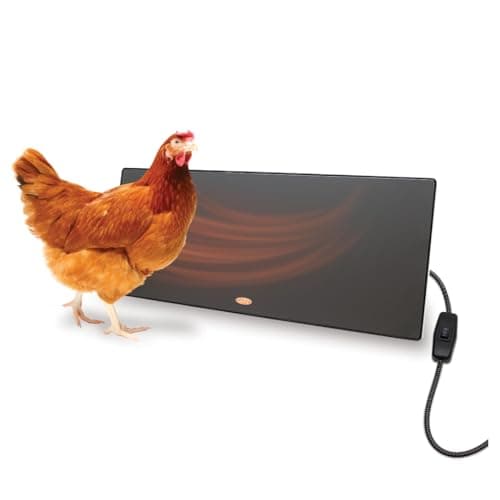
Safest Coop Heater
The safest chicken coop heaters
Radiant panels ranked on fire safety, certification and thermostat control — after a clear statement that most flocks need none of this.
Extension guidance advises against supplemental coop heat, and the reason is fire risk near dry bedding. Here is what to do instead — and how to do it safely if your case is the exception.
Chickens & Coops earns a commission when you buy through our links, at no extra cost to you. Prices come from Amazon and change; the date beside every price is when we last verified it. Full disclosure.
Ranked on the specifications below. Prices are live and dated; where no live price resolves, the cell reads Check price.
| # | Product | Power | Score | Price |
|---|---|---|---|---|
| Rank 1 | Cozy Products Cozy Coop Flat-Panel Heater, 150W The safest way to take the edge off a cold coop | 150 W | 7.2 | $54.69on Amazon |
| Rank 2 | 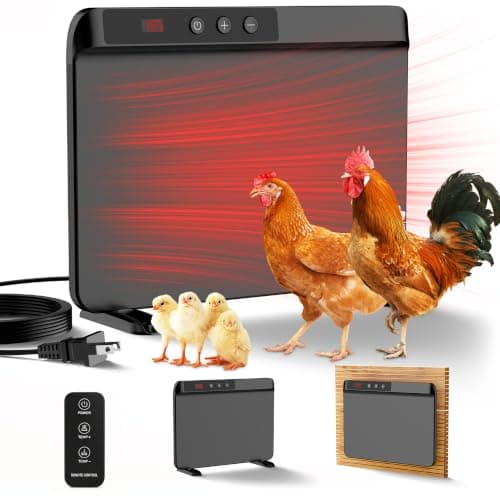 TIMEBAL Chicken Coop Heater, 200W UL Certified Radiant Panel A UL-certified panel at a sensible price | 200 W | 7.2 | $41.99on Amazon |
| Rank 3 | 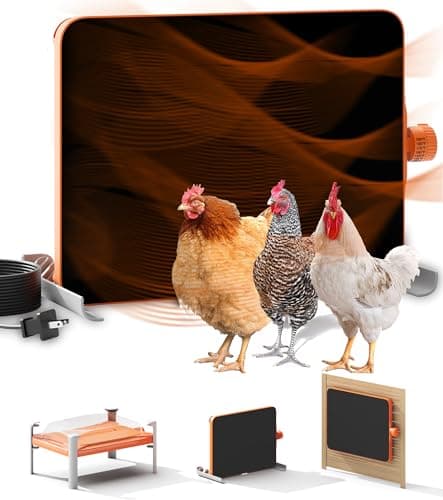 Smart Chicken Coop Heater, 200W Radiant Panel with Temperature Sensor A panel that switches itself off | 200 W | 8.2 | $59.99on Amazon |
| Rank 4 | 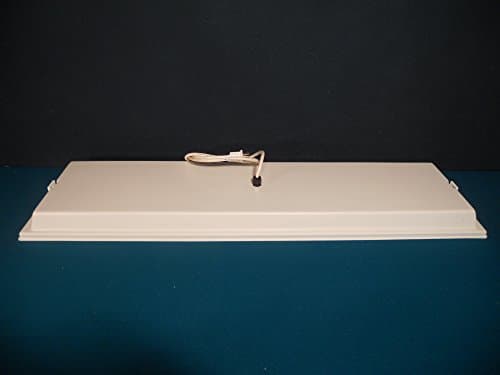 Sweeter Heater OH11x40, 150W Overhead Infrared A long-run radiant heater over a roost | 150 W | 7.0 | $161.00on Amazon |
| Rank 5 | 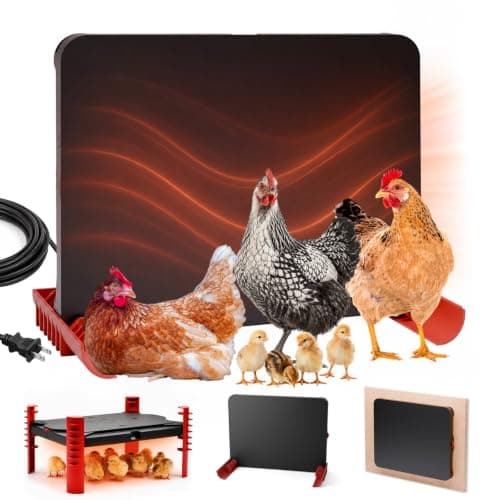 Smart Chicken Coop Heater, 150W Panel with Smart Thermostat Lower wattage with thermostat control | 150 W | 8.0 | $41.99on Amazon |
#ad Prices come from Amazon and change. How this site is funded. Scores are our own published rubric, not a lab test — see how we pick.
For healthy adult hens in a dry, draft-free, well-ventilated coop, no heater is needed. That is the position of the extension services, and the reason is not that chickens are tougher than you think — although they are. MSU Extension states that in most circumstances it advises against adding supplemental heat, because the risk of a heat source causing a fire is too high with combustible bedding present.
A coop is a wooden box containing six to twelve inches of dry wood shavings, in a dusty environment, visited by rodents that chew cables. People put mains-powered heating appliances in it. That is the context, and it is why this section leads with the case against heat rather than with a product grid.
This is the part that is genuinely counter-intuitive, and getting it wrong is the most common winter mistake in backyard keeping. The instinct in November is to seal every gap. Doing that traps the water vapor hens breathe out and their droppings release, humidity climbs, and it condenses on the coldest surfaces available — the walls, and the combs and wattles of the birds.
University of Minnesota Extension is explicit that high moisture combined with cold causes condensation, which causes frostbite, and Extension's frostbite article covers the mechanism. A dry coop at 20 degrees F is safer than a damp one at 30.
It follows that a heater without ventilation can make frostbite more likely, not less, because warm air holds more moisture. That is worth sitting with before buying one.
There are real exceptions, and none of them is "it is winter":
The full fire-safety checklist is here, and it applies to heated waterers too.
9 pages in this section. Roundup tiles carry the live price and a buy link for their top pick.
Safest Coop Heater
Radiant panels ranked on fire safety, certification and thermostat control — after a clear statement that most flocks need none of this.
Best Radiant Panel
Every radiant panel worth considering, from a 50 W brooder panel to a 200 W coop panel, with certification noted.
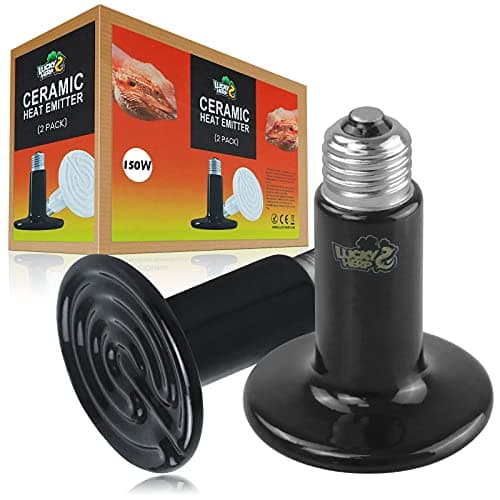
Best Heat Lamp Alternative
Heat-lamp alternatives ranked by how little can go wrong, plus an honest look at when a bulb lamp is still the answer.
Comparison
The safety comparison that decides most coop heating decisions, with picks for both answers.
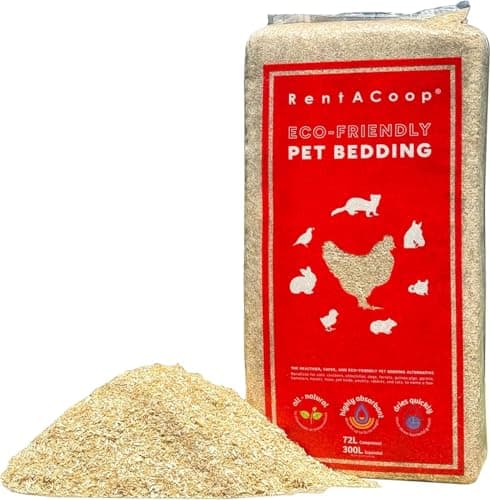
Comparison
Where to spend the winter budget: insulation, draft-proofing and bedding versus a heater. The order is not close.
Guide
The short answer is no, for healthy adult hens — and the reasons are about fire risk and moisture, not toughness.
Guide
Six changes that keep a flock comfortable through winter, in order of effect, with the gear that actually helps.
Guide
The full autumn checklist: coop, run, water, electrics and flock, in the order that makes the winter easy.
Guide
The checklist for running any mains appliance in a coop safely — and why extension guidance leans against heaters at all.