Start Here
Chickens vs rabbits
One produces breakfast, continuously, in public. The other produces meat, in batches, and asks you to do the hard part yourself.
Chickens & Coops earns a commission when you buy through our links, at no extra cost to you. Prices come from Amazon and change; the date beside every price is when we last verified it. Full disclosure.
Top pick
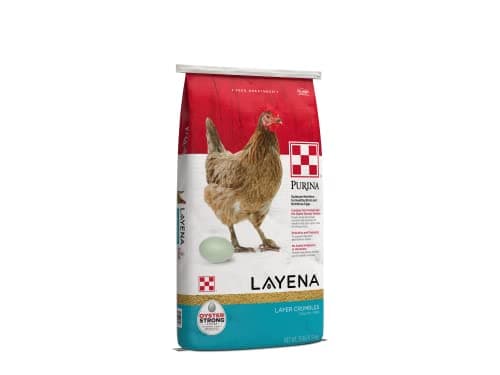
Purina Layena Layer Crumbles, 25 lb
25 lb of complete layer crumble — roughly a month for six hens.
#ad How we are funded · Price as of November 8, 2026
Quick picks
| # | Product | Capacity | Score | Price |
|---|---|---|---|---|
| Rank 1 | Purina Layena Layer Crumbles, 25 lb The standard bag for a six-hen flock | Not published | 9.5 | $34.89Purina Layena, 25 lb |
| Rank 2 | 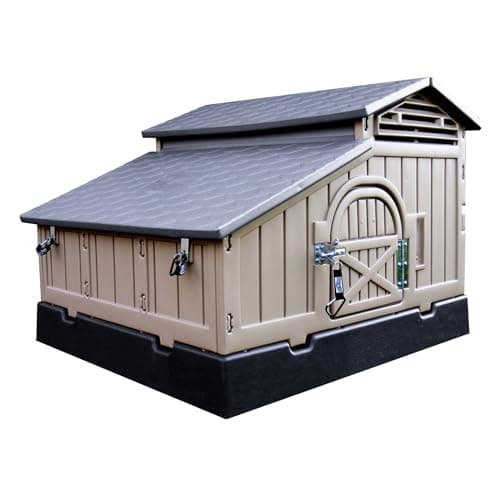 Hatching Time SnapLock Formex Standard Coop Four hens, and never scrubbing wood again | Not published | 9.2 | $549.99Hatching Time |
| Rank 3 |  FARM-TUFF Easy Fill Plastic Poultry Waterer, 5 Gallon A cheap 5-gallon gravity fount you can actually clean | 5 gallon | 8.8 | $49.99FARM-TUFF, 5 Gallon |
| Rank 4 | 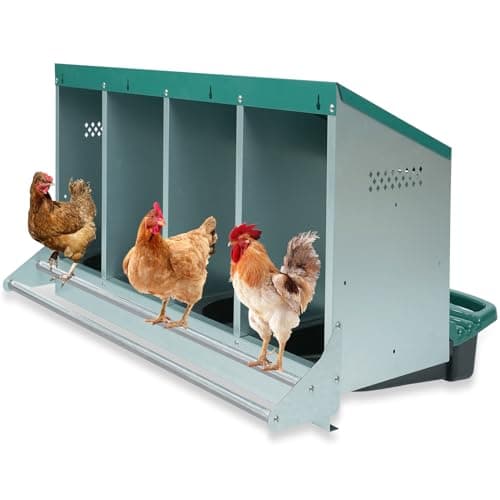 4-Hole Heavy Duty Metal Roll-Away Nesting Box Clean eggs from sixteen hens | Not published | 9.4 | $109.994-Hole Heavy Duty |
#ad Prices come from Amazon and change. How this site is funded. Scores are our own published rubric, not a lab test — see how we pick.
Keep chickens if you want something produced every day without you deciding anything. Keep rabbits if you want meat and you are willing to do, or pay for, the processing. That is the whole comparison in two sentences, and almost every other difference follows from it.
The question usually comes from someone with a small yard, a zoning rule or two, and a limited appetite for building. Both animals fit that yard. They ask for very different things once they are in it, and the figures below are the published ones rather than the enthusiastic ones.
Head to head
| Chickens | Rabbits | |
|---|---|---|
| Why you keep them | Eggs, continuously, for years | Meat, in batches |
| Space per adult | 2 sq ft of coop floor plus 10 sq ft of run for a large breed | An individual cage at least 30 in wide by 30 in deep by 20 in high for each mature buck and doe |
| Can they share housing? | Yes — a flock lives together | Breeding adults are caged individually; juniors and fryers may be grouped |
| Daily feed | About a quarter pound of complete layer feed per hen | 6 to 8 oz of pellets for bucks and does without litters; does with litters are fed to appetite |
| First output | Around 18 weeks to the first egg | Fryers reach 5 lb at about 10 weeks |
| Ongoing output | A few eggs a day, most of the year | About five litters a year per doe, 8 to 10 kits each |
| Productive life | Strongest in the first two or three laying years | A good doe produces maximum-sized litters for 2 to 3 years |
| Gestation / incubation | 21 days in an incubator, or under a broody hen | 31 to 32 days |
| Noise | Hens are quiet; a rooster is not, and is what most ordinances ban | Near silent, which is why rabbits clear some rules chickens do not |
| Smell | Manageable with dry litter and ventilation | Urine is strong and concentrated; the tray is the whole job |
| Manure | Hot — must be composted before it touches a plant | Cold — can go straight onto a bed |
| The hard part | Nothing much once the coop is right | Processing day, every batch |
1. Rabbits need more cages than you expect, not more room
The intuition is that a rabbit is smaller than a hen, so a rabbit setup must be smaller. The arithmetic does not work that way, because hens share and breeding rabbits do not.
Penn State Extension's rabbit production guidance puts mature bucks and does in individual cages at least 30 inches wide, 30 inches deep and 20 inches high — roughly 6.25 square feet each, one animal per cage. Junior does, fryers and non-breeding animals may be kept in small groups in one pen, so the growing stock is less demanding than the breeders.
Set that against the chicken figure: 2 square feet of coop floor and 10 square feet of run per large bird, all of it shared. Six hens want one 12 square foot coop. A trio of breeding rabbits — one buck, two does — wants three separate cages before you have housed a single fryer, plus somewhere for the litters to grow out.
The practical consequence is that rabbits push you toward a rack of hutches rather than a single structure, and a hutch rack is a different building project from a coop sized to your flock. It is not harder. It is just not the thing people picture.
2. The output is shaped completely differently
A laying flock is a trickle. Six hens in their first full year give you a few eggs most days, nearly every week, and the kitchen absorbs it without anyone making a decision. The flow dips in deep winter and during the molt, which is why hens stop laying rather than a fault in your setup.
Rabbits are a pulse. Penn State's figures give about five litters a year per doe, averaging 8 to 10 kits, with fryers slaughtered at 5 pounds at about 10 weeks. One doe therefore produces something in the region of forty-odd fryers a year, all of them arriving in five clumps, all of them needing freezer space and a processing session on roughly the same weekend.
- Chickens suit a household that eats eggs steadily and does not want to plan anything.
- Rabbits suit a household that cooks from a freezer and is comfortable batching work.
- Neither suits someone who wants to opt out for a fortnight. Both need daily water, and rabbits in summer need it more than people expect.
3. The feed bill is smaller for rabbits, and the equipment bill is not
Penn State puts bucks and does without litters at 6 to 8 ounces of pellets a day, with pregnant does and does with litters fed all they will eat. That is less feed per animal than a laying hen eating about a quarter pound a day of complete feed — but a laying hen is producing while she eats it, and a non-breeding buck is not.
Where rabbits cost more is hardware. One cage per breeding adult, water bottles or a nipple line per cage, and a manure management plan under each one. Penn State's own sample budget for a 20-doe, 2-buck herd lists $6,000 for buildings, cages and handling facilities and 150 to 200 labor hours a year on an eighth of an acre. That is a commercial-scale illustration rather than a backyard one, but the ratio it implies holds at any size: with rabbits, the structure cost scales with the number of adults rather than being spent once.
Chickens invert that. The coop is the expensive purchase and it is a single purchase, which is why what a chicken coop actually costs is the first number worth getting right, and why the feed bill afterwards is modest and predictable.
The chicken side of the comparison
If this page has settled it in favor of hens, these are the four purchases that decide whether the first year goes well: complete layer feed, a coop that hoses out, a fount that holds a sensible number of days, and a roll-away nest box.
#1 · The standard bag for a six-hen flock
#ad How we are funded · Price as of November 8, 2026
Purina Layena Layer Crumbles, 25 lb
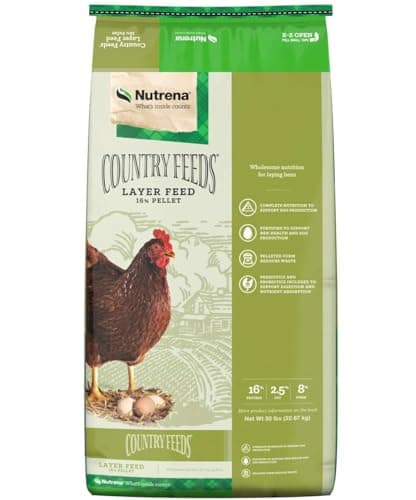
Purina25 lb of complete layer crumble — roughly a month for six hens. Crumble suits mixed-age flocks and bantams that find full pellets awkward.
| Type | Layer crumbles, nutritionally complete |
|---|---|
| Weight | 25 lb |
| For | Laying hens |
| Protein | Not published by manufacturer |
Specifications per Manufacturer figures as published on the Amazon product listing, as published at the date above.
Why we picked it
- Complete layer ration from the most widely stocked brand in the US
- Crumble is easier for bantams and smaller breeds to eat than pellets
- 25 lb is about a month for six hens — fresh all the way down the bag
Good to know — Crumble generates more dust and more billed-out waste than pellets
Our rubric
- Fit for purpose
- 9.8
- Mess and waste
- 8.9
- Quality
- 9.8
- Value
- 9.3
#2 · Four hens, and never scrubbing wood again
#ad How we are funded · Price as of November 8, 2026
Hatching Time SnapLock Formex Standard Coop
Hatching TimeA double-wall structural-foam coop that assembles without tools and hoses out completely. The reason to pay plastic-coop money is mites: there is nowhere in the wall for them to hide.
| Stated capacity | 4 chickens |
|---|---|
| Material | Formex structural foam (double wall) |
| Assembly | Snap-together, no tools published |
| Ventilation | Built-in vents |
| Floor area | Not published by manufacturer |
Specifications per Manufacturer figures as published on the Amazon product listing, as published at the date above.
Why we picked it
- Non-porous double-wall plastic gives red mite nowhere to breed — the single biggest argument against wooden coops
- Hoses out and dries in minutes instead of soaking into timber
- Insulating foam wall is genuinely warmer in winter and cooler in summer than thin ply
- Snap assembly means no half-day with a drill and a missing screw pack
Good to know — Several times the price of a wooden coop of the same stated capacity
Our rubric
- Space per bird
- 8.9
- Predator resistance
- 8.9
- Ventilation
- 9.3
- Cleaning access
- 10.0
- Build
- 9.8
- Value
- 8.4
#3 · A cheap 5-gallon gravity fount you can actually clean
#ad How we are funded · Price as of November 8, 2026
FARM-TUFF Easy Fill Plastic Poultry Waterer, 5 Gallon
FARM-TUFFA gravity-fed plastic fount with a top fill. Top filling is the feature worth paying for: you refill it without inverting five gallons of water over your boots.
| Capacity | 5 gallon |
|---|---|
| Material | Plastic |
| Filling | Top fill |
| Operation | Gravity fed |
| Heated base compatible | No — plastic body |
Specifications per Manufacturer figures as published on the Amazon product listing, as published at the date above.
Why we picked it
- Top fill means no inverting a full fount, which is the main reason people stop refilling properly
- Translucent plastic lets you see the level at a glance
- Light enough to carry full
- Easy to scrub out, unlike a cone-top metal fount
Good to know — Cannot be used on a heated base — plastic melts
Our rubric
- Capacity
- 9.3
- Stays clean
- 8.4
- Freeze resistance
- 6.5
- Ease of refill
- 9.8
- Value
- 9.8
#4 · Clean eggs from sixteen hens
#ad How we are funded · Price as of November 8, 2026
4-Hole Heavy Duty Metal Roll-Away Nesting Box
GenericFour roll-away holes in heavy-duty metal. Roll-away is the single best upgrade for egg cleanliness: the egg leaves the nest the moment it is laid, so it cannot be stood on, pecked or soiled.
| Holes | 4 |
|---|---|
| Covers | Up to 16 hens at 1 box per 4 |
| Material | Heavy duty metal |
| Type | Roll-away with egg collection |
Specifications per Manufacturer figures as published on the Amazon product listing, as published at the date above.
Why we picked it
- Eggs roll out of reach immediately — the end of dirty eggs and most egg-eating habits
- Metal construction leaves mites nowhere to hide and lasts far longer than ply
- Four holes covers a sixteen-hen flock
- Collecting from a tray rather than reaching under a hen is faster and calmer
Good to know — Roll-away boxes are the most expensive nest option
Our rubric
- Egg cleanliness
- 10.0
- Mounting options
- 8.9
- Cleaning access
- 9.8
- Build
- 9.8
- Value
- 8.4
4. Manure: the one place rabbits win outright
Chicken manure is nitrogen-hot. Fresh, it burns plants, which is why it has to be composted before it goes near a bed and why the deep-litter method exists at all — see how to clean a chicken coop for what that routine looks like in practice.
Rabbit manure is cold. It can be applied directly, it does not need aging, and a tray under a hutch rack is as close as small-scale animal keeping gets to a free fertilizer supply. For someone whose real project is the vegetable garden and whose animals are a means to that end, this is a genuine argument and not a small one.
5. The part that decides it for most people
You can keep chickens for a decade and never kill anything. Eggs arrive, you collect them, the hens eventually retire and many keepers simply let them. The entry cost in squeamishness is zero.
Rabbits have a processing day in every cycle. Five times a year, per doe, somebody has to do it or pay to have it done, and the kits were in your yard that morning. People who have done it generally describe it as fine and quick. People who have not generally overestimate how fine they will find it. It is worth being honest with yourself about that before buying the first cage rather than after the first litter.
Which one, by situation
Pick by what your household actually wants
- You want food with no processingChickens. Eggs are the only backyard protein you harvest without killing anything. See the picks
- Your town bans poultryRabbits, almost certainly. The rules are usually written about noise, and a rabbit makes none.
- You want meat, and you will do the workRabbits. Five litters a year per doe at 8 to 10 kits is a serious amount of meat from a small footprint.
- Your real project is the vegetable gardenRabbits for the cold manure, or chickens plus a compost routine. Both work; rabbits need less patience. See the picks
- You have children who want to be involvedChickens. Egg collecting is a job a five-year-old can do, and nothing in the routine is distressing. See the picks
- You travel and need a neighbor to coverChickens, with a large feeder and waterer. A rabbit rack is a more detailed ask of a neighbor. See the picks
If you land on chickens, start here
The decisions in order are: how many birds, then the coop, then the feeder and waterer, then everything else. How many chickens should I get settles the first one honestly, and the starter checklist is the shortest route to a setup that works in week one rather than week six.
If you are still weighing other birds rather than rabbits, the same comparison exists for ducks, quail and turkeys — and the short version of all three is that chickens are the lowest-effort way to produce food in a yard, which is exactly why they are the default.
Frequently asked questions
Are rabbits cheaper to keep than chickens?
How much space do backyard rabbits need?
How much meat does one doe produce in a year?
Can rabbits and chickens be kept together?
Which is better for a small garden, chicken or rabbit manure?
Are rabbits allowed where chickens are banned?
Our recommendation
If you buy one thing from this page, buy the first one. The second is here because it is the alternative worth weighing against it, not because a list needs two entries.
Top pick
Purina Layena Layer Crumbles, 25 lb
The standard bag for a six-hen flock
#ad How we are funded · Price as of November 8, 2026
Runner-up
Hatching Time SnapLock Formex Standard Coop
Four hens, and never scrubbing wood again
#ad How we are funded · Price as of November 8, 2026
Sources
Read next
Start Here
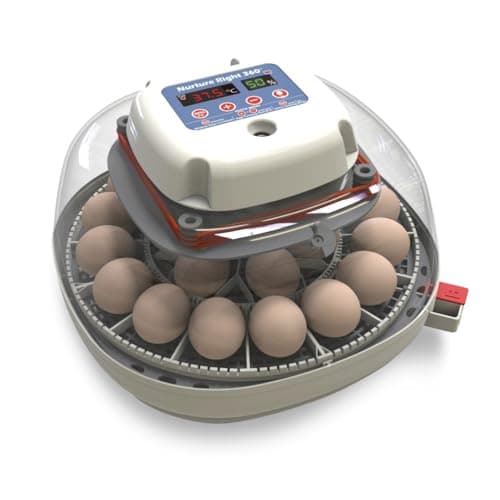
Chickens vs ducks
An honest comparison for a backyard, with the water and housing differences that decide it in practice.
Start Here
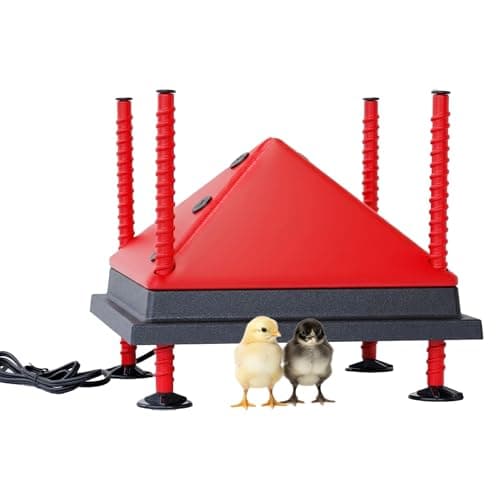
Chickens vs quail
Space, eggs, noise, legality and how fast each one starts laying — with an honest note on where quail gear runs out.
Start Here
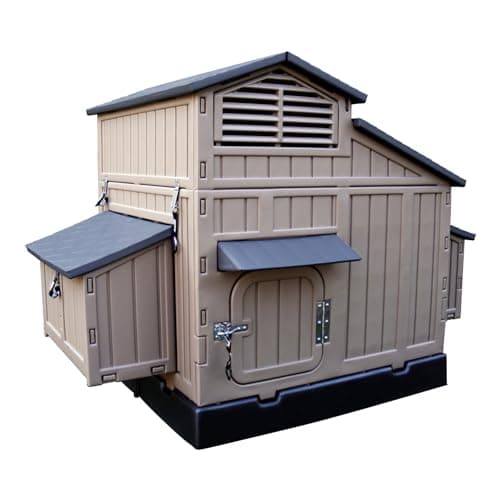
Chickens vs turkeys
Space, feed, timeline, disease risk and what you end up with — with the published extension figures for both birds, and the blackhead warning about keeping them together.
Start Here
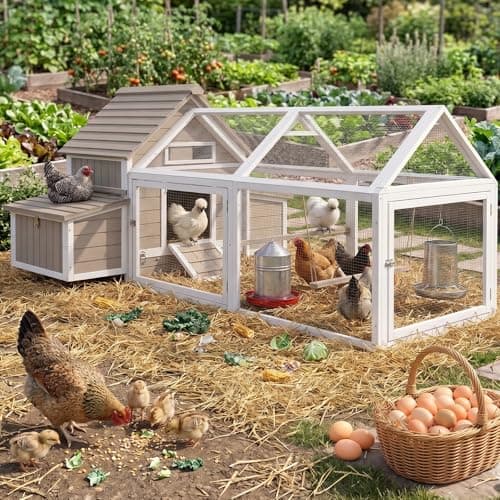
How many chickens should I get?
Flock sizing by household, yard and coop, with the space figures and the honest note about flocks growing.
Chicken Coops
How much does a chicken coop cost?
Five price tiers of chicken coop explained by what each one actually buys — floor area, run, standing height, material and lifespan — with the live price on every tier in one table.
Start Here
The real cost of raising backyard chickens
A cost framework using live prices and published consumption figures, so the numbers are yours rather than ours.