Start Here
Chickens vs turkeys
Turkeys are a seasonal meat project with a hard deadline. Chickens are a standing egg supply. Almost every disappointment comes from confusing the two.
Chickens & Coops earns a commission when you buy through our links, at no extra cost to you. Prices come from Amazon and change; the date beside every price is when we last verified it. Full disclosure.
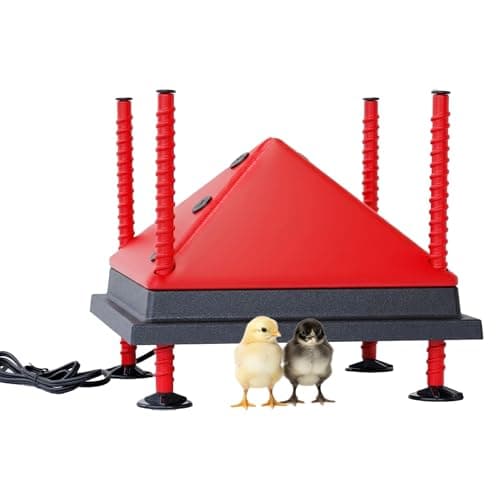
Top pick
RentACoop 12x12in Adjustable Heating Plate with Anti-Roost Cone
A 12 x 12 inch adjustable-height heat plate with a foldable anti-roost cone.
#ad How we are funded · Price as of November 8, 2026
Quick picks
| # | Product | Capacity | Score | Price |
|---|---|---|---|---|
| Rank 1 | RentACoop 12x12in Adjustable Heating Plate with Anti-Roost Cone The safest brooder heat, with the roosting problem solved | Not published | 9.3 | $59.95RentACoop 12x12in |
| Rank 2 | 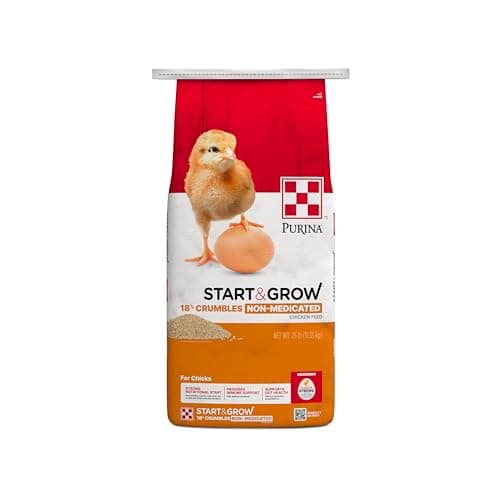 Purina Start & Grow Chick Crumbles, 25 lb (non-medicated) Feeding chicks from day one | Not published | 9.5 | $34.29Purina Start, 25 lb |
| Rank 3 | 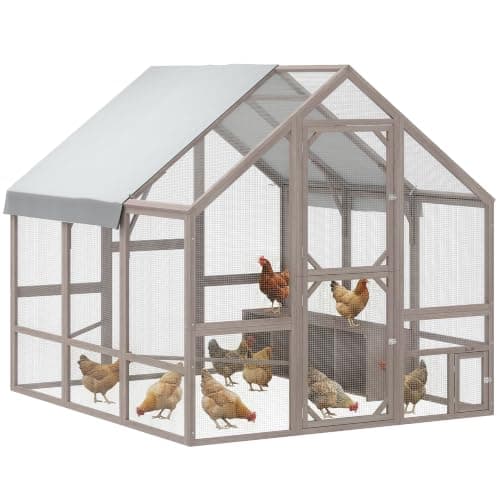 PawHut Large Wooden Chicken Coop, 83in x 73in x 73in Eight to ten hens in a coop you can walk into | Not published | 9.2 | $399.99PawHut Large Wooden |
| Rank 4 | 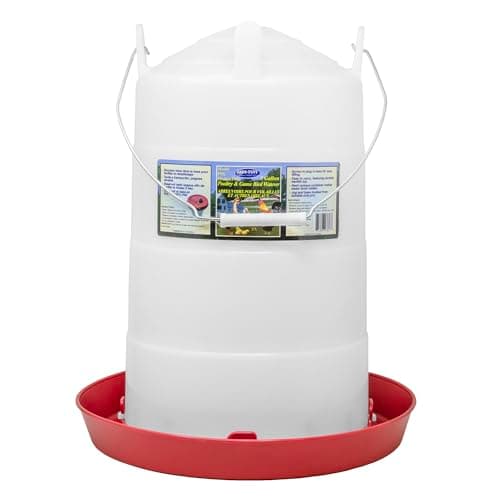 FARM-TUFF Easy Fill Plastic Poultry Waterer, 5 Gallon A cheap 5-gallon gravity fount you can actually clean | 5 gallon | 8.8 | $49.99FARM-TUFF, 5 Gallon |
#ad Prices come from Amazon and change. How this site is funded. Scores are our own published rubric, not a lab test — see how we pick.
Keep chickens if you want eggs; raise turkeys if you want a specific number of large birds in a freezer on a specific date. They are not competing hobbies, they are different projects that happen to share a feed store aisle. A flock of hens is an ongoing supply that pays out a few eggs a day for years. A batch of turkeys is a season with an end: you buy poults in spring, you feed them hard for four or five months, and in November you are done.
The question comes up most from people who already keep chickens, have the coop and the routine, and are wondering whether the Thanksgiving bird can come from the same yard. It can. There are three things to understand first, and the third one is the one nobody mentions.
Head to head
| Chickens | Turkeys | |
|---|---|---|
| Why you keep them | Eggs, for years | Meat, on a date |
| Space per bird | 2 sq ft coop floor + 10 sq ft run (large breeds) | 3-5 sq ft of confined housing from 8 weeks to market |
| Brooder density | Varies by breed and brooder | 1 to 1.5 poults per sq ft for initial brooding |
| Starter protein | Chick starter, commonly 18-20% | Turkey crumbles at 28% protein for the first 3-4 weeks |
| Brooder temperature | Around 95 degrees Fahrenheit under the heat source in week one | Room at about 88 degrees, 95 degrees directly under the heat source |
| Time to payoff | Around 18 weeks to first egg, then years | Hens about 20 lb at 14 weeks; toms about 36 lb at 17 weeks |
| Ongoing output | A few eggs a day, most of the year | Nothing until processing day |
| Winter housing | Yes — a dry ventilated coop carries them through | Usually not applicable; the batch is gone by then |
| Disease risk from the other | Low — chickens are somewhat resistant to blackhead | High — blackhead is the reason to keep them apart |
| Equipment | Everything, at every price | Chicken gear, scaled up, plus a bigger feeder and drinker |
| The hard part | Nothing much after setup | Processing, or paying someone to |
1. Turkeys take roughly three times the room
Penn State Extension's small-flock turkey guidance puts finishing turkeys at 3 to 5 square feet of confined housing space per bird from eight weeks to market, depending on the weight they are grown to. The same source puts initial brooding at 1 to 1.5 poults per square foot.
Set that against the chicken figure this site uses everywhere: 2 square feet of coop floor and 10 square feet of run for a large chicken. Six turkeys want 18 to 30 square feet of housing; six hens want 12. And a turkey is physically a much larger animal moving through that space, so the practical gap feels wider than the arithmetic suggests.
The useful way to think about it: a coop sized for six hens will finish about three turkeys, and a walk-in structure you can stand up in is far more pleasant to work with birds that size. If you are buying housing for turkeys, walk-in coops is the right category to shop, not the small elevated coops that suit a few hens.
2. The feed is different, and the first month is expensive
Poults are not chicks. Penn State's figure is turkey crumbles containing 28 percent protein for the first three to four weeks, which is well above what a chick starter carries. Feeding poults on chicken starter because it is what you have in the shed is the commonest early mistake, and it shows up as poor growth you cannot get back later.
The brooder is also warmer and more exacting. Penn State's setup is a room at about 88 degrees Fahrenheit with supplemental heat bringing the area directly under the heat source to 95 degrees. That is a hotter ambient than most chick brooders run, and poults are notoriously slower than chicks to find food, water and heat in the first days — they need more watching, not less.
After that first month the feeding gets simpler and much bulkier. A bird heading for 20 or 36 pounds eats accordingly, so the feeder and the drinker both want to be the biggest you have. How much feed per chicken per day sets out the chicken arithmetic; for turkeys, assume the same logic against a much larger animal and budget generously.
3. Blackhead: the reason not to run them together
This is the part that catches out people who already keep chickens, and it is the single most important thing on this page. Turkeys are highly susceptible to blackhead — histomoniasis — and chickens are not. Extension's guidance on blackhead in poultry states that "chickens are somewhat resistant to blackhead", and makes a specific, long-horizon recommendation: "It is recommended that turkeys not be ranged on pasture used by chickens within the past three years."
Three years. Not three months, and not "clean the run first". That recommendation rules out the arrangement most people were quietly planning — poults in the same run the hens have used, or a chicken tractor moved onto ground the hens were on last season.
What it means in practice for a backyard setup:
- Separate housing, not a divided coop. Shared air and shared ground are the thing being avoided.
- Separate ground, with the three-year horizon in mind. On a small property this is often the binding constraint, and it is better to find that out before you order poults.
- Separate boots, or at least a scrub between. Ordinary biosecurity, and USDA's Defend the Flock guidance is the same whichever birds you keep.
- If you cannot separate them, do not keep turkeys. That is an honest answer and a cheaper one than finding out in August.
The broader point about mixing species applies here as it does to chickens and ducks: the convenient arrangement and the healthy arrangement are usually not the same one.
What you actually end up with
A chicken flock gives you something small every day. A productive hen lays most days through her first and second years, slowing afterwards, and a flock of six is a steady supply for a household with some to give away. The payoff is continuous and low-drama.
Turkeys give you nothing for four months and then a great deal at once. Penn State's figures for broad-breasted birds are hens at roughly 20 pounds at 14 weeks and toms at roughly 36 pounds at 17 weeks. A 36-pound tom is more bird than most domestic ovens will take, which is a genuine planning consideration — people routinely raise toms and then have to joint them.
And then there is processing day, which is the part that decides whether this is a project for you. Either you do it yourself, or you book a processor early — slots fill up by late summer in most areas. Unlike a laying flock, there is no version of turkey-keeping where you quietly change your mind and keep feeding them; a broad-breasted bird is bred to reach weight on a schedule and is not a long-lived animal.
Can you raise turkeys as a beginner?
You can, and the usual advice to do a year of chickens first is sound for one reason above all others: the daily habits. Watering twice in a heat wave, noticing the bird that is standing apart, reading a flock's behavior at dusk — none of that is written down anywhere useful, and all of it transfers. Raising chickens for beginners is where that year starts.
The second reason is sunk cost. A chicken setup is reusable for a decade. A turkey setup gets used for five months and then sits empty, unless you are running the batch annually. If the space and money are tight, the flock that pays out every morning is the better first investment.
The third is the blackhead constraint above. Keeping chickens first does not stop you raising turkeys later, but it does put your available ground on a clock, and it is much easier to plan separate turkey ground from the start than to find it after the hens have had the run of the yard for three seasons.
When turkeys are the right call
- You want the meat and you have separate ground for it. The two conditions are equal in weight.
- You have a structure you can stand up in, or will build one. Working a 30-pound bird in a 3-foot coop is unpleasant for everyone involved.
- You have a processing plan already booked or practiced. Decide this in May, not November.
- You are comfortable with a project that ends. That is a feature for some people and a reason to stick with hens for others.
Our answer
For almost everyone reading a backyard poultry site, the first birds should be chickens: less space, less protein, no three-year ground constraint, no deadline, and a return that starts around week eighteen and keeps going. How many chickens should I get is the next question, and the best breeds for beginners is the one after it.
Turkeys are worth doing if you want the meat, you have ground the chickens have not used, and you have a plan for processing day. Treat them as a separate project on separate ground rather than an addition to the flock — which is exactly what the blackhead guidance is telling you to do.
Frequently asked questions
Can chickens and turkeys live together?
How much space does a turkey need?
Can poults eat chick starter?
How long does it take to raise a turkey?
Are turkeys harder to raise than chickens?
Do turkeys lay eggs you can eat?
Can I use my chicken coop for turkeys?
Our recommendation
If you buy one thing from this page, buy the first one. The second is here because it is the alternative worth weighing against it, not because a list needs two entries.
Top pick
RentACoop 12x12in Adjustable Heating Plate with Anti-Roost Cone
The safest brooder heat, with the roosting problem solved
#ad How we are funded · Price as of November 8, 2026
Runner-up
Purina Start & Grow Chick Crumbles, 25 lb (non-medicated)
Feeding chicks from day one
#ad How we are funded · Price as of November 8, 2026
Sources
Read next
Start Here
Chickens vs ducks
An honest comparison for a backyard, with the water and housing differences that decide it in practice.
Start Here
Chickens vs quail
Space, eggs, noise, legality and how fast each one starts laying — with an honest note on where quail gear runs out.
Start Here
Raising chickens for beginners
The pillar guide for a first flock: how many birds, what they need, what it costs, and what to get right first.
Chicken Coops
The best walk-in chicken coops and runs
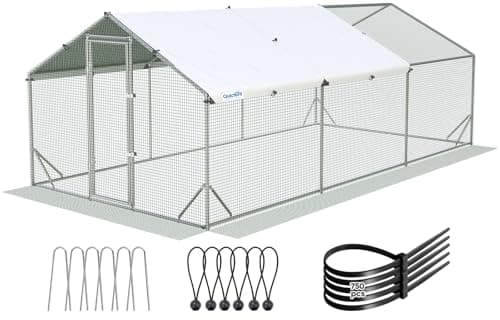
Coops and runs with standing headroom, ranked on height, floor area and whether the mesh is actually hardware cloth.
Hatching & Brooding
The best brooder heat plates
Heat plates ranked on published capacity, anti-roost design and height adjustment — the three things that differ.
Feeders & Feed
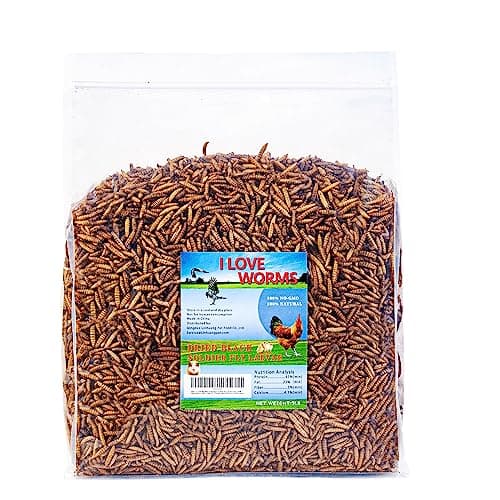
The best chicken treats and supplements
Insect protein, scratch, electrolytes, probiotics and a hanging greens holder — with the honest answer on how much of each a laying flock should actually get.
Start Here
Chickens vs rabbits
Space, feed, output, timeline and the part nobody enjoys — with Penn State Extension's published rabbit figures set against the chicken figures this site uses everywhere.