Chicken Coops
Chicken roosting bars: height, spacing and size
Six inches of bar per bird, 18 to 24 inches off the floor, and higher than the nest boxes. Three numbers, and the third one is the one people get wrong.
Chickens & Coops earns a commission when you buy through our links, at no extra cost to you. Prices come from Amazon and change; the date beside every price is when we last verified it. Full disclosure.
Top pick
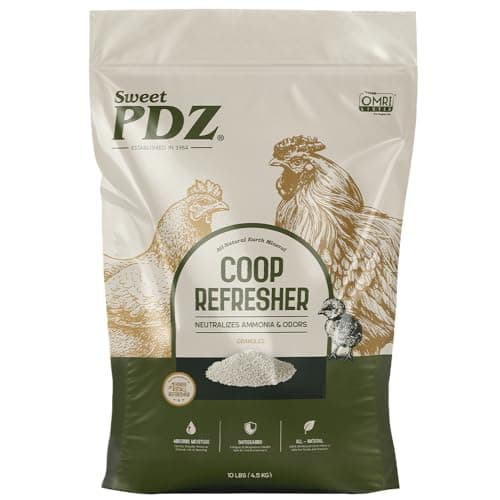
Sweet PDZ Coop Refresher, 10 lb
Granular zeolite that binds ammonia rather than masking it.
#ad How we are funded · Price as of November 8, 2026
Quick picks
| # | Product | Material | Score | Price |
|---|---|---|---|---|
| Rank 1 | Sweet PDZ Coop Refresher, 10 lb Ammonia under the roosts | Not published | 9.7 | $24.95Sweet PDZ, 10 lb |
| Rank 2 | 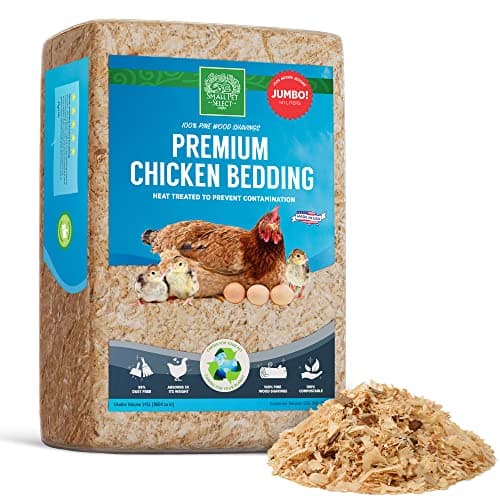 Small Pet Select Pine Shavings Chicken Bedding The default coop and nest-box bedding | Pine wood shavings | 9.2 | $35.99Small Pet Select |
| Rank 3 | 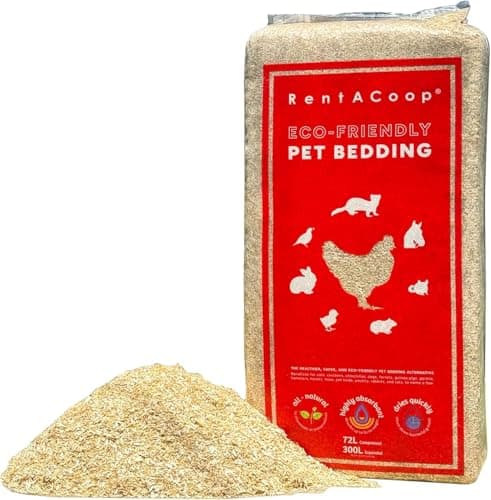 RentACoop Premium Hemp Bedding, 300L Low dust in a small or poorly ventilated coop | Hemp hurd | 9.3 | $74.95RentACoop, 300L |
#ad Prices come from Amazon and change. How this site is funded. Scores are our own published rubric, not a lab test — see how we pick.
The figures to build to: six inches of perch space per standard-size bird, roosts set 18 to 24 inches above the floor, and the roost higher than the top of the nest boxes. Penn State Extension's small-scale poultry housing guidance publishes the first two. The third is not a measurement but it is the one that decides whether your hens sleep on the roost or in the nest boxes, and a flock that sleeps in the boxes gives you dirty eggs every morning.
A roost is where a flock spends twelve hours a day, so it is worth more attention than the ten minutes it usually gets. It is also the cheapest part of a coop to build or fix: a length of timber and two brackets.
The three numbers
| Flock size | Total roost length | Height above floor | Spacing between parallel bars |
|---|---|---|---|
| 2 hens | 12 in | 18-24 in | n/a |
| 4 hens | 24 in | 18-24 in | At least 12 in |
| 6 hens | 36 in | 18-24 in | At least 12 in |
| 8 hens | 48 in | 18-24 in | At least 12 in |
| 10 hens | 60 in | 18-24 in | At least 12 in |
| 12 hens | 72 in | 18-24 in | At least 12 in |
Bantams need less than six inches each and heavy breeds appreciate more, so round up rather than down. And add length for the flock you might have rather than the flock you have: roost space is the resource newcomers get pushed off first, which matters when introducing new chickens.
What to make the bar from
A hen does not grip a perch the way a parrot does. She squats with her feet flat and her breast resting on the bar, and her toes curl over the front edge rather than around the whole thing. That changes what a good bar looks like:
- A 2x4 laid flat, wide face up, is the standard and it is a good choice. The wide flat surface lets her sit with her feet covered by her own body, which is what protects toes in cold weather. Sand or round over the front edges.
- A 2x2 or a broom handle works for lighter breeds and is easier to find, but it gives less foot coverage in a frost.
- Avoid anything narrow or sharp-edged. Thin metal bar is the worst option available: cold, slippery and hard on the breastbone.
- Avoid plastic and smooth metal. Birds slip off, which is how you get an injured hen under the roost in the morning.
- Untreated softwood is fine and it is the easiest to replace, which you will want to do eventually. Treated lumber and painted surfaces should not be where birds sleep and peck.
- Make it removable if you can. A roost you can lift out is a roost you can actually scrub, and roost bar ends are exactly where mites survive a casual clean. Chicken mites treatment explains why that matters.
Where to put it
- Higher than the nest boxes. Birds roost on the highest available perch. If the nest boxes are level with or above the roost, that is where they will sleep. If your boxes are already high, either raise the roost or fit sloped lids so the boxes cannot be perched on.
- Not above the feeder, the waterer or the nest boxes. Whatever is under the roost gets covered in droppings overnight.
- Clear of the walls and the ceiling. Allow enough room behind for a hen to sit without her tail against the wall, and enough above for her to stand up and stretch. A bird that cannot get her head up on the roost will not use it.
- Out of the direct draft line. Air moving across a roosting bird at night is what causes trouble, which is why vents belong above head height rather than at perch level. Chicken coop ventilation.
- Low enough to get down from safely. Heavy breeds landing from a high roost onto a hard floor pick up foot injuries. The published 18 to 24 inches is a sensible ceiling for large birds, and a ladder-style stepped roost helps if you go higher.
Multiple bars, and the pecking order
If you need more length than one wall will take, run two or three parallel bars at the same height rather than stacking them like a ladder. Birds compete for the highest perch, so a stepped arrangement creates a hierarchy problem and puts the lower birds directly under the higher ones. Same height, at least a foot apart, solves both.
The droppings board
A flock produces a large share of its daily droppings overnight, in one place: directly under the roost. A board or tray fitted a few inches below the bar catches that, and it changes the weekly clean from shoveling a coop out to scraping one surface.
- Fit it four to six inches below the bar — close enough to catch everything, far enough that birds are not standing on it.
- Dust it with granular zeolite. Zeolite binds ammonia rather than masking it, and a thin layer on the board is the most effective single thing you can do about coop smell.
- Or run a shallow layer of bedding on it and scrape the lot off into the compost every few days.
- Scrape it every day or two, which takes under a minute and removes most of the moisture and ammonia load from the coop before it reaches the floor.
What goes under the roost
The zeolite that binds ammonia on a droppings board, and the two beddings worth using underneath if you would rather not fit one.
#1 · Ammonia under the roosts
#ad How we are funded · Price as of November 8, 2026
Sweet PDZ Coop Refresher, 10 lb
Sweet PDZGranular zeolite that binds ammonia rather than masking it. Dusted on the poop board under the roosts it is the most effective single thing you can do about coop smell.
| Active material | Zeolite |
|---|---|
| Weight | 10 lb |
| Function | Ammonia and odor absorption |
| Scent added | None |
Specifications per Manufacturer figures as published on the Amazon product listing, as published at the date above.
Why we picked it
- Chemically binds ammonia instead of covering it with fragrance
- No added scent, which matters because fragrance oils irritate bird airways
- A thin layer on the poop board is all it takes — a 10 lb bag lasts a small flock months
- Safe to compost with the litter
Good to know — It is a granular mineral: it will not fix a coop that is genuinely under-ventilated
Our rubric
- Fit for purpose
- 10.0
- Mess and waste
- 8.9
- Quality
- 9.8
- Value
- 9.8
#2 · The default coop and nest-box bedding
#ad How we are funded · Price as of November 8, 2026
Small Pet Select Pine Shavings Chicken Bedding
Small Pet SelectKiln-dried pine shavings in a bag sized for a coop rather than a hamster cage. Pine is the baseline bedding for a reason: absorbent, cheap, compostable, and it does not mat.
| Material | Pine wood shavings |
|---|---|
| Intended use | Coop floor and nest boxes |
| Volume | Not published by manufacturer |
| Dust level | Not published by manufacturer |
Specifications per Manufacturer figures as published on the Amazon product listing, as published at the date above.
Why we picked it
- Absorbent enough to run a deep-litter floor for weeks between full changes
- Composts down with the manure into usable garden material
- Shavings stay loose, so hens can scratch and dust-bathe in them
Good to know — Dustier than hemp, which matters in a tight coop with poor ventilation
Our rubric
- Fit for purpose
- 9.8
- Mess and waste
- 8.4
- Quality
- 9.3
- Value
- 9.3
#3 · Low dust in a small or poorly ventilated coop
#ad How we are funded · Price as of November 8, 2026
RentACoop Premium Hemp Bedding, 300L
RentACoop300 liters of hemp hurd per 30 lb bale. Hemp costs more than pine up front but absorbs more per liter and throws far less dust — which is the thing that actually damages chicken lungs.
| Material | Hemp hurd |
|---|---|
| Volume | 300 L |
| Weight | 30 lb |
| Intended use | Chickens, rabbits, horses |
Specifications per Manufacturer figures as published on the Amazon product listing, as published at the date above.
Why we picked it
- Volume and weight both published, so the real cost per liter is comparable
- Markedly less dust than pine — the single biggest respiratory factor in a closed coop
- Absorbs more liquid per liter than shavings, so the litter stays drier between changes
- Composts readily
Good to know — Costs several times what an equivalent volume of pine does
Our rubric
- Fit for purpose
- 9.8
- Mess and waste
- 9.3
- Quality
- 9.8
- Value
- 8.4
If the birds are not using it
- They are sleeping in the nest boxes. The roost is not clearly the highest spot. Raise it, or block the boxes at dusk for a week. What to put in nesting boxes covers the rest of that problem.
- They are sleeping on the floor. Usually the roost is too high for the breed, too narrow, or too close to the ceiling. Try a lower bar or a stepped approach.
- One bird is excluded. That is roost length, not preference. Count your inches again.
- They are roosting outside, in a tree or on the run frame. Shut the pop hole after they go in for a week and they relearn where home is — and remember that a bird sleeping outside is a bird a predator will find.
A roost you can live with
A 2x4 laid flat with the front edges rounded, screwed into removable brackets at 20 inches, with six inches of length per bird and a scrapeable board four inches underneath. That is a twenty-minute job with offcuts and it fixes the smell, the dirty eggs and the toe damage all at once. The rest of the coop interior is covered in coop flooring and coop bedding.
Frequently asked questions
How much roosting space does each chicken need?
How high should a chicken roost be?
Is a 2x4 good for a chicken roost?
How far apart should roosting bars be?
Why are my chickens not using the roost?
Do I need a droppings board under the roost?
Our recommendation
If you buy one thing from this page, buy the first one. The second is here because it is the alternative worth weighing against it, not because a list needs two entries.
Top pick
Sweet PDZ Coop Refresher, 10 lb
Ammonia under the roosts
#ad How we are funded · Price as of November 8, 2026
Runner-up
Small Pet Select Pine Shavings Chicken Bedding
The default coop and nest-box bedding
#ad How we are funded · Price as of November 8, 2026
Sources
Read next
Chicken Coops
Chicken coop size per chicken: the real numbers
The sizing table the rest of this site is built on, with the extension sources and a method for checking any listing.
Chicken Coops
Chicken coop ventilation, done right
The single most misunderstood part of coop design: why you ventilate in winter, and where the vents actually go.
Nesting Boxes
What to put in chicken nesting boxes
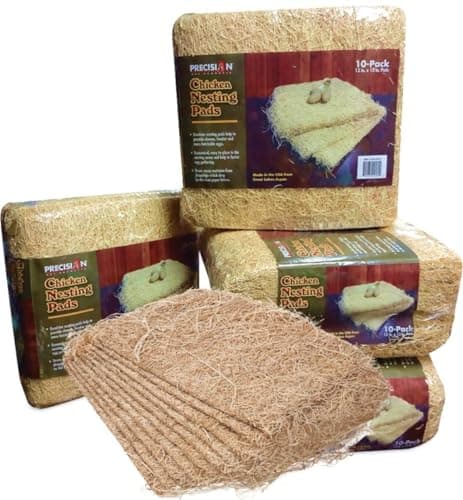
Shavings, straw, excelsior pads, washable pads and herbs compared for a nest box, with depth, change frequency and the things to keep out.
Chicken Coops
Why your chicken coop smells, and how to fix it
A diagnostic for coop smell: four causes in order of likelihood, and what fixes each one. Masking it is not on the list.
Chicken Coops
The best chicken coop bedding
Pine, hemp and the ammonia binder that makes either work. Ranked on absorbency and dust, not bag price.