Chicken Coops
Chicken mites: how to find them and get rid of them
Treating the birds and not the coop is why mite infestations come back. Both, on a schedule, is how they end.
Chickens & Coops earns a commission when you buy through our links, at no extra cost to you. Prices come from Amazon and change; the date beside every price is when we last verified it. Full disclosure.
Quick picks
| # | Product | Function | Score | Price |
|---|---|---|---|---|
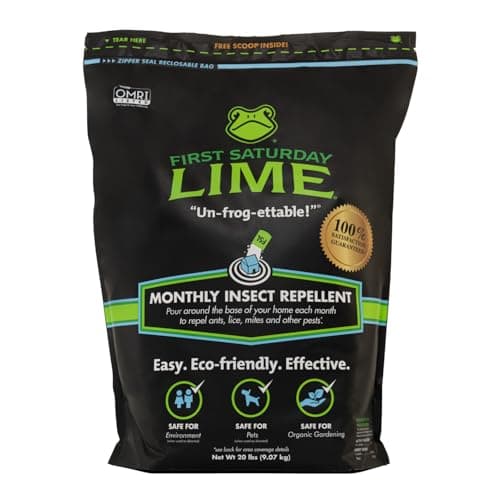
| Rank 1 | First Saturday Lime Insect Deterrent, 20 lb Mites and lice in the coop, not odor | Insect deterrent | 7.5 | $41.99on Amazon |
| Rank 2 | 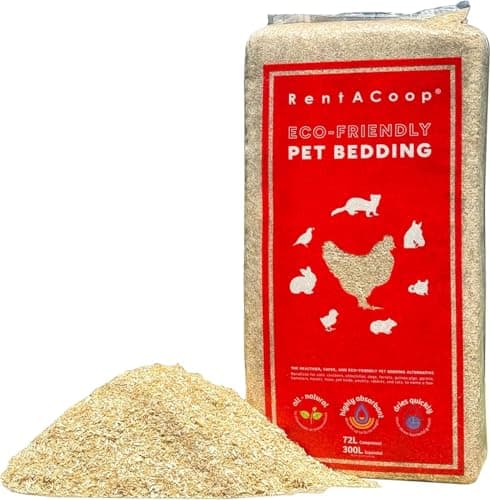 RentACoop Premium Hemp Bedding, 300L Low dust in a small or poorly ventilated coop | Not published | 8.0 | $74.95on Amazon |
| Rank 3 | 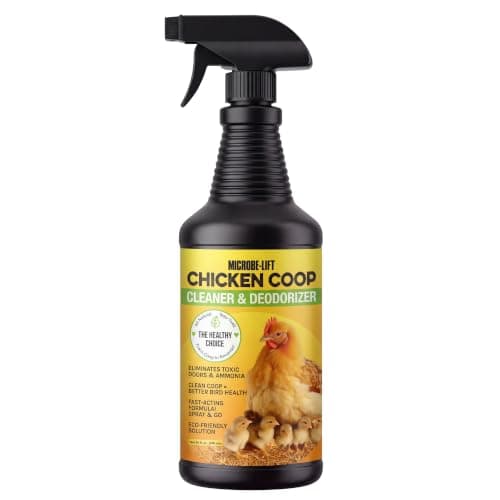 MICROBE-LIFT Chicken Coop Cleaner and Odor Eliminator The annual deep clean | Not published | 7.5 | $29.52on Amazon |
| Rank 4 | 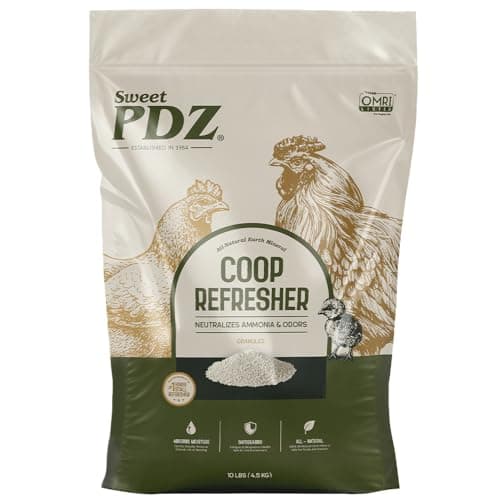 Sweet PDZ Coop Refresher, 10 lb Ammonia under the roosts | Ammonia and odor absorption | 8.8 | $24.95on Amazon |
#ad Prices come from Amazon and change. How this site is funded. Scores are our own published rubric, not a lab test — see how we pick.
Treat the birds and the coop at the same time, and treat again four to seven days later. That second treatment is the whole answer: Extension's external parasite guidance states plainly that "it is necessary, therefore, to re-treat an infected flock every four to seven days," because eggs that survive the first round hatch into the gap. One treatment feels like it worked and is why the problem returns in a fortnight.
Mites are the most consequential husbandry problem on this site that you cannot see from across the yard. A heavy infestation causes anaemia from blood loss, usually with a fall in laying or growth rate and lower feed intake. Birds get it from wild birds, from other poultry, and from a coop that never got cleaned properly.
Mites or lice? They hide in different places
This matters because it changes where you look and what you treat.
| Northern fowl mite | Chicken mite (red mite) | Lice | |
|---|---|---|---|
| Where it lives | On the bird | In the coop — on the bird only at night | Entirely on the bird |
| Where to look | The vent area | Cracks and crevices in roosts, walls, ceilings, floors | In the feathers, at the base of the shaft |
| When it feeds | On the bird | Nocturnal | On the bird |
| Size and look | About 1/25 inch, eight legs, black or brown | Visible in daytime hiding places, not on the bird | Eggs laid in clusters near the feather base |
| Treat | Bird and house | The house above all | The bird |
The practical consequence: if you inspect birds in daylight and find nothing but you are confident something is biting them, you are probably dealing with the chicken mite, which hides in the structure during the day and feeds at night. Extension is explicit that during daylight hours these mites live in dark areas of the poultry house — cracks and crevices in roosts, walls, ceilings and floors — and come out at night to feed.
How to check, properly
- Pick a bird up after dark, with a torch. Night is when mites are on the bird.
- Part the feathers around the vent, which is where Extension says to look for northern fowl mites. You are looking for tiny specks that move.
- Look at the base of the feather shafts for clusters of eggs, which indicates lice rather than mites.
- Run a pale cloth along the underside of the roost bar. Red smears mean mites have been crushed, and that is a house problem, not a bird problem.
- Check the darkest crevices in the roost ends, the joints and under the nest-box lip. Those are the harborage sites.
The treatment
Extension's approach has two halves and both are required. On the birds, effective treatment may involve treating all birds with an insecticide approved for poultry, following every label instruction including protective equipment and withholding times. Use a product labeled for poultry and follow its label — that is the part of this page where you should be reading the bottle rather than a website, because withholding periods for eggs differ between products and are a food-safety matter.
On the coop, Extension is specific: it is important to treat the inside of the poultry house, making sure the nesting area, roosts, and any cracks and crevices are treated. In practice that is where people under-do it. The roost bar ends, the joints, the underside of the nest-box lip and the seams of a wooden coop are the places mites survive a casual spray.
Dust bathing and diatomaceous earth
Extension names one non-chemical measure directly: including food-grade diatomaceous earth in dust baths is a nontoxic insecticide option, and providing birds with an area to dust bathe helps control external parasites. That is worth taking seriously — a dry, loose dust-bathing patch in the shade is both free and genuinely preventive.
Two honest caveats. Diatomaceous earth only works dry, so a dust bath exposed to rain does nothing. And it is a dust: it is as irritating to bird and human lungs as any fine powder, so keep it in a bathing area rather than scattering it through the coop air.
What to use on the coop
A coop-safe insect deterrent, the lowest-dust bedding we rank, the deep-clean cleaner, and the zeolite that handles the ammonia side.
#1 · Mites and lice in the coop, not odor
#ad How we are funded · Price as of October 10, 2026
First Saturday Lime Insect Deterrent, 20 lb
First Saturday LimeA coop-safe lime-based insect deterrent. It is not hydrated lime and it is not an odor absorber — it is for the mite and lice problem, which is a different job from the ammonia one.
| Weight | 20 lb |
|---|---|
| Function | Insect deterrent |
| Use | Outdoor and coop areas |
| Active ingredient detail | Not published by manufacturer |
Specifications per Manufacturer figures as published on the Amazon product listing, as published at the date above.
What it does well
- Targets the mite and lice problem that bedding changes alone do not solve
- Safe around birds, unlike caustic hydrated lime, which should never go in a coop
- A 20 lb bag treats a backyard coop many times over
Where it falls short
- Does nothing for ammonia — pair it with zeolite rather than substituting it
- Full ingredient breakdown is not published on the listing
- Like any powder, it is dusty to apply
Our rubric
- Fit for purpose
- 8.0
- Mess and waste
- 6.0
- Quality
- 8.0
- Value
- 8.0
#2 · Low dust in a small or poorly ventilated coop
#ad How we are funded · Price as of October 10, 2026
RentACoop Premium Hemp Bedding, 300L
RentACoop300 liters of hemp hurd per 30 lb bale. Hemp costs more than pine up front but absorbs more per liter and throws far less dust — which is the thing that actually damages chicken lungs.
| Material | Hemp hurd |
|---|---|
| Volume | 300 L |
| Weight | 30 lb |
| Intended use | Chickens, rabbits, horses |
Specifications per Manufacturer figures as published on the Amazon product listing, as published at the date above.
What it does well
- Volume and weight both published, so the real cost per liter is comparable
- Markedly less dust than pine — the single biggest respiratory factor in a closed coop
- Absorbs more liquid per liter than shavings, so the litter stays drier between changes
- Composts readily
Where it falls short
- Costs several times what an equivalent volume of pine does
- Finer particles can sift through widely-spaced slatted floors
- Not stocked in most feed stores, so you are ordering it
Our rubric
- Fit for purpose
- 9.0
- Mess and waste
- 8.0
- Quality
- 9.0
- Value
- 6.0
#3 · The annual deep clean
#ad How we are funded · Price as of October 10, 2026
MICROBE-LIFT Chicken Coop Cleaner and Odor Eliminator
MICROBE-LIFTA biological surface cleaner for the twice-a-year scrub-out, usable on coop surfaces and equipment. It is for cleaning, not for daily odor control — those are different products.
| Type | Biological cleaner and odor eliminator |
|---|---|
| Surfaces | All coop surfaces and equipment |
| Volume | Not published by manufacturer |
| Dilution | Not published by manufacturer |
Specifications per Manufacturer figures as published on the Amazon product listing, as published at the date above.
What it does well
- Designed for coop surfaces, so it is safe on the feeders and waterers too
- Biological action breaks residue down rather than just wetting it
- Turns the deep clean from a bleach job into a rinse job
Where it falls short
- Volume and dilution are not published, so cost per clean is unclear
- A cleaner, not a daily deodorizer — you still want zeolite on the poop board
- Surfaces need to dry fully before the birds go back in
Our rubric
- Fit for purpose
- 8.0
- Mess and waste
- 7.0
- Quality
- 8.0
- Value
- 7.0
#4 · Ammonia under the roosts
#ad How we are funded · Price as of October 10, 2026
Sweet PDZ Coop Refresher, 10 lb
Sweet PDZGranular zeolite that binds ammonia rather than masking it. Dusted on the poop board under the roosts it is the most effective single thing you can do about coop smell.
| Active material | Zeolite |
|---|---|
| Weight | 10 lb |
| Function | Ammonia and odor absorption |
| Scent added | None |
Specifications per Manufacturer figures as published on the Amazon product listing, as published at the date above.
What it does well
- Chemically binds ammonia instead of covering it with fragrance
- No added scent, which matters because fragrance oils irritate bird airways
- A thin layer on the poop board is all it takes — a 10 lb bag lasts a small flock months
- Safe to compost with the litter
Where it falls short
- It is a granular mineral: it will not fix a coop that is genuinely under-ventilated
- Needs topping up as it saturates
- Dusty to apply — worth doing with the hens outside
Our rubric
- Fit for purpose
- 10.0
- Mess and waste
- 7.0
- Quality
- 9.0
- Value
- 9.0
Why plastic coops do not get red mite
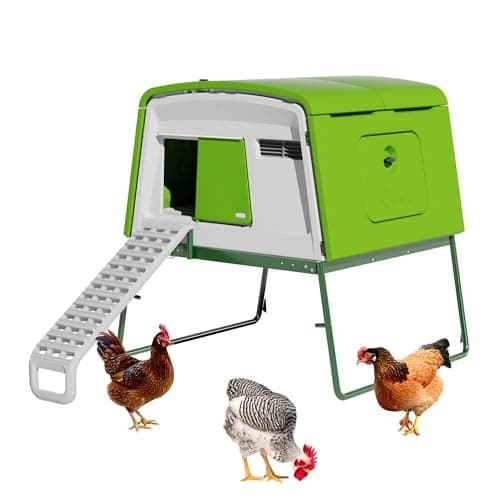
Because there is nowhere for it to live. The chicken mite's whole strategy depends on daytime harborage in cracks, grain and joints, and a non-porous twin-wall plastic shell has none. This is the strongest practical argument in the plastic versus wood decision, and it is the one that keepers who have fought red mite in a wooden coop mention first. It is also why the Omlet Eglu has the reputation it does.
If you have a wooden coop, that is not a reason to replace it. It is a reason to treat the structure rather than only the birds, to keep the seams accessible, and to do a full clear-out twice a year rather than once.
Preventing the next one
- A dry, shaded dust-bathing area, always available, with food-grade diatomaceous earth in it.
- Low-dust, absorbent bedding, changed before it mats. Hemp and kiln-dried pine both qualify; coop bedding compares them.
- Two full clear-outs a year, with the roosts and crevices scrubbed rather than just the floor swept. How to clean a chicken coop is the method.
- Quarantine new birds before they join the flock. Most infestations arrive on a bird.
- Keep wild birds off the feed. They are a route in, which is one more argument for a rat- and bird-proof feeder.
One thing to be clear about: lime-based coop deterrents and zeolite odor absorbers are not insecticides and should not be treated as a cure. They make a coop less hospitable and they handle the ammonia problem that often runs alongside a neglected coop. The infestation itself is dealt with by a poultry-labeled product, applied to birds and house, twice, four to seven days apart.
Frequently asked questions
How do I know if my chickens have mites?
How often should you treat chickens for mites?
What is the difference between chicken mites and lice?
Do I need to treat the coop as well as the birds?
Does diatomaceous earth work for chicken mites?
Can chicken mites live in a plastic coop?
Sources
Read next
Chicken Coops
How to clean a chicken coop
The daily, weekly and twice-yearly routine, the products that help, and the hygiene rules CDC publishes for handling poultry.
Chicken Coops
The best chicken coop bedding
Pine, hemp and the ammonia binder that makes either work. Ranked on absorbency and dust, not bag price.
Chicken Coops
Plastic vs wooden chicken coops
The real trade-off: mite control and cleaning against price and modifiability. Picks for whichever answer fits you.
Chicken Coops
Why your chicken coop smells, and how to fix it
A diagnostic for coop smell: four causes in order of likelihood, and what fixes each one. Masking it is not on the list.
Nesting Boxes
The best nesting box pads
Excelsior, aspen and washable nest pads compared on cushioning, fit and running cost, plus the honest view on nesting herbs.