Chicken Coops
Why your chicken coop smells, and how to fix it
A healthy coop smells of warm bird and wood shavings. If it smells sharp, that is ammonia, and it is harming your hens.
Chickens & Coops earns a commission when you buy through our links, at no extra cost to you. Prices come from Amazon and change; the date beside every price is when we last verified it. Full disclosure.
Quick picks
| # | Product | Function | Score | Price |
|---|---|---|---|---|
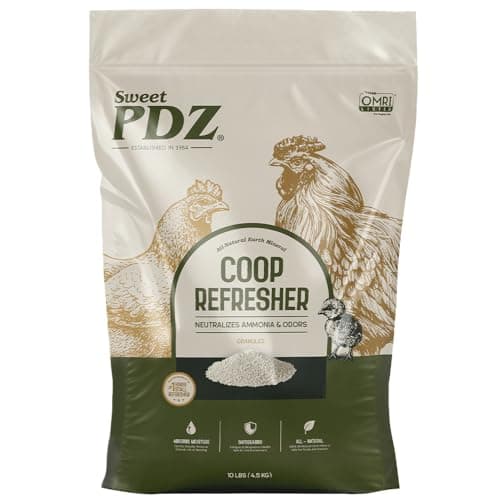
| Rank 1 | Sweet PDZ Coop Refresher, 10 lb Ammonia under the roosts | Ammonia and odor absorption | 8.8 | $24.95on Amazon |
| Rank 2 | 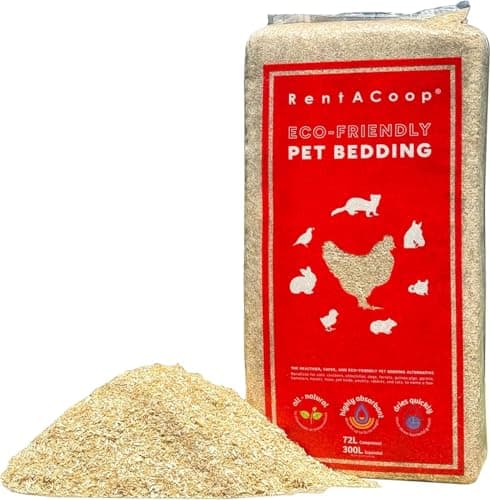 RentACoop Premium Hemp Bedding, 300L Low dust in a small or poorly ventilated coop | Not published | 8.0 | $74.95on Amazon |
| Rank 3 | 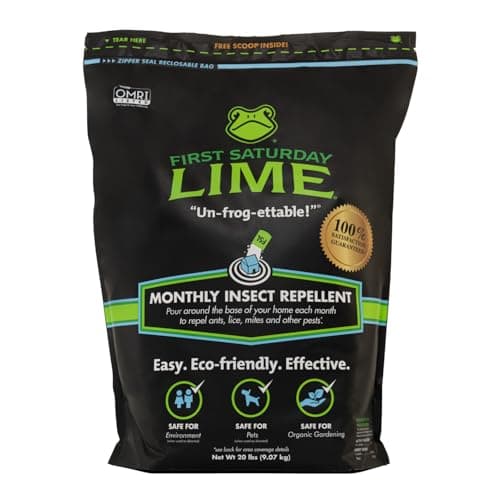 First Saturday Lime Insect Deterrent, 20 lb Mites and lice in the coop, not odor | Insect deterrent | 7.5 | $41.99on Amazon |
| Rank 4 | 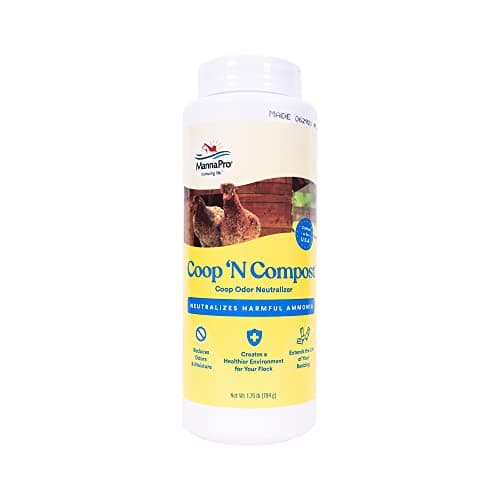 Manna Pro Coop 'N Compost Deodorizer, 1.75 lb Trying odor control cheaply before committing | Deodorizer and moisture absorber | 6.8 | $9.96on Amazon |
#ad Prices come from Amazon and change. How this site is funded. Scores are our own published rubric, not a lab test — see how we pick.
A coop that smells of warm bird, wood and a little dust is normal. A coop with a sharp, eye-watering edge to it is producing ammonia, and ammonia at levels you can smell is already irritating your birds' airways. This page is a diagnostic, not a product list — though there are two products at the end that genuinely help once you have found the cause.
Work through these in order
1. Wet litter — the cause nine times out of ten
Ammonia comes from droppings breaking down in the presence of moisture. Dry droppings barely smell. So the first question is always: why is the litter wet?
- A leaking or splashing waterer inside the coop. Move it outside or into the run, or raise it to back height so birds cannot tip or stand in it.
- Rain getting in through a failed roof seal, a drafty vent without a baffle, or wind-driven rain through an open pop-hole.
- Litter too shallow. Four to six inches minimum; six to twelve in winter.
- Litter not absorbent enough. Straw is the usual culprit — it is hollow and absorbs poorly.
2. Droppings not being removed
Most of the overnight output lands under the roost. Without a droppings board it mixes into the litter and overwhelms it. Fit a removable board under the roosts and scrape it every day or two — this alone resolves a large share of coop smell complaints.
3. Not enough ventilation
Ammonia and water vapor have to leave the building. If the vents are closed, too small, or at the wrong height, both accumulate. Vents belong high, above the birds, and stay open in winter. The full ventilation guide is here.
4. Too many birds for the space
If the first three are right and it still smells, the coop is overstocked. Twice the birds means twice the moisture and droppings in the same volume of air. Check the floor area against the sizing table — this is the cause people reach last and should sometimes reach first.
What genuinely helps, once the cause is fixed
Zeolite (sold as coop refresher or Sweet PDZ) chemically binds ammonia rather than masking it. A thin dusting on the droppings board under the roosts is where it does the most work — not mixed through the whole floor, which wastes it.
More absorbent bedding. Hemp hurd holds more moisture per liter than pine and produces much less dust, which matters in exactly the coops that have smell problems.
A coop-safe lime deterrent is for mites rather than smell. They are often sold side by side and are frequently confused — use zeolite for ammonia and lime for insects.
What to buy
An ammonia binder, better bedding, a mite deterrent, and a small trial-size option.
#1 · Ammonia under the roosts
#ad How we are funded · Price as of October 5, 2026
Sweet PDZ Coop Refresher, 10 lb
Sweet PDZGranular zeolite that binds ammonia rather than masking it. Dusted on the poop board under the roosts it is the most effective single thing you can do about coop smell.
| Active material | Zeolite |
|---|---|
| Weight | 10 lb |
| Function | Ammonia and odor absorption |
| Scent added | None |
Specifications per Manufacturer figures as published on the Amazon product listing, as published at the date above.
What it does well
- Chemically binds ammonia instead of covering it with fragrance
- No added scent, which matters because fragrance oils irritate bird airways
- A thin layer on the poop board is all it takes — a 10 lb bag lasts a small flock months
- Safe to compost with the litter
Where it falls short
- It is a granular mineral: it will not fix a coop that is genuinely under-ventilated
- Needs topping up as it saturates
- Dusty to apply — worth doing with the hens outside
Our rubric
- Fit for purpose
- 10.0
- Mess and waste
- 7.0
- Quality
- 9.0
- Value
- 9.0
#2 · Low dust in a small or poorly ventilated coop
#ad How we are funded · Price as of October 5, 2026
RentACoop Premium Hemp Bedding, 300L
RentACoop300 liters of hemp hurd per 30 lb bale. Hemp costs more than pine up front but absorbs more per liter and throws far less dust — which is the thing that actually damages chicken lungs.
| Material | Hemp hurd |
|---|---|
| Volume | 300 L |
| Weight | 30 lb |
| Intended use | Chickens, rabbits, horses |
Specifications per Manufacturer figures as published on the Amazon product listing, as published at the date above.
What it does well
- Volume and weight both published, so the real cost per liter is comparable
- Markedly less dust than pine — the single biggest respiratory factor in a closed coop
- Absorbs more liquid per liter than shavings, so the litter stays drier between changes
- Composts readily
Where it falls short
- Costs several times what an equivalent volume of pine does
- Finer particles can sift through widely-spaced slatted floors
- Not stocked in most feed stores, so you are ordering it
Our rubric
- Fit for purpose
- 9.0
- Mess and waste
- 8.0
- Quality
- 9.0
- Value
- 6.0
#3 · Mites and lice in the coop, not odor
#ad How we are funded · Price as of October 5, 2026
First Saturday Lime Insect Deterrent, 20 lb
First Saturday LimeA coop-safe lime-based insect deterrent. It is not hydrated lime and it is not an odor absorber — it is for the mite and lice problem, which is a different job from the ammonia one.
| Weight | 20 lb |
|---|---|
| Function | Insect deterrent |
| Use | Outdoor and coop areas |
| Active ingredient detail | Not published by manufacturer |
Specifications per Manufacturer figures as published on the Amazon product listing, as published at the date above.
What it does well
- Targets the mite and lice problem that bedding changes alone do not solve
- Safe around birds, unlike caustic hydrated lime, which should never go in a coop
- A 20 lb bag treats a backyard coop many times over
Where it falls short
- Does nothing for ammonia — pair it with zeolite rather than substituting it
- Full ingredient breakdown is not published on the listing
- Like any powder, it is dusty to apply
Our rubric
- Fit for purpose
- 8.0
- Mess and waste
- 6.0
- Quality
- 8.0
- Value
- 8.0
#4 · Trying odor control cheaply before committing
#ad How we are funded · Price as of October 5, 2026
Manna Pro Coop 'N Compost Deodorizer, 1.75 lb
Manna ProA small, inexpensive deodorizer and moisture absorber. Useful as a trial bag; the cost per pound is poor next to a 10 lb bag of zeolite if you decide you want it permanently.
| Weight | 1.75 lb |
|---|---|
| Function | Deodorizer and moisture absorber |
| Active material | Not published by manufacturer |
Specifications per Manufacturer figures as published on the Amazon product listing, as published at the date above.
What it does well
- Cheap enough to try without committing to a 10 lb bag
- Addresses moisture as well as smell, and damp litter is what creates the smell
- Widely stocked
Where it falls short
- 1.75 lb does not go far in a coop — this is a sample size
- Cost per pound is high compared with bulk zeolite
- Active material not published
Our rubric
- Fit for purpose
- 7.0
- Mess and waste
- 7.0
- Quality
- 7.0
- Value
- 6.0
A quick checklist
- Is the litter dry? If not, find the water.
- Is there a droppings board, and is it being scraped?
- Are the vents open, high, and big enough that the walls do not condense?
- Is the coop actually big enough for the flock?
- Only then: zeolite on the board and more absorbent bedding.
Frequently asked questions
Why does my chicken coop smell so bad?
What absorbs ammonia smell in a chicken coop?
Is ammonia smell harmful to chickens?
Should I use scented sprays in the coop?
Does a smelly coop mean my chickens are sick?
Sources
Read next
Chicken Coops
Chicken coop ventilation, done right
The single most misunderstood part of coop design: why you ventilate in winter, and where the vents actually go.
Chicken Coops
The best chicken coop bedding
Pine, hemp and the ammonia binder that makes either work. Ranked on absorbency and dust, not bag price.
Chicken Coops
How to clean a chicken coop
The daily, weekly and twice-yearly routine, the products that help, and the hygiene rules CDC publishes for handling poultry.
Chicken Coops
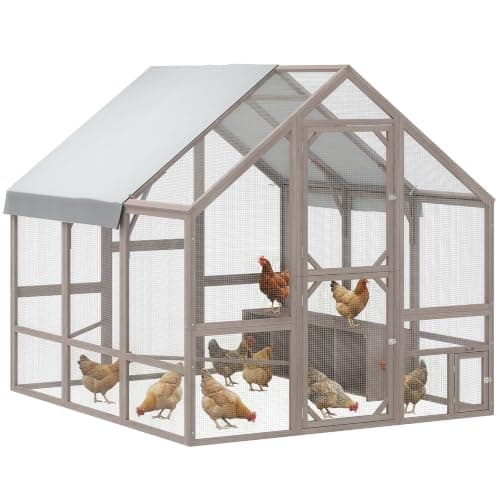
Chicken coop size per chicken: the real numbers
The sizing table the rest of this site is built on, with the extension sources and a method for checking any listing.
Chicken Coops
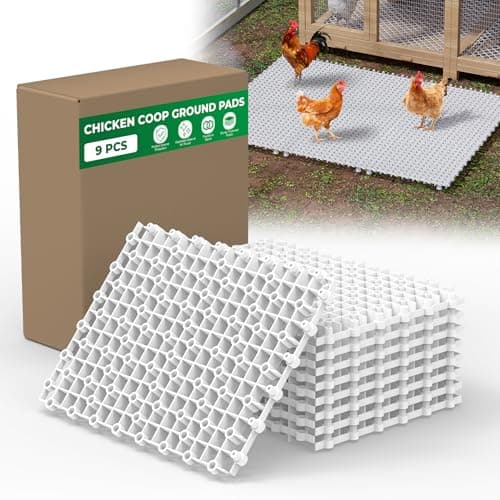
The best chicken coop flooring
Floor surfaces compared on cleaning, rot and foot health, with the interlocking pads and liners that protect bare timber.