Chicken Coops
Chicken coop ventilation, done right
Moisture causes frostbite, not cold. The vents belong above the birds' heads, and they stay open all winter.
Chickens & Coops earns a commission when you buy through our links, at no extra cost to you. Prices come from Amazon and change; the date beside every price is when we last verified it. Full disclosure.
Quick picks
| # | Product | Function | Score | Price |
|---|---|---|---|---|
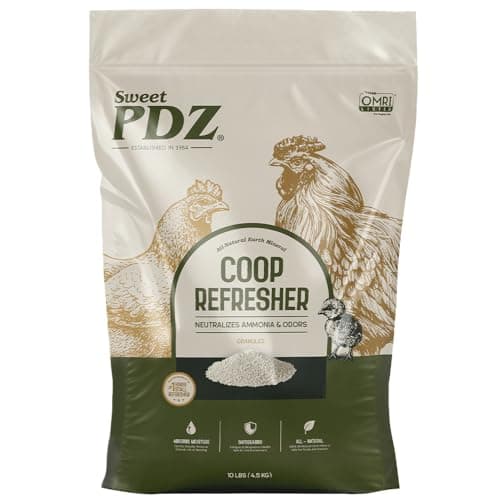
| Rank 1 | Sweet PDZ Coop Refresher, 10 lb Ammonia under the roosts | Ammonia and odor absorption | 8.8 | $24.95on Amazon |
| Rank 2 | 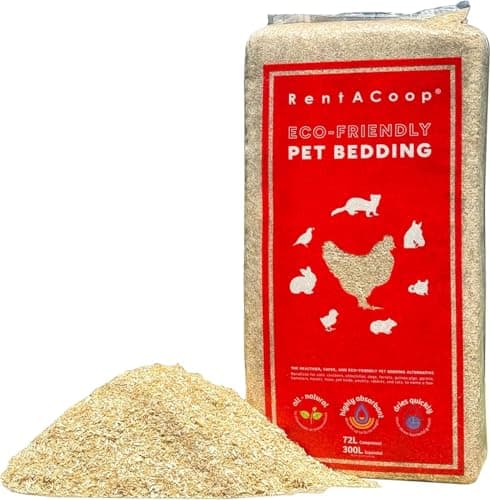 RentACoop Premium Hemp Bedding, 300L Low dust in a small or poorly ventilated coop | Not published | 8.0 | $74.95on Amazon |
| Rank 3 | 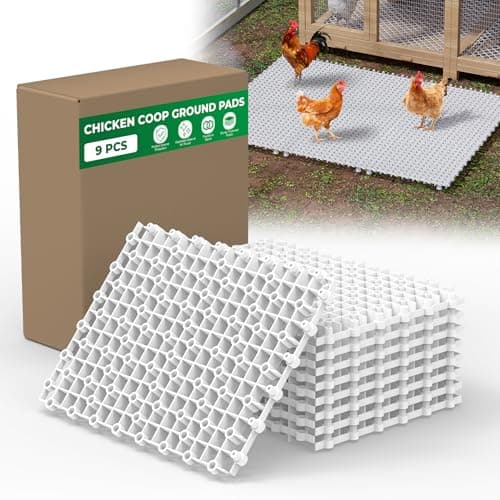 Forestchill Chicken Coop Ground Pads, 9-piece A washable interlocking floor inside a coop | Not published | 7.5 | $35.99on Amazon |
#ad Prices come from Amazon and change. How this site is funded. Scores are our own published rubric, not a lab test — see how we pick.
Every winter, well-meaning keepers seal their coops against the cold and give their birds frostbite. It is the most common avoidable mistake in backyard chicken keeping, and it happens because the intuition is exactly backwards: the danger in a winter coop is moisture, not temperature.
Why moisture, not cold
A hen breathes out water vapor all night and her droppings release more. In a sealed coop that moisture has nowhere to go, so humidity climbs and condenses on the coldest surfaces available — the walls, and the combs and wattles of the birds. University of Minnesota Extension puts it plainly: high moisture in a coop combined with cold temperatures causes condensation, which causes frostbite. Extension's frostbite article covers the mechanism in detail.
A dry coop at 20 degrees F is a safe coop. A damp coop at 30 degrees F is not. Ventilation is how you get the first one.
Ventilation is not a draft
The distinction that resolves the whole argument:
- Ventilation is air leaving high, above the birds, carrying moisture and ammonia with it.
- A draft is air moving across the birds at roost height, stripping heat out of their feathers.
You want the first and not the second. In practice that means vents at the top of the walls or in the gable ends, with the roost below them and no opening at roost level on the windward side. The birds should sit in still air underneath a moving layer.
Where to put vents
- High on the walls, under the eaves, on at least two sides so air can cross.
- Above the roost, never level with it. If you can feel air moving when your hand is at roost height, that is a draft.
- Protected from rain — a baffle, an overhang or a soffit vent, so the vent can stay open in weather.
- Covered with half-inch hardware cloth, because a vent is also an opening and weasels can pass through a quarter-inch gap.
- Open all winter. Vents you close in November are decoration.
The signs you have it wrong
- Condensation or frost on the inside of the coop walls on a cold morning — too little ventilation
- A sharp ammonia smell at head height when you open the door — too little ventilation, and too much wet litter
- Birds huddled at one end away from an opening — a draft
- Blackened comb tips after a cold snap — frostbite, which means the coop was damp
- Damp, matted litter — the moisture is condensing instead of leaving
Ventilation and litter work together
Ventilation removes moisture from the air; dry litter stops moisture entering it in the first place. The two are a system. A deep layer of absorbent bedding, a droppings board scraped every day or two, and a zeolite-based ammonia binder under the roosts between them remove most of the load that ventilation has to clear.
What helps
Not ventilation products — there is no such thing to buy. These are the three things that reduce the moisture and ammonia load your vents have to carry.
#1 · Ammonia under the roosts
#ad How we are funded · Price as of October 5, 2026
Sweet PDZ Coop Refresher, 10 lb
Sweet PDZGranular zeolite that binds ammonia rather than masking it. Dusted on the poop board under the roosts it is the most effective single thing you can do about coop smell.
| Active material | Zeolite |
|---|---|
| Weight | 10 lb |
| Function | Ammonia and odor absorption |
| Scent added | None |
Specifications per Manufacturer figures as published on the Amazon product listing, as published at the date above.
What it does well
- Chemically binds ammonia instead of covering it with fragrance
- No added scent, which matters because fragrance oils irritate bird airways
- A thin layer on the poop board is all it takes — a 10 lb bag lasts a small flock months
- Safe to compost with the litter
Where it falls short
- It is a granular mineral: it will not fix a coop that is genuinely under-ventilated
- Needs topping up as it saturates
- Dusty to apply — worth doing with the hens outside
Our rubric
- Fit for purpose
- 10.0
- Mess and waste
- 7.0
- Quality
- 9.0
- Value
- 9.0
#2 · Low dust in a small or poorly ventilated coop
#ad How we are funded · Price as of October 5, 2026
RentACoop Premium Hemp Bedding, 300L
RentACoop300 liters of hemp hurd per 30 lb bale. Hemp costs more than pine up front but absorbs more per liter and throws far less dust — which is the thing that actually damages chicken lungs.
| Material | Hemp hurd |
|---|---|
| Volume | 300 L |
| Weight | 30 lb |
| Intended use | Chickens, rabbits, horses |
Specifications per Manufacturer figures as published on the Amazon product listing, as published at the date above.
What it does well
- Volume and weight both published, so the real cost per liter is comparable
- Markedly less dust than pine — the single biggest respiratory factor in a closed coop
- Absorbs more liquid per liter than shavings, so the litter stays drier between changes
- Composts readily
Where it falls short
- Costs several times what an equivalent volume of pine does
- Finer particles can sift through widely-spaced slatted floors
- Not stocked in most feed stores, so you are ordering it
Our rubric
- Fit for purpose
- 9.0
- Mess and waste
- 8.0
- Quality
- 9.0
- Value
- 6.0
#3 · A washable interlocking floor inside a coop
#ad How we are funded · Price as of October 5, 2026
Forestchill Chicken Coop Ground Pads, 9-piece
ForestchillNine interlocking plastic floor pads that lift the birds off bare timber or ground. The point is that they come out and hose down, so the coop floor itself never soaks.
| Pack | 9 pieces |
|---|---|
| Material | Plastic |
| Type | Reusable interlocking walking mats |
| Coverage area | Not published by manufacturer |
Specifications per Manufacturer figures as published on the Amazon product listing, as published at the date above.
What it does well
- Removable and washable, so the structural floor stays dry and lasts years longer
- Interlocking panels let you cover an odd-shaped floor without cutting
- Easier on feet than bare wire, which causes sores
Where it falls short
- Total coverage area is not published, so you cannot work out how many packs you need
- Droppings collect in the drainage gaps and need rinsing, not sweeping
- Plastic can go brittle after a few years of UV exposure in an open run
Our rubric
- Fit for purpose
- 8.0
- Mess and waste
- 7.0
- Quality
- 7.0
- Value
- 8.0
Summer is a different problem
In heat, ventilation stops being about moisture and becomes about heat dumping, and the rules relax: you want as much airflow as you can get, including at bird level. Chickens tolerate cold far better than heat. A coop that is well vented for winter is usually under-vented for a summer heatwave — open doors, add shade, and make sure water is in the shade too.
Frequently asked questions
Should I close my chicken coop vents in winter?
What is the difference between ventilation and a draft?
How much ventilation does a chicken coop need?
Can a coop be too ventilated in winter?
Do coop vents need covering?
Sources
Read next
Winter Heat
Do chickens need heat in winter?
The short answer is no, for healthy adult hens — and the reasons are about fire risk and moisture, not toughness.
Winter Heat
Winterizing a chicken coop
The full autumn checklist: coop, run, water, electrics and flock, in the order that makes the winter easy.
Chicken Coops
Why your chicken coop smells, and how to fix it
A diagnostic for coop smell: four causes in order of likelihood, and what fixes each one. Masking it is not on the list.
Chicken Coops
Chicken coop size per chicken: the real numbers
The sizing table the rest of this site is built on, with the extension sources and a method for checking any listing.
Chicken Coops
The best chicken coop bedding
Pine, hemp and the ammonia binder that makes either work. Ranked on absorbency and dust, not bag price.