Winter Heat
How to keep chickens warm without electricity
This is not the compromise answer. For most flocks it is the better one, and every item on the list costs less than a heater.
Chickens & Coops earns a commission when you buy through our links, at no extra cost to you. Prices come from Amazon and change; the date beside every price is when we last verified it. Full disclosure.
Top pick
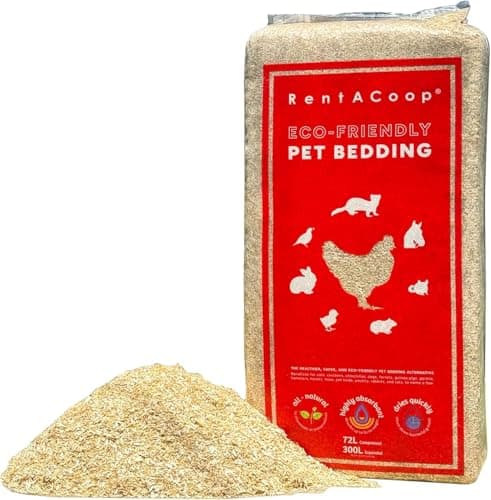
RentACoop Premium Hemp Bedding, 300L
300 liters of hemp hurd per 30 lb bale.
#ad How we are funded · Price as of November 8, 2026
Quick picks
| # | Product | Material | Score | Price |
|---|---|---|---|---|
| Rank 1 | RentACoop Premium Hemp Bedding, 300L Low dust in a small or poorly ventilated coop | Hemp hurd | 9.3 | $74.95RentACoop, 300L |
| Rank 2 | 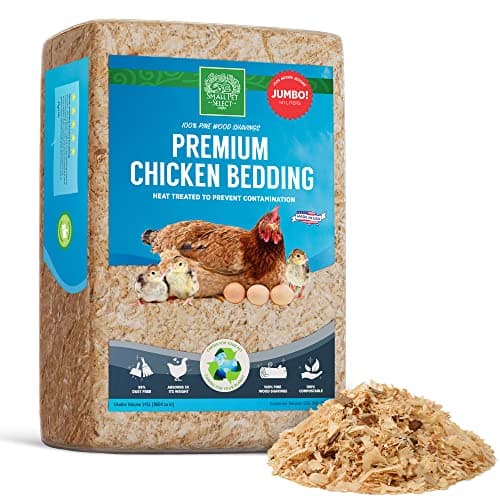 Small Pet Select Pine Shavings Chicken Bedding The default coop and nest-box bedding | Pine wood shavings | 9.2 | $35.99Small Pet Select |
| Rank 3 | 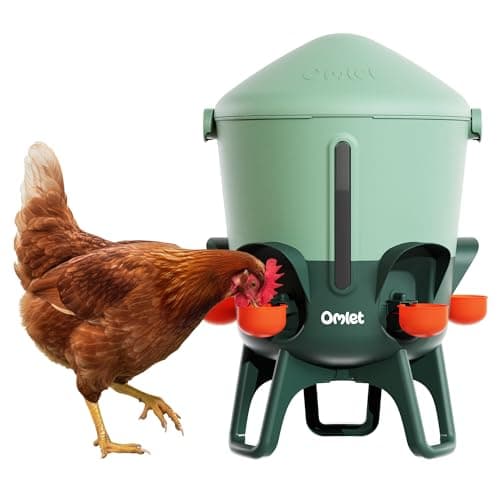 Omlet Insulated Chicken Waterer, 3 Gallon Slowing freezing without any electricity | BPA-free | 8.9 | $109.99Omlet, 3 Gallon |
| Rank 4 | 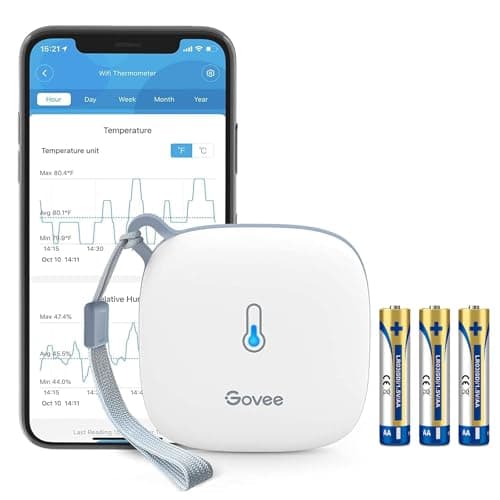 Govee WiFi Thermometer Hygrometer H5179 An alert on your phone when the coop crosses a threshold | Not published | 9.1 | $31.98Govee WiFi |
#ad Prices come from Amazon and change. How this site is funded. Scores are our own published rubric, not a lab test — see how we pick.
The short answer: deep dry bedding, drafts sealed at bird level, vents left open above head height, and enough birds to share the roost. University of Minnesota Extension recommends 6 to 12 inches of dry bedding in winter because it insulates the birds' feet, and that single change does more for a cold flock than any heater you can buy. None of it can catch fire, none of it fails in a power cut, and none of it leaves the birds unacclimatized if it stops.
It is worth being clear that this is not a workaround. MSU Extension advises against adding supplemental heat in most circumstances, because the fire risk from a heat source near combustible bedding is too high, and states that a properly constructed, mostly draft-free coop with adequate ventilation is enough to limit the danger from cold. The unpowered approach is the recommended approach. Do chickens need heat in winter sets out the full case.
Why chickens cope with cold better than you expect
A hen wears a down jacket she grew herself, and she can fluff it to trap more air. She tucks her head under a wing and stands on one foot at a time to keep her extremities out of the air. A flock on a roost presses together and shares body heat. All of that works down to temperatures that feel alarming to us.
What breaks it is moisture and wind, not cold. Extension's frostbite guidance is the reference here: damp air is what takes combs and wattles, and a sealed coop full of respired moisture is far more dangerous than a cold one with the vents open. Which is why the list below is mostly about dryness and air movement rather than about warmth.
The five measures, in order of effect
1. Deep dry bedding
Six to twelve inches, per the Extension figure, topped up rather than replaced through the winter. Bedding insulates the floor the birds stand on, buffers moisture, and — if you manage it as a deep litter — generates a little gentle warmth as it composts. Hemp throws less dust than pine, which matters in a tight coop; pine is cheaper and perfectly good with decent ventilation. Coop bedding, compared.
2. Seal drafts at bird level, not at the top
A draft is air moving across a roosting bird. Gaps at perch height, around pop holes and under eaves on the windward side are the ones to close, with board, batten or foam tape. Do this on a windy day and you will find them by feel. What you must not do is seal the coop: the vents above the birds' heads are how the moisture leaves.
3. Keep ventilation open above head height
This is the instruction that feels wrong in January and is the most important one on the page. Warm, moist air rises off the birds and has to get out, or it condenses on the inside of the roof and drips back down. Vents at the ridge, soffit or gable — above the roosting birds, so the air leaves without blowing across them — stay open all winter. Chicken coop ventilation covers the sizing and placement.
4. Keep the flock together, and the coop sized right
Birds heat each other. A flock of six in a coop sized for six is warmer than two birds in a coop sized for twelve, which is one of the very few arguments in backyard chicken keeping for not buying a bigger coop than you need. Coop size per chicken has the arithmetic.
5. Block the wind outside, too
A windbreak on the prevailing side of the run — board, straw bales, a tarp lashed to the mesh with the top left open — changes how much time the flock spends outdoors in winter, which matters for their condition. Leave the leeward side open so the run does not become a wind tunnel or a closed box.
What helps
The two beddings worth having deep on the floor, an insulated waterer that needs no power, and the monitor that tells you whether any of this is working.
#1 · Low dust in a small or poorly ventilated coop
#ad How we are funded · Price as of November 8, 2026
RentACoop Premium Hemp Bedding, 300L
RentACoop300 liters of hemp hurd per 30 lb bale. Hemp costs more than pine up front but absorbs more per liter and throws far less dust — which is the thing that actually damages chicken lungs.
| Material | Hemp hurd |
|---|---|
| Volume | 300 L |
| Weight | 30 lb |
| Intended use | Chickens, rabbits, horses |
Specifications per Manufacturer figures as published on the Amazon product listing, as published at the date above.
Why we picked it
- Volume and weight both published, so the real cost per liter is comparable
- Markedly less dust than pine — the single biggest respiratory factor in a closed coop
- Absorbs more liquid per liter than shavings, so the litter stays drier between changes
- Composts readily
Good to know — Costs several times what an equivalent volume of pine does
Our rubric
- Fit for purpose
- 9.8
- Mess and waste
- 9.3
- Quality
- 9.8
- Value
- 8.4
#2 · The default coop and nest-box bedding
#ad How we are funded · Price as of November 8, 2026
Small Pet Select Pine Shavings Chicken Bedding
Small Pet SelectKiln-dried pine shavings in a bag sized for a coop rather than a hamster cage. Pine is the baseline bedding for a reason: absorbent, cheap, compostable, and it does not mat.
| Material | Pine wood shavings |
|---|---|
| Intended use | Coop floor and nest boxes |
| Volume | Not published by manufacturer |
| Dust level | Not published by manufacturer |
Specifications per Manufacturer figures as published on the Amazon product listing, as published at the date above.
Why we picked it
- Absorbent enough to run a deep-litter floor for weeks between full changes
- Composts down with the manure into usable garden material
- Shavings stay loose, so hens can scratch and dust-bathe in them
Good to know — Dustier than hemp, which matters in a tight coop with poor ventilation
Our rubric
- Fit for purpose
- 9.8
- Mess and waste
- 8.4
- Quality
- 9.3
- Value
- 9.3
#3 · Slowing freezing without any electricity
#ad How we are funded · Price as of November 8, 2026
Omlet Insulated Chicken Waterer, 3 Gallon
OmletA 3-gallon insulated waterer with five cups and nipples included. Insulation does not stop a hard freeze, but it buys hours — which in a mild-winter climate can be enough.
| Capacity | 3 gallon |
|---|---|
| Drinkers | 5 cups and nipples included |
| Insulation | Insulated body |
| Material | BPA-free |
| Power required | None |
Specifications per Omlet published specifications, as published at the date above.
Why we picked it
- Insulated body genuinely delays freezing with no power at all
- Five drinkers included — nothing else to buy
- Also keeps water cooler in summer, which slows algae
- The right answer where running a cable to the coop is not practical
Good to know — Insulation delays freezing; it does not prevent it below about 25 degrees F overnight
Our rubric
- Capacity
- 8.4
- Stays clean
- 9.8
- Freeze resistance
- 8.4
- Ease of refill
- 9.3
- Value
- 8.4
#4 · An alert on your phone when the coop crosses a threshold
$39.99 20% off
#ad How we are funded · Price as of November 8, 2026
Govee WiFi Thermometer Hygrometer H5179
GoveeThe pick for most coops, because it is the cheapest sensor here that will actually wake you up. App notifications on a temperature or humidity threshold are the whole point of monitoring a coop: a reading you have to walk out and look at tells you nothing at 2am.
| Connectivity | WiFi |
|---|---|
| Alerts | App notification alerts |
| Data history | 2 years of stored data |
| Measures | Temperature and humidity |
| Weather rating | Not published by manufacturer |
Specifications per Manufacturer figures as published on the Amazon product listing, as published at the date above.
Why we picked it
- Threshold alerts to the phone, which is the only feature that changes what you do
- Two years of stored history, so you can see what the coop actually did last winter
- The listing names incubator and greenhouse use, so the duty cycle is the right one
- Cheapest route to real alerting here
Good to know — Needs the coop to be inside WiFi range, which a lot of coops are not
Our rubric
- Alerting
- 9.8
- Accuracy
- 8.9
- Readability
- 8.4
- Cold tolerance
- 8.4
- Value
- 9.8
Water is the real unpowered problem
Keeping birds warm without electricity is straightforward. Keeping their water liquid without electricity is genuinely hard, and it is the thing that will cost you time every day of a cold snap.
- An insulated waterer buys hours rather than days. In a mild winter that can be enough; in a hard freeze it is not.
- Two containers, rotated. One in the coop, one thawing indoors, swapped morning and evening. Unglamorous, reliable, free.
- A black rubber tub in full sun picks up enough solar gain to stay liquid longer than a white plastic one, and ice pops out of flexible rubber instead of cracking it.
- Depth beats breadth. A tall narrow volume freezes more slowly than a wide shallow one of the same capacity.
- Site it out of the wind and off the frozen ground, on a block of wood or a paver.
The full set of options, including the ones that do use power, is in how to stop chicken water freezing and heated waterers without electricity.
What about insulation?
Insulating a coop is a reasonable unpowered measure and a better investment than a heater, with two conditions: it must not reduce ventilation, and it must be covered so the birds cannot peck at it. Extension's insulation guidance covers the building side, and a heater versus better insulation is the direct comparison. In a small backyard coop, honestly, deep bedding and sealed drafts get you most of what insulation would.
The exceptions
There are flocks where some heat is the right call, and pretending otherwise would be dishonest: chicks still brooding, a single bird that has lost its flock, a bird recovering from illness, large-combed breeds in an extreme cold snap, and climates where temperatures sit far below zero for weeks. In those cases the safe option is a radiant panel on a thermostat rather than a lamp — coop heater fire safety covers why, and the heater picks are here.
A winter checklist you can do in an afternoon
- Bedding deepened to at least six inches, dry, and topped up weekly.
- Drafts at perch height found on a windy day and closed.
- Ridge or gable vents confirmed open and clear.
- Roof checked for leaks, because a drip onto bedding undoes everything else.
- A windbreak on the prevailing side of the run.
- A water plan that does not depend on you being home at lunchtime.
- A thermometer and hygrometer in the coop, so the next decision is based on a reading rather than a hunch.
Frequently asked questions
How do I keep chickens warm in winter without electricity?
Is it safe to keep chickens without a coop heater?
How cold is too cold for chickens?
Should I close the coop vents in winter?
How do I stop the water freezing without electricity?
Does deep litter actually produce heat?
Our recommendation
If you buy one thing from this page, buy the first one. The second is here because it is the alternative worth weighing against it, not because a list needs two entries.
Top pick
RentACoop Premium Hemp Bedding, 300L
Low dust in a small or poorly ventilated coop
#ad How we are funded · Price as of November 8, 2026
Runner-up
Small Pet Select Pine Shavings Chicken Bedding
The default coop and nest-box bedding
#ad How we are funded · Price as of November 8, 2026
Sources
Read next
Winter Heat
Do chickens need heat in winter?
The short answer is no, for healthy adult hens — and the reasons are about fire risk and moisture, not toughness.
Winter Heat
How to keep chickens warm in winter
Six changes that keep a flock comfortable through winter, in order of effect, with the gear that actually helps.
Winter Heat
Winterizing a chicken coop
The full autumn checklist: coop, run, water, electrics and flock, in the order that makes the winter easy.
Chicken Coops
Chicken coop ventilation, done right
The single most misunderstood part of coop design: why you ventilate in winter, and where the vents actually go.
Waterers
How to stop chicken water from freezing
Every method for keeping water liquid in winter, honestly ranked — including the four that do not work.