Start Here
The best chickens for cold climates
Extension services name four breeds that overwinter well. They also make clear that a dry, ventilated coop matters more than any of them.
Chickens & Coops earns a commission when you buy through our links, at no extra cost to you. Prices come from Amazon and change; the date beside every price is when we last verified it. Full disclosure.
Cold-Climate Picks
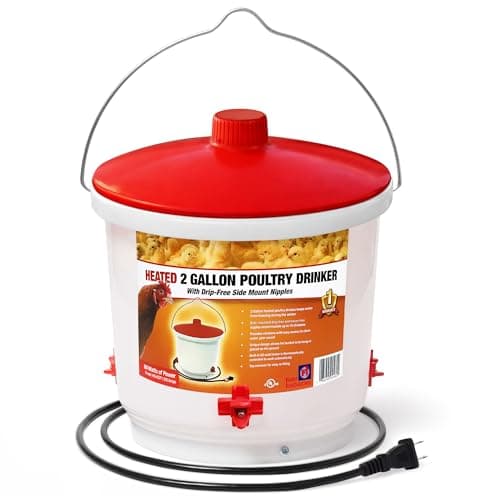
Farm Innovators HB-60P Heated Poultry Waterer, 2 Gallon 60W
Two gallons with a 60-watt thermostatically-controlled element built in.
#ad How we are funded · Price as of November 8, 2026
Quick picks
| # | Product | Type | Score | Price |
|---|---|---|---|---|
| Rank 1 | Farm Innovators HB-60P Heated Poultry Waterer, 2 Gallon 60W A purpose-built heated waterer that just works | Heated drinker | 9.0 | $49.99Farm, 2 Gallon 60W |
| Rank 2 | 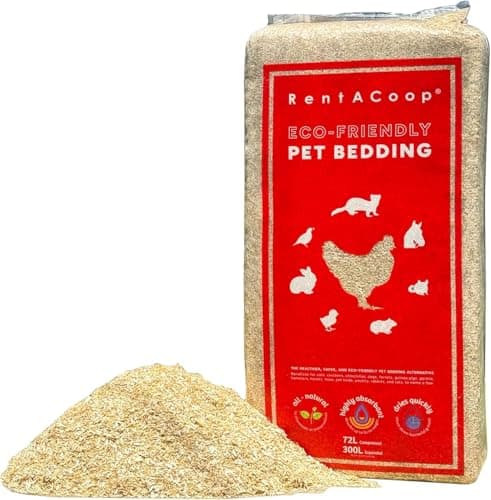 RentACoop Premium Hemp Bedding, 300L Low dust in a small or poorly ventilated coop | Not published | 9.3 | $74.95RentACoop, 300L |
| Rank 3 | 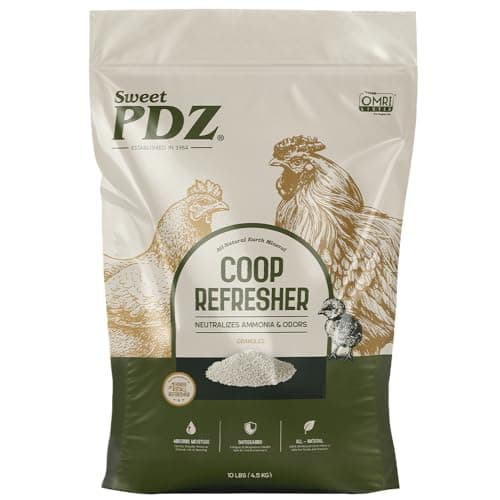 Sweet PDZ Coop Refresher, 10 lb Ammonia under the roosts | Not published | 9.7 | $24.95Sweet PDZ, 10 lb |
| Rank 4 |  Govee WiFi Thermometer Hygrometer H5179 An alert on your phone when the coop crosses a threshold | Not published | 9.1 | $31.98Govee WiFi |
| Rank 5 | 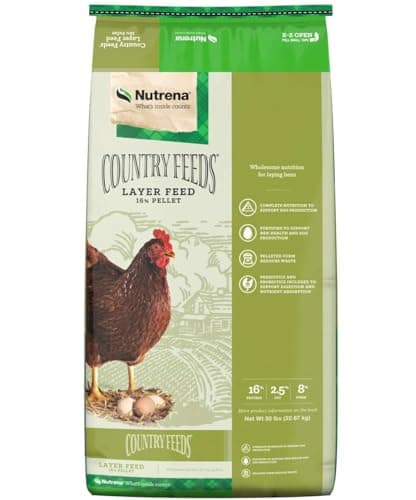 Nutrena Country Feeds 16% Layer Pellets, 50 lb The cheapest cost per pound for a bigger flock | Layer pellets | 9.7 | $41.79Nutrena, 50 lb |
| Rank 6 | 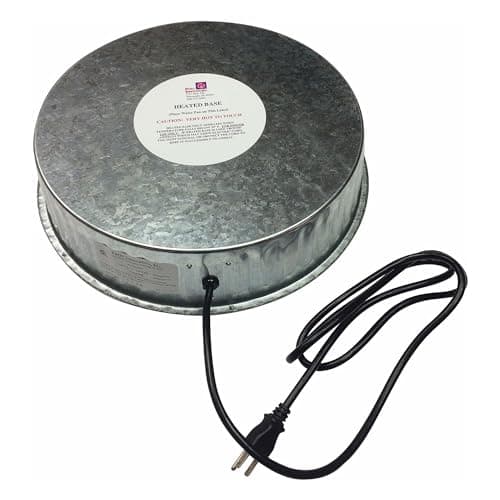 Farm Innovators HP-125 Heated Base for Metal Founts, 125W Heating the metal waterer you already own | Heated base | 9.2 | $46.92Farm, 125W |
#ad Prices come from Amazon and change. How this site is funded. Scores are our own published rubric, not a lab test — see how we pick.
The breeds University of Minnesota Extension names as overwintering well are Plymouth Rock, Wyandotte, Ameraucana and Orpington — heavier birds, in its words. That is a cited list from a land-grant extension service rather than a hatchery's marketing copy, which is why it is the one this page leads with.
The more useful thing to say up front is that your coop decides more of this than your breed does. A Wyandotte in a damp, sealed coop will get frostbitten combs. A Leghorn in a dry, well-ventilated coop in Minnesota will usually be fine. Extension's frostbite article puts the conditions plainly: frostbite "is more likely to occur during the nighttime hours in a cold, poorly ventilated coop with damp bedding". Breed is a tiebreaker on top of that, not a substitute for it.
What "cold hardy" actually means
Four traits, and only two of them are about the weather at all.
1. Comb type — the single biggest factor
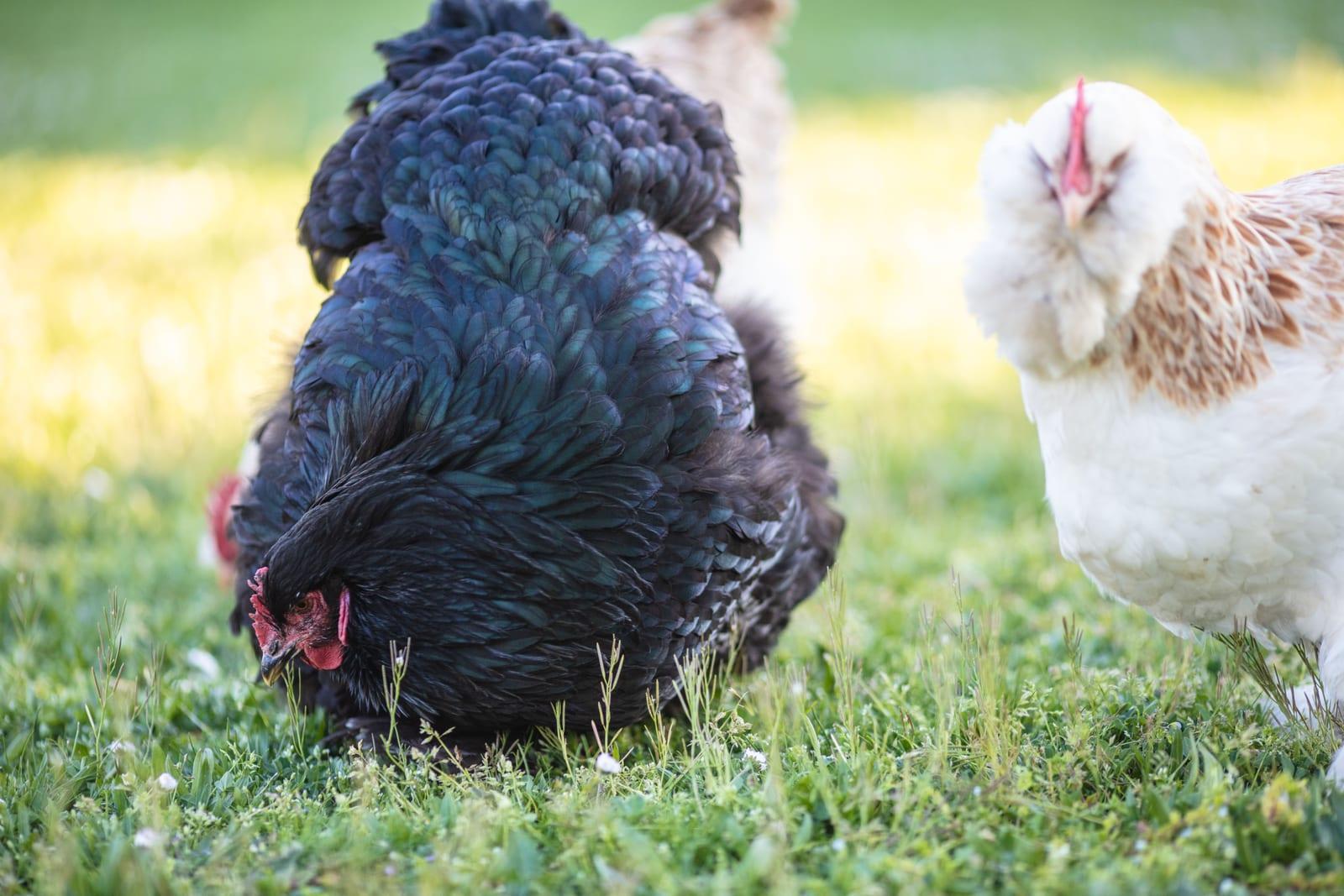
A comb is a thin, blood-rich, unfeathered projection sticking out into the air, and it is the first part of a chicken to freeze. Extension is specific about the difference between comb types: "The incidence of frostbite in chickens with the smaller comb types, such as pea and strawberry, is much less." It is equally specific about the other end — "any hen with a large comb, such as a leghorn, can be vulnerable as well" — and notes that frostbite "is most common in roosters because they typically have larger combs and wattles".
So if you are choosing a breed for a severe winter and you only get to weight one trait, weight this one. A pea comb is a small, low, three-ridged comb that sits close to the head. A large single comb is the tall, upright, serrated one most people picture when they picture a chicken.
2. Body mass
A larger bird has a lower surface-area-to-mass ratio and more insulating tissue, which is why extension's list of good overwinterers is a list of heavy breeds. The same page says the inverse directly: "Smaller breeds, or those with less feathering or large combs and wattles, need extra care."
This is also an argument against bantams as a cold-climate first flock. They are charming, they eat less and they need about half the space — and they are small birds with a lot of surface for their mass. In a mild climate that is a non-issue. In a continental one it is a real consideration.
3. Feathering
Dense, tight feathering traps a layer of warm air against the body, and that layer is the bird's actual insulation. Two things undermine it. Breeds with sparse or loose feathering have less of it to start with. And the one genuine trap in this category: silkie-type plumage does not shed water, because the feathers lack the structure that makes a normal feather waterproof. A soaked bird has no insulation at all. Extension's phrasing — "those with less feathering" need extra care — covers both cases.
4. Temperament, which matters for a different reason
Winter means the flock spends far more hours shut in a smaller space. Crowding causes bullying, and bullying in a cold coop means a bird kept off the roost, off the feeder or off the water. Extension's advice is to separate mixed flocks "if heavier or dominant birds crowd out others from feed, water, or roosts" — which tells you that a calm, evenly matched flock is a cold-weather asset rather than a personality preference. It is the same trait that matters most if there are children in the flock's life, for different reasons.
How comb types compare
| Comb type | What it looks like | Frostbite exposure |
|---|---|---|
| Pea | Small, low, three parallel ridges close to the head | Extension: incidence "much less" |
| Strawberry (cushion) | Low, compact, sits forward on the head | Extension: incidence "much less" |
| Single, moderate | Upright and serrated, but short | Moderate — vulnerable in extreme cold |
| Single, large | Tall, upright, deeply serrated | Highest. Extension names the leghorn as an example |
The breeds extension actually names
Plymouth Rock, Wyandotte, Ameraucana and Orpington. All four are standard-size, heavy, well-feathered birds, and all four are widely available in the United States, which matters more than it sounds — a cold-hardy breed you cannot replace locally is a problem in year three.
Worth noting what the Wyandotte and the Ameraucana have in common: both carry a comb type other than a large single comb. That is not a coincidence, and it is the practical reason to prefer them over an equally heavy breed with a tall single comb if your winters routinely reach single digits — which is the threshold extension uses when it says that "with extremely low temperatures (single digits and below), frostbite can become a problem".
Breeds to think twice about in a severe winter
- Mediterranean layers with large single combs. Leghorns and similar. Extension names the leghorn specifically as vulnerable. They are superb layers and they need a drier coop than most people have.
- Silkie-type plumage. The feathers do not shed water. Fine in a mild, dry climate; a genuine risk anywhere with wet snow.
- Bantams as a first cold-climate flock. Small body, large surface area. Keepable, but not the easy option.
- Any roosters, if you keep them. Larger combs and wattles, and extension says frostbite "is most common in roosters" for exactly that reason. Many municipalities settle this question for you.
- A single bird of any breed. Chickens warm each other on the roost. A flock of one has nothing to huddle against, and it is also miserable for a social animal.
The four numbers worth knowing before winter
| What | Extension figure | Source |
|---|---|---|
| Chicken body temperature | Around 106 degrees F | University of Minnesota Extension |
| Comfortable ambient range | 60 to 75 degrees F | University of Minnesota Extension |
| Supplemental heat considered | Below 35 degrees F | University of Minnesota Extension |
| Feed intake increase in cold | Up to 25 percent | University of Minnesota Extension |
| Bedding depth for winter | 4 to 6 inches of straw or shavings | University of Minnesota Extension |
| Doorway kickboard | 6 to 8 inches | University of Minnesota Extension |
| Frostbite risk threshold | Single digits and below | Extension Poultry |
The 25 percent feed figure is the one people are most often surprised by, and it has a practical consequence: your winter feed bill goes up and your feeder needs refilling more often. Extension's note on scratch grain is worth repeating, because scratch is what people reach for in cold weather — feed it "in moderation, about a handful per 10 birds". It is a treat, not a ration, and a flock filling up on it is on a diluted diet exactly when it needs the protein. Layer feed versus scratch has the full argument.
How we ranked the gear
The picks below are not breeds — you cannot buy a Wyandotte through this page and we would not want you to. They are the four jobs a cold climate adds to flock keeping, ranked on how well each product does its job. Nobody on this site has lived with all six products; the ranking is built from the figures each listing publishes, the pattern of what verified owners report at the retailer, and whether the design actually addresses the extension guidance above. How we pick sets out the method and its limits.
- Liquid water. The first and biggest winter job. Extension's line is that chickens "need free access to fresh, clean water" and that they stop eating without it, so frozen water does not just dehydrate a flock — it stops them feeding on the coldest day of the year.
- Dry bedding, at depth. Four to six inches, kept dry. This is the frostbite control that costs almost nothing.
- Moisture and ammonia management. Extension says to increase ventilation "if you smell ammonia or see moisture on surfaces", which means those two signs are what you are managing. A zeolite amendment attacks the source.
- Knowing what the coop is actually doing. Humidity, not temperature, is the number that predicts frostbite, and nobody can estimate humidity by standing in a coop.
What a cold-climate flock actually needs
Liquid water first, then dry bedding at depth, then moisture control, then a sensor so you know whether any of it is working.
#1 · A purpose-built heated waterer that just works
#ad How we are funded · Price as of November 8, 2026
Farm Innovators HB-60P Heated Poultry Waterer, 2 Gallon 60W
Farm InnovatorsTwo gallons with a 60-watt thermostatically-controlled element built in. Published wattage, published capacity, and the heater is integrated rather than bolted on — the fewest failure points of any heated option.
| Capacity | 2 gallon |
|---|---|
| Heater | 60 W integrated |
| Control | Thermostatically controlled |
| Type | Heated drinker |
Specifications per Manufacturer figures as published on the Amazon product listing, as published at the date above.
Why we picked it
- 60 W is published, so you can work out the running cost rather than guess
- Thermostat means it only draws power when it is actually near freezing
- Integrated heater — no separate base to misalign or water to spill onto
- The most widely used heated poultry drinker in US backyards for a reason
Good to know — 2 gallons is a daily refill for anything above about six hens in winter
Our rubric
- Capacity
- 7.9
- Stays clean
- 8.9
- Freeze resistance
- 10.0
- Ease of refill
- 8.9
- Value
- 8.9
#2 · Low dust in a small or poorly ventilated coop
#ad How we are funded · Price as of November 8, 2026
RentACoop Premium Hemp Bedding, 300L
RentACoop300 liters of hemp hurd per 30 lb bale. Hemp costs more than pine up front but absorbs more per liter and throws far less dust — which is the thing that actually damages chicken lungs.
| Material | Hemp hurd |
|---|---|
| Volume | 300 L |
| Weight | 30 lb |
| Intended use | Chickens, rabbits, horses |
Specifications per Manufacturer figures as published on the Amazon product listing, as published at the date above.
Why we picked it
- Volume and weight both published, so the real cost per liter is comparable
- Markedly less dust than pine — the single biggest respiratory factor in a closed coop
- Absorbs more liquid per liter than shavings, so the litter stays drier between changes
- Composts readily
Good to know — Costs several times what an equivalent volume of pine does
Our rubric
- Fit for purpose
- 9.8
- Mess and waste
- 9.3
- Quality
- 9.8
- Value
- 8.4
#3 · Ammonia under the roosts
#ad How we are funded · Price as of November 8, 2026
Sweet PDZ Coop Refresher, 10 lb
Sweet PDZGranular zeolite that binds ammonia rather than masking it. Dusted on the poop board under the roosts it is the most effective single thing you can do about coop smell.
| Active material | Zeolite |
|---|---|
| Weight | 10 lb |
| Function | Ammonia and odor absorption |
| Scent added | None |
Specifications per Manufacturer figures as published on the Amazon product listing, as published at the date above.
Why we picked it
- Chemically binds ammonia instead of covering it with fragrance
- No added scent, which matters because fragrance oils irritate bird airways
- A thin layer on the poop board is all it takes — a 10 lb bag lasts a small flock months
- Safe to compost with the litter
Good to know — It is a granular mineral: it will not fix a coop that is genuinely under-ventilated
Our rubric
- Fit for purpose
- 10.0
- Mess and waste
- 8.9
- Quality
- 9.8
- Value
- 9.8
#4 · An alert on your phone when the coop crosses a threshold
$39.99 20% off
#ad How we are funded · Price as of November 8, 2026
Govee WiFi Thermometer Hygrometer H5179
GoveeThe pick for most coops, because it is the cheapest sensor here that will actually wake you up. App notifications on a temperature or humidity threshold are the whole point of monitoring a coop: a reading you have to walk out and look at tells you nothing at 2am.
| Connectivity | WiFi |
|---|---|
| Alerts | App notification alerts |
| Data history | 2 years of stored data |
| Measures | Temperature and humidity |
| Weather rating | Not published by manufacturer |
Specifications per Manufacturer figures as published on the Amazon product listing, as published at the date above.
Why we picked it
- Threshold alerts to the phone, which is the only feature that changes what you do
- Two years of stored history, so you can see what the coop actually did last winter
- The listing names incubator and greenhouse use, so the duty cycle is the right one
- Cheapest route to real alerting here
Good to know — Needs the coop to be inside WiFi range, which a lot of coops are not
Our rubric
- Alerting
- 9.8
- Accuracy
- 8.9
- Readability
- 8.4
- Cold tolerance
- 8.4
- Value
- 9.8
#5 · The cheapest cost per pound for a bigger flock
#ad How we are funded · Price as of November 8, 2026
Nutrena Country Feeds 16% Layer Pellets, 50 lb
Nutrena50 lb of 16% layer pellets with the protein figure published. For eight or more hens this is the sensible format — provided you have a sealed bin to keep it in.
| Type | Layer pellets |
|---|---|
| Protein | 16% |
| Weight | 50 lb |
| For | Laying hens |
Specifications per Manufacturer figures as published on the Amazon product listing, as published at the date above.
Why we picked it
- Lowest cost per pound of any layer feed here
- 16% protein stated
- 50 lb is about six weeks for eight hens
Good to know — 50 lb needs a rodent-proof metal bin, or you are feeding mice
Our rubric
- Fit for purpose
- 9.8
- Mess and waste
- 9.3
- Quality
- 9.3
- Value
- 10.0
#6 · Heating the metal waterer you already own
$49.99 6% off
#ad How we are funded · Price as of November 8, 2026
Farm Innovators HP-125 Heated Base for Metal Founts, 125W
Farm InnovatorsA 125-watt thermostatically-controlled base that sits under a metal fount. If you already own a galvanized waterer, this is the cheapest route to unfrozen water — and the only one that scales to 5 gallons.
| Power | 125 W |
|---|---|
| Control | Thermostatically controlled |
| Compatible with | Metal poultry founts only |
| Type | Heated base |
Specifications per Manufacturer figures as published on the Amazon product listing, as published at the date above.
Why we picked it
- Turns any metal fount into a heated one, including a 5-gallon fount no integrated heater covers
- Thermostat means it idles when it is not freezing
- Cheaper than replacing a working waterer with a heated model
- 125 W published, so running cost is calculable
Good to know — Metal founts ONLY — a plastic waterer on this will soften and deform
Our rubric
- Capacity
- 8.9
- Stays clean
- 8.9
- Freeze resistance
- 9.8
- Ease of refill
- 9.3
- Value
- 9.3
Why the coop beats the breed
Three things, in order. None of them is a heater.
Ventilation, which people close in November and should not
Chickens, in extension's words, "generate a great deal of moisture from their breathing, feces, and water spillage", and "ventilation must be increased to keep the coop dry". That moisture has to leave the building or it condenses on the coldest surfaces available — which includes combs. Sealing a coop for winter is the classic beginner mistake and it manufactures the exact problem you were trying to prevent.
Extension's practical options are a partially opened "south-facing window", roof vents, and opening a small door or window on warmer days. The principle is that vents belong above the birds' heads, so moist air leaves without a draft crossing the roost. Coop ventilation covers the detail.
Dry bedding at depth
Four to six inches of straw or shavings, with a 6 to 8-inch kickboard at the doorway to keep it in. Depth gives the birds something to stand in rather than on, and gives moisture somewhere to go other than straight into the air. The failure mode is a wet patch under the roost, which is where most of the night's droppings land — a droppings board handles it. Coop bedding compares the materials.
Water that is still liquid
A heated drinker or a heated base under an existing metal fount. Both are on the list above, and which one is right depends on whether you already own a fount worth keeping. The full comparison is in heated base versus heated waterer, and if you have no power at the coop, a heated waterer without electricity covers the honest options and their limits.
The heat question
Extension's position is that supplemental heat is considered when "temperatures fall below 35 degrees Fahrenheit", with the heat source placed at nest box or lower roost height and fire-safety precautions taken. That is a real recommendation from a real extension service and we are not going to pretend otherwise.
What has to sit next to it is the mechanism: warm air holds more moisture, so a heated sealed coop reaches a higher humidity than a cold one, and humidity condensing on a comb in cold weather is what causes frostbite. Heat without ventilation makes the problem worse, not better. If you are weighing it up, do chickens need heat in winter is the honest version of the argument, coop heater fire safety is the part that actually matters, and heater versus better insulation is where most people should start.
What we would buy
- Choosing a breed for a severe winter: one of the four extension names, and prefer the ones without a large single comb — Wyandotte or Ameraucana — if single-digit nights are normal where you live.
- Choosing a breed for a mild winter: anything on the beginner list. Comb type stops being a deciding factor and temperament matters more. Best chicken breeds for beginners.
- Already own the flock: skip the breed question entirely and spend the money on liquid water and dry bedding, in that order. It is the higher-return purchase by a wide margin.
- Already own a metal fount: the heated base rather than a whole new drinker.
- Want to know whether your coop is actually dry: the WiFi temperature and humidity sensor, because a damp coop looks exactly like a dry one.
If you are putting the whole winter plan together rather than choosing a breed, how to keep chickens warm in winter and winterizing a chicken coop are the two pages to read next.
Frequently asked questions
Which chicken breeds are best for cold climates?
Does comb type matter for cold weather?
How cold is too cold for chickens?
Do chickens eat more in winter?
How deep should winter bedding be?
Should I close up the coop for winter?
Are bantams a bad choice for a cold climate?
Our recommendation
If you buy one thing from this page, buy the first one. The second is here because it is the alternative worth weighing against it, not because a list needs two entries.
Cold-Climate Picks
Farm Innovators HB-60P Heated Poultry Waterer, 2 Gallon 60W
A purpose-built heated waterer that just works
#ad How we are funded · Price as of November 8, 2026
Runner-up
RentACoop Premium Hemp Bedding, 300L
Low dust in a small or poorly ventilated coop
#ad How we are funded · Price as of November 8, 2026
Sources
- University of Minnesota Extension — Caring for Chickens in Cold Weather
- Extension Poultry — Frostbite in Chickens
- Michigan State University Extension — Preparing Your Chickens for Winter
- Extension Poultry — Insulation for Housing of Small and Backyard Poultry Flocks
- University of Illinois Extension — How to Care for Backyard Chickens in Winter
Read next
Start Here
The best chicken breeds for beginners
How to choose a first breed on the traits that matter, and the gear a beginner flock needs regardless.
Winter Heat
How to keep chickens warm in winter
Six changes that keep a flock comfortable through winter, in order of effect, with the gear that actually helps.
Winter Heat
Winterizing a chicken coop
The full autumn checklist: coop, run, water, electrics and flock, in the order that makes the winter easy.
Waterers
The best heated chicken waterers
Heated drinkers and heated bases, ranked on published wattage and thermostat control — the two figures that matter.
Chicken Coops
Chicken coop ventilation, done right
The single most misunderstood part of coop design: why you ventilate in winter, and where the vents actually go.