Waterers
Keeping chicken water liquid without electricity
There is no unheated waterer that beats a hard freeze. There are several that buy you hours, and one routine that always works.
Chickens & Coops earns a commission when you buy through our links, at no extra cost to you. Prices come from Amazon and change; the date beside every price is when we last verified it. Full disclosure.
Quick picks
| # | Product | Capacity | Score | Price |
|---|---|---|---|---|
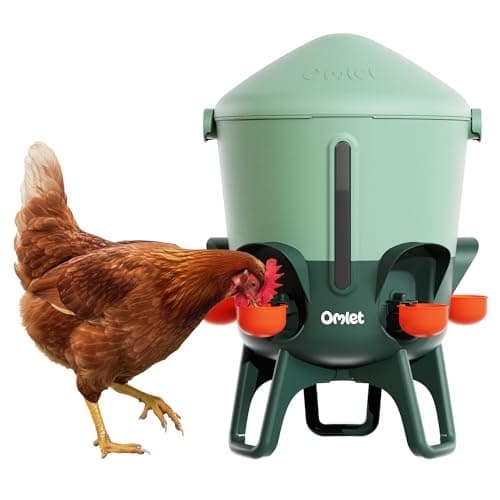
| Rank 1 | Omlet Insulated Chicken Waterer, 3 Gallon Slowing freezing without any electricity | 3 gallon | 7.0 | $109.99on Amazon |
| Rank 2 | 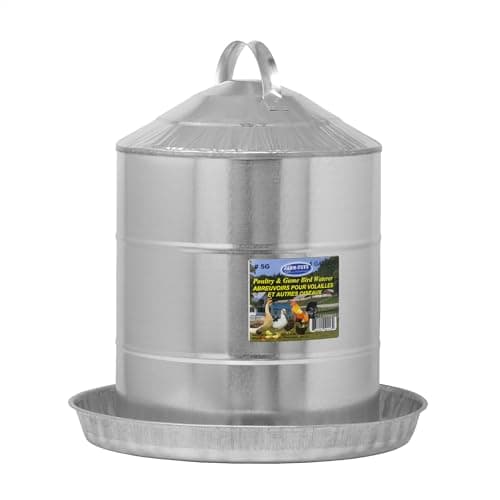 FARM-TUFF Galvanized Poultry Fountain, 5 Gallon A gravity waterer that lasts a decade | 5 gallon | 6.6 | $56.16on Amazon |
| Rank 3 | 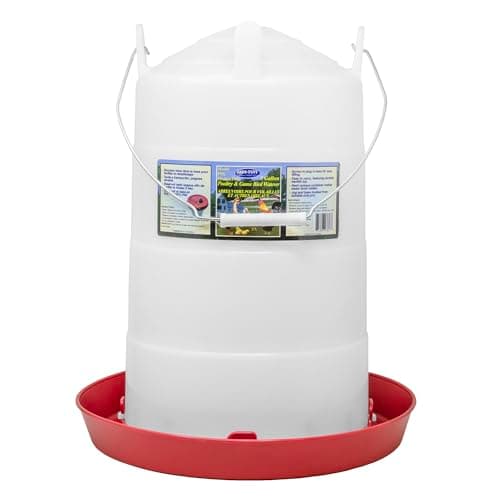 FARM-TUFF Easy Fill Plastic Poultry Waterer, 5 Gallon A cheap 5-gallon gravity fount you can actually clean | 5 gallon | 6.8 | $49.99on Amazon |
#ad Prices come from Amazon and change. How this site is funded. Scores are our own published rubric, not a lab test — see how we pick.
Let us be straight about this first: no unheated waterer keeps water liquid through a sustained hard freeze. Products marketed as solar or self-heating waterers are, with very few exceptions, insulated vessels — they slow heat loss, which delays freezing. That is genuinely useful and it is not the same thing. Anyone promising otherwise is selling you physics that does not exist.
The method that always works: two waterers
One waterer is outside in use; the identical twin is inside thawing. Swap them morning and evening. This works in any climate, costs the price of a second waterer, and needs no power or infrastructure.
- Buy two identical waterers, so the swap is mechanical and takes seconds.
- Fill with warm, not hot, water. Warm water starts further from freezing. Hot water can crack a cold plastic vessel.
- Swap at first light and at dusk, which also means the flock always has liquid water at the two times they drink most.
- Keep the indoor one somewhere it will actually thaw — a garage at 35 degrees F is not that place.
What buys you hours
| Method | What it does | Honest verdict |
|---|---|---|
| Insulated waterer | Slows heat loss | Real effect, hours not days. Also helps in summer. |
| Larger volume | More thermal mass to freeze | Real. 5 gal beats 1 gal by a useful margin. |
| Black rubber tub in sun | Absorbs solar gain; flexes so ice pops out | Good on a sunny day, nothing overnight. |
| Sunniest sheltered spot | Reduces wind chill, gains sun | Free. Do it regardless. |
| Raised off the ground | Frozen ground conducts heat away | Small but real. Free. |
| Deep litter underneath | Composting litter gives off some warmth | Marginal for water. Genuinely helps the coop floor. |
What does not work
- "Solar heated" waterers with no stated heating element — insulated vessels with a marketing name.
- Ping pong balls — no wind in a sheltered run, and ice forms around them anyway.
- Salt or sugar — negligible effect at safe levels, harmful at useful ones.
- Glycerine or antifreeze — toxic. Never, under any circumstances.
- Relying on snow — melting it costs the bird heat and supplies inadequate water.
What to buy
The insulated option that genuinely delays freezing, and two large-capacity founts worth owning in pairs for the swap routine.
#1 · Slowing freezing without any electricity
#ad How we are funded · Price as of October 5, 2026
Omlet Insulated Chicken Waterer, 3 Gallon
OmletA 3-gallon insulated waterer with five cups and nipples included. Insulation does not stop a hard freeze, but it buys hours — which in a mild-winter climate can be enough.
| Capacity | 3 gallon |
|---|---|
| Drinkers | 5 cups and nipples included |
| Insulation | Insulated body |
| Material | BPA-free |
| Power required | None |
Specifications per Omlet published specifications, as published at the date above.
What it does well
- Insulated body genuinely delays freezing with no power at all
- Five drinkers included — nothing else to buy
- Also keeps water cooler in summer, which slows algae
- The right answer where running a cable to the coop is not practical
Where it falls short
- Insulation delays freezing; it does not prevent it below about 25 degrees F overnight
- Priced well above an uninsulated 3-gallon fount
- 3 gallons is a few days for a small flock, not a week
Our rubric
- Capacity
- 6.0
- Stays clean
- 9.0
- Freeze resistance
- 6.0
- Ease of refill
- 8.0
- Value
- 6.0
#2 · A gravity waterer that lasts a decade
#ad How we are funded · Price as of October 5, 2026
FARM-TUFF Galvanized Poultry Fountain, 5 Gallon
FARM-TUFFA double-wall galvanized cone-top fountain. Metal is the right choice if you will ever want a heated base under it — plastic founts cannot sit on one.
| Capacity | 5 gallon |
|---|---|
| Material | Galvanized steel, double wall |
| Top | Cone top |
| Operation | Automatic gravity feed |
| Heated base compatible | Yes — metal fount |
Specifications per Manufacturer figures as published on the Amazon product listing, as published at the date above.
What it does well
- Galvanized metal is the only fount body you can legitimately put on a heated base
- Cone top stops hens roosting on it and fouling the water
- Double wall construction means it will outlast several plastic waterers
- 5 gallons is roughly a week for a small flock in mild weather
Where it falls short
- Heavy when full — about 40 lb of water plus the fount
- Galvanized metal reacts with apple cider vinegar, so skip that additive with it
- Cone top makes it awkward to scrub inside
Our rubric
- Capacity
- 8.0
- Stays clean
- 8.0
- Freeze resistance
- 4.0
- Ease of refill
- 6.0
- Value
- 7.0
#3 · A cheap 5-gallon gravity fount you can actually clean
#ad How we are funded · Price as of October 5, 2026
FARM-TUFF Easy Fill Plastic Poultry Waterer, 5 Gallon
FARM-TUFFA gravity-fed plastic fount with a top fill. Top filling is the feature worth paying for: you refill it without inverting five gallons of water over your boots.
| Capacity | 5 gallon |
|---|---|
| Material | Plastic |
| Filling | Top fill |
| Operation | Gravity fed |
| Heated base compatible | No — plastic body |
Specifications per Manufacturer figures as published on the Amazon product listing, as published at the date above.
What it does well
- Top fill means no inverting a full fount, which is the main reason people stop refilling properly
- Translucent plastic lets you see the level at a glance
- Light enough to carry full
- Easy to scrub out, unlike a cone-top metal fount
Where it falls short
- Cannot be used on a heated base — plastic melts
- Sunlight through translucent plastic grows algae faster
- Plastic rims crack if left full through a hard freeze
Our rubric
- Capacity
- 8.0
- Stays clean
- 6.0
- Freeze resistance
- 2.0
- Ease of refill
- 9.0
- Value
- 9.0
Worth considering: getting power to the coop
Before committing to a whole winter of twice-daily swaps, it is worth pricing an outdoor-rated extension run on a GFCI outlet. A 60 W thermostatted drinker uses very little electricity because the thermostat means it only runs when needed. For many people the cost of the lead is less than the aggravation of the alternative — and it also opens up the option of a radiant coop panel if your climate genuinely warrants one.
What the birds actually need in winter
Water intake drops in cold weather but does not stop, and laying stops quickly without water. University of Minnesota Extension and MSU Extension both emphasize liquid water alongside dry bedding, draft-free housing and ventilation — and all of them ahead of supplemental heat.
Frequently asked questions
Is there a waterer that stops freezing without power?
What is the best no-electricity method?
Does a black rubber tub keep water from freezing?
Do solar chicken waterers work?
How much electricity does a heated waterer actually use?
Sources
Read next
Waterers
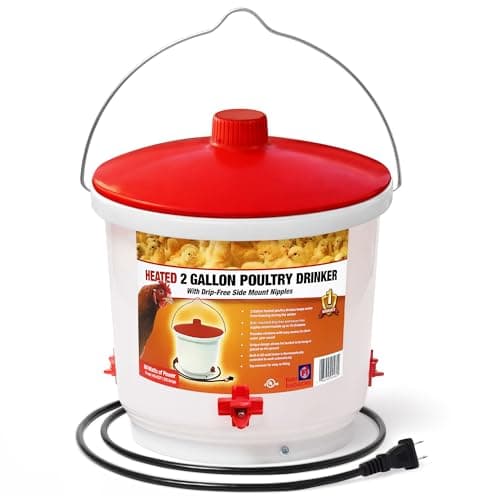
How to stop chicken water from freezing
Every method for keeping water liquid in winter, honestly ranked — including the four that do not work.
Waterers
The best heated chicken waterers
Heated drinkers and heated bases, ranked on published wattage and thermostat control — the two figures that matter.
Winter Heat
Do chickens need heat in winter?
The short answer is no, for healthy adult hens — and the reasons are about fire risk and moisture, not toughness.
Winter Heat
Coop heater fire safety
The checklist for running any mains appliance in a coop safely — and why extension guidance leans against heaters at all.
Winter Heat
Winterizing a chicken coop
The full autumn checklist: coop, run, water, electrics and flock, in the order that makes the winter easy.