Predator Protection
How to keep snakes out of a chicken coop
A missing egg with no shell left behind is the signature. The fix is mesh size, and the number is smaller than you think.
Chickens & Coops earns a commission when you buy through our links, at no extra cost to you. Prices come from Amazon and change; the date beside every price is when we last verified it. Full disclosure.
Top pick
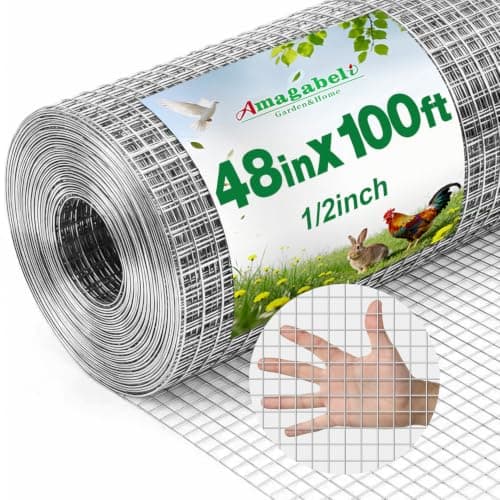
Amagabeli Hardware Cloth, 1/2in Mesh, 48in x 100ft, 19 Gauge
Hot-dipped galvanized-after-welding half-inch hardware cloth in 19 gauge.
#ad How we are funded · Price as of November 8, 2026
Quick picks
| # | Product | Mesh | Score | Price |
|---|---|---|---|---|
| Rank 1 | Amagabeli Hardware Cloth, 1/2in Mesh, 48in x 100ft, 19 Gauge The mesh that actually stops raccoons | 1/2 in | 9.5 | $109.99Amagabeli Hardware |
| Rank 2 | 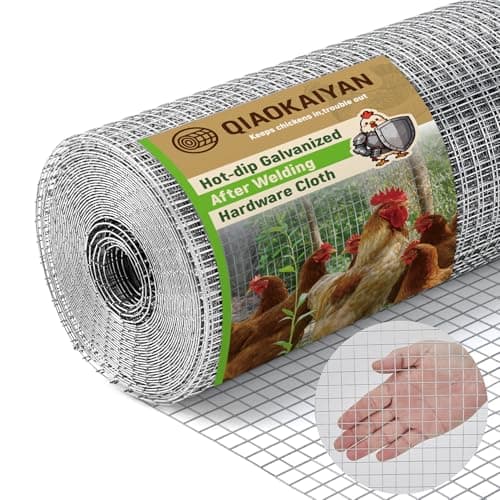 Hardware Cloth, 1/2in Mesh, 16in x 50ft, 19 Gauge A predator apron around an existing run | 1/2 in | 9.7 | $26.98Hardware Cloth |
| Rank 3 | 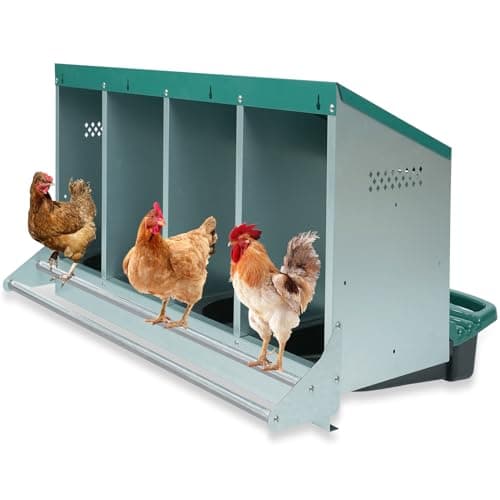 4-Hole Heavy Duty Metal Roll-Away Nesting Box Clean eggs from sixteen hens | Not published | 9.4 | $109.994-Hole Heavy Duty |
#ad Prices come from Amazon and change. How this site is funded. Scores are our own published rubric, not a lab test — see how we pick.
You keep snakes out of a coop by closing every gap larger than a quarter of an inch around the nest boxes, the pop hole surround, the vents and the floor junctions — and by removing the two things that bring them in, which are eggs left sitting in nests and rodents living under the coop. Extension's predator guidance is specific on the dimension: snakes able to enter through gaps that are a quarter of an inch in diameter or smaller typically do not cause predation damage.
That figure is the whole page in one line, and it is smaller than the half-inch hardware cloth that handles raccoons and weasels. In practice half-inch mesh stops any snake large enough to take an egg or a chick — a snake that fits through a quarter-inch hole is too small to be a problem — so the work is not usually about buying finer mesh. It is about finding the gaps that are not covered at all.
How to tell it was a snake
Snake predation is genuinely hard to identify, because a snake eats its prey whole. Extension's identification guidance sets out the distinctions:
- A missing egg with no shell left behind. A snake swallows the egg whole, so there is nothing to find. Raccoons and skunks typically leave shells behind; opossums chew shells into small pieces and leave those in the nest.
- Missing chicks with no other sign of disturbance. Extension lists a snake, a rat, a raccoon or a house cat as the likely culprits when chicks disappear without a trace.
- Rat snakes specifically are named as the species known to eat eggs and young chicks — those less than a month old.
- No damage to the structure. A snake does not tear, dig or chew. If eggs are vanishing and nothing is broken, that is a strong signal.
- Adult birds are not usually taken. Missing adult hens point to a dog, coyote, fox, bobcat, hawk or owl instead. The full predator identification guide works through the rest.
One more mechanical detail from the same source that is useful when you are hunting for the entry point: a snake has to be able not only to enter the enclosure but also to exit after swallowing its prey. A snake that has eaten an egg is wider than the snake that came in, which is why they are sometimes found still inside a coop, and why the gap you are looking for may be larger than you assume.
Why they came: eggs and rodents
A snake in a coop is doing one of two things. Either it is there for eggs and chicks, or it is there because the coop has a rodent population and the snake is following the rats. The second case is worth sitting with, because the snake is a symptom: if rats are living under your coop, the snake is the second problem and the rats were the first. How to keep rats out of chicken feed is the fix for the underlying cause, and removing the feed source removes both animals.
The exclusion work
- Cover every vent and window with mesh, not netting. Half-inch hardware cloth, screwed down over battens rather than stapled, is the standard. Staples pull out; screws and washers do not.
- Close the gaps around nest boxes. External nest boxes are the commonest entry point on a wooden coop, because the box is usually bolted on and the junction is rarely tight. Check it from inside with a torch off and daylight outside: any light you can see is a gap.
- Seal floor and wall junctions. Snakes travel along the base of a structure and find the corner where the floor sheet does not quite meet the wall.
- Mesh under a raised coop, or close the space off entirely. The void under a raised coop is a rodent habitat, which makes it a snake habitat.
- Check the pop hole surround and the door frame. An automatic door closing against a frame with a quarter-inch gap at the hinge side is still an open coop as far as a snake is concerned.
- Keep the apron and the mesh skirt intact. The same hardware cloth apron that stops a fox digging also closes the ground-level gaps snakes use.
What this takes
The full-height mesh for vents, windows and skirting, the narrow roll for ground-level gaps and aprons, and the nest-box change that removes the reason to visit.
#1 · The mesh that actually stops raccoons
#ad How we are funded · Price as of November 8, 2026
Amagabeli Hardware Cloth, 1/2in Mesh, 48in x 100ft, 19 Gauge
AmagabeliHot-dipped galvanized-after-welding half-inch hardware cloth in 19 gauge. This is the specification to buy: half-inch openings keep weasels out, and galvanized-after-welding means the weld points do not rust first.
| Mesh | 1/2 in |
|---|---|
| Gauge | 19 |
| Size | 48 in x 100 ft |
| Coating | Hot-dipped galvanized after welding |
Specifications per Manufacturer figures as published on the Amazon product listing, as published at the date above.
Why we picked it
- Half-inch openings are small enough to stop weasels, which 1 in mesh is not
- Galvanized AFTER welding — the welds are coated, so the mesh does not rust at the joints first
- 19 gauge resists a raccoon's hands, which hexagonal chicken wire does not
- 400 sq ft covers the lower half of most runs
Good to know — Several times the price of hexagonal chicken wire for the same area
Our rubric
- Predator resistance
- 10.0
- Install effort
- 7.9
- Durability
- 10.0
- Reliability
- 10.0
- Value
- 8.9
#2 · A predator apron around an existing run
#ad How we are funded · Price as of November 8, 2026
Hardware Cloth, 1/2in Mesh, 16in x 50ft, 19 Gauge
GenericA narrow 16-inch roll of the same half-inch, 19-gauge hot-dipped mesh. Sixteen inches is exactly the width you want for a predator apron laid flat around the base of a run.
| Mesh | 1/2 in |
|---|---|
| Gauge | 19 |
| Size | 16 in x 50 ft |
| Coating | Hot-dipped galvanized |
Specifications per Manufacturer figures as published on the Amazon product listing, as published at the date above.
Why we picked it
- 16 in width is the right apron dimension — wide enough that a digging fox gives up
- Same half-inch, 19-gauge specification as the full-height rolls
- Cheap enough to apron a whole run without a second thought
- Narrow roll is far easier to handle alone than a 48 in one
Good to know — Too short for run walls — this is an apron roll, not a fencing roll
Our rubric
- Predator resistance
- 9.8
- Install effort
- 8.4
- Durability
- 9.8
- Reliability
- 10.0
- Value
- 10.0
#3 · Clean eggs from sixteen hens
#ad How we are funded · Price as of November 8, 2026
4-Hole Heavy Duty Metal Roll-Away Nesting Box
GenericFour roll-away holes in heavy-duty metal. Roll-away is the single best upgrade for egg cleanliness: the egg leaves the nest the moment it is laid, so it cannot be stood on, pecked or soiled.
| Holes | 4 |
|---|---|
| Covers | Up to 16 hens at 1 box per 4 |
| Material | Heavy duty metal |
| Type | Roll-away with egg collection |
Specifications per Manufacturer figures as published on the Amazon product listing, as published at the date above.
Why we picked it
- Eggs roll out of reach immediately — the end of dirty eggs and most egg-eating habits
- Metal construction leaves mites nowhere to hide and lasts far longer than ply
- Four holes covers a sixteen-hen flock
- Collecting from a tray rather than reaching under a hen is faster and calmer
Good to know — Roll-away boxes are the most expensive nest option
Our rubric
- Egg cleanliness
- 10.0
- Mounting options
- 8.9
- Cleaning access
- 9.8
- Build
- 9.8
- Value
- 8.4
The nest box change that helps most
If eggs are the attraction, the strongest single measure is to stop eggs sitting in nests. Two versions of that:
- Collect more often. An egg collected at lunchtime cannot be eaten overnight. This is free and it works.
- Fit roll-away nest boxes. The egg rolls out of the nest into a collection tray the moment it is laid, so there is nothing in the nest to find. That is a real reduction in the reward for visiting, and it also keeps eggs cleaner and unbroken. Roll-out versus standard nesting boxes compares them properly.
Housekeeping around the coop
- Cut the vegetation back from the coop and run walls. Snakes move under cover and avoid open ground.
- Clear woodpiles, rubble and long grass within a few yards of the coop — that is the habitat, not the coop itself.
- Store feed in sealed metal containers so there is no rodent food. Feed storage containers.
- Pick up spilled feed daily. The same rule that controls rats controls what follows them.
- Keep the run floor clear of hiding places. Chicken run flooring covers the surface side.
Do snakes hurt adult hens?
Rarely. The risk is to eggs and to chicks under about a month old, which is exactly why brooders and the nest area are where the work belongs. An adult hen is large enough to be an unattractive target for the egg-eating species common around backyard flocks, and a flock will often mob a snake. If you are raising chicks outdoors, treat the brooder enclosure with the same quarter-inch standard as the nest boxes — and read what baby chicks need for the rest of that setup.
The order to do it in
- Collect eggs more often, starting today.
- Walk the coop with the lights off and look for daylight. Mark every gap.
- Mesh the nest box junction, vents and pop hole surround with half-inch hardware cloth, screwed down.
- Close or mesh the void under a raised coop.
- Remove the rodent food source and clear cover within a few yards.
- If eggs keep disappearing after that, fit roll-away boxes so there is nothing left in the nest to take.
Frequently asked questions
How do I keep snakes out of my chicken coop?
How do I know if a snake took my eggs?
Do snakes eat baby chicks?
What size mesh keeps snakes out?
Why are snakes coming into my coop?
Should I kill a snake in my chicken coop?
Our recommendation
If you buy one thing from this page, buy the first one. The second is here because it is the alternative worth weighing against it, not because a list needs two entries.
Top pick
Amagabeli Hardware Cloth, 1/2in Mesh, 48in x 100ft, 19 Gauge
The mesh that actually stops raccoons
#ad How we are funded · Price as of November 8, 2026
Runner-up
Hardware Cloth, 1/2in Mesh, 16in x 50ft, 19 Gauge
A predator apron around an existing run
#ad How we are funded · Price as of November 8, 2026
Sources
Read next
Predator Protection
The main chicken predators, and what stops each one
An identification guide: what each predator does, how to tell which one visited, and the one measure that stops it.
Predator Protection
Chicken wire vs hardware cloth
The single most useful distinction in predator protection, with the gauges, the openings and where each belongs.
Predator Protection
How to fit a predator apron
The flat-apron method step by step, why it beats burying mesh, and the mesh specification to buy.
Feeders & Feed
How to keep rats out of chicken feed
Five changes in order of effectiveness, why poison is the wrong first move, and the feeders that end the problem.
Nesting Boxes
Roll-out vs standard nesting boxes
The roll-away decision: when the premium is clearly worth it and when a standard box is fine.