Chicken Coops
Chicken run flooring: what to put on the ground
Grass lasts about three weeks. After that the run floor is a drainage problem, and the material you choose is the smaller half of the answer.
Chickens & Coops earns a commission when you buy through our links, at no extra cost to you. Prices come from Amazon and change; the date beside every price is when we last verified it. Full disclosure.
Top pick
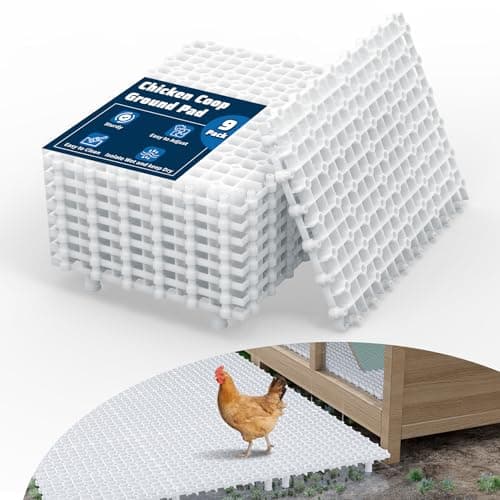
Pearwow Chicken Coop Ground Pads, 9-Pack
Nine interlocking plastic floor pads that lift the birds off bare timber or ground.
#ad How we are funded · Price as of November 8, 2026
Quick picks
| # | Product | Material | Score | Price |
|---|---|---|---|---|
| Rank 1 | Pearwow Chicken Coop Ground Pads, 9-Pack A washable interlocking floor inside a coop | Plastic | 9.1 | $35.99Pearwow, 9-Pack |
| Rank 2 | 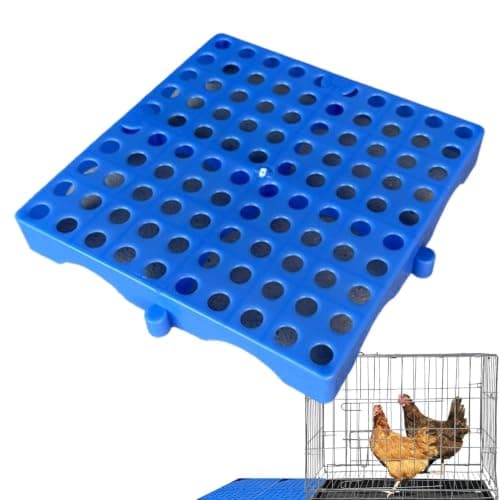 Poultry Coop Floor Mat, Anti-Slip Interlocking Cheap drainage under a small coop | ABS plastic | 8.9 | $7.89Poultry Coop Floor |
| Rank 3 | 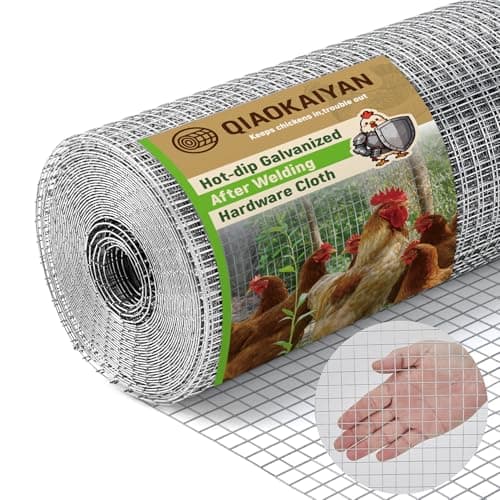 Hardware Cloth, 1/2in Mesh, 16in x 50ft, 19 Gauge A predator apron around an existing run | Not published | 9.7 | $26.98Hardware Cloth |
| Rank 4 | 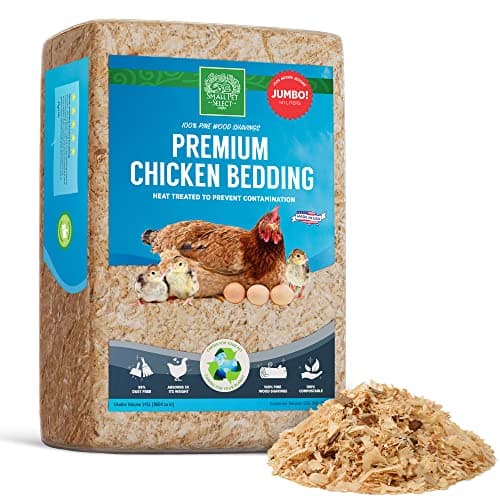 Small Pet Select Pine Shavings Chicken Bedding The default coop and nest-box bedding | Pine wood shavings | 9.2 | $35.99Small Pet Select |
#ad Prices come from Amazon and change. How this site is funded. Scores are our own published rubric, not a lab test — see how we pick.
For most backyard runs the answer is coarse wood chips over a graded, free-draining base, topped up once or twice a year. They drain, they compost, hens love scratching through them, and they are the cheapest material that does not turn to slurry. Coarse sand is the better answer if your run is covered and your soil is heavy clay. Bare grass is the one choice that is guaranteed to fail: a flock strips a fixed run to dirt in a few weeks, and dirt plus rain is mud.
That is the short version. The longer version matters because almost every run-floor complaint — the smell, the flies, the mud that never dries, the birds tracking it into the nest boxes — traces back to water that has nowhere to go rather than to the material on top of it.
Why the ground is the problem, not the covering
A run concentrates a flock's droppings and foot traffic onto a small area, and extension housing guidance treats a well-drained site as a basic requirement rather than a refinement. Put a run in the lowest corner of the garden and no floor material will save it. Put it on a slight slope with somewhere for water to leave, and almost any material works.
Two pieces of groundwork pay for themselves before you spend anything on surfacing:
- Grade the run so water leaves it. A fall of an inch or two across the run, away from the coop, is enough. If the run sits in a hollow, dig a shallow channel out of the low side.
- Get the roof water away. Coop and run roof runoff is far more water than rainfall on the run itself. A gutter and a length of downpipe discharging outside the run will do more for mud than any amount of wood chips.
The materials, honestly compared
| Material | Drainage | Relative cost | Lifespan | Watch out for |
|---|---|---|---|---|
| Coarse wood chips | Good once a few inches deep | Low, often free from a tree surgeon | 6-12 months before topping up | Fine bark mulch holds water; ask for chips |
| Coarse sand | Very good if genuinely coarse | Medium | Years, raked and spot-cleaned | Builder's or play sand is fine-grained and packs hard |
| Pea gravel | Excellent | Medium to high | Years | Hard on feet in a thin layer; droppings are hard to rake out |
| Grass or bare soil | Poor once the flock strips it | Free | About three weeks of grass | Becomes mud, then anaerobic and smelly |
| Pine shavings | Good under cover only | Low | Weeks outdoors | Blows away and mats down in rain; an in-coop material |
| Interlocking plastic mats | Good — lifts birds off wet ground | Medium | Years, UV depending | Droppings collect in the drainage gaps and need rinsing |
| Concrete or paving slabs | Excellent if sloped | High | Decades | Needs a sacrificial litter layer on top or it is brutal on feet |
What to look for in a run surface
- It has to drain, not absorb. Anything that holds water holds smell. Coarse beats fine in every material family.
- It has to be rakeable. You will be moving droppings around weekly. Pea gravel and matted shavings both fail this.
- It has to be kind to feet. Bare wire and thin gravel both cause sores. Litter over a hard base is the compromise.
- It should compost. Wood chips and shavings go on the garden at the end. Sand and gravel do not, which is a real cost over years.
- It should not blow away. Open-sided runs lose light bedding in the first gale.
What helps
Two interlocking mat options for a small or permanently wet area, the apron mesh that stops digging under whatever you lay, and the bedding that belongs on the dry side of the coop door.
#1 · A washable interlocking floor inside a coop
#ad How we are funded · Price as of November 8, 2026
Pearwow Chicken Coop Ground Pads, 9-Pack
PearwowNine interlocking plastic floor pads that lift the birds off bare timber or ground. The point is that they come out and hose down, so the coop floor itself never soaks.
| Pack | 9 pieces |
|---|---|
| Material | Plastic |
| Type | Reusable interlocking walking mats |
| Coverage area | Not published by manufacturer |
Specifications per Manufacturer figures as published on the Amazon product listing, as published at the date above.
Why we picked it
- Removable and washable, so the structural floor stays dry and lasts years longer
- Interlocking panels let you cover an odd-shaped floor without cutting
- Easier on feet than bare wire, which causes sores
Good to know — Total coverage area is not published, so you cannot work out how many packs you need
Our rubric
- Fit for purpose
- 9.3
- Mess and waste
- 8.9
- Quality
- 8.9
- Value
- 9.3
#2 · Cheap drainage under a small coop
#ad How we are funded · Price as of November 8, 2026
Poultry Coop Floor Mat, Anti-Slip Interlocking
GenericA budget interlocking drainage mat. Does the same basic job as pricier pads — keeps birds off wet timber — with less published about it.
| Type | Anti-slip interlocking drainage barrier |
|---|---|
| Material | ABS plastic |
| Coverage area | Not published by manufacturer |
| Pack size | Not published by manufacturer |
Specifications per Manufacturer figures as published on the Amazon product listing, as published at the date above.
Why we picked it
- Cheapest way to get a drained, washable surface into a small coop
- Anti-slip surface is kinder to feet than smooth plastic
- Lifts out for cleaning in seconds
Good to know — Neither pack size nor coverage area is published
Our rubric
- Fit for purpose
- 8.9
- Mess and waste
- 8.4
- Quality
- 8.4
- Value
- 9.8
#3 · A predator apron around an existing run
#ad How we are funded · Price as of November 8, 2026
Hardware Cloth, 1/2in Mesh, 16in x 50ft, 19 Gauge
GenericA narrow 16-inch roll of the same half-inch, 19-gauge hot-dipped mesh. Sixteen inches is exactly the width you want for a predator apron laid flat around the base of a run.
| Mesh | 1/2 in |
|---|---|
| Gauge | 19 |
| Size | 16 in x 50 ft |
| Coating | Hot-dipped galvanized |
Specifications per Manufacturer figures as published on the Amazon product listing, as published at the date above.
Why we picked it
- 16 in width is the right apron dimension — wide enough that a digging fox gives up
- Same half-inch, 19-gauge specification as the full-height rolls
- Cheap enough to apron a whole run without a second thought
- Narrow roll is far easier to handle alone than a 48 in one
Good to know — Too short for run walls — this is an apron roll, not a fencing roll
Our rubric
- Predator resistance
- 9.8
- Install effort
- 8.4
- Durability
- 9.8
- Reliability
- 10.0
- Value
- 10.0
#4 · The default coop and nest-box bedding
#ad How we are funded · Price as of November 8, 2026
Small Pet Select Pine Shavings Chicken Bedding
Small Pet SelectKiln-dried pine shavings in a bag sized for a coop rather than a hamster cage. Pine is the baseline bedding for a reason: absorbent, cheap, compostable, and it does not mat.
| Material | Pine wood shavings |
|---|---|
| Intended use | Coop floor and nest boxes |
| Volume | Not published by manufacturer |
| Dust level | Not published by manufacturer |
Specifications per Manufacturer figures as published on the Amazon product listing, as published at the date above.
Why we picked it
- Absorbent enough to run a deep-litter floor for weeks between full changes
- Composts down with the manure into usable garden material
- Shavings stay loose, so hens can scratch and dust-bathe in them
Good to know — Dustier than hemp, which matters in a tight coop with poor ventilation
Our rubric
- Fit for purpose
- 9.8
- Mess and waste
- 8.4
- Quality
- 9.3
- Value
- 9.3
Mats, and what they are actually for
Interlocking plastic floor pads are not a run surface in the way sand or chips are. They are a way to lift birds off ground that stays wet, inside a small coop or under a covered section, and they come out to be hosed down. In a 100 sq ft open run they are the wrong tool: you would need a great many of them, and the droppings still end up on whatever is underneath.
Where they earn their place is the covered patch immediately outside the coop door, which takes the heaviest traffic and stays wettest. Pave that with mats or slabs, surface the rest with chips, and the run behaves far better than it does with a single material everywhere.
The dig barrier underneath
Whatever goes on top, the perimeter is where predators work. A hardware cloth apron laid flat on the ground outside the run and pinned down, then covered with the run surfacing, stops a digging fox or dog without any digging of your own. This is the single highest-value thing to do while the run floor is already open.
Deep litter in the run
Adding carbon — chips, leaves, straw — on top of droppings rather than removing them works outdoors as well as in. The litter composts in place, which is why a well-chipped run smells of woodland rather than ammonia. Two rules make it work: keep adding material before it looks like it needs it, and keep it dry enough to compost aerobically. A run that is permanently wet does not compost, it ferments, and the smell tells you which is happening.
Mud in winter: the short checklist
- Roof water diverted outside the run.
- Six inches or more of coarse chips on the traffic routes.
- A covered section the birds can stand in on a wet day. A cover over even a third of the run changes the whole floor.
- Droppings raked out of the heaviest-traffic strip weekly rather than monthly.
- No feeder or waterer on the muddiest ground — move them onto a paver or a mat and the mud stops spreading.
Frequently asked questions
What is the best flooring for a chicken run?
Should I put sand in my chicken run?
How do I stop my chicken run turning to mud?
Can I use pine shavings in a chicken run?
How often should run flooring be replaced?
Does run flooring need a dig barrier?
Our recommendation
If you buy one thing from this page, buy the first one. The second is here because it is the alternative worth weighing against it, not because a list needs two entries.
Top pick
Pearwow Chicken Coop Ground Pads, 9-Pack
A washable interlocking floor inside a coop
#ad How we are funded · Price as of November 8, 2026
Runner-up
Poultry Coop Floor Mat, Anti-Slip Interlocking
Cheap drainage under a small coop
#ad How we are funded · Price as of November 8, 2026
Sources
Read next
Chicken Coops
The best chicken coop flooring
Floor surfaces compared on cleaning, rot and foot health, with the interlocking pads and liners that protect bare timber.
Chicken Coops
The best metal chicken runs
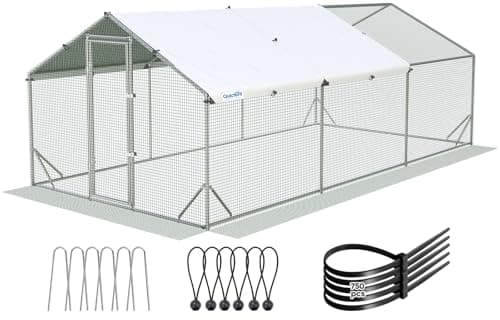
Walk-in metal runs ranked on published floor area, mesh specification and cover, with the sizing maths for a flock of four up to twenty.
Predator Protection
How to fit a predator apron
The flat-apron method step by step, why it beats burying mesh, and the mesh specification to buy.
Chicken Coops
The best chicken coop bedding
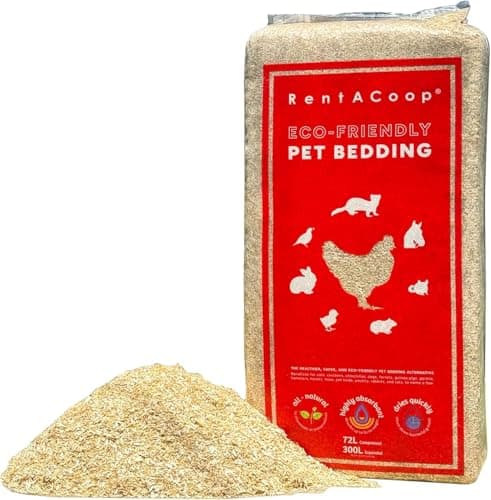
Pine, hemp and the ammonia binder that makes either work. Ranked on absorbency and dust, not bag price.
Chicken Coops
Why your chicken coop smells, and how to fix it
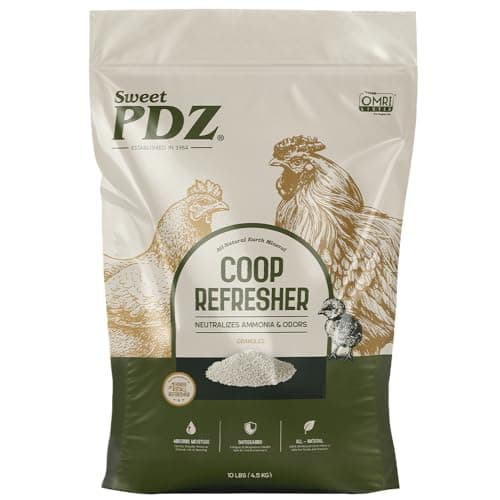
A diagnostic for coop smell: four causes in order of likelihood, and what fixes each one. Masking it is not on the list.