Nesting Boxes
The best egg storage and handling gear
Your flock does not produce eggs in batches, so the problem is never storage space. It is knowing which egg came first.
Chickens & Coops earns a commission when you buy through our links, at no extra cost to you. Prices come from Amazon and change; the date beside every price is when we last verified it. Full disclosure.
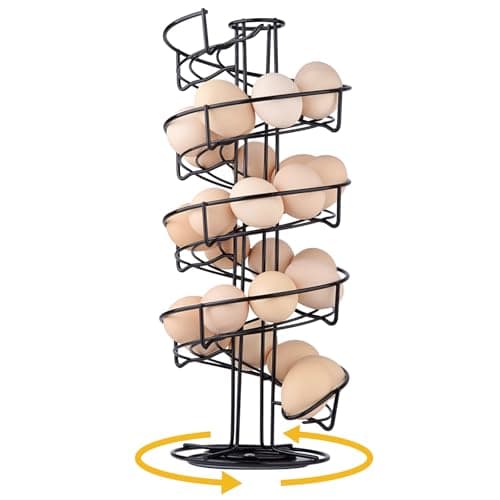
Best Egg Storage
Toplife Spiral Design Metal Egg Skelter Dispenser Rack
A spiral rack solves the one problem a backyard flock actually has with eggs: you cannot tell which ones you collected on Tuesday.
#ad How we are funded · Price as of November 8, 2026
Quick picks
| # | Product | Stated capacity | Score | Price |
|---|---|---|---|---|
| Rank 1 | Toplife Spiral Design Metal Egg Skelter Dispenser Rack Rotating eggs oldest-first without writing dates on anything | Not published | 9.0 | $28.49Toplife Spiral |
| Rank 2 | 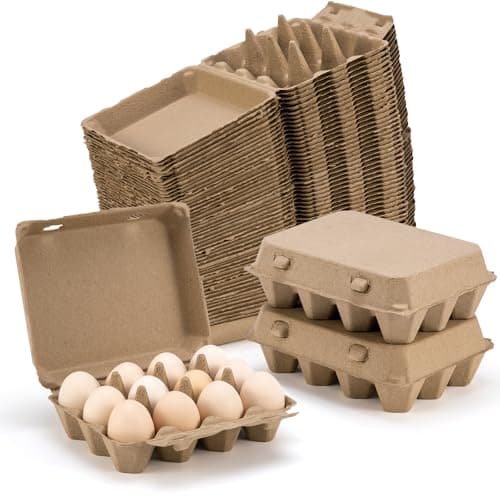 CINPIUK Egg Cartons, 50 Pack, 3x4 Paper Pulp Trays Fridge storage, and giving eggs away without losing your cartons | Not published | 9.2 | $36.59CINPIUK Egg Cartons |
| Rank 3 | 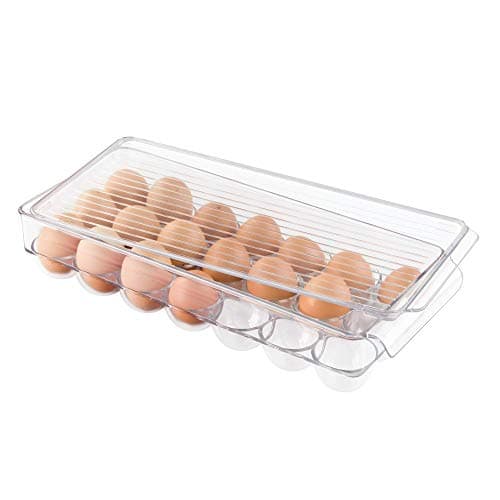 iDesign Clear Plastic Egg Holder for Fridge with Lid, 21 Egg A washable fridge container when you out-lay your cartons | 21 eggs | 8.7 | $14.29iDesign, 21 Egg |
| Rank 4 | 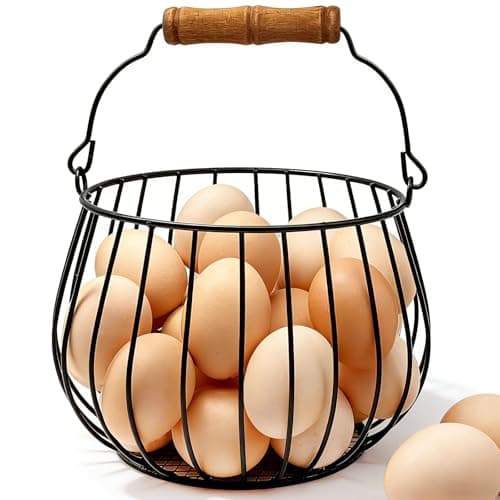 Wire Egg Basket for Gathering Fresh Eggs, Holds 24 Eggs, Wood Handle Carrying eggs from the coop to the kitchen in one trip | 24 eggs | 8.5 | $19.99Wire Egg Basket |
| Rank 5 | 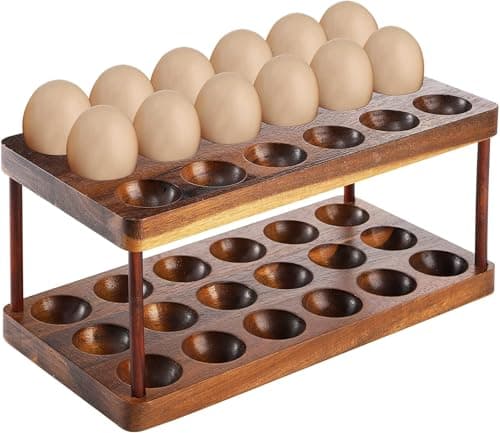 YOUEON Acacia Wooden Egg Holder, Double Layer, Holds 36 Eggs A big countertop lay with the eggs standing upright | 36 eggs | 8.6 | $17.99YOUEON Acacia Wooden |
| Rank 6 | 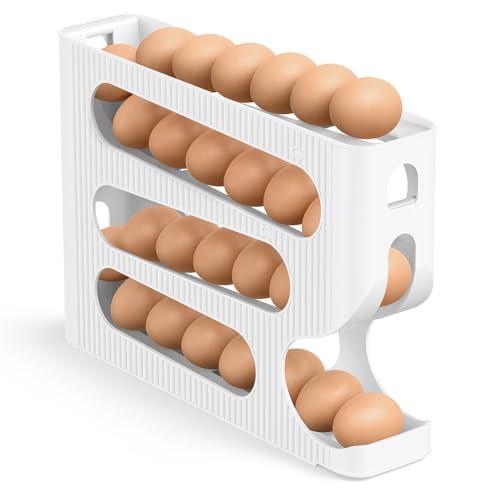 Sotfamily FIFO Egg Holder, 28 Eggs Eating the oldest egg first without having to remember which one it is | 28 large eggs | 9.3 | $18.99Sotfamily, 28 Eggs |
#ad Prices come from Amazon and change. How this site is funded. Scores are our own published rubric, not a lab test — see how we pick.
For most keepers the pick is a spiral egg rack on the counter and a stack of blank pulp cartons in a cupboard, and the two together cost less than one decent feeder. The rack solves rotation for the eggs you are about to eat; the cartons handle the fridge, the overflow and everything you give away.
That is the whole category, and it is worth saying plainly at the top because egg storage gets sold as a decor problem and it is not one. A backyard flock produces two, four, six eggs a day, every day, in a continuous trickle. Nothing arrives in a labeled batch. Three weeks in, you have thirty-one eggs on a counter and in a fridge and in a basket by the door, and no idea which of them were laid in the first week. Every product below is judged on whether it fixes that.
The rule that decides everything: did you wash it?
Before gear, one fork in the road, because it determines where your eggs are allowed to live. Penn State Extension describes the cuticle — "sometimes referred to as 'bloom'" — as "an outer layer that provides protection by sealing the natural pores in the eggshell". A freshly laid egg arrives with it. Washing takes it off.
So there are two legitimate systems, and mixing them is how people get into trouble:
- Unwashed, cuticle intact. The egg can sit out at room temperature for a reasonable working period. This is why countertop racks and wooden holders exist at all. Penn State is explicit that "you are not required to wash the eggs produced by your home flock for your own consumption".
- Washed, cuticle removed. The egg goes in the refrigerator and stays there. Penn State puts the requirement at "at or below 40°F during transport and storage", and Extension's small-flock guidance states that "all eggs must be stored at or less than 45°F shortly after being laid".
The mistake is washing eggs and then leaving them on a handsome rack on the counter, which is the exact combination the bloom was protecting against. If you wash, you own a fridge system. If you do not wash, you can own a counter system — and you can still own cartons for the fridge, because a cold unwashed egg is perfectly fine too.
How we ranked these
Nobody on this site has lived with all six of these products. The ranking is built from the figures each listing publishes, the pattern of what verified owners report at the retailer, and how each design holds up against the extension guidance above — which is a harsher test than whether it looks good on a counter. Every card says what it relies on, and how we pick sets out the method and its limits.
- Rotation. Does the thing make you eat the oldest egg first, or does it just hold eggs? Weighted hardest, because this is the only problem the category genuinely has.
- Capacity. Against a real lay rate, not against a shelf. Six hens in June is around three dozen a week.
- Egg protection. Pulp cushions, wire does not, wooden wells stop eggs touching each other. A chipped shell is a short-dated egg.
- Cleaning. Raw shell touches the surface. CDC's backyard poultry guidance is why this matters more than it looks: a container you cannot wash is a container you cannot decontaminate.
- Value. Against the job. The two cheapest things here — cartons and a brush — score highest, and that is not an accident.
The picks
Ranked on whether the design enforces first-in-first-out, then on whether you can clean it after a broken egg.
#1 · Rotating eggs oldest-first without writing dates on anything
$29.99 5% off
#ad How we are funded · Price as of November 8, 2026
Toplife Spiral Design Metal Egg Skelter Dispenser Rack
ToplifeA spiral rack solves the one problem a backyard flock actually has with eggs: you cannot tell which ones you collected on Tuesday. New eggs go in at the top, the oldest rolls to the front, and you take whatever is nearest. It is the only product here that enforces rotation by its shape rather than by you remembering.
| Type | Spiral countertop dispenser |
|---|---|
| Material | Metal |
| Color | Black |
| Stated capacity | Not published by manufacturer |
| Dishwasher safe | Not published by manufacturer |
Specifications per Manufacturer figures as published on the Amazon product listing, as published at the date above.
Why we picked it
- The spiral does the first-in-first-out ordering for you — no dating, no guessing
- Eggs sit visible on the counter, so you actually use them instead of losing them behind the milk
- Metal construction wipes clean, which a cardboard carton never does
- Holds a few days of a small flock's lay at a glance, which is a real inventory check
Good to know — Counter storage means room temperature, which is only acceptable for unwashed eggs you will eat soon
Our rubric
- Rotation (oldest first)
- 10.0
- Capacity
- 8.4
- Egg protection
- 7.9
- Cleaning
- 8.9
- Value
- 9.3
#2 · Fridge storage, and giving eggs away without losing your cartons
#ad How we are funded · Price as of November 8, 2026
CINPIUK Egg Cartons, 50 Pack, 3x4 Paper Pulp Trays
CINPIUKBlank pulp cartons are the cheapest correct answer to almost every egg question: they stack, they take a date in pencil, they keep the egg large-end up, and you can hand one to a neighbor without caring whether it comes back. Fifty of them costs less than most single countertop racks.
| Quantity | 50 cartons |
|---|---|
| Holds | 12 eggs each, 3x4 layout |
| Material | Paper pulp |
| Reusable | Reusable (manufacturer claim) |
| Printing | Blank |
Specifications per Manufacturer figures as published on the Amazon product listing, as published at the date above.
Why we picked it
- Pulp cushions better than plastic or wire, so fewer cracked eggs in a packed fridge
- Writes on in pencil or marker, which is the whole rotation system in one line
- Closed carton limits moisture loss and keeps the shell from picking up fridge odors
- Cheap enough to give away permanently, which no reusable container is
Good to know — Pulp absorbs liquid, so a broken egg contaminates the carton and it goes in the trash
Our rubric
- Rotation (oldest first)
- 9.3
- Capacity
- 10.0
- Egg protection
- 9.8
- Cleaning
- 6.5
- Value
- 10.0
#3 · A washable fridge container when you out-lay your cartons
#ad How we are funded · Price as of November 8, 2026
iDesign Clear Plastic Egg Holder for Fridge with Lid, 21 Egg
iDesignA 21-egg lidded bin for the refrigerator, which is where [Penn State Extension says raw shell eggs belong](https://extension.psu.edu/how-to-safely-handle-and-store-eggs-from-your-home-flock) once you have washed them. The published egg count is the useful part — most fridge organizers make you guess — and unlike a pulp carton it goes in the sink when an egg breaks.
| Stated capacity | 21 eggs |
|---|---|
| Material | Clear plastic |
| Lid | Included |
| Type | Refrigerator storage bin |
| Dishwasher safe | Not published by manufacturer |
Specifications per Manufacturer figures as published on the Amazon product listing, as published at the date above.
Why we picked it
- Washable, which is the one thing a pulp carton cannot do
- Clear sides, so you see how many eggs you have without opening anything
- A lid keeps shells from taking on refrigerator odors through the pores
- 21 eggs is roughly a week from four or five hens, which is a sensible batch
Good to know — No rotation at all — the oldest egg is wherever you last put it
Our rubric
- Rotation (oldest first)
- 6.5
- Capacity
- 9.3
- Egg protection
- 8.4
- Cleaning
- 9.8
- Value
- 9.3
#4 · Carrying eggs from the coop to the kitchen in one trip
#ad How we are funded · Price as of November 8, 2026
Wire Egg Basket for Gathering Fresh Eggs, Holds 24 Eggs, Wood Handle
GenericThe collection half of the job, which the racks and cartons do not do. A published 24-egg capacity and an open weave that lets you see every egg you put in, on a handle you can carry while opening a coop door with the other hand. Buy it for the walk, not for storage.
| Stated capacity | 24 eggs |
|---|---|
| Material | Metal wire with wood handle |
| Weave | Open weave |
| Food-safe coating | Not published by manufacturer |
| Dishwasher safe | Not published by manufacturer |
Specifications per Manufacturer figures as published on the Amazon product listing, as published at the date above.
Why we picked it
- A published capacity figure, which most baskets in this category do not give you
- Open wire lets dirt and bedding fall through instead of riding into the kitchen
- One-handed carry on the handle, which matters with a coop door and a dog at your knees
- Doubles as a countertop holder if you keep eggs out, though a spiral rotates better
Good to know — Eggs touch metal and each other — on a rough walk the losses are real
Our rubric
- Rotation (oldest first)
- 7.0
- Capacity
- 9.8
- Egg protection
- 7.5
- Cleaning
- 8.4
- Value
- 9.8
#5 · A big countertop lay with the eggs standing upright
#ad How we are funded · Price as of November 8, 2026
YOUEON Acacia Wooden Egg Holder, Double Layer, Holds 36 Eggs
YOUEONThirty-six eggs on two detachable acacia trays, which is the right scale for a flock that is out-producing the fridge in June. It stands eggs in individual wells rather than piling them, so nothing rolls and nothing presses on anything else.
| Stated capacity | 36 eggs |
|---|---|
| Material | Acacia wood |
| Layers | Two, detachable |
| Type | Countertop storage rack |
| Dishwasher safe | Not published by manufacturer |
Specifications per Manufacturer figures as published on the Amazon product listing, as published at the date above.
Why we picked it
- Individual wells mean eggs never rest on each other, which is where chips come from
- Detachable layers let you serve one tray and leave the other stacked
- 36 eggs is a genuine peak-season buffer for a flock of six to eight
- Looks like something you want on a counter, which is why it gets used
Good to know — Wood should not be soaked, so a broken egg is a real cleaning problem
Our rubric
- Rotation (oldest first)
- 7.0
- Capacity
- 10.0
- Egg protection
- 9.3
- Cleaning
- 7.5
- Value
- 8.9
#6 · Eating the oldest egg first without having to remember which one it is
#ad How we are funded · Price as of November 8, 2026
Sotfamily FIFO Egg Holder, 28 Eggs
SotfamilyThe only thing on this page that solves rotation mechanically rather than asking you to keep track. Eggs load at the top, roll down a sloped channel, and the one waiting at the opening is always the oldest in the tray. For a flock that lays a few eggs a day rather than a dozen at once, that is the whole problem handled.
| Stated capacity | 28 large eggs |
|---|---|
| Type | Auto-rolling first-in-first-out egg dispenser |
| Placement | Refrigerator shelf or kitchen countertop |
| Pack | 1 dispenser |
| Material | Not published by manufacturer |
Specifications per Manufacturer figures as published on the Amazon product listing, as published at the date above.
Why we picked it
- Rotation is built into the shape: the egg at the opening is always the oldest, with nothing to label and nothing to remember
- 28 large eggs is roughly four days of laying from a six-hen flock, which is the right size of buffer
- Fits a standard fridge shelf, so it replaces the loose cartons rather than adding to them
- Open front shows you how many eggs you actually have before you go shopping
Good to know — Sized for large eggs, so early pullet eggs and jumbos sit less evenly in the channel
Our rubric
- Rotation (oldest first)
- 10.0
- Capacity
- 8.9
- Egg protection
- 8.9
- Cleaning
- 8.9
- Value
- 9.8
How they compare
| Product | Published capacity | Enforces rotation | Washable | Where it lives |
|---|---|---|---|---|
| Toplife spiral skelter | Not published | Yes, by shape | Yes, wipeable metal | Counter |
| CINPIUK cartons, 50 pack | 12 eggs each | Only if you date them | No | Fridge or cupboard |
| iDesign fridge holder | 21 eggs | No | Yes | Refrigerator |
| Wire gathering basket | 24 eggs | No | Yes | Coop to kitchen |
| YOUEON acacia holder | 36 eggs | No | No — wood | Counter |
| Sotfamily FIFO holder | 28 large eggs | Yes, automatically | Yes | Fridge or counter |
Why a spiral rack is worth more than it looks
A skelter is a coil of wire on a stand, and at first glance it is a twenty-dollar solution to a problem a pencil solves for free. Here is the case for it. Dating eggs works perfectly as long as you do it every single time, and you will not. A spiral rack cannot be used incorrectly without obvious effort: new eggs go in at the top, gravity rolls everything down, the egg at the front is the oldest one in the house. The ordering is a property of the object rather than of your discipline.
The second argument is visibility. Eggs on a counter get eaten. Eggs at the back of a fridge behind a jar of pickles become the thing you find in November and throw out. For a household eating most of what the flock lays, the counter is the right place for the working stock and the fridge is the right place for the surplus.
The caveat is the washing rule above. A countertop rack is for unwashed eggs with the cuticle intact, and even then it is for your working week rather than your reserve. Extension defines room temperature as "between 68 to 77°F" and notes that British practice is to keep eggs "at less than 68°F" once they are home — so if your kitchen runs warm in August, move the working stock to the fridge for the summer and let the rack hold a day or two rather than a week.
Cartons do four jobs; the rack does one
Blank pulp cartons are unglamorous and they are the best value in this category by a distance. They stack in a fridge, they take a date in pencil, they close so the shell does not pick up refrigerator odors through its pores, and they cushion better than wire or plastic. They also solve the social problem: you can hand a dozen to a neighbor and never think about the carton again.
They do one thing properly that nothing else here does — they store eggs large end up. Extension is direct about it: "It is also best the eggs be in the carton large end up. When storing with the small end up, the yolk tends to get stuck in the small end." The air cell sits in the large end, and keeping it uppermost keeps the yolk centered. A flat fridge tray or a wire basket cannot do this at all.
The weakness is hygiene. Pulp absorbs, so one broken egg takes a carton out of service, and you cannot wash it afterwards. Buy enough of them that throwing one away is a shrug rather than a decision.
How long eggs actually keep
Penn State's figure for a covered egg in the refrigerator is the one to work from: "Eggs can be stored in the refrigerator safely for at least one month if they are covered." Note both qualifiers — refrigerated, and covered. A lidded container or a closed carton meets that; an open tray in the fridge door does not, and the door is the warmest part of the appliance anyway.
For unwashed eggs at room temperature there is no equivalent published figure in the sources this site cites, and we are not going to invent one. The honest practice is to keep the counter stock small and in order, and send anything you will not eat within a few days into the fridge. If a rack holds more days of eggs than you eat in a week, it is too big for you.
One more reason to keep the stock moving: a hen's lay rate is not constant. You get a glut in late spring and a near-stop through the molt, so the month that fills every container you own is followed by a month that does not. Build the system for June and it will sit mostly empty in November, which is fine — but do not buy capacity you only need for eight weeks a year.
Collection is half the job
Extension's first instruction on egg handling is not about storage at all: "Collect the eggs as frequently as possible, but at least once a day. Twice a day is better." Everything on this page gets easier if the egg was never sat on, stepped on, or left in a damp box overnight.
Which puts the real upgrade upstream of the kitchen. A roll-out nesting box moves the egg out of the bird's reach seconds after it is laid, which is the single most effective way to get clean eggs and to stop egg-eating before it starts. Clean nest box liners do most of the rest — a dry, dust-free box means fewer eggs that need cleaning at all, and the cleaning section above is the part of this page you want to use least.
A gathering basket is the small piece that joins the two. The practical argument for one is not capacity, it is that you have two hands and one of them is opening a coop door. The practical argument against collecting eggs in a jacket pocket is that everyone who has done it has a story about it.
What we left off, and why
- Egg washing machines. They exist and they work, and the ones in the catalog run to several hundred dollars and are built for farms selling eggs by the case. For a backyard flock that is the wrong tool at the wrong price, and it commits every egg you own to the refrigerator.
- Water-glassing and mineral-oil preservation. Both are real techniques with real followings, and neither has a figure in our sources we would be willing to publish. Where a time or a temperature cannot be cited, the method is left out rather than filled in from somewhere else.
- Printed and branded cartons. Worth it if you sell eggs at a gate, a nuisance otherwise. Printing claims on a carton you sell from also brings labeling rules into play, which is a different conversation from storing your own breakfast.
- Countertop racks that hold eggs in a line. Several good-looking products hold a dozen eggs in a row and solve nothing. If it does not rotate and you cannot wash it, a carton beats it on every axis including price.
- Egg-sizing scales. Useful if you are grading eggs for sale. For a household the sorting that matters is by age, not by weight.
A system that works, in order
- Collect at least once a day, twice if you can, into a basket rather than a pocket.
- Leave clean eggs alone. Spot-clean a marked one dry with a brush; wash a genuinely dirty one with warm water by the method above, then dry it and refrigerate it.
- Unwashed working stock goes on the counter in something that rotates. Everything else goes into a carton, large end up, dated.
- Cartons go in the body of the fridge, not the door, and stay closed.
- Eat from the front of the rack and from the oldest carton. That is the entire point of the preceding four steps.
Our answer
Buy the spiral rack and a pack of cartons. The rack costs about what a decent feed scoop does and it makes rotation automatic for the eggs you are actively eating; the cartons handle the fridge, the surplus and the giveaways for pennies each. Add the brush, because it costs about what a coffee does and it keeps you away from the tap.
Add the lidded fridge bin only if you wash your eggs and want something you can actually clean after a breakage. Add the big acacia holder only if you have six or more hens in peak lay and a counter to spare — it is a buffer, not a rotation system, and thirty-six wells will hide an old egg as efficiently as anything else here. And if you are choosing between any of this and fixing the nest boxes, fix the nest boxes: a clean egg needs no system at all.
Frequently asked questions
Do backyard eggs need to be refrigerated?
Should I wash my chicken eggs?
Which way up should eggs be stored?
How long do fresh eggs last in the refrigerator?
What is an egg skelter and is it worth buying?
How often should I collect eggs?
Can I reuse store-bought egg cartons?
Our recommendation
If you buy one thing from this page, buy the first one. The second is here because it is the alternative worth weighing against it, not because a list needs two entries.
Best Egg Storage
Toplife Spiral Design Metal Egg Skelter Dispenser Rack
Rotating eggs oldest-first without writing dates on anything
#ad How we are funded · Price as of November 8, 2026
Runner-up
CINPIUK Egg Cartons, 50 Pack, 3x4 Paper Pulp Trays
Fridge storage, and giving eggs away without losing your cartons
#ad How we are funded · Price as of November 8, 2026
Sources
- Extension Poultry — Safe Handling of Eggs from Small and Backyard Flocks
- Penn State Extension — How to Safely Handle and Store Eggs from Your Home Flock
- University of Minnesota Extension — Raising Chickens for Eggs
- Penn State Extension — Management Requirements for Laying Flocks
- CDC — Backyard Poultry and Your Health (Salmonella guidance)
Read next
Nesting Boxes
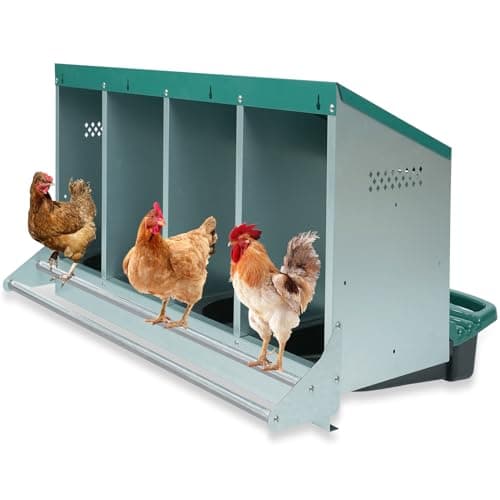
The best roll-out nesting boxes
Roll-away banks from two to eight holes, ranked on build and hole count, with the slope and broody caveats.
Nesting Boxes
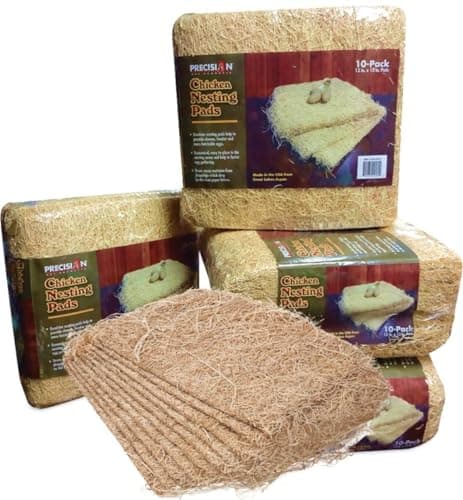
The best nesting box pads
Excelsior, aspen and washable nest pads compared on cushioning, fit and running cost, plus the honest view on nesting herbs.
Nesting Boxes
What to put in chicken nesting boxes
Shavings, straw, excelsior pads, washable pads and herbs compared for a nest box, with depth, change frequency and the things to keep out.
Start Here
How often do chickens lay eggs?
The daily, seasonal and lifetime pattern of laying, with the five factors that change it and every figure sourced.
Start Here
Backyard chickens and Salmonella
CDC's Salmonella guidance for backyard flocks, in plain language. No products, by policy.
Feeders & Feed
The best chicken treats and supplements
Insect protein, scratch, electrolytes, probiotics and a hanging greens holder — with the honest answer on how much of each a laying flock should actually get.