Chicken Coops
How to keep chickens cool in summer
Hens tolerate a hard frost better than a hot afternoon. Three things fix almost all of it, and two of them are free.
Chickens & Coops earns a commission when you buy through our links, at no extra cost to you. Prices come from Amazon and change; the date beside every price is when we last verified it. Full disclosure.
Quick picks
| # | Product | Capacity | Score | Price |
|---|---|---|---|---|
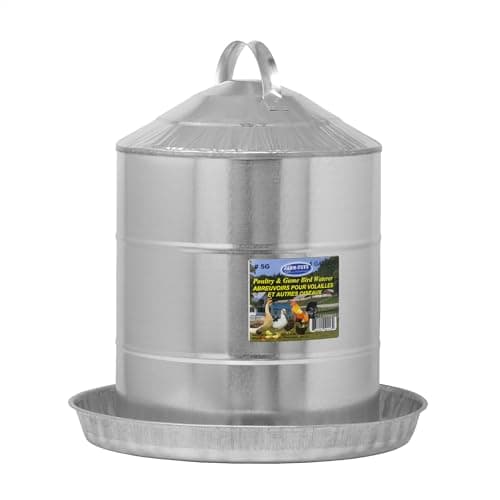
| Rank 1 | FARM-TUFF Galvanized Poultry Fountain, 5 Gallon A gravity waterer that lasts a decade | 5 gallon | 6.6 | $56.59on Amazon |
| Rank 2 | 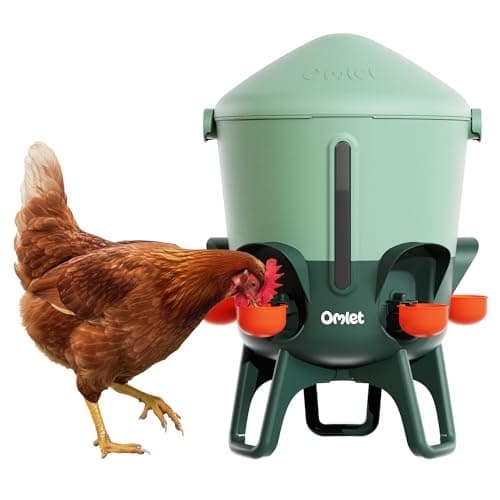 Omlet Insulated Chicken Waterer, 3 Gallon Slowing freezing without any electricity | 3 gallon | 7.0 | $109.99on Amazon |
| Rank 3 | 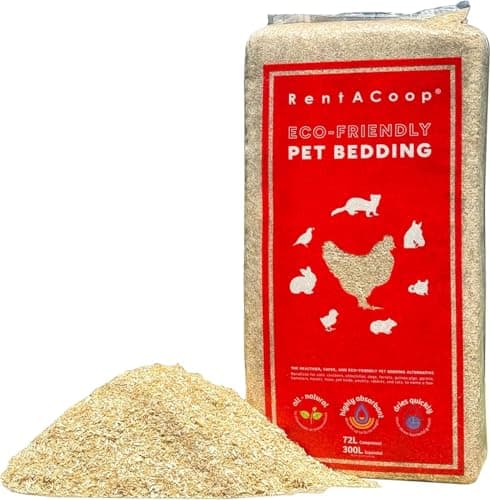 RentACoop Premium Hemp Bedding, 300L Low dust in a small or poorly ventilated coop | Not published | 8.0 | $74.95on Amazon |
| Rank 4 | 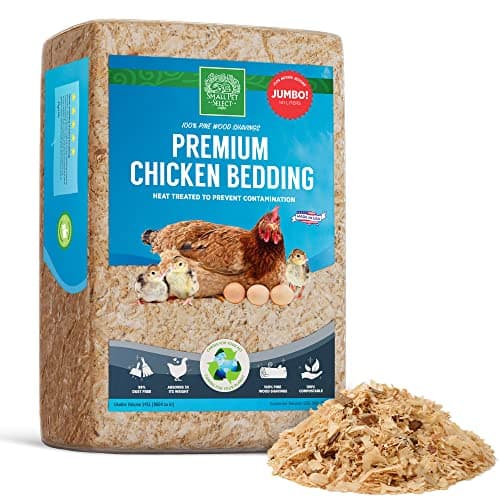 Small Pet Select Pine Shavings Chicken Bedding The default coop and nest-box bedding | Not published | 7.8 | $35.99on Amazon |
#ad Prices come from Amazon and change. How this site is funded. Scores are our own published rubric, not a lab test — see how we pick.
Shade, water and ventilation, in that order — and two of the three cost nothing. Penn State Extension puts the thermoneutral zone, the range in which poultry hold body temperature without spending extra energy, at 60-75 degrees Fahrenheit, and notes that once temperatures reach the 80s and 90s heat stress may occur, along with falls in feed consumption, egg quality and production. Chickens cannot sweat; they shed heat by panting, which costs them water.
That is why heat is the more dangerous end of the year for a backyard flock. A well-ventilated coop with liquid water will carry hens through a hard frost. A sealed coop in a treeless yard on a 95-degree afternoon can kill them, and it happens faster than most first-time keepers expect.
Shade first, because it is free and it works
The hottest place in most yards at 4pm is inside the coop, and the second hottest is an uncovered run. Extension's extreme-heat guidance is specific about placement: positioning shade in the middle or west end of the chicken run is what ensures birds have cover through the hottest part of the day, midday to afternoon.
- Shade the west end of the run. Morning sun is not the problem; afternoon sun is.
- Shade the waterer too. Warm water is water hens drink less of, which is the opposite of what you need.
- A tarp, a shade sail or a sheet of ply on the run roof all work. This does not need to be elegant.
- Leave bare earth available in the shade. Hens dig a shallow hollow and lie in it to dump heat into cool soil — a dust-bathing patch is a cooling device, not just a grooming one.
Water: the intake doubles
Extension's line is that constant access to fresh, cool water is critical, and that birds will drink more in summer both to hold body temperature and to replace what panting costs them. In practice, intake roughly doubles — and that changes your refill schedule more than your equipment.
A hen drinks about 6.4 fl oz a day in mild weather and roughly 13 in heat. Six hens therefore go from about 2.4 quarts a day to 4.8, so the waterer that lasted five days in April lasts two and a half in July. Extension also recommends providing multiple water sources in shady, cool areas, and adding ice cubes, ice blocks or frozen water bottles to keep the water cool.
What helps
A metal fount that keeps water cool in shade, an insulated waterer for runs with no shade at all, and the two beddings that behave best in heat.
#1 · A gravity waterer that lasts a decade
#ad How we are funded · Price as of October 10, 2026
FARM-TUFF Galvanized Poultry Fountain, 5 Gallon
FARM-TUFFA double-wall galvanized cone-top fountain. Metal is the right choice if you will ever want a heated base under it — plastic founts cannot sit on one.
| Capacity | 5 gallon |
|---|---|
| Material | Galvanized steel, double wall |
| Top | Cone top |
| Operation | Automatic gravity feed |
| Heated base compatible | Yes — metal fount |
Specifications per Manufacturer figures as published on the Amazon product listing, as published at the date above.
What it does well
- Galvanized metal is the only fount body you can legitimately put on a heated base
- Cone top stops hens roosting on it and fouling the water
- Double wall construction means it will outlast several plastic waterers
- 5 gallons is roughly a week for a small flock in mild weather
Where it falls short
- Heavy when full — about 40 lb of water plus the fount
- Galvanized metal reacts with apple cider vinegar, so skip that additive with it
- Cone top makes it awkward to scrub inside
Our rubric
- Capacity
- 8.0
- Stays clean
- 8.0
- Freeze resistance
- 4.0
- Ease of refill
- 6.0
- Value
- 7.0
#2 · Slowing freezing without any electricity
#ad How we are funded · Price as of October 10, 2026
Omlet Insulated Chicken Waterer, 3 Gallon
OmletA 3-gallon insulated waterer with five cups and nipples included. Insulation does not stop a hard freeze, but it buys hours — which in a mild-winter climate can be enough.
| Capacity | 3 gallon |
|---|---|
| Drinkers | 5 cups and nipples included |
| Insulation | Insulated body |
| Material | BPA-free |
| Power required | None |
Specifications per Omlet published specifications, as published at the date above.
What it does well
- Insulated body genuinely delays freezing with no power at all
- Five drinkers included — nothing else to buy
- Also keeps water cooler in summer, which slows algae
- The right answer where running a cable to the coop is not practical
Where it falls short
- Insulation delays freezing; it does not prevent it below about 25 degrees F overnight
- Priced well above an uninsulated 3-gallon fount
- 3 gallons is a few days for a small flock, not a week
Our rubric
- Capacity
- 6.0
- Stays clean
- 9.0
- Freeze resistance
- 6.0
- Ease of refill
- 8.0
- Value
- 6.0
#3 · Low dust in a small or poorly ventilated coop
#ad How we are funded · Price as of October 10, 2026
RentACoop Premium Hemp Bedding, 300L
RentACoop300 liters of hemp hurd per 30 lb bale. Hemp costs more than pine up front but absorbs more per liter and throws far less dust — which is the thing that actually damages chicken lungs.
| Material | Hemp hurd |
|---|---|
| Volume | 300 L |
| Weight | 30 lb |
| Intended use | Chickens, rabbits, horses |
Specifications per Manufacturer figures as published on the Amazon product listing, as published at the date above.
What it does well
- Volume and weight both published, so the real cost per liter is comparable
- Markedly less dust than pine — the single biggest respiratory factor in a closed coop
- Absorbs more liquid per liter than shavings, so the litter stays drier between changes
- Composts readily
Where it falls short
- Costs several times what an equivalent volume of pine does
- Finer particles can sift through widely-spaced slatted floors
- Not stocked in most feed stores, so you are ordering it
Our rubric
- Fit for purpose
- 9.0
- Mess and waste
- 8.0
- Quality
- 9.0
- Value
- 6.0
#4 · The default coop and nest-box bedding
#ad How we are funded · Price as of October 10, 2026
Small Pet Select Pine Shavings Chicken Bedding
Small Pet SelectKiln-dried pine shavings in a bag sized for a coop rather than a hamster cage. Pine is the baseline bedding for a reason: absorbent, cheap, compostable, and it does not mat.
| Material | Pine wood shavings |
|---|---|
| Intended use | Coop floor and nest boxes |
| Volume | Not published by manufacturer |
| Dust level | Not published by manufacturer |
Specifications per Manufacturer figures as published on the Amazon product listing, as published at the date above.
What it does well
- Absorbent enough to run a deep-litter floor for weeks between full changes
- Composts down with the manure into usable garden material
- Shavings stay loose, so hens can scratch and dust-bathe in them
Where it falls short
- Dustier than hemp, which matters in a tight coop with poor ventilation
- Volume per bag is not published, so cost-per-liter is hard to compare
- Blows out of an open-sided run
Our rubric
- Fit for purpose
- 9.0
- Mess and waste
- 6.0
- Quality
- 8.0
- Value
- 8.0
Ventilation: open it up, do not seal it
The winter instinct is to close a coop and the summer instinct should be the reverse. Extension's summer advice is to crack open coop windows and nest-area collection doors where possible, and notes that adding a fan to circulate air is beneficial, especially in enclosed spaces.
The principle is the same one that governs coop ventilation in winter: vents above bird height, moving air through the coop without blowing across the roost. In summer you simply want more of it, and there is no such thing as too much ventilation in August. If the coop has only one openable vent, summer is the season to cut a second.
Bedding in hot weather
Three changes worth making when the temperature climbs:
- Run the litter thinner. A deep litter bed generates and holds heat as it composts, which is exactly what you want in January and not in July.
- Keep dust down. Hot, dry coop air plus fine bedding dust is hard on bird lungs, and panting birds are breathing much more of it. Hemp throws considerably less dust than fine pine.
- Change nest material more often. Hens still sit to lay in a heatwave, and a nest box is the hottest, least ventilated spot in the coop.
Signs of heat stress, and what to do
Light panting in hot weather is normal and not a cause for alarm. Extension lists the signals of a more serious episode as heavy panting with the wattles hitting together under the jaw, often combined with crouching or lying down, wings held away from the body, lethargy, and pale combs or wattles.
- Move the bird into shade and moving air immediately.
- Offer cool water. Extension notes electrolyte mixes can be used, but that it is best to provide the mix for only a few hours and then replace it with fresh, plain water.
- For a bird in real trouble, Extension's instruction is to submerge the body in cool — not too cold — water and massage it into the feathers to reach the skin.
- Then fix the cause, which is almost always shade or ventilation rather than anything you can buy.
Why laying drops off in a heatwave
Extension connects heat stress directly to decreases in feed consumption, egg quality and production — and the chain is simple. A hot hen eats less, and a hen eating less is not taking in the protein and calcium that shell formation requires. The eggs get smaller, the shells thinner, and then there are fewer of them.
The implication is practical: in a heatwave, do not try to fix laying with a feed change. Fix the heat, and keep the complete layer feed in front of them so that what they do eat is worth eating. Why chickens stop laying covers the other causes, and layer feed vs scratch explains why loading up on treats in hot weather makes the shell problem worse rather than better.
The hot-weather checklist
- Shade over the run, weighted to the west end.
- More water than the arithmetic says, in more than one place, in the shade. Hot-weather waterers are ranked separately.
- Every vent and window open; a fan if the coop is enclosed.
- Litter thinner, drier and lower-dust than in winter.
- Frozen bottles in the reservoir on the worst days.
- A look at the flock at 4pm, which is when a problem shows.
Frequently asked questions
What temperature is too hot for chickens?
How do I cool down my chicken coop?
What are the signs of heat stress in chickens?
Can I put ice in my chickens' water?
Why have my chickens stopped laying in the heat?
Do chickens need a fan in summer?
Sources
Read next
Chicken Coops
Chicken coop ventilation, done right
The single most misunderstood part of coop design: why you ventilate in winter, and where the vents actually go.
Waterers
The best chicken waterers for hot weather
Hot-weather watering ranked on what actually matters in heat: enough gallons, water that stays cool, and enough drinking points that nobody queues.
Chicken Coops
The best chicken coop bedding
Pine, hemp and the ammonia binder that makes either work. Ranked on absorbency and dust, not bag price.
Nesting Boxes
Why have my chickens stopped laying?
A diagnostic for a stopped flock: eight causes in order of likelihood, with what actually fixes each one.
Winter Heat
Winterizing a chicken coop
The full autumn checklist: coop, run, water, electrics and flock, in the order that makes the winter easy.