Waterers
The best chicken waterers for hot weather
In a heatwave water is the only thing on this site that is genuinely life-or-death. Capacity, shade and cleanliness, in that order.
Chickens & Coops earns a commission when you buy through our links, at no extra cost to you. Prices come from Amazon and change; the date beside every price is when we last verified it. Full disclosure.
Quick picks
| # | Product | Capacity | Score | Price |
|---|---|---|---|---|
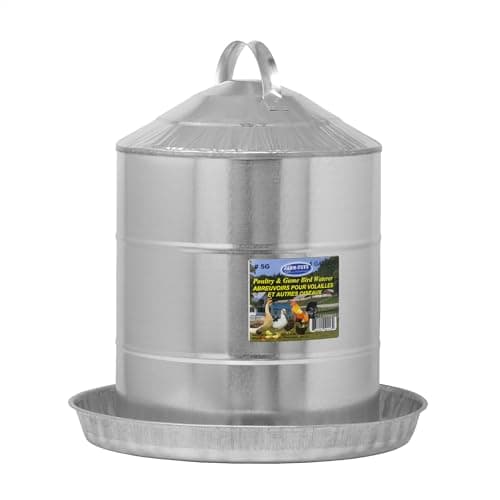
| Rank 1 | FARM-TUFF Galvanized Poultry Fountain, 5 Gallon A gravity waterer that lasts a decade | 5 gallon | 6.6 | $56.59on Amazon |
| Rank 2 | 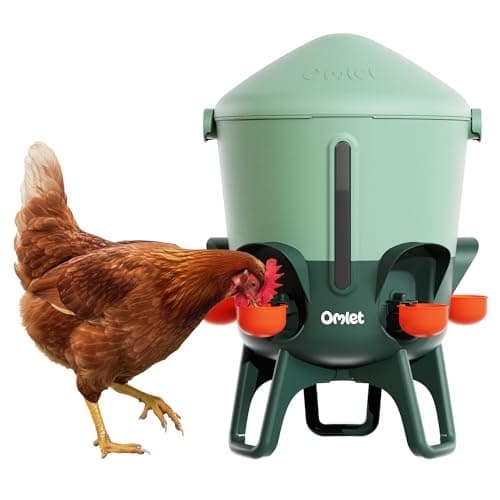 Omlet Insulated Chicken Waterer, 3 Gallon Slowing freezing without any electricity | 3 gallon | 7.0 | $109.99on Amazon |
| Rank 3 | 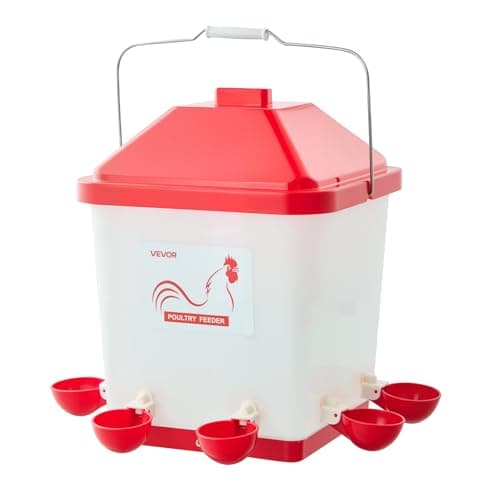 VEVOR 5 Gallon Automatic Waterer with 6 Cups Six automatic cups on one 5-gallon reservoir | 5 gallon | 7.2 | $38.90on Amazon |
| Rank 4 | 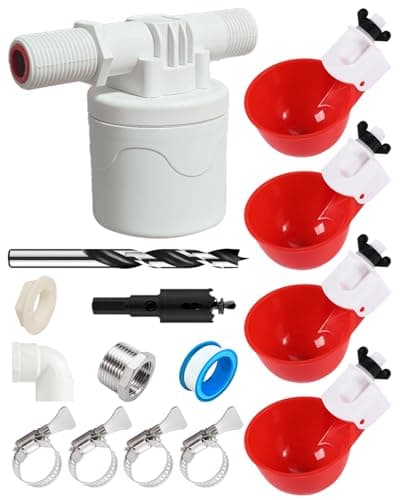 Psarnuk DIY Automatic Waterer Kit, 4 Cups with Float Valve Plumbing the waterer to a hose and forgetting it | Not published | 7.4 | $14.98on Amazon |
| Rank 5 | 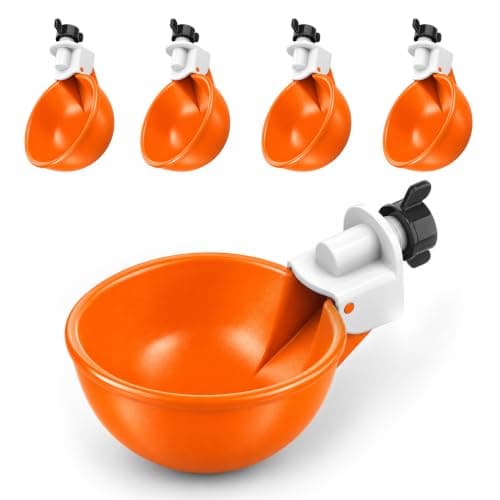 Lil'Clucker Large Automatic Waterer Cups Cups large enough for chicks and full-grown hens | Not published | 6.0 | $18.99on Amazon |
#ad Prices come from Amazon and change. How this site is funded. Scores are our own published rubric, not a lab test — see how we pick.
For hot weather the pick is the FARM-TUFF 5 gallon galvanized fountain: metal in shade stays cooler than plastic in shade, five gallons covers a doubled intake for a mid-size flock, and the same fount takes a heated base when the season turns. If your run has no shade to put it in, the Omlet insulated 3 gallon waterer is the better answer — the insulation that slows freezing in January also slows warming in July.
Heat changes the watering problem in three ways at once. Hens drink roughly twice as much, which halves how long any waterer lasts. Water left in the sun gets warm, and warm water is water they drink less of. And warm water grows biofilm and algae far faster, so the same waterer needs scrubbing more often.
Why water is the whole answer in heat
Chickens cannot sweat. Penn State Extension's summer flock guidance puts the thermoneutral zone — the range in which poultry hold body temperature without spending extra energy — at 60-75 degrees Fahrenheit, and notes that once temperatures reach the 80s and 90s heat stress may occur, along with falls in feed consumption, egg quality and production. Birds shed heat by panting, which costs them water, so Extension's line is that "constant access to fresh, cool water is critical" and that birds will drink more in summer both to hold body temperature and to replace what panting costs them.
That is the mechanism behind every recommendation on this page. The waterer is not a convenience item in a heatwave; it is the cooling system.
How much more they drink
| Flock size | Cool weather | Hot weather | 3 gal lasts (cool) | 5 gal lasts (cool) |
|---|---|---|---|---|
| 2 hens | About 13 fl oz/day | About 26 fl oz/day | weeks — too big | weeks — too big |
| 4 hens | About 26 fl oz/day | About 51 fl oz/day | about 2 weeks | about 3 weeks |
| 6 hens | About 2.4 qt/day | About 4.8 qt/day | about 5 days | about 8 days |
| 10 hens | About 1/2 gallon/day | About 1 gallon/day | about 6 days | about 10 days |
| 20 hens | About 1 gallon/day | About 2 gallons/day | about 3 days | about 5 days |
Read the hot-weather column, not the cool one. Six hens go from roughly 2.4 quarts a day to about 4.8 — so a waterer that was a five-day waterer in April is a two-and-a-half-day waterer in July. The commonest hot-weather mistake is not buying the wrong waterer; it is keeping the April refill habit into August.
What makes a waterer good in heat
- Enough capacity for the doubled figure, with margin. Run out at 2pm on a 95-degree day and you have a real problem, not an inconvenience.
- Material and placement that keep the water cool. Metal in shade beats plastic in sun by a wide margin, and insulated bodies help wherever shade is scarce.
- Enough drinking points that nobody waits. In heat the whole flock wants water simultaneously, which is different from the rest of the year.
- Easy to scrub. Warm water grows biofilm quickly, and a waterer you dread cleaning is a waterer that does not get cleaned.
- A wide enough mouth to take ice. Extension's extreme-heat guidance recommends adding ice cubes, ice blocks or frozen water bottles to keep water cool, which is only practical if the opening allows it.
The picks
Five waterers judged on hot-weather behavior: gallons, how cool the water stays, and how many birds can drink at once.
#1 · A gravity waterer that lasts a decade
#ad How we are funded · Price as of October 10, 2026
FARM-TUFF Galvanized Poultry Fountain, 5 Gallon
FARM-TUFFA double-wall galvanized cone-top fountain. Metal is the right choice if you will ever want a heated base under it — plastic founts cannot sit on one.
| Capacity | 5 gallon |
|---|---|
| Material | Galvanized steel, double wall |
| Top | Cone top |
| Operation | Automatic gravity feed |
| Heated base compatible | Yes — metal fount |
Specifications per Manufacturer figures as published on the Amazon product listing, as published at the date above.
What it does well
- Galvanized metal is the only fount body you can legitimately put on a heated base
- Cone top stops hens roosting on it and fouling the water
- Double wall construction means it will outlast several plastic waterers
- 5 gallons is roughly a week for a small flock in mild weather
Where it falls short
- Heavy when full — about 40 lb of water plus the fount
- Galvanized metal reacts with apple cider vinegar, so skip that additive with it
- Cone top makes it awkward to scrub inside
Our rubric
- Capacity
- 8.0
- Stays clean
- 8.0
- Freeze resistance
- 4.0
- Ease of refill
- 6.0
- Value
- 7.0
#2 · Slowing freezing without any electricity
#ad How we are funded · Price as of October 10, 2026
Omlet Insulated Chicken Waterer, 3 Gallon
OmletA 3-gallon insulated waterer with five cups and nipples included. Insulation does not stop a hard freeze, but it buys hours — which in a mild-winter climate can be enough.
| Capacity | 3 gallon |
|---|---|
| Drinkers | 5 cups and nipples included |
| Insulation | Insulated body |
| Material | BPA-free |
| Power required | None |
Specifications per Omlet published specifications, as published at the date above.
What it does well
- Insulated body genuinely delays freezing with no power at all
- Five drinkers included — nothing else to buy
- Also keeps water cooler in summer, which slows algae
- The right answer where running a cable to the coop is not practical
Where it falls short
- Insulation delays freezing; it does not prevent it below about 25 degrees F overnight
- Priced well above an uninsulated 3-gallon fount
- 3 gallons is a few days for a small flock, not a week
Our rubric
- Capacity
- 6.0
- Stays clean
- 9.0
- Freeze resistance
- 6.0
- Ease of refill
- 8.0
- Value
- 6.0
#3 · Six automatic cups on one 5-gallon reservoir
VEVOR 5 Gallon Automatic Waterer with 6 Cups
VEVORFive gallons feeding six auto-fill cups. Cups keep the bulk of the water sealed inside the drum, which is the main reason cup systems stay cleaner than open founts.
| Capacity | 5 gallon |
|---|---|
| Water ports | 6 automatic-fill cups |
| Operation | Automatic gravity, cup-fed |
| Handle | Carry handle fitted |
Specifications per Manufacturer figures as published on the Amazon product listing, as published at the date above.
What it does well
- Six cups means six hens drink at once without a queue
- The reservoir is sealed, so bedding and droppings cannot get into the bulk water
- 5 gallons on a carry handle is a sensible format for a shed-to-run trip
Where it falls short
- Cups freeze solid before the reservoir does — this is a summer solution
- Cup valves stick if grit gets into them; they need a weekly flick
- Plastic body, so no heated base
Our rubric
- Capacity
- 8.0
- Stays clean
- 9.0
- Freeze resistance
- 2.0
- Ease of refill
- 8.0
- Value
- 9.0
#4 · Plumbing the waterer to a hose and forgetting it
Psarnuk DIY Automatic Waterer Kit, 4 Cups with Float Valve
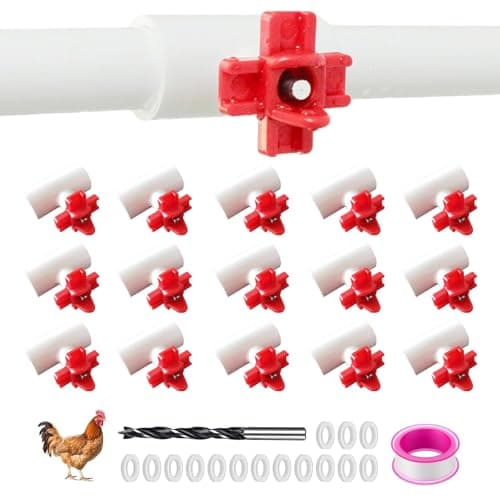
PsarnukFour cups plus a float valve, which turns a container into a self-filling trough on a hose line. The only setup here that genuinely never needs carrying water to.
| Includes | 4 cups and a float valve |
|---|---|
| Type | DIY automatic waterer kit |
| Supply | Mains or gravity hose feed |
| Container | Not included |
Specifications per Manufacturer figures as published on the Amazon product listing, as published at the date above.
What it does well
- A float valve on a hose means the water level maintains itself indefinitely
- No carrying buckets, which is the single biggest daily chore in a flock
- Four cups for a small to mid-size flock
Where it falls short
- A hose line must be drained before the first freeze or it splits
- Float valves stick; check it weekly or you get a flooded run
- Needs a container and a hose run you supply
Our rubric
- Capacity
- 8.0
- Stays clean
- 8.0
- Freeze resistance
- 2.0
- Ease of refill
- 10.0
- Value
- 9.0
#5 · Cups large enough for chicks and full-grown hens
#ad How we are funded · Price as of October 10, 2026
Lil'Clucker Large Automatic Waterer Cups
Lil'CluckerLarger-than-usual auto-fill cups, stated as suitable for chicks through to turkeys. Cup size matters: a tiny cup empties faster than the valve refills when a hen is really drinking.
| Type | Automatic water cups |
|---|---|
| Size | Large cup |
| Suitable for | Chicks, ducks, geese, turkeys |
| Pack size | Not published by manufacturer |
Specifications per Manufacturer figures as published on the Amazon product listing, as published at the date above.
What it does well
- Large cup holds enough that a thirsty hen is not waiting for the valve
- Shallow enough for chicks, which the deep nipple systems are not
- Works for mixed poultry, not just hens
Where it falls short
- Pack size is not published on the listing
- Open cups collect bedding — more cleaning than closed nipples
- Freezes first in cold weather
Our rubric
- Capacity
- 5.0
- Stays clean
- 7.0
- Freeze resistance
- 2.0
- Ease of refill
- 8.0
- Value
- 8.0
How they compare in heat
| Waterer | Capacity | Lasts 6 hens (hot) | Keeps water cool | Takes ice |
|---|---|---|---|---|
| FARM-TUFF Galvanized, 5 Gal | 5 gallon | About 4 days | Good in shade — metal, double wall | Yes, cone top opens |
| Omlet Insulated, 3 Gal | 3 gallon | About 2.5 days | Best where there is no shade | Yes |
| VEVOR 5 Gal, 6 Cups | 5 gallon | About 4 days | Moderate — plastic drum, sealed | Yes, via the drum |
| Psarnuk Float Valve Kit | Depends on container | Refills itself | Depends on container and shade | Yes, open container |
| Lil'Clucker Large Cups | Your reservoir | Depends on reservoir | Open cups warm fastest | No |
The free things that matter more than the waterer
Extension's extreme-heat article is largely about placement and shade rather than equipment, and it is right to be. Four changes that cost nothing:
- Put the waterer in shade, and if the run has shade only at one end, put it there even if that is inconvenient. Extension notes that positioning shade in the middle or west end of the run is what gives birds cover through midday and afternoon.
- Provide more than one water source, in cool, shady spots. This is the cheapest fix for a bullied hen in a heatwave.
- Add ice. Frozen bottles in the reservoir, or ice blocks in an open fount, measurably drop the temperature of what they are drinking.
- Open the coop up. Cracked windows and nest-area doors, and a fan to move air in an enclosed space, are standard hot-weather advice — the coop is the hottest place in the yard at 4pm.
Signs you have got it wrong
Light panting in hot weather is normal. Extension lists the signals of a more serious episode as heavy panting where the wattles hit together under the jaw, crouching or lying down, wings held away from the body, lethargy, and pale combs or wattles. If you see those, the response is immediate: shade, cool water, air movement, and for a bird in trouble Extension's instruction is to submerge the body in cool — not cold — water and work it into the feathers to reach the skin.
The wider summer picture, including bedding, ventilation and why laying drops off in a heatwave, is in keeping chickens cool in summer.
Frequently asked questions
How much water do chickens drink in hot weather?
At what temperature do chickens get heat stressed?
Can I put ice in a chicken waterer?
Is a metal or plastic waterer better in summer?
Should I give chickens electrolytes in hot weather?
How do I know if my chickens are too hot?
Sources
Read next
Waterers
The best chicken waterers
Our main waterer ranking: open founts, cup systems and nipple kits, judged on cleanliness as much as capacity.
Chicken Coops
How to keep chickens cool in summer
Shade, water and ventilation in order of effect, with the Extension temperature figures, the heat-stress signs worth acting on, and the gear that actually helps.
Waterers
How much water do chickens drink?
The published water-intake figures, a table by flock size, and why hot weather is the number that matters.
Waterers
How to keep chicken water clean
The three causes of dirty chicken water and what actually fixes each — including the one you cannot buy your way out of.
Waterers
The best automatic chicken waterers
Self-filling and self-dispensing waterers, with the float-valve caution that nobody mentions until it floods.