Chicken Coops
Plastic vs wooden chicken coops
One is far easier to keep clean and mite-free. The other costs a quarter as much and can be modified with a saw.
Chickens & Coops earns a commission when you buy through our links, at no extra cost to you. Prices come from Amazon and change; the date beside every price is when we last verified it. Full disclosure.
Quick picks
| # | Product | Material | Score | Price |
|---|---|---|---|---|
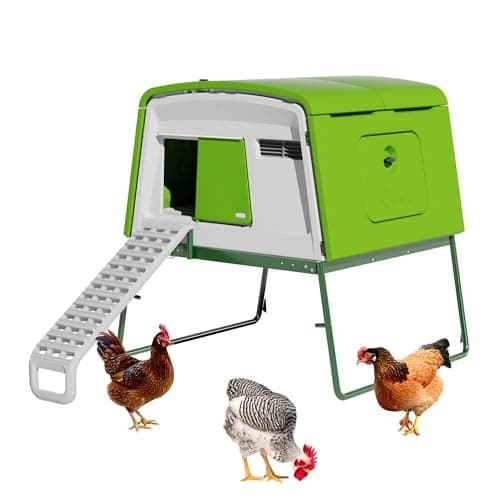
| Rank 1 | Omlet Eglu Cube Large Buy-it-once plastic, with the strongest predator record | Twin-wall insulated plastic | 8.2 | $1,399.00on Amazon |
| Rank 2 | 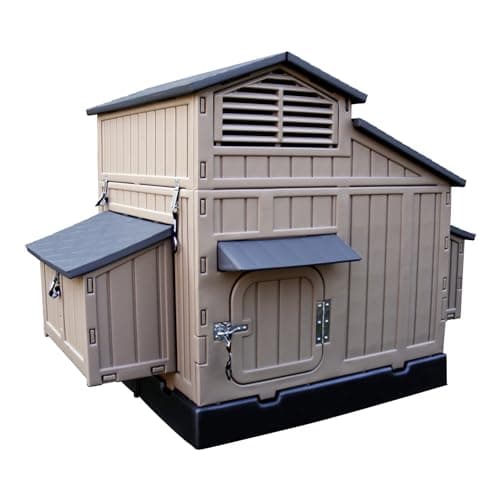 Hatching Time Formex Snap Lock Large Coop (4-6 hens) Six hens in a coop you can pressure-wash | Formex structural foam (double wall) | 7.7 | $824.99on Amazon |
| Rank 3 | 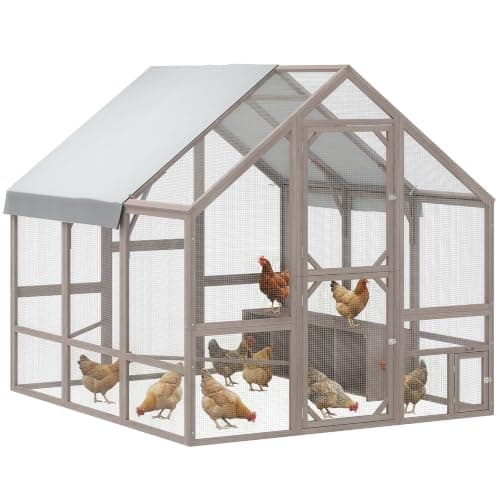 PawHut Large Wooden Chicken Coop, 83in x 73in x 73in Eight to ten hens in a coop you can walk into | Not published | 7.7 | $379.99on Amazon |
| Rank 4 | 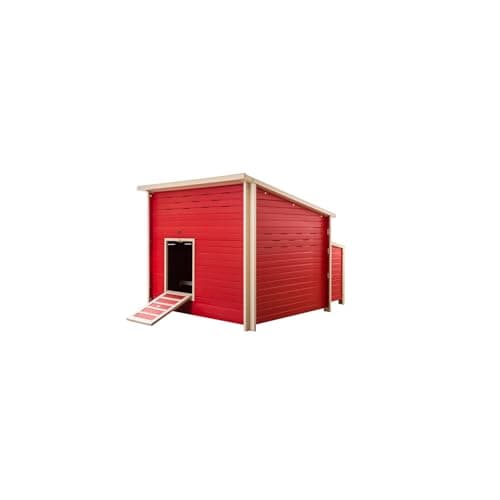 New Age Pet ECOFLEX Fontana Jumbo Chicken Coop A wood-look coop that will not rot | ECOFLEX recycled composite | 7.2 | $391.54on Amazon |
#ad Prices come from Amazon and change. How this site is funded. Scores are our own published rubric, not a lab test — see how we pick.
This is the first real fork in a coop decision, and it is usually decided on price before anyone explains what the price buys. So: what plastic actually buys you is mite control and cleaning time. What wood buys you is money back in your pocket and a coop you can change with a drill.
The honest summary
| Plastic | Wood | |
|---|---|---|
| Red mite harborage | Essentially none — no seams | Significant — seams, joints, end grain |
| Cleaning | Hose out, dry in minutes | Scrape, scrub, wait to dry |
| Price | Three to ten times wood | Lowest in the category |
| Insulation | Twin-wall models insulate well | Thin ply insulates poorly |
| Modifying it | Hard — you are stuck with the design | Easy — a drill and offcuts |
| Lifespan | Decades, no maintenance | Years, with resealing |
| Resale value | Holds a large fraction | Close to zero |
| Weight and wind | Light, must be anchored | Heavy, stays put |
Choose plastic if
- You have had red mite before, or you would rather never meet it
- You want the weekly clean to take five minutes, because then it happens
- You plan to keep chickens for many years and want one purchase
- You might sell up later — plastic coops hold value, wooden ones do not
Choose wood if
- Budget is the binding constraint, which for most first flocks it is
- You want to modify it: extra vents, a bigger pop-hole, a different roost height, hardware cloth everywhere
- You need a size or shape plastic does not come in
- You are comfortable resealing it every year or two
The mite question, properly
Red mite does not live on the birds. It lives in the coop — in cracks, seams and the end grain of timber — and comes out at night to feed. That is why a wooden coop is harder: you are not treating the chickens, you are treating the building, and the building has a thousand places to hide. A molded plastic coop has none. This single fact is why experienced keepers pay the plastic premium and why first-time keepers usually do not understand it yet.
Picks for both answers
Two plastic, one composite, one wooden — all judged on the criteria above.
#1 · Buy-it-once plastic, with the strongest predator record
#ad How we are funded · Price as of October 5, 2026
Omlet Eglu Cube Large
OmletThe reference plastic coop: twin-wall insulated plastic, a slide-out droppings tray, and the only hen house in common backyard use with a genuine reputation for stopping foxes and raccoons at the door.
| Material | Twin-wall insulated plastic |
|---|---|
| Cleaning | Slide-out droppings tray; fully washable |
| Mobility | Optional wheel kit |
| Security | Marketed as a secure hen house |
| Floor area | Not published by manufacturer |
Specifications per Omlet published specifications, as published at the date above.
What it does well
- Twin-wall plastic is the best mite-proofing available short of a metal coop
- Droppings tray pulls out, so the weekly clean is genuinely five minutes
- The strongest predator reputation of any plastic coop in backyard use
- Holds value: used Eglus sell for a large fraction of new
Where it falls short
- By far the most expensive coop on this page
- The run sold with it is the usual upgrade cost, and it adds up quickly
- No floor area published on the listing, so compare on bird count with care
Our rubric
- Space per bird
- 8.0
- Predator resistance
- 9.0
- Ventilation
- 9.0
- Cleaning access
- 10.0
- Build
- 9.0
- Value
- 4.0
#2 · Six hens in a coop you can pressure-wash
#ad How we are funded · Price as of October 5, 2026
Hatching Time Formex Snap Lock Large Coop (4-6 hens)
Hatching TimeThe larger Formex coop, stated for 4-6 birds. Same argument as the standard model — a non-porous double wall, no mite harborage, hose-out cleaning — with room for a realistic six-hen flock.
| Stated capacity | 4-6 chickens |
|---|---|
| Material | Formex structural foam (double wall) |
| Assembly | Snap-together |
| Ventilation | Built-in vents |
| Floor area | Not published by manufacturer |
Specifications per Manufacturer figures as published on the Amazon product listing, as published at the date above.
What it does well
- Nothing for red mite to hide in, which is the problem wooden coops never fully solve
- Washes down to clean in minutes — the difference between cleaning weekly and meaning to
- Insulated wall moderates both winter cold and summer heat
- No rot, no repainting, no re-sealing, ever
Where it falls short
- Expensive next to a wooden coop of the same stated capacity
- Must be anchored — light enough to shift in strong wind
- No published floor area, so the 4-6 claim cannot be checked on paper
Our rubric
- Space per bird
- 7.0
- Predator resistance
- 7.0
- Ventilation
- 8.0
- Cleaning access
- 10.0
- Build
- 9.0
- Value
- 5.0
#3 · Eight to ten hens in a coop you can walk into
PawHut Large Wooden Chicken Coop, 83in x 73in x 73in
PawHutThe rare large coop that publishes all three dimensions: 83 x 73 x 73 inches for 8-10 hens. 73 inches of height is the number that matters — you can stand up inside it to clean.
| Stated capacity | 8-10 hens |
|---|---|
| Dimensions | 83 in L x 73 in W x 73 in H |
| Footprint | About 42 sq ft |
| Construction | Wood |
| Finish | Light brown |
Specifications per Manufacturer figures as published on the Amazon product listing, as published at the date above.
What it does well
- All three dimensions published, so the 8-10 claim is actually checkable — and it holds up
- 73 in internal height means cleaning standing up instead of on your knees
- About 42 sq ft of footprint covers ten standard hens at roughly 4 sq ft each
Where it falls short
- Large and heavy to assemble; two people and a free afternoon
- Supplied wire is unlikely to be hardware cloth — plan to re-skin the lower panels
- Needs a level base: a 42 sq ft timber frame on uneven ground will twist
Our rubric
- Space per bird
- 9.0
- Predator resistance
- 6.0
- Ventilation
- 8.0
- Cleaning access
- 8.0
- Build
- 7.0
- Value
- 8.0
#4 · A wood-look coop that will not rot
#ad How we are funded · Price as of October 5, 2026
New Age Pet ECOFLEX Fontana Jumbo Chicken Coop
New Age PetA recycled-composite coop that looks like painted timber and behaves like plastic: no rot, no splitting, no annual re-sealing. The sensible middle between a cheap wooden hutch and an Eglu.
| Material | ECOFLEX recycled composite |
|---|---|
| Finish | Red, wood-look |
| Rot resistance | Non-porous composite — will not rot or warp |
| Stated capacity | Not published by manufacturer |
| Floor area | Not published by manufacturer |
Specifications per Manufacturer figures as published on the Amazon product listing, as published at the date above.
What it does well
- Composite board does not rot, warp or need painting — the three jobs wooden coops create
- Looks like a timber coop, which matters if the coop sits where neighbors see it
- Easier to disinfect than softwood, though not as seamless as a molded plastic shell
Where it falls short
- No stated bird capacity or floor area on the listing — size it from the dimensions, not the name
- Composite panels are heavy; plan where it goes before assembly
- Mid-high price without the predator reputation of the Eglu
Our rubric
- Space per bird
- 7.0
- Predator resistance
- 6.0
- Ventilation
- 7.0
- Cleaning access
- 8.0
- Build
- 9.0
- Value
- 6.0
What about metal?
Metal is mostly sold as walk-in runs rather than houses. As a house material it is the best of all on mites and the worst on condensation and temperature swing — metal walls sweat, and sweating in winter is what causes frostbite. If you use a metal structure as a coop, insulate it. Extension's insulation guidance covers the principle.
Frequently asked questions
Are plastic chicken coops worth the money?
Do plastic coops get too hot in summer?
How long does a wooden chicken coop last?
Can you get rid of red mite in a wooden coop?
Sources
Read next
Chicken Coops
The best chicken coops for a backyard flock
Our main coop ranking, from a two-hen starter box to a twenty-bird shed, with the space maths done for you.
Chicken Coops
How to clean a chicken coop
The daily, weekly and twice-yearly routine, the products that help, and the hygiene rules CDC publishes for handling poultry.
Chicken Coops
Why your chicken coop smells, and how to fix it
A diagnostic for coop smell: four causes in order of likelihood, and what fixes each one. Masking it is not on the list.
Chicken Coops
Chicken coop kit vs building your own
Kit or self-build? The real comparison on cost, time, size and how good the finished coop is.
Nesting Boxes
Plastic vs wooden nesting boxes
Why nest box material matters more than coop material, with the mite argument spelled out and picks for both answers.