Chicken Coops
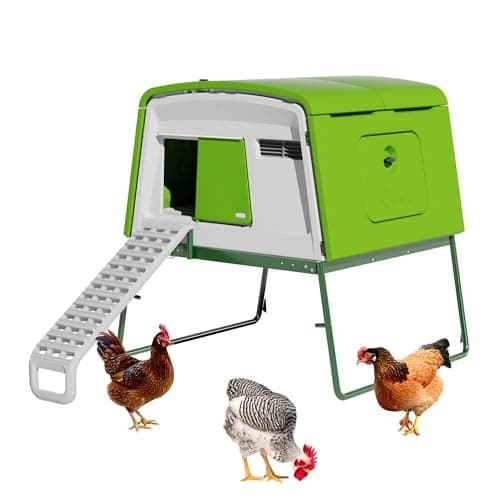
Omlet Eglu Cube review
The most expensive coop most backyard keepers will ever consider, and the only plastic one with a 10-year warranty behind it. Here is what the published numbers actually say.
Chickens & Coops earns a commission when you buy through our links, at no extra cost to you. Prices come from Amazon and change; the date beside every price is when we last verified it. Full disclosure.
Quick picks
| # | Product | Material | Score | Price |
|---|---|---|---|---|
| Rank 1 | Omlet Eglu Cube Large Buy-it-once plastic, with the strongest predator record | Twin-wall insulated plastic | 8.2 | $1,399.00on Amazon |
#ad Prices come from Amazon and change. How this site is funded. Scores are our own published rubric, not a lab test — see how we pick.
The Eglu Cube is the coop people ask about and then flinch at. It costs several times what a wooden flat-pack costs, it is made of plastic, and it is the only backyard hen house with a serious reputation among people who have lost birds to predators. All three of those things are true at once, which is why a straight answer is hard to find.
This review works from figures Omlet publishes, plus our own standing sizing arithmetic. We have not had one in a yard, and nothing below is presented as hands-on testing — where a number is unpublished we say so rather than estimating it.
The short verdict
Buy it if you want a hen house that will still be serviceable in a decade, you clean weekly and resent the job, you have had a predator get into a wooden coop, or you keep a small flock in a small yard where a plastic coop's footprint and washability matter. The 10-year warranty is real and it is the single best argument for the price.
Do not buy it if you need to house six large hens overnight, which is what the listing implies and what the internal dimensions do not support. Also skip it if the budget means skipping the run — the house on its own is a roost box, and the run is where the space arithmetic has to land.
What Omlet actually publishes
| Figure | Omlet's published number |
|---|---|
| Stated capacity | Up to 6 large hens, 8 medium breeds or 10 bantams |
| House, external | 3 ft 3 in long x 3 ft 1 in wide x 2 ft 2 in high |
| House, internal | 2 ft 11 in x 1 ft 8 in x 1 ft 10 in |
| House material | 100% recyclable UV-stabilized polyethylene |
| Run mesh | Double-layer fully coated steel weld mesh |
| With 9 ft run | 5 ft 1 in wide x 10 ft 6 in long x 3 ft 10 in high |
| With 12 ft run | 5 ft 1 in wide x 13 ft 5 in long x 3 ft 10 in high |
| With walk-in run | 7 ft 3 in wide x 8 ft 11 in long x 6 ft 8 in high |
| Warranty | Up to 10 years on materials and workmanship |
The capacity claim, checked
This is the part of the review that matters, and it is arithmetic anyone can repeat. The internal floor is 2 ft 11 in by 1 ft 8 in, which is about 4.9 square feet. This site uses Penn State Extension's large-chicken figures throughout: 2 sq ft of indoor floor per bird. Divide and the house is a two-hen house, not a six-hen house.
That gap is not Omlet being dishonest, and it is worth understanding rather than dismissing. An Eglu is designed as a roost box bolted to a run: the birds sleep and lay in the plastic shell and spend their waking hours in the mesh, so Omlet's capacity figure is about perch space and nest access, not floor area. On a wooden coop with a small attached hutch-run the same claim would be indefensible; here it is a different design philosophy.
But the run has to carry the load, and the run is where it gets tight. With the 9 ft run the whole unit occupies roughly 53 sq ft of ground, of which the house takes about 10, leaving something in the region of 43 sq ft of run. At Extension's 10 sq ft of outdoor space per large bird, that is about four hens — not six. With the 12 ft run you get closer to five.
What it genuinely does better
Cleaning
This is the reason owners rave about it, and it is not marketing. A slide-out droppings tray under the roosting bars means the weekly clean is pulling a tray, tipping it, and sliding it back. The whole shell hoses down and the surfaces are non-porous, so there is nothing for muck to key into. A wooden coop at the same age has absorbed everything that has ever happened in it.
The secondary benefit is bigger than people expect: red mite has nowhere to live. Mites hide in cracks and timber grain during the day and feed on roosting birds at night, which is why a wooden coop needs an annual war. Twin-wall plastic has no grain and no joints to colonize, and that single property does more for flock health than anything else in the design.
Predator resistance
The Eglu's reputation here is the second reason people pay. Omlet publishes double-layer coated steel weld mesh on the run and markets the house as secure as standard. The house itself is a sealed rigid shell with no gaps a raccoon can lever, which is a genuinely different proposition from a wooden coop's hinged doors and stapled chicken wire.
Two caveats that apply to any coop, Eglu included. The weak point in a run is almost always the ground, which is why a predator apron matters regardless of what the walls are made of. And mesh gauge beats mesh presence every time — chicken wire is not a predator barrier whatever the coop costs.
The 10-year warranty
Omlet's warranty covers free repairs and replacement parts for up to 10 years against defects in materials or workmanship. In a category where a $300 wooden coop is often visibly failing in its third winter, a decade of parts support is the strongest value argument the Eglu has — and the reason used Eglus resell for a large fraction of new.
Winter and summer behavior
Omlet markets the twin-wall shell as cool in summer and warm in winter, and the physics of a double skin supports that direction, though no insulation value is published so there is no number to quote. The practical point is that it needs the same thing every coop needs: ventilation above bird height, with no draft at roost level. Insulation without ventilation makes a humid coop, and humidity, not cold, is what causes frostbite. The full winter case is here.
What we would hold against it
- The price, and then the price again. The house is the headline number; the run, the wheel kit and the handles are commonly separate. Price the configuration you will actually own before deciding, because the house alone is not a complete setup.
- No floor area published. Omlet gives internal dimensions, which is more than most brands, but not square footage — so the sizing correction above is something a buyer has to do rather than read.
- Six large hens is optimistic. See the arithmetic above. This is the one claim we would push back on hardest.
- It does not look like a coop. That is a matter of taste, but it is a real objection and worth saying: some yards want timber, and a plastic pod is not a neutral aesthetic choice.
- Plastic is still chewable at the margins. Not by a raccoon, but rodents will test a plastic shell, and feed stored alongside it is what brings them. Keeping the feed in a steel can rather than the bag is a bigger factor in whether you get rats than the coop material is.
- Replacement parts mean a parts relationship. The warranty is a strength, but a proprietary shell means you cannot fix it at a hardware store the way you can patch timber.
How it compares to the alternatives
| Eglu Cube | Flat-pack wooden coop | Large plastic coop (non-Eglu) | |
|---|---|---|---|
| Weekly clean | Tray out, hose down | Scrape and sweep | Hose down |
| Red mite | Nowhere to hide | Annual problem | Low risk |
| Predator record | The category reference | Depends entirely on the mesh | Shell good, mesh usually weak |
| Published warranty | Up to 10 years | Typically 1 year or none | Varies; usually short |
| Upfront cost | Highest in backyard use | Lowest | Middle |
| Resale | Holds value unusually well | Close to none | Poor |
If the Eglu is out of budget, the honest alternatives are not cheap imitations of it. A plastic coop at a lower price point gets you the washability and most of the mite resistance without the warranty or the predator record. A walk-in coop gets you far more space per dollar if the yard allows it, which for a growing flock is often the better trade. And the full ranking by flock size is the right place to start if you have not fixed on a bird count yet.
Who it is actually for
The buyer the Eglu Cube suits best is specific: a small flock of three or four hens, a yard where the coop is visible and will be cleaned often, a keeper who intends to still be keeping chickens in ten years, and ideally someone who has already had a predator scare. For that person the price works out, because the alternative is buying a wooden coop twice.
The buyer it suits worst is the one buying it as a shortcut — the assumption that the most expensive coop removes the need to do the sizing arithmetic, run a predator apron and ventilate properly. It does not. It is a very good shell around the same husbandry everything else needs.
Frequently asked questions
How many chickens can an Eglu Cube really hold?
Is the Omlet Eglu Cube worth the money?
Does the Eglu Cube come with a run?
Is the Eglu Cube predator proof?
Is an Eglu Cube warm enough in winter?
How long does an Eglu Cube last?
Sources
Read next
Chicken Coops
The best chicken coops for a backyard flock
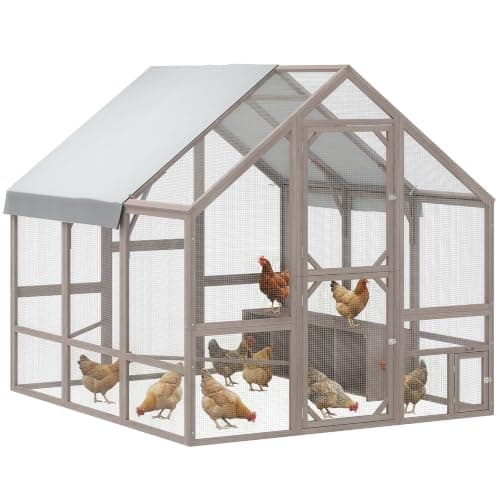
Our main coop ranking, from a two-hen starter box to a twenty-bird shed, with the space maths done for you.
Chicken Coops
Plastic vs wooden chicken coops
The real trade-off: mite control and cleaning against price and modifiability. Picks for whichever answer fits you.
Chicken Coops
Chicken coop size per chicken: the real numbers
The sizing table the rest of this site is built on, with the extension sources and a method for checking any listing.
Chicken Coops
The best walk-in chicken coops and runs
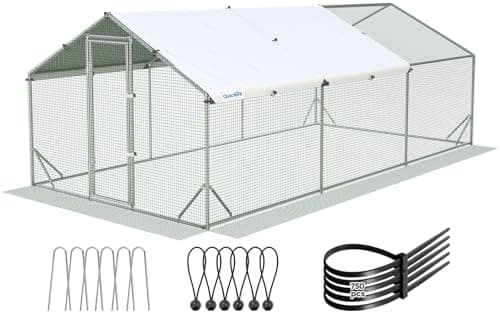
Coops and runs with standing headroom, ranked on height, floor area and whether the mesh is actually hardware cloth.
Predator Protection
The most predator-resistant chicken coops
The coops with the best predator record, plus the three upgrades almost every coop needs whatever the listing claims.
About
How we pick
The published method behind every score here, and a plain statement of what we have not tested.