Chicken Coops
The best chicken coop wheels and dollies
A coop you cannot move is a coop that kills the grass under it. Here is what the hardware has to do, and which of it publishes a weight rating.
Chickens & Coops earns a commission when you buy through our links, at no extra cost to you. Prices come from Amazon and change; the date beside every price is when we last verified it. Full disclosure.
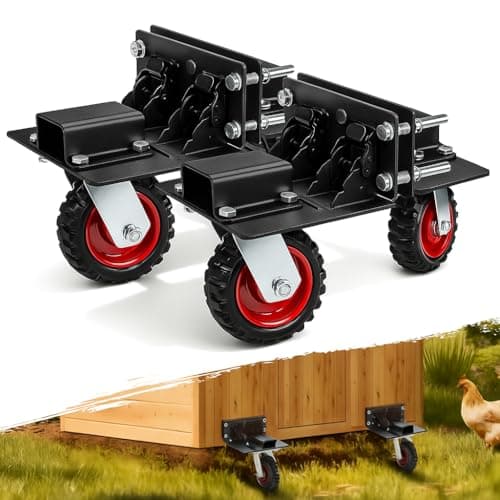
Best Coop Wheels
Chicken Coop Wheels Kit with Lift System, Set of 4
Four foldable heavy-duty casters with a stated 700 lb maximum load — the only kit here that tells you what it will carry.
#ad How we are funded · Price as of November 8, 2026
Quick picks
| # | Product | Stated load capacity | Score | Price |
|---|---|---|---|---|
| Rank 1 | Chicken Coop Wheels Kit with Lift System, Set of 4 The one kit that publishes a weight rating | 700 lb maximum | 9.1 | $111.99Chicken, Set of 4 |
| Rank 2 | 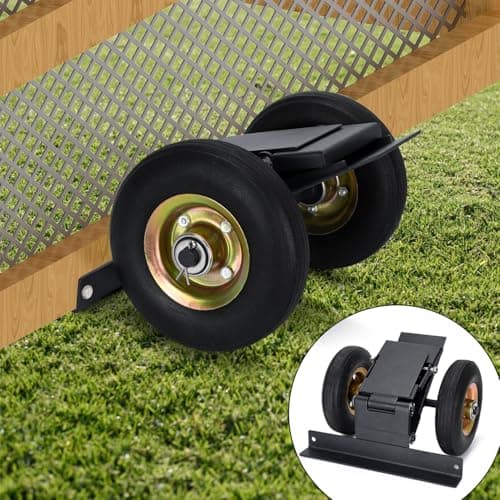 TOPOWN Chicken Coop Wheels Kit (coops to 7 ft) Most backyard coops and tractors | Not published | 9.0 | $142.00TOPOWN Chicken Coop |
| Rank 3 | 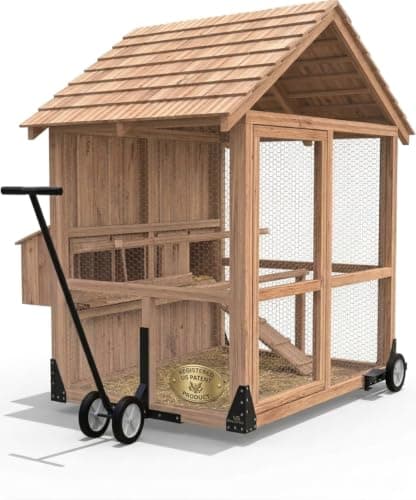 Belinova Chicken Coop Wheels Kit A heavy wooden coop you want to move on your own | Not published | 9.0 | $169.99Belinova Chicken |
| Rank 4 | 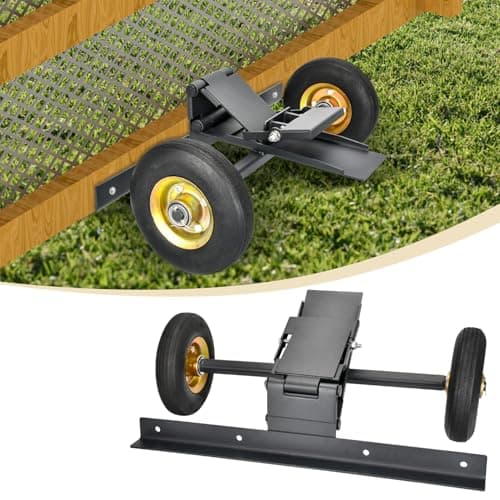 TOPOWN Large Chicken Coop Wheels Lift Kit (8 ft and wider) Walk-in coops and wide runs | Not published | 8.8 | $175.00TOPOWN Large Chicken |
| Rank 5 | 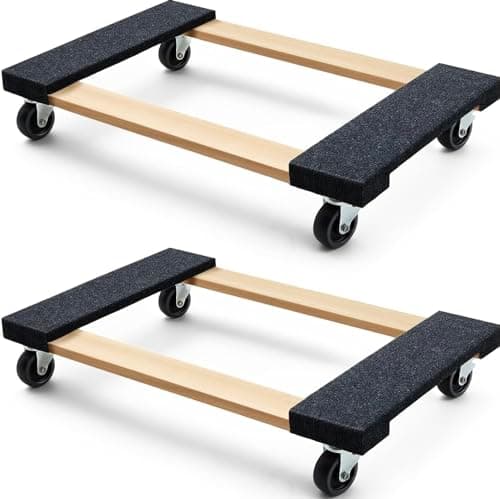 Simpli-Magic Hardwood Furniture Moving Dolly, 2 Pack Moving a coop that has no wheels and never will | 1,320 lb | 8.8 | $39.99Simpli-Magic, 2 Pack |
| Rank 6 | 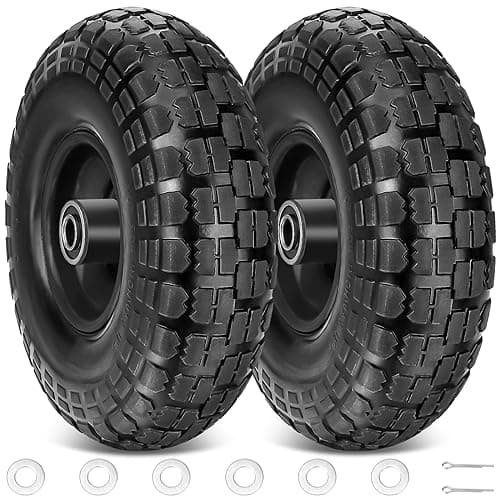 TICONN 10 in Flat-Free Tire and Wheel, 4.10/3.50-4 Bolting wheels to a tractor's own runners | 440 lb | 8.6 | $29.95TICONN, 4.10/3.50-4 |
| Rank 7 | 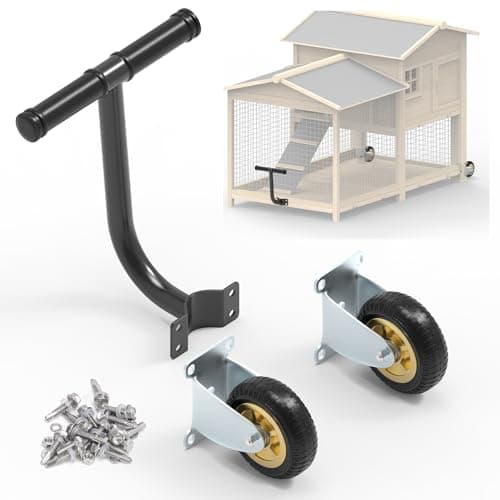 Flehomo Chicken Coop Wheels Kit, 2 Pack with Lifting Handle A light tractor, or replacing wheels that broke | Not published | 8.5 | $36.99Flehomo Chicken Coop |
| Rank 8 | 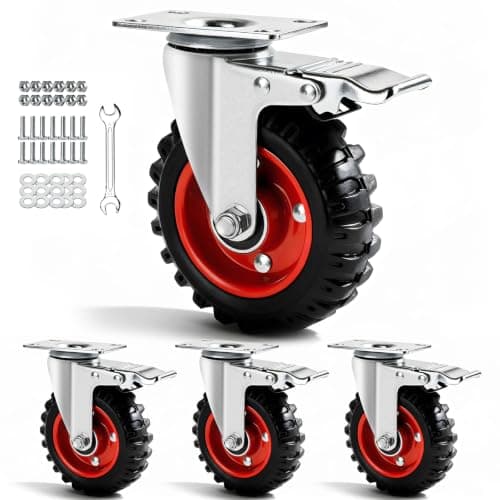 5 in Heavy Duty Locking Caster Wheels, Set of 4 A small coop that lives on a hard surface | 2,400 lb | 8.9 | $37.885 in Heavy, Set of 4 |
#ad Prices come from Amazon and change. How this site is funded. Scores are our own published rubric, not a lab test — see how we pick.
For most people the pick is the four-caster lift kit with a published 700 lb maximum load, because it is the only kit in this category that tells you what it will carry. For a coop you move twice a year rather than twice a week, a pair of furniture dollies does the same job for a third of the money and does not require drilling a single hole in your coop floor.
That is the short version, and the rest of this page is mostly about why the choice is harder than it looks. Coop mobility gear is sold as a simple accessory — bolt on wheels, push coop — and it is not. Three things decide whether a given kit works for you: how the hardware lifts the coop, what the coop actually weighs, and what the ground between here and there is made of. Get any one of those wrong and you own four wheels that have turned a movable coop into an immovable one.
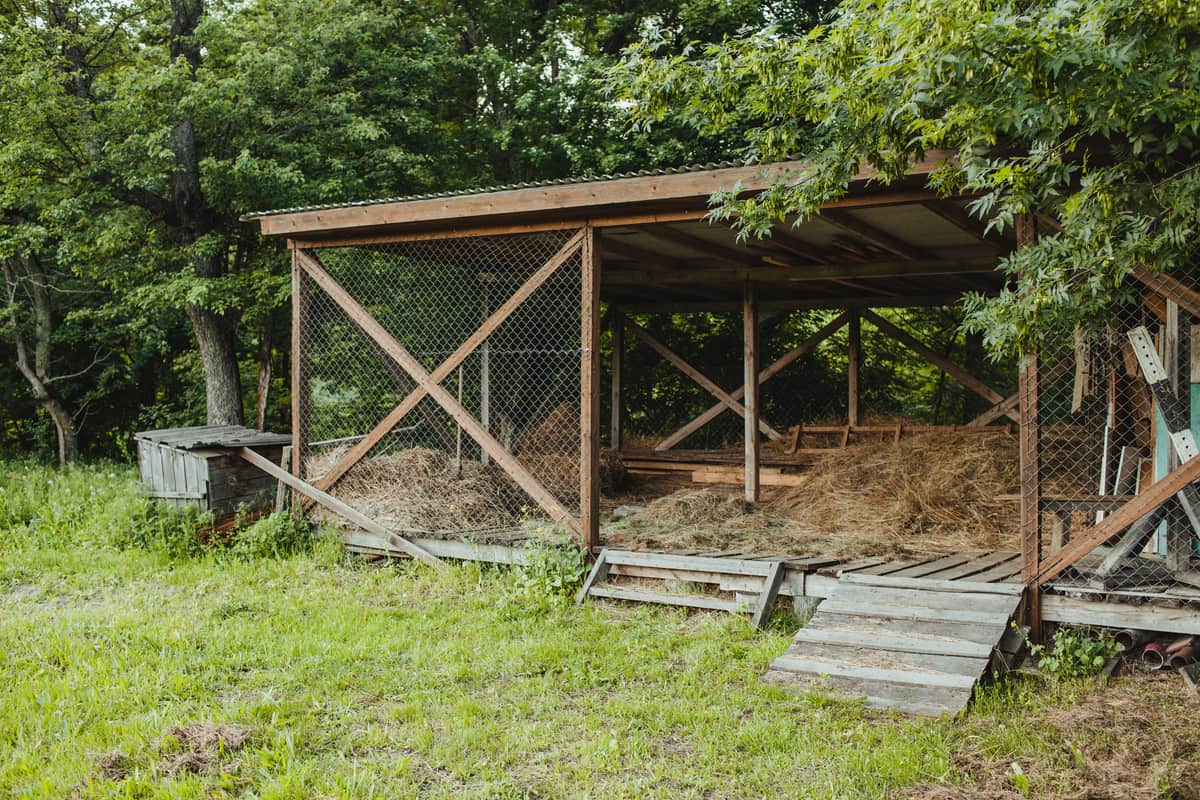
Why you want to move it at all
Three honest reasons, and they want different hardware.
- Pasture rotation. The reason the chicken tractor exists. A flock strips its patch of grass to bare soil quickly, and moving the coop every few days spreads the damage and the manure instead of concentrating both. This wants a daily move, which wants wheels that stay on.
- Clean-out and maintenance. Twice a year you want the coop somewhere you can hose it, or you want to get at what is growing underneath it. This wants an occasional move, which wants dollies or a retractable kit.
- Seasonal repositioning. Shade in July, shelter from the prevailing wind in January. One or two moves a year, and the same answer as clean-out.
Be honest with yourself about which of those you are actually buying for, because the gap between "I will move it every three days" and what happens in a wet February is the single biggest reason this hardware ends up unused. University of Minnesota Extension's own mobile poultry hut plan is blunt about it in its list of drawbacks: "There is a lot of labor involved in moving the huts and feeding and watering the birds." That is an extension service describing a hut purpose-built to be moved.
The three routes, and which coop each one suits
Route 1 — a lift kit that stays bolted on
Wheels mounted permanently to the coop's frame, with a mechanism that raises the coop onto them and lowers it back onto its own base. This is what the dedicated coop kits on this page are. The lift is the whole point: between moves the coop sits flat on the ground, which is what you want for draft control and for predators, and the wheels carry it only while it is moving.
Right for: a wooden coop or tractor you move weekly or more. Wrong for: a coop you move twice a year, where you are drilling permanent holes in a structure to solve an occasional problem.
Route 2 — wheels you bolt to the runners yourself
A bare wheelbarrow wheel through a bolt or an axle. Cheapest by far, best on rough ground, and entirely dependent on you having something to bolt it to. Extension's hut plan does exactly this: four 10-inch steel-centered wheels, bolted straight through holes drilled in the 4 x 4 runners with washers and nuts, no axle at all. If your coop sits on skids, this route is available to you and it is the one that crosses a real lawn.
Right for: a tractor you are building or modifying, and any coop with wooden runners. Wrong for: a plastic coop or a thin-framed flat-pack with nothing structural to bolt into.
Route 3 — nothing attached to the coop at all
Dollies. You lift one end of the coop onto a dolly, then the other, and push. No holes, no permanent gap under the coop, no hardware weathering outdoors for five years. The same extension plan names this route too: "To move the hut, you can use a two-wheeled dolly, or attach ropes to the front or back to move it along."
Right for: an occasional move on a hard surface, and for anyone who does not want to modify a coop they may sell. Wrong for: grass, and for anything you cannot lift one end of.
What the hardware actually has to do
Five criteria, weighted in that order. They are the rubric behind every score on this page.
- Lift mechanism. Weighted hardest, because it is the only part you cannot improvise. A kit that raises the coop and locks is doing the job your back would otherwise do, and it is the difference between a coop that rests on its base and a coop permanently balanced on four small wheels.
- Load capacity, as published. Not as estimated. A 4 ft x 4 ft wooden coop with a plywood floor, a shingle roof, six inches of bedding and a full feeder is heavier than people expect, and most of this category refuses to print a number.
- Rough ground. Decided almost entirely by wheel diameter. Four inches is a hard-surface wheel whatever the listing says; ten inches crosses a lawn.
- Install effort. How much drilling, and how reversible it is. A kit is a permanent modification to a structure that has to stay weatherproof and predator-proof afterwards.
- Value. Against the job, not against the other kits. The two cheapest things here — bare wheels and a pair of dollies — score highest on value, and that is not an accident.
How we ranked these
Nobody on this site has lived with all eight of these products. The ranking is built from the figures each listing publishes, the pattern of what verified owners report at the retailer, and how each design holds up against the extension guidance above. Every card says what it relies on, and how we pick sets out the method and its limits. Where a figure is not published we print that rather than estimating it — which in this category happens a lot, and is itself the most useful finding on the page.
The picks
Ranked on the lift mechanism first, then on whether the listing publishes a load rating you can check against your coop.
#1 · The one kit that publishes a weight rating
$159.99 30% off
#ad How we are funded · Price as of November 8, 2026
Chicken Coop Wheels Kit with Lift System, Set of 4
Chicken Coop Wheels KitFour foldable heavy-duty casters with a stated 700 lb maximum load — the only kit here that tells you what it will carry. For anyone who wants to do the arithmetic before buying rather than after, that single published figure makes this the easiest kit to recommend.
| Stated load capacity | 700 lb maximum |
|---|---|
| Wheel count | 4 |
| Lift mechanism | Lift system with foldable casters |
| Stated fit | Large or small hen houses |
| Wheel size | Not published by manufacturer |
Specifications per Manufacturer figures as published on the Amazon product listing, as published at the date above.
Why we picked it
- Publishes a 700 lb maximum load, so you can check it against your coop instead of hoping
- Foldable casters tuck away, which means the coop rests on its base and not on four small contact patches
- Four wheels rather than two, so the load is shared and nothing has to be lifted at one end
- Noticeably cheaper than the lever-action kits
Good to know — No wheel size published, and caster diameter is what decides whether it crosses a lawn or digs into it
Our rubric
- Lift mechanism
- 9.3
- Load capacity
- 9.8
- Rough ground
- 7.9
- Install effort
- 9.3
- Value
- 9.3
#2 · Most backyard coops and tractors
$149.00 5% off
#ad How we are funded · Price as of November 8, 2026
TOPOWN Chicken Coop Wheels Kit (coops to 7 ft)
TOPOWNThe sensible default for a normal backyard coop: a lift-design wheel kit with a stated fit you can actually check against your coop before you order. If your coop is 7 ft or less, this is the kit to start with.
| Stated fit | Chicken coops 7 ft or less |
|---|---|
| Lift mechanism | Lift design (manufacturer's term) |
| Stated weather rating | Weatherproof |
| Stated load capacity | Not published by manufacturer |
| Wheel count | Not published by manufacturer |
Specifications per Manufacturer figures as published on the Amazon product listing, as published at the date above.
Why we picked it
- A published size fit, which is the single most useful number in this category and most listings omit it
- Lift design, so the coop can sit on its own base between moves instead of permanently on wheels
- Cheaper than the lever-action kits without dropping to bare casters
- Same maker as the 8 ft(+) kit, so you can size up without re-learning the hardware
Good to know — No stated load capacity — size fit is not the same as a weight rating
Our rubric
- Lift mechanism
- 9.3
- Load capacity
- 8.4
- Rough ground
- 8.9
- Install effort
- 8.9
- Value
- 9.3
#3 · A heavy wooden coop you want to move on your own
#ad How we are funded · Price as of November 8, 2026
Belinova Chicken Coop Wheels Kit
BelinovaThe most complete lift-and-roll kit here: a lever-action front lift plus a step-to-lift locking mechanism, so the coop is raised off the ground by the hardware rather than by your back. It is also the most expensive thing on this page by some distance, and it only earns that if your coop is genuinely heavy.
| Kit contents | 6-component kit |
|---|---|
| Lift mechanism | Step-to-lift locking plus lever-action front lift |
| Stated fit | Heavy wooden chicken coops |
| Stated load capacity | Not published by manufacturer |
| Wheel count | Not published by manufacturer |
Specifications per Manufacturer figures as published on the Amazon product listing, as published at the date above.
Why we picked it
- A real lift mechanism at both ends, which is the difference between moving a coop and dragging it
- The step-to-lift lock means the coop sits back down on its own base when you are done, not on the wheels
- Sold as a complete 6-component kit rather than wheels you then have to engineer a mount for
- Aimed squarely at the heavy wooden coops that are hardest to move
Good to know — The most expensive option on this page, and several times the cost of bolting on plain wheels
Our rubric
- Lift mechanism
- 10.0
- Load capacity
- 8.9
- Rough ground
- 8.9
- Install effort
- 8.4
- Value
- 8.4
#4 · Walk-in coops and wide runs
$189.00 7% off
#ad How we are funded · Price as of November 8, 2026
TOPOWN Large Chicken Coop Wheels Lift Kit (8 ft and wider)
TOPOWNThe same idea as TOPOWN's standard kit, sized for the coops that actually need it. If you have a walk-in or a wide run and the standard kits look short, this is the one that states it fits 8 ft and over — which matters, because a kit mounted too far inboard of the corners will rack the frame.
| Stated fit | Coops 8 ft and wider |
|---|---|
| Lift mechanism | Lift kit (manufacturer's term) |
| Stated weather rating | Weatherproof |
| Stated load capacity | Not published by manufacturer |
| Wheel count | Not published by manufacturer |
Specifications per Manufacturer figures as published on the Amazon product listing, as published at the date above.
Why we picked it
- Explicitly sized for 8 ft(+) coops, which almost nothing else in the category states
- Keeps the mounting points near the corners on a wide frame, where the structure can take the load
- Lift design rather than permanent casters, so a wide coop still sits flat for predator-proofing
- The right answer for the walk-in coops and metal runs people most often find they cannot move
Good to know — Most expensive of the three lift kits here, and no load capacity is published for any of them
Our rubric
- Lift mechanism
- 9.3
- Load capacity
- 8.9
- Rough ground
- 8.9
- Install effort
- 8.4
- Value
- 8.4
#5 · Moving a coop that has no wheels and never will
#ad How we are funded · Price as of November 8, 2026
Simpli-Magic Hardwood Furniture Moving Dolly, 2 Pack
Simpli-MagicTwo hardwood dollies, 30 by 18 inches, rated 1,320 lb each. Nothing is bolted to the coop: you lift one end onto a dolly, then the other, and push. For a coop you move twice a year — spring clean-out and a winter reposition — this is cheaper, less invasive and more useful than any wheel kit.
| Deck size | 30 in x 18 in |
|---|---|
| Stated load capacity | 1,320 lb |
| Wheel count | 4 swivel, per dolly |
| Quantity in pack | 2 pack |
| Material | Hardwood deck |
Specifications per Manufacturer figures as published on the Amazon product listing, as published at the date above.
Why we picked it
- Nothing is drilled into the coop, so the floor stays sealed and the frame stays intact
- A published 1,320 lb rating per dolly, which is more than any backyard coop weighs
- Two dollies for less than the cheapest coop wheel kit, and they move everything else in your yard too
- University of Minnesota Extension's own mobile hut plan names a two-wheeled dolly as a way to move a hut, so this is the method, not a workaround
Good to know — Hard surfaces only. Small swivel casters on a hardwood deck are useless on grass
Our rubric
- Lift mechanism
- 6.5
- Load capacity
- 10.0
- Rough ground
- 6.5
- Install effort
- 10.0
- Value
- 10.0
#6 · Bolting wheels to a tractor's own runners
#ad How we are funded · Price as of November 8, 2026
TICONN 10 in Flat-Free Tire and Wheel, 4.10/3.50-4
TICONNNot a coop product at all — a wheelbarrow wheel, and the right answer if you are building or modifying a tractor rather than retrofitting a kit. Ten inches of flat-free tire on a 5/8 in bearing crosses rough ground that 4-inch casters cannot, and it is the cheapest honest option on this page.
| Wheel size | 10 in |
|---|---|
| Tire | 4.10/3.50-4 flat-free solid |
| Bore | 5/8 in double sealed bearings |
| Stated load capacity | 440 lb |
| Quantity in pack | Not published by manufacturer |
Specifications per Manufacturer figures as published on the Amazon product listing, as published at the date above.
Why we picked it
- Ten-inch diameter is the single biggest upgrade available for crossing grass and ruts
- Flat-free solid tire, so it does not go down over a winter in a shed
- Publishes both a load rating and a bore size, which is everything you need to spec an axle
- Matches the 10 in wheel size University of Minnesota Extension specifies in its own mobile poultry hut build
Good to know — No lift mechanism and no mounting hardware — you are supplying the axle, bolts and the design
Our rubric
- Lift mechanism
- 6.1
- Load capacity
- 8.9
- Rough ground
- 10.0
- Install effort
- 7.5
- Value
- 10.0
#7 · A light tractor, or replacing wheels that broke
#ad How we are funded · Price as of November 8, 2026
Flehomo Chicken Coop Wheels Kit, 2 Pack with Lifting Handle
FlehomoTwo 4-inch casters and a lifting handle for roughly a quarter of what the full kits cost. This is the wheelbarrow approach — wheels at one end, you lift the other — and on a light A-frame tractor it is genuinely all you need. On a heavy wooden coop it is the wrong tool.
| Wheel count | 2 |
|---|---|
| Wheel size | 4 in |
| Lift mechanism | Separate lifting handle |
| Stated fit | Portable coops; replacement or DIY |
| Stated load capacity | Not published by manufacturer |
Specifications per Manufacturer figures as published on the Amazon product listing, as published at the date above.
Why we picked it
- The cheapest entry into the category by a wide margin
- The wheelbarrow geometry is the right one for a light tractor you move every day or two
- Sold as a replacement part as well as a kit, which is what you need when one original wheel fails
- Two wheels and a handle is far less drilling than a four-corner kit
Good to know — 4-inch casters are small — they stall on tussocky grass and sink in mud
Our rubric
- Lift mechanism
- 7.9
- Load capacity
- 7.5
- Rough ground
- 7.0
- Install effort
- 9.8
- Value
- 10.0
#8 · A small coop that lives on a hard surface
#ad How we are funded · Price as of November 8, 2026
5 in Heavy Duty Locking Caster Wheels, Set of 4
Heavy Duty CastersFour 5-inch swivel casters with dual locking brakes and a published 2,400 lb capacity. On a patio, a concrete pad or a garage floor this is the cheapest way to make a small coop movable — and the brakes are what make it defensible, because an unbraked coop on casters is a coop that moves when you do not want it to.
| Wheel size | 5 in |
|---|---|
| Quantity in pack | Set of 4 |
| Stated load capacity | 2,400 lb |
| Brake | Dual locking |
| Mount | Swivel top plate, mounting hardware included |
Specifications per Manufacturer figures as published on the Amazon product listing, as published at the date above.
Why we picked it
- Dual locking brakes, which no dedicated coop wheel kit on this page offers
- A published 2,400 lb capacity for the set — far more headroom than any coop needs
- Swivel plates mean you can turn a small coop in place rather than shunting it
- Costs about the same as two coop casters and includes the mounting hardware
Good to know — Hard-surface hardware. Five-inch wheels on a lawn will sink, and swivel casters fight ruts
Our rubric
- Lift mechanism
- 7.5
- Load capacity
- 10.0
- Rough ground
- 6.5
- Install effort
- 9.8
- Value
- 10.0
How they compare
| Product | Stated load capacity | Wheel size | Lift | Surface |
|---|---|---|---|---|
| Four-caster lift kit, set of 4 | 700 lb | Not published | Yes, foldable | Hard or firm ground |
| TOPOWN kit, coops to 7 ft | Not published | Not published | Yes | Hard or firm ground |
| Belinova lift kit | Not published | Not published | Yes, lever-action | Hard or firm ground |
| TOPOWN Large, 8 ft(+) | Not published | Not published | Yes | Hard or firm ground |
| Simpli-Magic dollies, 2 pack | 1,320 lb each | Not published | No — you lift | Hard surfaces only |
| TICONN 10 in flat-free wheel | 440 lb | 10 in | No | Grass and rough ground |
| Flehomo 2 casters + handle | Not published | 4 in | Handle only | Hard surfaces |
| 5 in locking casters, set of 4 | 2,400 lb | 5 in | No — permanent | Hard surfaces only |
The number almost nobody publishes
Look down the load capacity column again. One dedicated coop wheel kit states a figure. The three that do not are the three most expensive items on the page. The products that publish real numbers — 440 lb, 1,320 lb, 2,400 lb — are the ones that were never designed for coops at all, because wheelbarrow wheels, furniture dollies and industrial casters are sold into markets where a load rating is table stakes.
This matters because coop weight is genuinely hard to guess. The structure is only part of it. A plywood floor soaks up water and gains weight through a wet winter. Six inches of bedding, which is what University of Minnesota Extension recommends for cold weather, weighs more once it is damp. A full 20 lb feeder, a 5-gallon waterer at roughly 40 lb, and a shingle roof all land on the same four wheels. If a kit does not publish a rating, you cannot do this arithmetic — you can only find out.
So the practical rule: if you are choosing between two kits and one prints a number, buy the one that prints a number. That is most of why the 700 lb four-caster kit sits at the top of this page rather than the more sophisticated lever-action kit below it.
Wheel diameter is what decides grass
A wheel crosses an obstacle it can roll up and over. A 4-inch caster meets a 2-inch tussock as a wall; a 10-inch wheel treats the same tussock as a bump. This is not a quality question and no amount of load rating changes it — a 2,400 lb caster set on a lawn sinks into the lawn.
It is worth noticing that extension's own hut design specifies 10-inch wheels for a hut that is moved across pasture, and that almost none of the dedicated coop kits publish their wheel size at all. If pasture rotation is your actual reason for buying, that silence is a warning: the kits in this category are mostly designed for a reasonably firm, reasonably level yard, and the bare wheelbarrow wheel route exists precisely because the kits do not cover rough ground well.
| Wheel diameter | Where it works | Where it fails |
|---|---|---|
| 4 in caster | Concrete, patio, packed gravel, garage floor | Any grass with texture; mud; a 2 in root |
| 5 in caster | Concrete, patio, hard-packed dirt | Soft lawn; sinks and leaves tracks |
| 10 in wheelbarrow wheel | Lawn, pasture, rutted ground, light mud | Nothing in a backyard, but it needs an axle |
| 13 in pneumatic wheel | Rough pasture and slopes | Overkill, and raises the coop noticeably |
The predator gap you create when you put a coop on wheels
This is the part the listings never mention and it is the most important thing on this page. A coop sitting flat on the ground has no gap underneath it. A coop standing on four casters has a few inches of open space all the way round, and that space is a highway.
Extension's predator management guidance is clear that the defense against digging predators is a physical barrier at ground level, and a wheeled coop removes exactly that. Raccoons reach through gaps. Rats nest in the dry space under a raised floor and then chew up into it. A weasel needs an opening of about an inch.
There are three honest answers:
- Buy a lift kit rather than permanent casters, so the coop returns to sitting flat on its own base between moves. This is the single strongest argument for the lift mechanism and it has nothing to do with your back.
- Skirt the gap. Hardware cloth stapled round the base, closing the space entirely. Fine on a coop that only moves twice a year, awkward on one you move weekly.
- Accept the gap and protect the coop itself. The floor, walls and every opening have to be predator-proof in their own right, because the barrier at ground level is gone. Predator-proofing a chicken tractor covers what that takes.
Chicken wire is not the material for any of this. Chicken wire versus hardware cloth explains why, and a predator apron is what you use on the coop that does not move.
Mounting: where the bolts go, and the mistake to avoid
Wheels load the frame at four points, and the frame was not designed for it. Three rules worth following:
- Bolt into structure, not into panel. A runner, a corner post, or a floor joist. A bolt through plywood siding will pull through, and it will pull through while the coop is loaded and moving.
- Keep the mounting points near the corners. A wide coop with wheels mounted well inboard racks the frame — the middle sags and the corners twist. This is the whole reason there is a separate kit for 8 ft and wider coops rather than one universal kit.
- Seal every hole you drill. You have just made four to eight new penetrations in a structure whose job is to stay dry. Exterior sealant on each one, and check them the following spring.
And the reversibility point: a lift kit is a permanent modification. If you are not certain, the dollies cost less and the decision stays open. On a plastic coop, note that there is often nothing structural to bolt into at all, which is why plastic versus wood coops matters here as well as everywhere else.
If you are buying a coop anyway, buy one with wheels fitted
Retrofitting is always second best. A coop designed to move has the wheel mounts in the frame, the lift geometry worked out and the gap under the floor dealt with by the manufacturer. If you have not bought the coop yet and mobility matters to you, start at the best mobile chicken coops rather than here, and read coop versus tractor to be sure a tractor is what you want. Several of the coops on this site ship with wheels already on them.
This page is for the far more common situation: you own a coop, the grass under it is dead, and nobody told you the thing weighs as much as it does.
What we would buy
- A wooden coop or tractor you move weekly: the four-caster lift kit with the published 700 lb rating, after weighing up whether your ground is firm enough for small wheels.
- A coop 8 ft or wider: the large TOPOWN kit, because mounting points near the corners on a wide frame is not optional.
- A heavy wooden coop and one person moving it: the Belinova lever-action kit, which is the most mechanism available and priced accordingly.
- A coop you move twice a year, on a hard surface: the pair of hardwood dollies. Cheapest credible answer here, and no holes in the coop.
- A tractor you are building, or a coop on skids: 10-inch flat-free wheelbarrow wheels bolted through the runners, exactly as extension's hut plan does it.
- A small coop that lives on a patio: the 5-inch locking casters, and skirt the gap underneath with hardware cloth.
- A light A-frame tractor: the two-caster kit with the lifting handle. It is a wheelbarrow, and for a light tractor a wheelbarrow is correct.
Frequently asked questions
How much weight do chicken coop wheels need to carry?
Will coop wheels work on grass?
Is a lift kit better than permanent casters?
Can I just use furniture dollies to move a chicken coop?
Where should coop wheels be mounted?
Do I need four wheels or two?
Our recommendation
If you buy one thing from this page, buy the first one. The second is here because it is the alternative worth weighing against it, not because a list needs two entries.
Best Coop Wheels
Chicken Coop Wheels Kit with Lift System, Set of 4
The one kit that publishes a weight rating
#ad How we are funded · Price as of November 8, 2026
Runner-up
TOPOWN Chicken Coop Wheels Kit (coops to 7 ft)
Most backyard coops and tractors
#ad How we are funded · Price as of November 8, 2026
Sources
- University of Minnesota Extension — DIY Mobile Poultry Hut
- Penn State Extension — Small Scale Poultry Housing
- Extension Poultry — Predator Management for Small and Backyard Poultry Flocks
- University of Minnesota Extension — Caring for Chickens in Cold Weather
- Extension Poultry — Small-Scale Poultry Housing: Overview
Read next
Chicken Coops
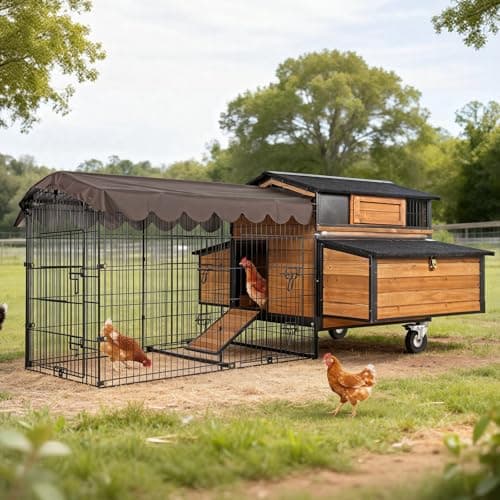
The best mobile chicken coops and chicken tractors
Wheeled coops and tractors, judged on whether they genuinely move and whether the ground recovers when they do.
Chicken Coops
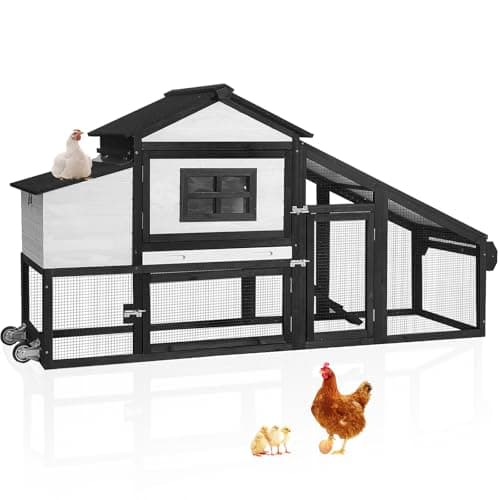
Chicken coop vs chicken tractor
The movable-versus-fixed decision worked through on ground damage, predator risk, weight and winter, with four tractors and the fixed-coop alternative.
Predator Protection
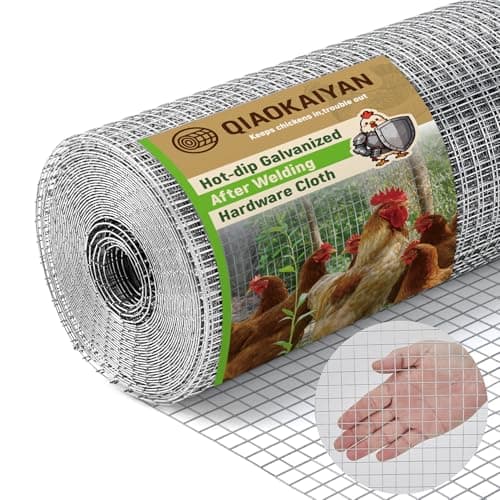
Predator proofing a chicken tractor
How to secure a mobile coop when a buried apron is not an option: a traveling skirt, half-inch mesh, a two-step latch, and the honest limits.
Chicken Coops
The best walk-in chicken coops and runs
Coops and runs with standing headroom, ranked on height, floor area and whether the mesh is actually hardware cloth.
Predator Protection
How to fit a predator apron
The flat-apron method step by step, why it beats burying mesh, and the mesh specification to buy.