Chicken Coops
The best chicken coop thermometers and monitors
Humidity decides whether a coop causes frostbite, and a reading you have to walk outside to see tells you nothing at 2am.
Chickens & Coops earns a commission when you buy through our links, at no extra cost to you. Prices come from Amazon and change; the date beside every price is when we last verified it. Full disclosure.
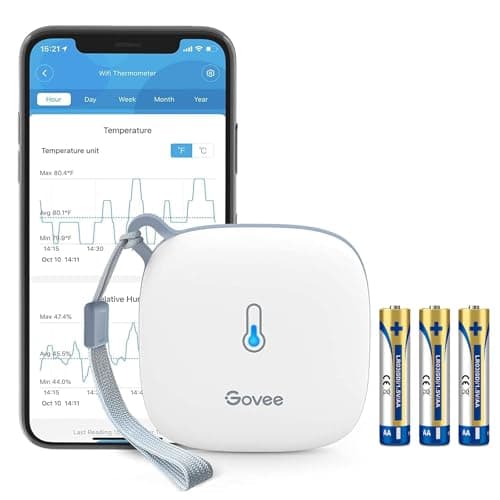
Best Coop Monitor
Govee WiFi Thermometer Hygrometer H5179
The pick for most coops, because it is the cheapest sensor here that will actually wake you up.
#ad How we are funded · Price as of November 8, 2026
Quick picks
| # | Product | Connectivity | Score | Price |
|---|---|---|---|---|
| Rank 1 | Govee WiFi Thermometer Hygrometer H5179 An alert on your phone when the coop crosses a threshold | WiFi | 9.1 | $31.98Govee WiFi |
| Rank 2 | 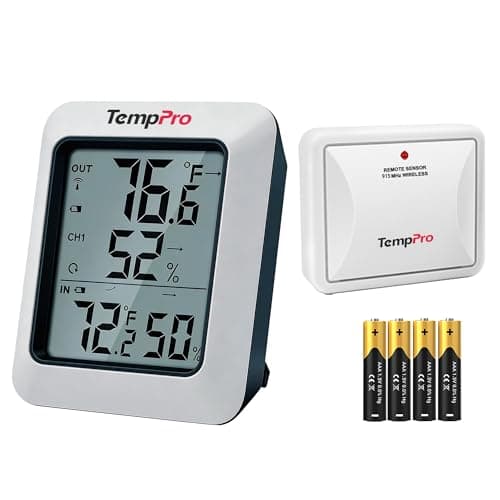 TempPro TempAir Indoor Outdoor Thermometer, 500 ft Wireless A coop with no WiFi anywhere near it | Proprietary radio, no hub or app | 9.1 | $18.98TempPro TempAir |
| Rank 3 | 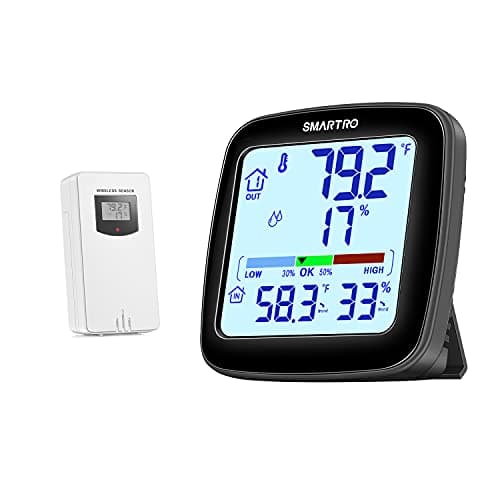 SMARTRO SC92 Professional Digital Wireless Thermometer Hygrometer A humidity reading you can actually trust | Proprietary radio, no app | 8.8 | $26.99SMARTRO SC92 |
| Rank 4 | 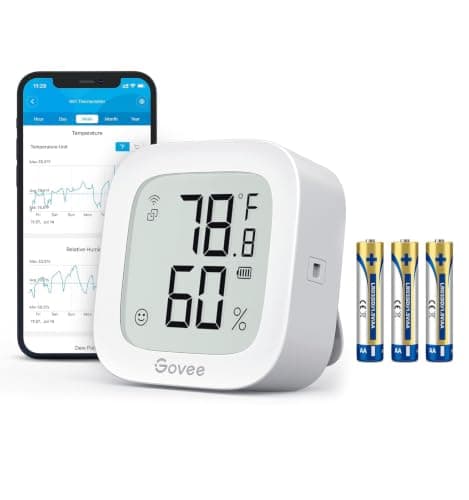 Govee WiFi Thermometer Hygrometer H5103 with Electronic Ink Display Reading the number at a glance in a dim coop | WiFi | 9.1 | $39.99Govee WiFi |
| Rank 5 | 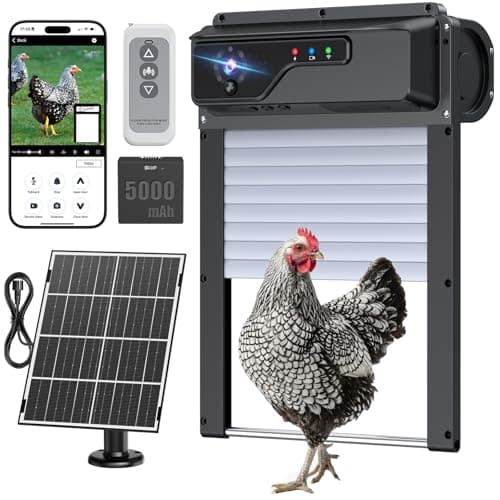 Automatic Chicken Coop Door with HD Camera, WiFi and Solar Power Actually seeing the coop, not just its temperature | WiFi, app control | 8.5 | $158.49Automatic Chicken |
#ad Prices come from Amazon and change. How this site is funded. Scores are our own published rubric, not a lab test — see how we pick.
For most coops the pick is the Govee WiFi Thermometer Hygrometer H5179: it is the cheapest unit here that sends an alert to your phone when temperature or humidity crosses a line you set, and alerting is the only feature on this page that changes what you do. If the coop sits outside WiFi range — which a lot of coops do — the TempPro TempAir puts a cold-resistant sensor in the coop and the display in your house with no hub, no app and no account.
Before any of that, the honest question: most flocks do not need a coop monitor. Adult chickens handle cold far better than their keepers expect, and a thermometer does not change the weather. A monitor earns its place for three specific reasons, and if none of them applies to you, spend the money on ventilation or bedding instead.
What a coop monitor is actually for
- Humidity, because humidity causes frostbite — not cold. This is the reason to own a hygrometer rather than a thermometer. Extension's guidance on frostbite in chickens is the basis for the position this whole site takes on winter: a damp, under-ventilated coop damages combs and wattles at temperatures a dry, ventilated coop handles without trouble. A humidity reading tells you whether your ventilation is working. Nothing else does.
- Knowing whether the coop went below freezing overnight. Not for the birds — for the water. If the coop dipped below freezing at 4am, the drinker was solid before you got there, and the fix is a heated waterer rather than anything else.
- Summer, which is the more dangerous end of the year. Penn State Extension puts the comfortable range at 60-75 degrees Fahrenheit and notes heat stress may occur once temperatures reach the 80s and 90s. The coop is the hottest place in the yard at 4pm, and a sensor in it is the only way to know how much hotter than ambient it gets.
Notice what is not on that list: keeping a coop at a target temperature. That is not a goal on this site. Most flocks should not be heated at all, and a monitor is for understanding the building rather than for running a thermostat.
How we ranked these
The ranking is built from the specifications each listing publishes, the pattern of what verified owners report at the retailer, and how well the design fits a coop specifically — which is a harsher environment than the greenhouses and wine cellars most of these products are marketed for. Every card says which of those it relies on, and how we pick sets out the method.
- Alerting. Can it wake you up, or does it wait to be looked at? This is weighted hardest, because a sensor nobody reads is decoration.
- Accuracy. Specifically humidity accuracy. Cheap hygrometers can read many points off, and a wrong humidity number is worse than none because you will act on it.
- Readability. A coop is dim and you will be reading it in a coat. Large digits and e-ink both help.
- Cold tolerance. The sensor lives in an unheated outbuilding through January. Batteries and cheap sensors both fail there, and only some listings address it.
- Value. Against the job, not the sticker. The cheapest unit here is the best value and cannot alert you at all.
The picks
Ranked on whether the unit can tell you something in time, then on whether you can trust the number it gives you.
#1 · An alert on your phone when the coop crosses a threshold
$39.99 20% off
#ad How we are funded · Price as of November 8, 2026
Govee WiFi Thermometer Hygrometer H5179
GoveeThe pick for most coops, because it is the cheapest sensor here that will actually wake you up. App notifications on a temperature or humidity threshold are the whole point of monitoring a coop: a reading you have to walk out and look at tells you nothing at 2am.
| Connectivity | WiFi |
|---|---|
| Alerts | App notification alerts |
| Data history | 2 years of stored data |
| Measures | Temperature and humidity |
| Weather rating | Not published by manufacturer |
Specifications per Manufacturer figures as published on the Amazon product listing, as published at the date above.
Why we picked it
- Threshold alerts to the phone, which is the only feature that changes what you do
- Two years of stored history, so you can see what the coop actually did last winter
- The listing names incubator and greenhouse use, so the duty cycle is the right one
- Cheapest route to real alerting here
Good to know — Needs the coop to be inside WiFi range, which a lot of coops are not
Our rubric
- Alerting
- 9.8
- Accuracy
- 8.9
- Readability
- 8.4
- Cold tolerance
- 8.4
- Value
- 9.8
#2 · A coop with no WiFi anywhere near it
$24.99 24% off
#ad How we are funded · Price as of November 8, 2026
TempPro TempAir Indoor Outdoor Thermometer, 500 ft Wireless
TempProSensor in the coop, display in the house, no hub and no app. For the many coops that sit outside WiFi range this is the only arrangement that works, and the stated 500 ft range and cold-resistant sensor are the two specs that matter for it.
| Connectivity | Proprietary radio, no hub or app |
|---|---|
| Stated range | 500 ft |
| Display | Large LCD |
| Sensor | Cold-resistant outdoor sensor |
| Batteries | Included |
Specifications per Manufacturer figures as published on the Amazon product listing, as published at the date above.
Why we picked it
- Works with no WiFi, no account and no app at all
- 500 ft of stated range covers a coop at the end of a garden
- The sensor is sold as cold-resistant, which is the failure mode of cheap outdoor sensors
- Cheapest unit here
Good to know — No alerting: it cannot tell you anything unless you are looking at the display
Our rubric
- Alerting
- 6.5
- Accuracy
- 8.9
- Readability
- 9.8
- Cold tolerance
- 9.8
- Value
- 10.0
#3 · A humidity reading you can actually trust
#ad How we are funded · Price as of November 8, 2026
SMARTRO SC92 Professional Digital Wireless Thermometer Hygrometer
SMARTROThe one here sold on accuracy and calibration rather than on connectivity. Humidity is the number that matters in a winter coop, and a cheap hygrometer reading ten points off is worse than no hygrometer at all.
| Connectivity | Proprietary radio, no app |
|---|---|
| Calibration | Pro accuracy calibration (manufacturer claim) |
| Measures | Temperature and humidity, indoor and outdoor |
| Stated accuracy | Not published by manufacturer |
| Stated range | Not published by manufacturer |
Specifications per Manufacturer figures as published on the Amazon product listing, as published at the date above.
Why we picked it
- Sold specifically on calibrated accuracy, which no other unit here claims
- Indoor and outdoor channels, so you can compare coop against ambient
- No app, no account, nothing to go offline
Good to know — No alerting and no history, same blind spot as the TempPro
Our rubric
- Alerting
- 6.5
- Accuracy
- 9.8
- Readability
- 9.3
- Cold tolerance
- 8.9
- Value
- 9.3
#4 · Reading the number at a glance in a dim coop
$49.99 20% off
#ad How we are funded · Price as of November 8, 2026
Govee WiFi Thermometer Hygrometer H5103 with Electronic Ink Display
GoveeThe same alerting idea with an electronic-ink screen, which stays legible without a backlight and sips power. Worth the premium only if you want to read the coop at the door as well as on your phone.
| Connectivity | WiFi |
|---|---|
| Display | Electronic ink |
| Measures | Temperature and humidity |
| Alerts | App alerts |
| Weather rating | Not published by manufacturer |
Specifications per Manufacturer figures as published on the Amazon product listing, as published at the date above.
Why we picked it
- E-ink is readable in a dim coop without lighting it up
- Low display power draw, so battery life is better than a backlit LCD
- Same app alerting as the cheaper Govee unit
Good to know — Materially more expensive than the H5179 for a display you may never look at
Our rubric
- Alerting
- 9.8
- Accuracy
- 8.9
- Readability
- 10.0
- Cold tolerance
- 8.4
- Value
- 8.4
#5 · Actually seeing the coop, not just its temperature
#ad How we are funded · Price as of November 8, 2026
Automatic Chicken Coop Door with HD Camera, WiFi and Solar Power
GenericNot a thermometer: a solar automatic coop door with an HD night-vision camera and motion alerts built into it. It is here because "coop camera" and "coop monitor" are the same search for most people, and a standalone coop camera needs power and WiFi anyway — so getting the camera attached to the door you were already going to buy is the sensible version.
| Camera | HD with night vision |
|---|---|
| Power | Solar, 5000 mAh battery |
| Connectivity | WiFi, app control |
| Alerts | Smart alerts |
| Safety | Anti-pinch sensor |
Specifications per Manufacturer figures as published on the Amazon product listing, as published at the date above.
Why we picked it
- You can see the flock, which no sensor can tell you — a count at dusk is the real check
- Solar powered, so it does not need a cable run to the coop
- Does the automatic-door job at the same time, which is the higher-value half
- Anti-pinch sensor, which is the one safety feature an automatic door needs
Good to know — By far the most expensive thing on this page, and most of the cost is the door
Our rubric
- Alerting
- 9.3
- Accuracy
- 7.5
- Readability
- 8.9
- Cold tolerance
- 8.9
- Value
- 7.9
How they compare
| Monitor | Connection | Phone alerts | History | Published weather rating |
|---|---|---|---|---|
| Govee H5179 | WiFi | Yes | 2 years | Not published |
| TempPro TempAir | Radio, no app | No | No | Cold-resistant sensor |
| SMARTRO SC92 | Radio, no app | No | No | Not published |
| Govee H5103 e-ink | WiFi | Yes | Yes | Not published |
| Camera autodoor | WiFi | Yes, motion alerts | App | IP-rated roll-up door |
WiFi or no WiFi: the decision that picks the product
If the coop has WiFi coverage
Buy a WiFi unit and set the alerts, because that is the whole point. The two thresholds worth setting on day one are humidity above about 70% in winter (your ventilation is not keeping up) and temperature below freezing (the water is going solid tonight). Stored history matters more than it sounds: a winter's worth of data tells you whether a vent you cut actually did anything.
The weakness is dependence. A WiFi sensor needs the router up, the account working and the vendor's cloud service alive, and the failure mode is silence — you do not get an alert saying alerts have stopped. Check it deliberately once a month rather than trusting it.
If the coop has no WiFi
This is the common case and it is worth saying clearly: a lot of coops sit at the end of a garden, past a brick wall, with no usable signal. A sensor-and-display pair on a proprietary radio link solves it — sensor in the coop, display on the kitchen windowsill, no network involved.
What you give up is alerting and history. You get a number when you look, which covers the summer and ventilation questions and does nothing at 2am. Treat the stated range with suspicion too: a figure like 500 ft is measured in open air, and a wall plus a run of garden eats a lot of it. Site the display where it works rather than where it looks tidy.
On cameras
"Coop camera" and "coop monitor" are usually the same search, so it belongs on this page — with a caveat. A camera answers a different and arguably more useful question than any sensor: are all the birds in, and is anything in there with them. A count at dusk from the sofa is a real improvement on walking out in the rain to do it.
The practical problem is that a standalone coop camera needs power and WiFi at the coop anyway, at which point the better-value version is a camera attached to the automatic door you were probably going to buy. That is why the camera pick here is a solar automatic door with an HD night-vision camera built in, and why most of its price is the door rather than the camera. If you want the door on its own, automatic coop doors ranks the category properly, and autodoor vs manual door is the honest comparison including the failure modes.
What the numbers should look like
| Reading | What it means | What to do |
|---|---|---|
| Humidity well above ambient in winter | Ventilation is not clearing moisture | Open vents above bird height; thin the litter |
| Coop below freezing overnight | The drinker froze before you got up | Heated waterer, or carry water twice a day |
| Coop warmer than ambient on a hot afternoon | Normal — but the margin is the problem | Shade, open everything, move air |
| Coop 10-20F warmer than ambient at night in winter | Normal for a full coop; birds generate heat | Nothing, if humidity is under control |
| Readings barely move all day | Suspect the sensor, not the coop | Compare against a second thermometer |
Battery life is the real reliability question
Every unit here runs on batteries at the sensor end, and an unheated coop in January is where batteries go to die. Three things that help, none of which cost anything:
- Lithium AA cells rather than alkaline in the outdoor sensor. The difference in cold is substantial.
- Change them in autumn, on a date, not when they fail. A dead sensor in February reads nothing and tells you nothing about the fact.
- Note the display's low-battery indicator and actually look at it. On the no-app units it is the only warning you get.
What to buy instead, if the budget is tight
If reading the coop is competing for money with fixing it, fix it. In order of effect: ventilation above bird height, dry absorbent bedding, and a heated waterer if the coop has power. A monitor tells you the coop is damp; a vent stops it being damp. Coop ventilation is the page that matters more than this one.
The exception is hatching, where a sensor is not optional — an incubator holds 99.5 degrees for twenty-one days and budget displays can read several degrees out. That is a different product and the egg candler and thermometer roundup covers it.
Two sensors tell you more than one
The single most useful upgrade after buying any of these is a second reading to compare against. One number in isolation is hard to act on: 78% humidity in the coop could be a ventilation failure or it could be a wet morning everywhere. The same number alongside 76% outside is weather; alongside 55% outside it is your building.
You get the comparison in one of three ways. The indoor-outdoor units here include it by design — sensor in the coop, base unit in the house, two readings on one screen. A second cheap sensor placed outside the coop in shade does the same job more directly. Or, if you have a WiFi unit with history, compare the coop's own trend against the forecast rather than against a second device.
The comparison is also how you catch a failing sensor. A reading that stops moving, or that sits implausibly flat through a day that was obviously not flat, is a dead sensor rather than a stable coop — and without something to compare it to, a dead sensor looks exactly like good news.
What we left off, and why
- Hub-based smart-home sensors. Zigbee and Thread sensors are cheaper per unit and more reliable than WiFi ones, and they need a hub plus a working smart-home setup. If you already run one, buy a sensor for it rather than anything here. If you do not, a hub is a bigger project than a coop thermometer deserves.
- Analog dial thermometers and hygrometers. They cost almost nothing and the humidity needle on a cheap dial unit is close to decorative. Since humidity is the reading that matters, a dial gauge is the one category here we would actively steer away from.
- Standalone coop cameras. Every one we looked at needs mains power and WiFi at the coop, at which point the camera-plus-automatic-door unit above does the same job and the more valuable job at the same time.
- Temperature-controlled outlets. Worth owning, but they are not monitors — they switch a heater rather than tell you anything. They live with the heaters, in coop heaters with thermostats.
Our answer
Buy the WiFi monitor with alerts if the coop has coverage, the sensor-and-display pair if it does not, and the calibrated unit if you specifically want to trust the humidity figure rather than the connection. Buy the camera door only if you were already considering an automatic door. And if you are weighing a monitor against actually ventilating the coop, ventilate the coop — the number is only useful because of what it tells you to change.
Frequently asked questions
Do I need a thermometer in my chicken coop?
What humidity should a chicken coop be?
What temperature is too cold for chickens?
Can I use a regular indoor thermometer in a coop?
Do coop monitors need WiFi?
Is a chicken coop camera worth it?
Where should I put a coop thermometer?
Our recommendation
If you buy one thing from this page, buy the first one. The second is here because it is the alternative worth weighing against it, not because a list needs two entries.
Best Coop Monitor
Govee WiFi Thermometer Hygrometer H5179
An alert on your phone when the coop crosses a threshold
#ad How we are funded · Price as of November 8, 2026
Runner-up
TempPro TempAir Indoor Outdoor Thermometer, 500 ft Wireless
A coop with no WiFi anywhere near it
#ad How we are funded · Price as of November 8, 2026
Sources
- Extension Poultry — Frostbite in Chickens
- University of Minnesota Extension — Caring for Chickens in Cold Weather
- Penn State Extension — Summer Flock Care: Keeping Your Birds Cool and Comfortable
- Extension Poultry — Small-Scale Poultry Housing: Overview
- Extension Poultry — Insulation for Housing of Small and Backyard Poultry Flocks
Read next

Chicken Coops
Chicken coop ventilation, done right
The single most misunderstood part of coop design: why you ventilate in winter, and where the vents actually go.

Winter Heat
Do chickens need heat in winter?
The short answer is no, for healthy adult hens — and the reasons are about fire risk and moisture, not toughness.
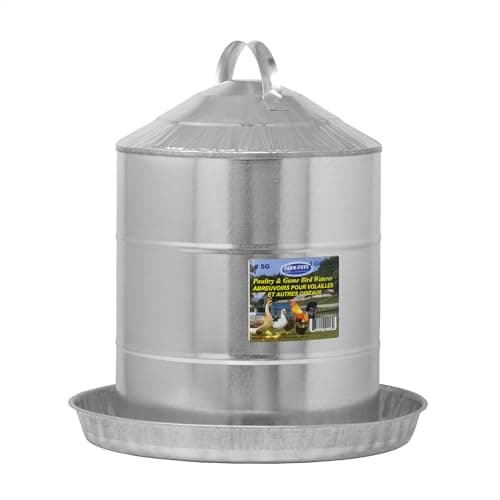
Chicken Coops
How to keep chickens cool in summer
Shade, water and ventilation in order of effect, with the Extension temperature figures, the heat-stress signs worth acting on, and the gear that actually helps.
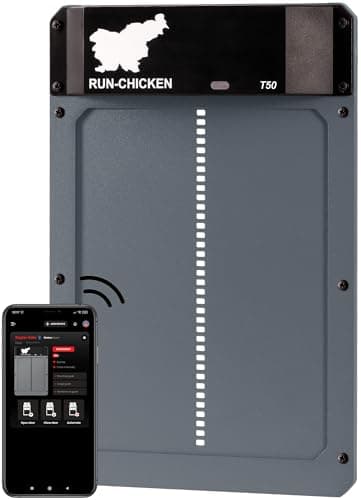
Predator Protection
The best automatic chicken coop doors
Automatic coop doors ranked on material and power source, with the one honest caution about shutting a bird out.
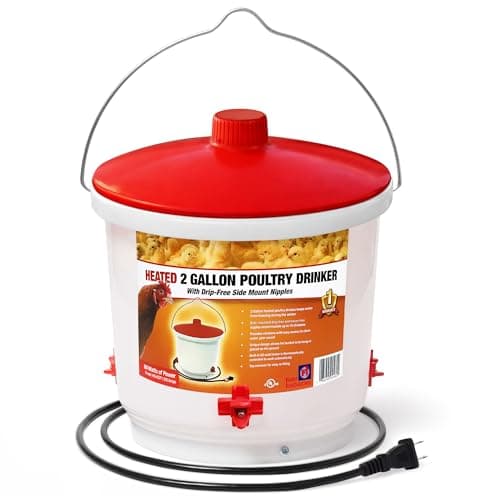
Waterers
The best heated chicken waterers
Heated drinkers and heated bases, ranked on published wattage and thermostat control — the two figures that matter.