Winter Heat
The best chicken coop heaters with thermostats
A heater that cannot switch itself off is a heater you will unplug in disgust by December. Control is the specification that matters.
Chickens & Coops earns a commission when you buy through our links, at no extra cost to you. Prices come from Amazon and change; the date beside every price is when we last verified it. Full disclosure.
Quick picks
| # | Product | Control | Score | Price |
|---|---|---|---|---|
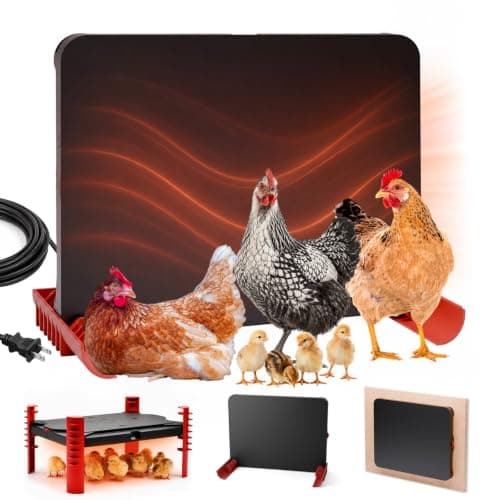
| Rank 1 | Smart Chicken Coop Heater, 150W Panel with Smart Thermostat Lower wattage with thermostat control | Smart thermostat | 8.0 | $41.99on Amazon |
| Rank 2 | 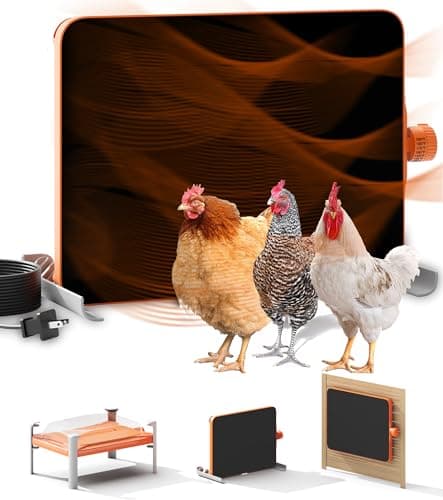 Smart Chicken Coop Heater, 200W Radiant Panel with Temperature Sensor A panel that switches itself off | Built-in temperature sensor | 8.2 | $59.99on Amazon |
| Rank 3 | 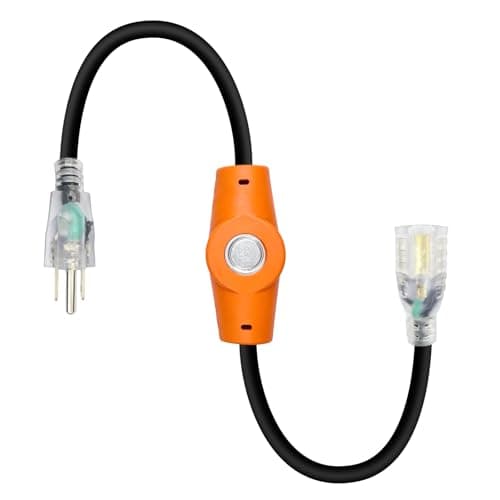 MAXKOSKO Thermostatically Controlled Outlet, 15A 120V Making any coop heater switch itself off | Not published | 7.8 | $16.82on Amazon |
| Rank 4 | No image available HOPOCO 200W Coop Heater, Timer and Controller Compatible Running coop heat on an external controller | Not published | 7.8 | Check price on Amazon |
| Rank 5 | 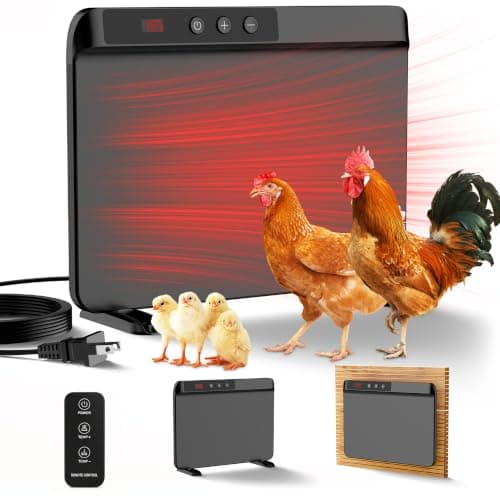 TIMEBAL Chicken Coop Heater, 200W UL Certified Radiant Panel A UL-certified panel at a sensible price | Not published | 7.2 | $39.99on Amazon |
#ad Prices come from Amazon and change. How this site is funded. Scores are our own published rubric, not a lab test — see how we pick.
The pick is the 150W radiant panel with a smart thermostat: enough radiant warmth for a roost in a small coop, and the sense to switch itself off above freezing — which is most of the nights you will run it. If you already own a coop heater without a thermostat, you do not need a new heater: a thermostatically controlled outlet between the socket and the plug does the same job for a fraction of the price.
Before anything else on this page: most backyard flocks in most of the United States do not need a coop heater at all. Adult chickens handle cold well, and the risk from a heater — fire, and a flock that has never acclimated losing its heat source in a power cut — is real. Do chickens need heat in winter is the page to read before this one. This page is for the keeper who has decided to run heat anyway, or who keeps birds in a genuinely severe climate, and wants it done with control rather than a bulb on a string.
Why the thermostat is the whole point
A 200-watt panel left plugged in from October to April draws 200 watts every hour it is on, whether the coop is at 45 degrees or 5. On a mild autumn night that is pure waste, and it is also actively unhelpful: birds that live in a warmed coop do not develop the feather condition and acclimation that lets them handle a real cold snap, so the heater makes the flock more dependent on itself the longer it runs.
A thermostat fixes both at once. It lets the coop sit at ambient temperature through the mild part of the season — which is what you want — and brings the heat in only when the temperature approaches or passes freezing. The birds stay acclimated, the running cost collapses, and the heater spends most of the winter switched off.
Three ways to get thermostat control
| Approach | What it is | Best when |
|---|---|---|
| Built-in thermostat | The panel senses coop temperature and switches itself | You are buying new and want one appliance, one plug |
| Built-in temperature sensor | Similar, usually with less control over the set point | You want automatic switching and do not need to choose the threshold |
| External thermostat outlet | A plug-through device that only passes power near freezing | You already own a heater, or you want the same control on several devices |
| External timer | Switches on a clock, not a temperature | Coop lighting, not heating — a clock does not know how cold it is |
The picks
Two panels with control built in, the external thermostat outlet that upgrades anything, a panel stated as safe to switch externally, and the UL-certified option.
#1 · Lower wattage with thermostat control
#ad How we are funded · Price as of October 10, 2026
Smart Chicken Coop Heater, 150W Panel with Smart Thermostat
Generic150 watts with a thermostat. The combination most backyard coops actually want: enough radiant warmth for a roost, and the sense to switch off when it is not needed.
| Power | 150 W |
|---|---|
| Control | Smart thermostat |
| Type | Radiant panel |
| Certification | Not published by manufacturer |
Specifications per Manufacturer figures as published on the Amazon product listing, as published at the date above.
What it does well
- Thermostat plus a modest 150 W is the cheapest honest way to run coop heat
- Radiant panel rather than a lamp
- Cheaper to run than the 200 W panels for a small coop
Where it falls short
- No certification published
- 150 W is marginal in a large or drafty coop
- Thermostat accuracy is not specified
Our rubric
- Fire safety
- 7.0
- Temperature control
- 9.0
- Heat output
- 6.0
- Running cost
- 9.0
- Value
- 9.0
#2 · A panel that switches itself off
Smart Chicken Coop Heater, 200W Radiant Panel with Temperature Sensor
GenericA 200-watt radiant panel with a temperature sensor built in. The sensor is the feature worth paying for: without one, a coop heater runs at full draw on a mild night in November.
| Power | 200 W |
|---|---|
| Control | Built-in temperature sensor |
| Type | Radiant panel |
| Certification | Not published by manufacturer |
Specifications per Manufacturer figures as published on the Amazon product listing, as published at the date above.
What it does well
- Integrated sensor means it only draws power when the coop is actually cold
- Radiant panel — no bulb, no open element
- 200 W is enough for a normal backyard coop
Where it falls short
- No safety certification published, which on an unattended heater is a real gap
- Set-point range is not published
- Generic brand, so no spares path
Our rubric
- Fire safety
- 7.0
- Temperature control
- 9.0
- Heat output
- 8.0
- Running cost
- 8.0
- Value
- 9.0
#3 · Making any coop heater switch itself off
#ad How we are funded · Price as of October 10, 2026
MAXKOSKO Thermostatically Controlled Outlet, 15A 120V
MAXKOSKOA thermostat outlet that only passes power near freezing. Put this between the socket and any unthermostatted heater and you stop paying to heat a coop in October.
| Rating | 15 A, 120 V |
|---|---|
| Type | Thermostatically controlled outlet extension |
| Function | Freeze protection switching |
| Switching temperatures | Not published by manufacturer |
Specifications per Manufacturer figures as published on the Amazon product listing, as published at the date above.
What it does well
- Cuts the running cost of any un-thermostatted heater or de-icer to near zero outside freezing weather
- 15 A rating covers everything a backyard coop will plug into it
- Also an added safety layer: a heater that cannot run in mild weather cannot overheat in mild weather
Where it falls short
- Exact on/off temperatures are not published on this listing
- Not a substitute for an outdoor-rated, GFCI-protected supply
- One more connection in a damp environment to keep dry
Our rubric
- Capacity
- 6.0
- Stays clean
- 6.0
- Freeze resistance
- 8.0
- Ease of refill
- 9.0
- Value
- 10.0
#4 · Running coop heat on an external controller
#ad How we are funded · Live price unavailable — check at Amazon
HOPOCO 200W Coop Heater, Timer and Controller Compatible
HOPOCOA 200-watt panel explicitly stated as compatible with external timers and temperature controllers. Worth knowing, because many heaters with built-in electronics misbehave when switched at the plug.
| Power | 200 W |
|---|---|
| External control | Compatible with timers and temperature controllers |
| Type | Radiant panel |
| Certification | Not published by manufacturer |
Specifications per Manufacturer figures as published on the Amazon product listing, as published at the date above.
What it does well
- Explicitly works with a thermostat outlet, which many electronically-switched heaters do not
- 200 W radiant output for a normal coop
- Low price for the wattage
Where it falls short
- No certification published
- No thermostat of its own — the external controller is required, not optional
- Generic brand
Our rubric
- Fire safety
- 7.0
- Temperature control
- 7.0
- Heat output
- 8.0
- Running cost
- 8.0
- Value
- 9.0
#5 · A UL-certified panel at a sensible price
TIMEBAL Chicken Coop Heater, 200W UL Certified Radiant Panel
TIMEBALA 200-watt radiant panel that states UL certification. On an appliance that will be plugged in unattended in a dusty wooden building, a published safety certification is the specification that matters most.
| Power | 200 W |
|---|---|
| Certification | UL certified (manufacturer claim) |
| Type | Radiant panel |
| Finish | Black |
| Thermostat | Not published by manufacturer |
Specifications per Manufacturer figures as published on the Amazon product listing, as published at the date above.
What it does well
- States UL certification — the single most useful claim on a coop heater listing
- 200 W covers a real coop rather than just a brooder corner
- Radiant panel, so no bulb to break
- A fraction of the price of the premium sealed panels
Where it falls short
- Thermostat is not confirmed on the listing — budget for a thermostat outlet
- 200 W is a meaningful running cost if left on all winter
- Verify the UL listing number yourself before leaving it unattended
Our rubric
- Fire safety
- 8.0
- Temperature control
- 5.0
- Heat output
- 8.0
- Running cost
- 6.0
- Value
- 9.0
How they compare
| Heater | Power | Control | Certification published |
|---|---|---|---|
| Smart 150W Panel with Thermostat | 150 W | Smart thermostat | Not published |
| Smart 200W Panel with Sensor | 200 W | Built-in temperature sensor | Not published |
| MAXKOSKO Thermostat Outlet | Passes up to 15 A | External freeze-protection switching | Not published |
| HOPOCO 200W Panel | 200 W | None built in; stated compatible with external controllers | Not published |
| TIMEBAL 200W Panel | 200 W | None built in | UL certified (manufacturer claim) |
Wattage: 150 or 200?
Radiant panels do not heat the air in a coop; they warm the surfaces and birds they are pointed at. That means wattage translates into how large an area gets usefully warmed rather than into a coop temperature you can predict. For a small coop with a single roost, 150 watts is sufficient and costs a quarter less to run than 200. For a walk-in coop or a long roost bar, 200 watts covers more of it.
Either way, the panel wants to be mounted on a wall near the roost, at bird height, not above the birds like a lamp. Radiant panels versus heat lamps covers why the panel is the safer design, and the radiant panel roundup ranks the category as a whole.
What a thermostat does not fix
- Fire risk. A thermostat reduces how many hours the heater runs; it does not change what happens if the appliance fails. Keep it clear of bedding, mount it rigidly, and read coop heater fire safety before you install anything.
- Power-cut dependency. A heated flock that loses power in a hard freeze is in a worse position than an unheated one that acclimated in October. This is the strongest argument against running heat at all.
- Moisture. Warm, sealed coops are humid coops, and humidity rather than cold is what causes frostbite. A heater does not replace ventilation above bird height — it makes it more important.
- Water freezing. The coop can be above freezing at roost level and the waterer still freeze overnight. That is a separate purchase: heated waterers.
The cheaper thing to do first
If the reason you are looking at heaters is that the coop feels cold, insulation and draft-proofing buy more than wattage does, cost nothing to run, and cannot fail unattended. Heater versus better insulation runs that comparison properly, and winterizing a chicken coop is the full seasonal job.
Frequently asked questions
Do chicken coop heaters have thermostats?
What temperature should a coop heater be set to?
Can I put a chicken coop heater on a timer?
How much does it cost to run a 200W coop heater?
Is a 150W or 200W coop heater better?
Sources
Read next
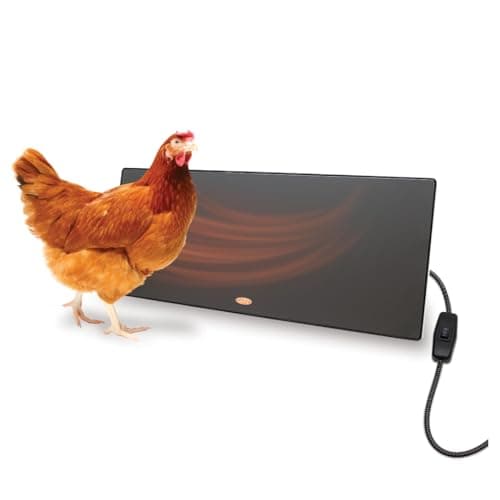
Winter Heat
The safest chicken coop heaters
Radiant panels ranked on fire safety, certification and thermostat control — after a clear statement that most flocks need none of this.
Winter Heat
The best radiant chicken coop heaters
Every radiant panel worth considering, from a 50 W brooder panel to a 200 W coop panel, with certification noted.
Winter Heat
Do chickens need heat in winter?
The short answer is no, for healthy adult hens — and the reasons are about fire risk and moisture, not toughness.
Winter Heat
Coop heater fire safety
The checklist for running any mains appliance in a coop safely — and why extension guidance leans against heaters at all.
Winter Heat
Coop heater vs better insulation
Where to spend the winter budget: insulation, draft-proofing and bedding versus a heater. The order is not close.