Winter Heat
Solar coop heaters: the honest answer
A 200-watt heater running overnight needs more stored energy than any backyard solar kit holds. Here is what solar is actually good for.
Chickens & Coops earns a commission when you buy through our links, at no extra cost to you. Prices come from Amazon and change; the date beside every price is when we last verified it. Full disclosure.
Quick picks
| # | Product | Power | Score | Price |
|---|---|---|---|---|
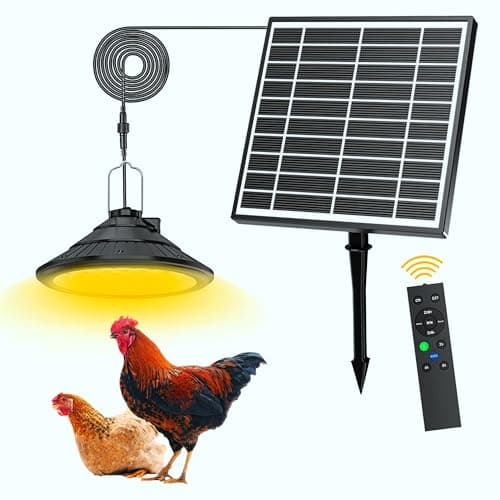
| Rank 1 | Solar Chicken Coop Light with Timer, 3-Color Dimmable, IP66 A coop with no power running to it | Solar panel with battery | 8.0 | $38.99on Amazon |
| Rank 2 | 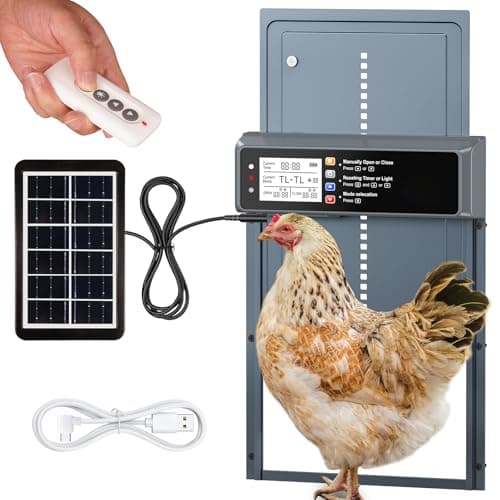 NyPots Solar Automatic Coop Door with Timer and Light Sensor An automatic door with no wiring at all | Solar | 7.4 | $59.99on Amazon |
| Rank 3 | 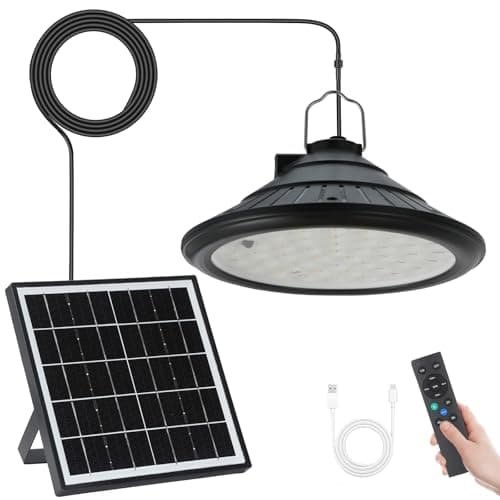 Solar Chicken Coop Light, 4500 mAh Rechargeable, IP66 A published battery figure and a remote | Solar, rechargeable | 7.8 | $39.99on Amazon |
| Rank 4 | 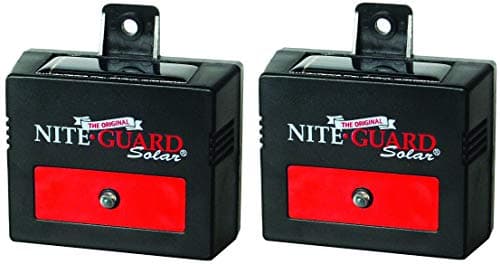 Nite Guard Solar Predator Control Light, 2-Pack A night deterrent with a long track record | Solar | 7.2 | $38.99on Amazon |
#ad Prices come from Amazon and change. How this site is funded. Scores are our own published rubric, not a lab test — see how we pick.
There is no backyard solar kit that will usefully heat a chicken coop, and the arithmetic is not close. A 200-watt radiant panel running for a twelve-hour winter night needs about 2.4 kilowatt-hours of stored energy. The small solar lights and door openers sold for coops hold a tiny fraction of that — one of the better coop lights on this site publishes a 4500 mAh battery, which at typical voltages is a few watt-hours, not thousands. Scaling solar up to real heating means panels, a charge controller and a battery bank costing far more than running a cable to the coop.
That is the whole answer to "solar powered chicken coop heater", and it is worth saying plainly because the search term returns a lot of listings that imply otherwise. Heat is the one job solar cannot do at this scale. Almost everything else at a coop, it does well.
Why heating is the hard case
Heating is uniquely energy-hungry. Every other electrical job at a coop is measured in single-digit or low-double-digit watts, and they run for hours. Heat is measured in hundreds of watts, and it runs precisely when the sun is not available — overnight, in winter, often under cloud for days. Solar's weakest conditions coincide exactly with the hours you want heat.
| Job at the coop | Rough power draw | Works on solar? |
|---|---|---|
| Coop light on a timer | A few watts | Yes — this is what solar is for |
| Automatic door opener | Low, intermittent | Yes |
| Flashing predator deterrent light | Negligible | Yes |
| Electric fence energizer | Low, pulsed | Yes — solar energizers are standard |
| Heated waterer | 60-125 W, continuous in freezing weather | No, not practically |
| Radiant coop heater | 150-200 W, continuous overnight | No |
What solar is genuinely good for at a coop
Coop lighting
The best use by a distance. A solar coop light runs a few watts for a few hours and recharges in daylight, which is exactly the duty cycle solar suits. Lighting is also the one winter intervention with a documented effect on laying, which makes it the solar purchase with the clearest payback. The one specification that decides whether a solar coop light is usable is cord length between panel and lamp — the panel needs real sun outside while the lamp hangs over the roost inside. Coop lights for winter laying covers the category properly.
Automatic coop doors
A door motor draws power for a few seconds twice a day. Solar is ideal, and it removes the one real objection to automatic doors — a battery dying unnoticed in January. Look for a unit with both a light sensor and a timer: the sensor tracks the real sunset through the year and the timer is the fallback when it is overcast. Automatic coop doors ranks the full set.
Predator deterrence and fencing
Flashing deterrent lights draw almost nothing and are designed around a solar cell. More substantially, solar electric-fence energizers are standard equipment rather than a compromise — the output that matters on an energizer is joules, and a solar unit delivers the same pulse as a mains one. Electric fencing for chickens covers the fencing side.
What to buy for an unpowered coop
The solar jobs that work: a light with enough cord to reach real sun, a solar automatic door, a light with a published battery figure, and solar deterrent lights.
#1 · A coop with no power running to it
#ad How we are funded · Price as of October 10, 2026
Solar Chicken Coop Light with Timer, 3-Color Dimmable, IP66
GenericPanel outside, pendant light inside, 16.4 feet of cord between them — which is the single spec that decides whether a solar coop light is usable, because the panel has to reach real sun while the lamp hangs over the roost. IP66 rated and dimmable.
| Timer | Built in |
|---|---|
| Power | Solar panel with battery |
| Cord length | 16.4 ft |
| Weather rating | IP66 |
| Dimming | 3-color dimmable |
Specifications per Manufacturer figures as published on the Amazon product listing, as published at the date above.
What it does well
- No wiring and no outlet, which is the normal situation for a backyard coop
- 16.4 ft of cord lets the panel sit in sun while the lamp hangs inside
- IP66 is a published weather rating, which most coop lights do not give
- Dimmable, so you can run it at the low level the birds actually need
Where it falls short
- Solar is weakest exactly when you need it most: short, overcast midwinter days
- Battery capacity is not published on this listing, so winter runtime is unverifiable
- The panel needs clearing of snow and leaves, which is a chore you will forget
- Unbranded, so no spares and no warranty worth the name
Our rubric
- Timer control
- 8.0
- Light output
- 6.0
- Install effort
- 9.0
- Weather resistance
- 8.0
- Value
- 9.0
#2 · An automatic door with no wiring at all
#ad How we are funded · Price as of October 10, 2026
NyPots Solar Automatic Coop Door with Timer and Light Sensor
NyPotsSolar powered with both a timer and a light sensor. Having both is the right design: the light sensor tracks the real sunset through the year, and the timer is the fallback when it is overcast.
| Power | Solar |
|---|---|
| Control | Timer and light sensor |
| Type | Automatic coop door |
| Material | Not published by manufacturer |
Specifications per Manufacturer figures as published on the Amazon product listing, as published at the date above.
What it does well
- Solar means no wiring and no battery changes
- Light sensor plus timer covers both clear and overcast evenings
- Mid-price for a feature set the premium doors charge much more for
Where it falls short
- A solar panel in a shaded yard or a snowy winter is a real reliability risk
- Material not published
- Light sensors can be fooled by a security light nearby
Our rubric
- Predator resistance
- 7.0
- Install effort
- 7.0
- Durability
- 7.0
- Reliability
- 7.0
- Value
- 9.0
#3 · A published battery figure and a remote
#ad How we are funded · Price as of October 10, 2026
Solar Chicken Coop Light, 4500 mAh Rechargeable, IP66
GenericThe only solar light here that publishes its battery capacity — 4500 mAh — which is the figure that actually predicts whether it survives a cloudy week. Remote control, IP66, and chargeable off the panel or by cable.
| Timer | Not published by manufacturer |
|---|---|
| Battery | 4500 mAh |
| Power | Solar, rechargeable |
| Weather rating | IP66 |
| Control | Remote |
Specifications per Manufacturer figures as published on the Amazon product listing, as published at the date above.
What it does well
- Battery capacity is published, so you can reason about overcast runtime
- Remote means schedule changes without standing in the coop
- IP66 rating published
- Can be topped up by cable when the panel has had a bad week
Where it falls short
- Same fundamental solar problem: least charge available in the darkest month
- Single-unit pack, so a second coop needs a second purchase
- Unbranded listing with no lumen figure
- A remote in a coop is a remote you will eventually lose
Our rubric
- Timer control
- 8.0
- Light output
- 6.0
- Install effort
- 9.0
- Weather resistance
- 8.0
- Value
- 8.0
#4 · A night deterrent with a long track record
Nite Guard Solar Predator Control Light, 2-Pack
Nite GuardSolar flashing red lights that read as a predator's eyes to nocturnal animals. A deterrent, not a barrier: useful as a layer, never as the reason you leave the coop door open.
| Pack | 2 lights |
|---|---|
| Power | Solar |
| Type | Flashing red predator deterrent light |
| Target | Nocturnal predators |
Specifications per Manufacturer figures as published on the Amazon product listing, as published at the date above.
What it does well
- The longest-established product of its type, and the one most keepers reach for
- Solar, so install it and forget it
- A genuinely useful extra layer around a coop you already secured
Where it falls short
- A deterrent only — animals habituate to it, especially a hungry one
- No effect on daytime predators, which is when hawks hunt
- Two lights covers two approach directions; most sites need four
Our rubric
- Predator resistance
- 4.0
- Install effort
- 10.0
- Durability
- 8.0
- Reliability
- 6.0
- Value
- 8.0
So what do you do about winter with no power?
Two things, and neither is a heater.
- Make the coop a better building. Draft-proofing, dry bedding and ventilation above bird height cost nothing to run and cannot fail unattended. Adult chickens handle cold well; what they do not handle is a damp, still, under-ventilated coop, because humidity rather than cold is what causes frostbite. Winterizing a chicken coop is the full job, and heater versus better insulation explains why this beats wattage even when power is available.
- Solve the water, not the air. The real daily problem in a freezing winter is not that the birds are cold, it is that their water is solid. With no power the options are an insulated waterer, a black rubber bowl in the sun, and carrying warm water out twice a day. Heated waterers without electricity is the dedicated page, and it is honest about the limits.
The claims to be skeptical of
- "Solar powered coop heater." Check the wattage. If a listing claims meaningful heat from a small panel without a battery bank, the number will not be there.
- Solar panels with no published battery capacity. Capacity is what gets the device through a cloudy week, and it is the figure most listings omit. Where it is not published, our spec tables say so.
- Weather ratings left vague. A solar device lives outdoors year-round. An IP rating published on the listing is worth more than a photograph of rain.
- Short panel cords. A two-foot cord means the panel has to sit where the lamp sits, which on a coop means in shade. This is the commonest reason a solar coop light disappoints.
The summary
Solar is excellent at the coop for light, doors, deterrence and fencing, and it is the right answer for every one of those if there is no power at the building. For heat it is not a product category so much as a marketing phrase — and for most flocks in most climates, the correct amount of coop heating is none at all, which happens to make the whole question moot.
Frequently asked questions
Do solar chicken coop heaters work?
What can you actually run on solar at a chicken coop?
How do I keep chickens warm in a coop with no electricity?
Is a solar coop light worth it?
Can a solar panel run a heated chicken waterer?
Sources
Read next
Winter Heat
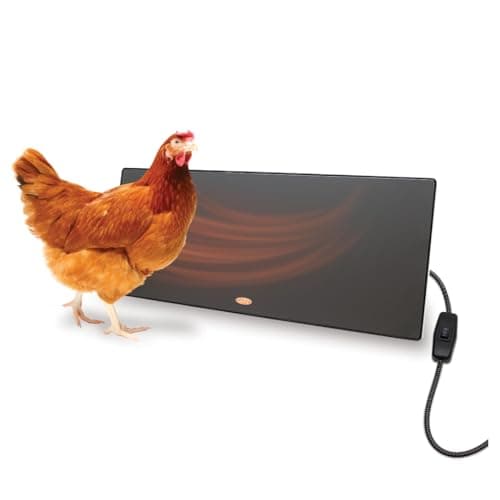
The safest chicken coop heaters
Radiant panels ranked on fire safety, certification and thermostat control — after a clear statement that most flocks need none of this.
Winter Heat
Coop heater vs better insulation
Where to spend the winter budget: insulation, draft-proofing and bedding versus a heater. The order is not close.
Waterers
Keeping chicken water liquid without electricity
The honest options when there is no power at the coop, ranked, with a clear statement of what none of them do.
Predator Protection
The best automatic chicken coop doors
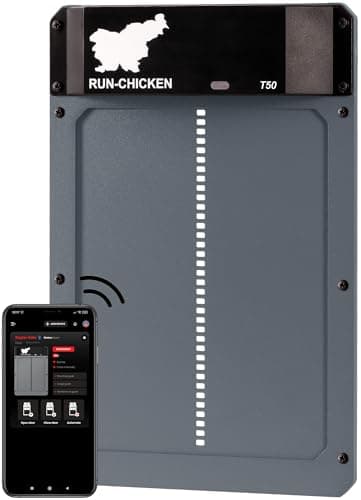
Automatic coop doors ranked on material and power source, with the one honest caution about shutting a bird out.
Winter Heat
Winterizing a chicken coop
The full autumn checklist: coop, run, water, electrics and flock, in the order that makes the winter easy.