Nesting Boxes
The best coop lights for winter laying
Laying is driven by day length, not temperature. A timer and a modest light is the whole intervention — and the timer is the part worth paying for.
Chickens & Coops earns a commission when you buy through our links, at no extra cost to you. Prices come from Amazon and change; the date beside every price is when we last verified it. Full disclosure.
Quick picks
| # | Product | Timer | Score | Price |
|---|---|---|---|---|
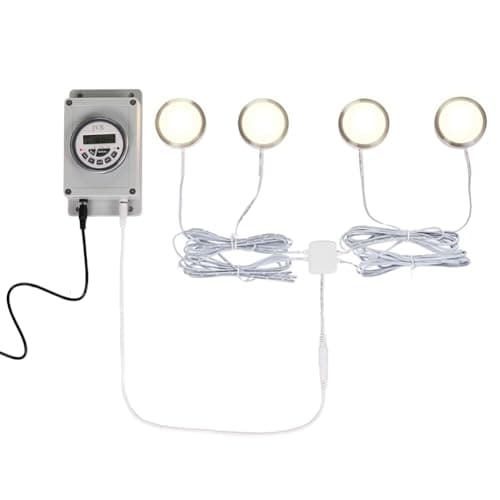
| Rank 1 | JVR Chicken Coop Light with Timer, 4000K LED A published color temperature and a built-in timer | Built in | 7.4 | $44.77on Amazon |
| Rank 2 | 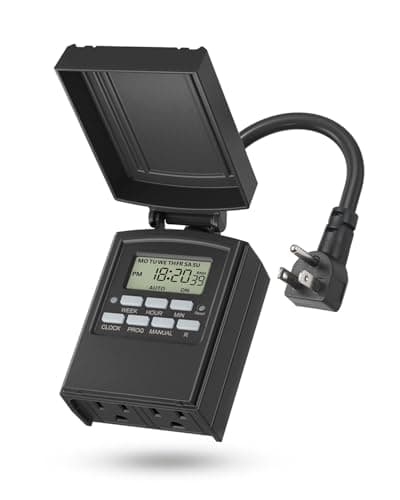 BN-LINK Outdoor 7-Day Programmable Timer Outlet, 2 Outlets Putting any coop light on a real schedule | 7-day programmable | 7.6 | $13.59on Amazon |
| Rank 3 | 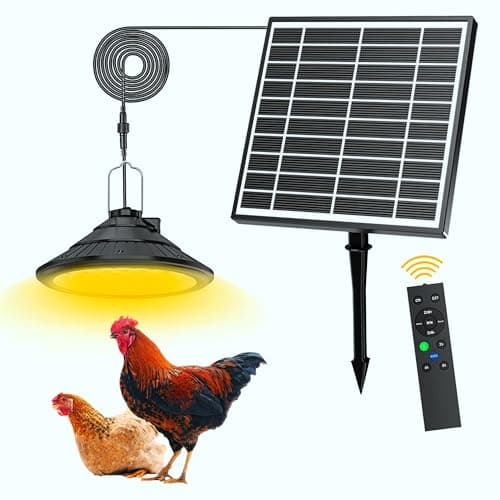 Solar Chicken Coop Light with Timer, 3-Color Dimmable, IP66 A coop with no power running to it | Built in | 8.0 | $38.99on Amazon |
| Rank 4 | 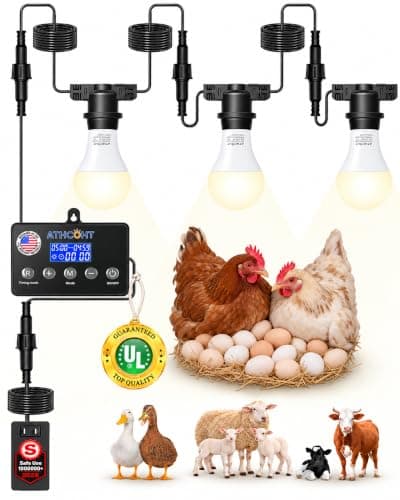 Chicken Coop Light with Timer, Automatic LED Daylight Boost Set-and-forget automation for one coop | Automatic, built in | 6.8 | $64.99on Amazon |
| Rank 5 | 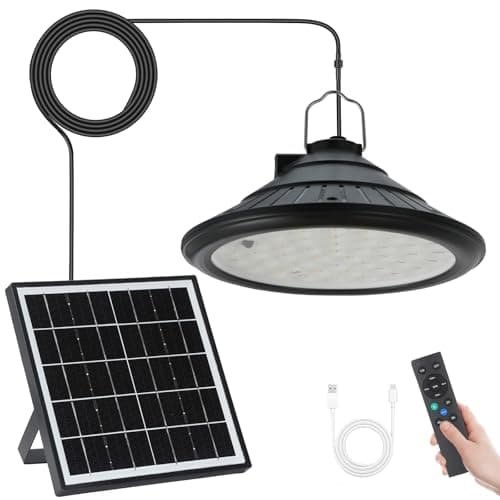 Solar Chicken Coop Light, 4500 mAh Rechargeable, IP66 A published battery figure and a remote | Not published | 7.8 | $39.99on Amazon |
| Rank 6 | 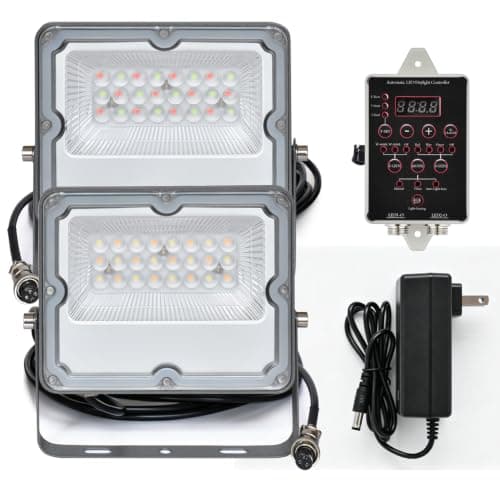 Automatic Chicken Coop Light with Timer, Multi-Color LED One fixture doing coop light and brooder night-light | Automatic, built in | 6.6 | $59.98on Amazon |
| Rank 7 | 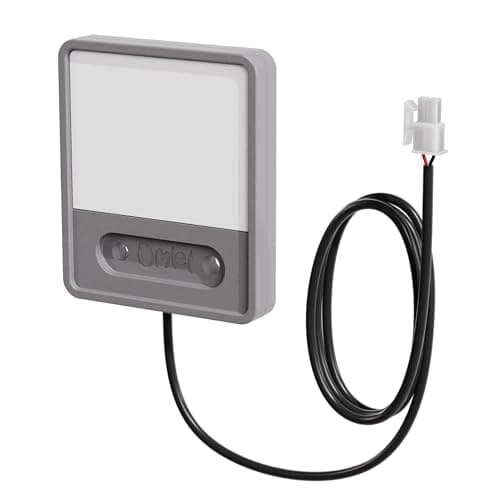 Omlet Coop Light for the Automatic Coop Door Opener Omlet autodoor owners who want birds in before the door shuts | Not published | 6.2 | $30.00on Amazon |
#ad Prices come from Amazon and change. How this site is funded. Scores are our own published rubric, not a lab test — see how we pick.
Hens go out of lay in the fall and most people blame the cold. It is not the cold. A hen's reproductive cycle is driven by day length, and when the days shorten past a threshold the flock shuts down — Extension's egg-production guidance puts it plainly: decreases in the number of hours of light per day typically will put a flock out of production, and flocks given no supplemental light go out of production through fall and winter.
The fix is well-established and cheap: hold total light exposure at 14 to 16 hours a day with a timed light. What you are buying is not brightness. It is a reliable schedule, which is why this page ranks the timer first and treats the lamp as a commodity.
How we ranked these
Timer control first, because an unscheduled light is useless: the entire mechanism depends on the light coming on at the same time every morning for months, and nobody does that by hand. A separate, replaceable timer scores highest — a built-in timer is convenient until it fails and takes the fixture with it.
Light output second, and deliberately weighted low. The published guidance is strikingly modest: Extension says a typical 60-watt incandescent bulb works fine for a small laying flock, and Penn State's small-flock guide goes lower still at a 25- to 40-watt bulb. Most coop lights sold today are brighter than they need to be. Install effort third — a coop with no outlet changes the shortlist entirely. Weather resistance fourth, because a coop is dusty and humid. Value last.
Morning light, not evening light
This is the one detail people get wrong, and it matters more than which fixture you buy. Add the extra hours before sunrise, and let the natural dusk put the birds to bed.
The reason is mechanical. A hen goes to roost as the light fades; she needs that gradual fade to find the roosting bar. If a timer snaps an evening light off at 9 p.m., the coop goes instantly dark and any bird still on the floor stays on the floor all night — on the ground, cold, and in the worst case piled in a corner. Penn State's small-flock guidance is explicit: add artificial light in the morning, and allow the birds to roost at sunset.
| Sunrise | Natural day length | Light on at | Total light exposure |
|---|---|---|---|
| 7:00 a.m. | 10 hours | 4:00 a.m. | 13 hours |
| 7:30 a.m. | 9.5 hours | 4:00 a.m. | 13 hours |
| 7:30 a.m. | 9.5 hours | 3:00 a.m. | 14 hours |
| 7:45 a.m. | 9 hours | 2:45 a.m. | 14 hours |
A 7-day programmable timer makes this easy to maintain, because sunrise moves roughly a minute a day and a weekly nudge keeps the total honest. A simple on/off timer works too; you just revisit it monthly.
Ease it in, and do not overshoot
- Start with an hour. Add one hour of morning light in the first week rather than jumping straight to a 14-hour day. A sudden four-hour change is a shock to a flock already in a seasonal downswing.
- Add 30 minutes a week until total exposure reaches 14 hours.
- Stop at 14, and treat 16 as the ceiling. Penn State's guidance is direct about this: do not light adult birds for more than 16 hours daily. More light does not mean more eggs, and it costs the birds rest.
- Hold it steady all winter. Dropping back down mid-season puts the flock out of lay again, and getting them back takes weeks.
- Taper off in spring, when natural day length has passed your target, rather than switching off abruptly.
The lights
Ranked on the timer first. Note the second pick is not a light at all — it is the timer that makes any light you already own do this job.
#1 · A published color temperature and a built-in timer
#ad How we are funded · Price as of October 9, 2026
JVR Chicken Coop Light with Timer, 4000K LED
JVRA mains coop light with the timer built in and a published 4000K color temperature — which puts it in the daylight-white range rather than the warm-yellow one. It is the only light here that tells you what spectrum you are buying.
| Color temperature | 4000 K |
|---|---|
| Timer | Built in |
| Power | Mains (plug-in) |
| Light output | Not published by manufacturer |
Specifications per Manufacturer figures as published on the Amazon product listing, as published at the date above.
What it does well
- 4000K is published, so you are not guessing at the spectrum
- Timer is built in — no separate outlet timer to buy and wire
- Mains power means it works through a run of overcast days, which solar does not
- Sold for laying flocks rather than repurposed from shed lighting
Where it falls short
- Needs a weather-rated outlet in or near the coop, which many coops do not have
- No lumen figure published, so brightness is unverifiable before you buy
- A built-in timer cannot be replaced; if it fails the whole fixture is scrap
Our rubric
- Timer control
- 9.0
- Light output
- 7.0
- Install effort
- 7.0
- Weather resistance
- 6.0
- Value
- 8.0
#2 · Putting any coop light on a real schedule
BN-LINK Outdoor 7-Day Programmable Timer Outlet, 2 Outlets
BN-LINKThe cheapest useful thing on this page. A plain LED fixture plus this outdoor timer does the same job as a purpose-built coop light for a fraction of the money, and when the timer dies you replace the timer, not the light.
| Timer | 7-day programmable |
|---|---|
| Outlets | 2 |
| Use | Outdoor rated |
| Power | Mains (plug-in) |
Specifications per Manufacturer figures as published on the Amazon product listing, as published at the date above.
What it does well
- Turns any light you already own into a scheduled coop light
- Two outlets, so the light and a heated waterer can share one timer housing
- A separate timer is a replaceable part; a built-in timer is not
- 7-day programming lets you step the schedule up week by week
Where it falls short
- Not a light — you still need a fixture and a bulb
- Needs a mains outlet, so it does nothing for an unwired coop
- Programming a mechanical-feel digital timer is fiddly in gloves
Our rubric
- Timer control
- 10.0
- Light output
- 1.0
- Install effort
- 9.0
- Weather resistance
- 8.0
- Value
- 10.0
#3 · A coop with no power running to it
#ad How we are funded · Price as of October 9, 2026
Solar Chicken Coop Light with Timer, 3-Color Dimmable, IP66
GenericPanel outside, pendant light inside, 16.4 feet of cord between them — which is the single spec that decides whether a solar coop light is usable, because the panel has to reach real sun while the lamp hangs over the roost. IP66 rated and dimmable.
| Timer | Built in |
|---|---|
| Power | Solar panel with battery |
| Cord length | 16.4 ft |
| Weather rating | IP66 |
| Dimming | 3-color dimmable |
Specifications per Manufacturer figures as published on the Amazon product listing, as published at the date above.
What it does well
- No wiring and no outlet, which is the normal situation for a backyard coop
- 16.4 ft of cord lets the panel sit in sun while the lamp hangs inside
- IP66 is a published weather rating, which most coop lights do not give
- Dimmable, so you can run it at the low level the birds actually need
Where it falls short
- Solar is weakest exactly when you need it most: short, overcast midwinter days
- Battery capacity is not published on this listing, so winter runtime is unverifiable
- The panel needs clearing of snow and leaves, which is a chore you will forget
- Unbranded, so no spares and no warranty worth the name
Our rubric
- Timer control
- 8.0
- Light output
- 6.0
- Install effort
- 9.0
- Weather resistance
- 8.0
- Value
- 9.0
#4 · Set-and-forget automation for one coop
#ad How we are funded · Price as of October 9, 2026
Chicken Coop Light with Timer, Automatic LED Daylight Boost
GenericA dedicated coop light sold on the one feature that matters: the timer runs the schedule so you are not walking out at 5 a.m. to flick a switch. The lamp itself is a commodity LED; the automation is the product.
| Timer | Automatic, built in |
|---|---|
| Type | LED |
| Intended use | Hen house lighting |
| Light output | Not published by manufacturer |
Specifications per Manufacturer figures as published on the Amazon product listing, as published at the date above.
What it does well
- The timer is the point, and it is included rather than sold separately
- Designed for a coop rather than a garage, so the mounting suits a low ceiling
- Automated morning light is the only version of this that works — nobody keeps a manual schedule for four months
Where it falls short
- The most expensive coop-specific light on this page
- Unbranded listing: no spectrum, lumen or IP rating published
- No dimming, so you cannot ease the flock into the schedule
Our rubric
- Timer control
- 9.0
- Light output
- 7.0
- Install effort
- 7.0
- Weather resistance
- 5.0
- Value
- 6.0
#5 · A published battery figure and a remote
#ad How we are funded · Price as of October 9, 2026
Solar Chicken Coop Light, 4500 mAh Rechargeable, IP66
GenericThe only solar light here that publishes its battery capacity — 4500 mAh — which is the figure that actually predicts whether it survives a cloudy week. Remote control, IP66, and chargeable off the panel or by cable.
| Timer | Not published by manufacturer |
|---|---|
| Battery | 4500 mAh |
| Power | Solar, rechargeable |
| Weather rating | IP66 |
| Control | Remote |
Specifications per Manufacturer figures as published on the Amazon product listing, as published at the date above.
What it does well
- Battery capacity is published, so you can reason about overcast runtime
- Remote means schedule changes without standing in the coop
- IP66 rating published
- Can be topped up by cable when the panel has had a bad week
Where it falls short
- Same fundamental solar problem: least charge available in the darkest month
- Single-unit pack, so a second coop needs a second purchase
- Unbranded listing with no lumen figure
- A remote in a coop is a remote you will eventually lose
Our rubric
- Timer control
- 8.0
- Light output
- 6.0
- Install effort
- 9.0
- Weather resistance
- 8.0
- Value
- 8.0
#6 · One fixture doing coop light and brooder night-light
#ad How we are funded · Price as of October 9, 2026
Automatic Chicken Coop Light with Timer, Multi-Color LED
GenericThe same timer-plus-LED formula with selectable white, red, blue and green. White is the setting that matters for laying; the red setting is genuinely useful over a brooder, where a dim red night light is the long-standing practice.
| Timer | Automatic, built in |
|---|---|
| Colors | White, red, blue, green |
| Type | LED |
| Light output | Not published by manufacturer |
Specifications per Manufacturer figures as published on the Amazon product listing, as published at the date above.
What it does well
- Red mode doubles as a brooder night light, so one purchase covers two jobs
- Timer built in, same as the pick above, for slightly less
- Color selection means you can run it dim and red in a coop where white light unsettles the birds
Where it falls short
- Only the white setting is relevant to egg production; the rest is bonus, not value
- Unbranded listing with no published spectrum or lumen figure
- Colored LEDs add failure points to a fixture that lives in a dusty, humid box
Our rubric
- Timer control
- 9.0
- Light output
- 6.0
- Install effort
- 7.0
- Weather resistance
- 5.0
- Value
- 6.0
#7 · Omlet autodoor owners who want birds in before the door shuts
#ad How we are funded · Price as of October 9, 2026
Omlet Coop Light for the Automatic Coop Door Opener
OmletNot a layer light — Omlet sells this as gentle lighting to encourage the flock inside to roost, which is a different job. If you run an Omlet autodoor, it solves the real problem of a hen still outside when the door closes.
| Timer | Not published by manufacturer |
|---|---|
| Purpose | Encourages the flock to roost |
| Compatibility | Omlet Automatic Coop Door Opener |
| Supplied | Light only; door opener sold separately |
| Light output | Not published by manufacturer |
Specifications per Omlet published specifications, as published at the date above.
What it does well
- Solves a genuine autodoor problem: birds that have not gone in before the door shuts
- Omlet build quality and a real company behind it, unlike most of this category
- The cheapest named-brand option on the page
Where it falls short
- This is a roosting light, not a laying light — it will not extend your day length
- Requires the Omlet door opener, which is sold separately and is not cheap
- No lumen or spectrum figure published
- Pointless if you do not already own the Omlet door
Our rubric
- Timer control
- 4.0
- Light output
- 5.0
- Install effort
- 8.0
- Weather resistance
- 7.0
- Value
- 7.0
A word about that second pick
An outdoor programmable timer outlet scores a 1 for light output on our rubric, which looks absurd in a list of lights until you see what it does. Plug a plain LED fixture into it and you have a coop light with better scheduling than most purpose-built units, for a fraction of the total. When the timer dies you replace a cheap timer rather than the whole fixture — and the timer is always the part that dies.
The case for a purpose-built coop light is tidiness and one less thing to wire, not performance. If you already have a working light in the coop, the timer is the only thing on this page you need.
Solar, if the coop has no power
Most backyard coops have no outlet, which is why the solar pendant lights exist. They work, with one honest caveat you should price in before buying: solar output is lowest exactly when you need the light most. Short days and heavy overcast are the conditions that both trigger the laying drop and starve the panel.
- Cord length is the spec that decides usability. The panel needs real sun and the lamp needs to hang over the roost, and those are rarely within a few feet of each other. Sixteen feet of cord is workable; four is not.
- Look for a published battery figure. A stated mAh capacity is the only way to reason about how many overcast days the light survives. Most listings do not publish one.
- Clear the panel. Snow, leaves and coop dust on a panel is the usual reason a solar light stops working in January.
- Dimming is worth having. The guidance calls for a modest light, and most of these are brighter than a small coop needs.
If the coop is within reach of an outdoor extension run from a GFCI outlet, mains is the more reliable answer — and the same wiring is what a heated waterer needs anyway, so running power once solves two winter problems.
What a light will not fix
Day length is one cause of a laying stop and it is the one a light addresses. The others it does nothing for:
- The molt. An annual feather replacement is protein-expensive and laying pauses for it. A light does not shorten a molt, and pushing a molting hen to lay is a bad trade.
- Age. Laying falls year on year. A four-year-old hen on a 14-hour day still lays like a four-year-old hen.
- Nutrition. A complete layer ration at around 16% protein, plus free-choice oyster shell, is doing more of the work than the light is. Feed and minerals here.
- Stress and crowding. A new predator in the yard, a move, or a coop that is too small all stop laying independently of light.
- Hidden nests. The commonest false alarm of all: the hens are laying somewhere you have not found. Work through the full checklist before you buy anything.
Installing it in a coop, safely
- Mount it high and out of reach. Birds peck at anything novel, and a cord at bird level is a cord that gets chewed.
- Use outdoor-rated cable on a GFCI outlet. Not an indoor extension lead through a gap in the siding. A coop is damp.
- Keep connections off the litter. Deep bedding is dry, combustible and conductive when wet — neither state suits a junction.
- Keep it away from bedding and nest material. An LED runs cool, which is one of the reasons it has replaced bulbs here, but the fitting and cable still want clearance.
- Dust it before the season and check the cord for rodent damage. This is the same autumn ritual that coop heater safety demands, and for the same reasons.
One more thing worth knowing: a light is not a heater and must not be used as one. If you are tempted by a fixture that does both, read why coop heat is the wrong default first — the fire risk from a heat source near dry bedding is the real winter hazard to a backyard flock.
What to expect
A flock on a steady 14-hour day through winter will generally keep laying rather than stopping, which is the realistic outcome — not a summer-level egg count in January. Expect a slower, smaller harvest that keeps going, and expect it to take two to three weeks from reaching full schedule before the difference shows.
If nothing changes after a month on a correct schedule, the cause was not day length. Go back to the laying-stop checklist and work through molt, age, nutrition and hidden nests instead of buying a brighter light.
Frequently asked questions
How many hours of light do chickens need to keep laying?
Should coop lights come on in the morning or the evening?
How bright does a coop light need to be?
Do I need a special chicken coop light, or will any light do?
Is it bad for chickens to use supplemental light?
Will a coop light help in a cold winter?
Sources
Read next

Nesting Boxes
Why have my chickens stopped laying?
A diagnostic for a stopped flock: eight causes in order of likelihood, with what actually fixes each one.
Start Here
How often do chickens lay eggs?
The daily, seasonal and lifetime pattern of laying, with the five factors that change it and no invented figures.
Nesting Boxes
The best nesting boxes for chickens
Our main nest box ranking, from a single plastic box to an eight-hole roll-away bank, with the box-count rule.
Winter Heat
Winterizing a chicken coop
The full autumn checklist: coop, run, water, electrics and flock, in the order that makes the winter easy.
Waterers
The best heated chicken waterers
Heated drinkers and heated bases, ranked on published wattage and thermostat control — the two figures that matter.
About
How we pick
The published method behind every score here, and a plain statement of what we have not tested.