Chicken Coops
Chicken coop vs chicken run
Two different buildings doing two different jobs. Almost every crowding problem in a backyard flock comes from confusing them.
Chickens & Coops earns a commission when you buy through our links, at no extra cost to you. Prices come from Amazon and change; the date beside every price is when we last verified it. Full disclosure.
Quick picks
| # | Product | Floor area | Score | Price |
|---|---|---|---|---|
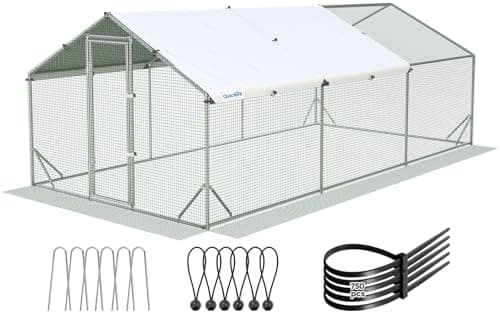
| Rank 1 | Quictent 18 x 9 x 6.6ft Metal Coop Run with Hardware Cloth The best predator-resistant run at walk-in height | 162 sq ft | 8.7 | $289.99on Amazon |
| Rank 2 | 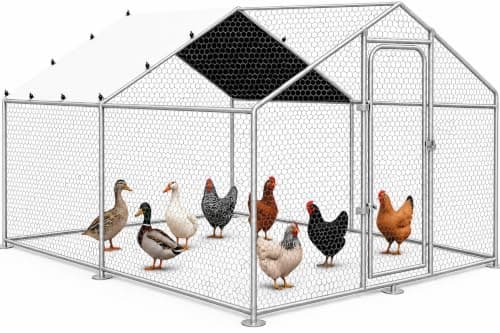 VAGGER 10 x 10 x 6.5ft Metal Chicken Run with Cover A square 100 sq ft run that fits most yards | 100 sq ft | 7.7 | $139.98on Amazon |
| Rank 3 | 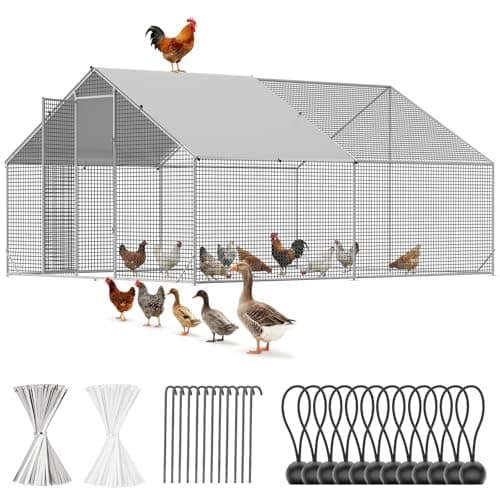 CAMMOO Walk-in Chicken Run, 13.1 x 9.8 x 6.6ft Maximum covered run area per dollar | About 128 sq ft | 7.8 | $169.99on Amazon |
| Rank 4 | 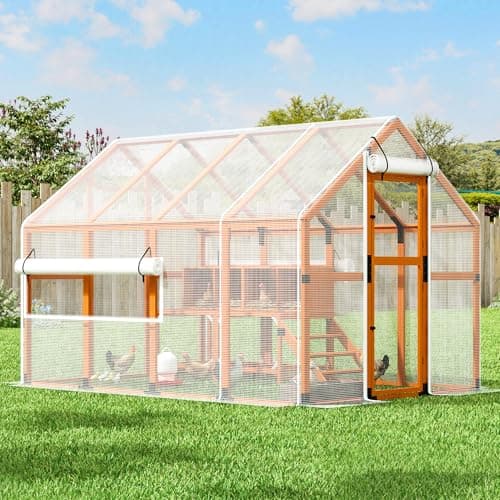 COZIWOW 9ft Extra Large Coop with Full Waterproof Cover A big covered run without building one | Not published | 7.0 | $592.99on Amazon |
#ad Prices come from Amazon and change. How this site is funded. Scores are our own published rubric, not a lab test — see how we pick.
The coop is the building hens sleep and lay in; the run is the enclosed outdoor space they spend their waking hours in. You need both, and the run needs about five times the floor area of the coop. Penn State Extension puts a large chicken at 2 sq ft of coop floor and 10 sq ft of run — so six hens want roughly 12 sq ft indoors and 60 sq ft outdoors. Most people buy enough coop and nothing like enough run.
This distinction sounds pedantic and is not. The phrase "coop for six chickens" on a listing almost always describes the house only, and the hutch-style run bolted to the side of it is a fraction of what six birds need. If a flock seems bad-tempered, bare-patched or smelly, the run is the first thing to measure.
What each one is actually for
| The coop | The run | |
|---|---|---|
| Job | Sleeping, laying, shelter from weather and night predators | Daytime living: moving, dust bathing, foraging, pecking order |
| Floor area per large bird | 2 sq ft | 10 sq ft |
| Must contain | Roost bars, nest boxes, ventilation above head height | Space, shade, water, something to scratch in |
| Open when | Overnight, closed and latched | Daylight hours |
| Dominant risk | Ammonia and moisture | Ground predators and mud |
| Mesh requirement | Solid walls; vents meshed | Half-inch hardware cloth on everything within reach |
The ratio is the headline. Five times more outdoor space than indoor is not a luxury standard, it is the published guidance, and it exists because a chicken's day is spent walking, scratching, dust bathing and keeping out of the way of the bird above her in the pecking order. None of that happens in a coop.
Size both from the same table
| Flock size | Coop floor (standard hens) | Run space | Roost length | Nest boxes |
|---|---|---|---|---|
| 2 hens | 4 sq ft | 16-20 sq ft | 12 in | 2 |
| 4 hens | 8 sq ft | 32-40 sq ft | 24 in | 2 |
| 6 hens | 12 sq ft | 48-60 sq ft | 36 in | 3 |
| 8 hens | 16 sq ft | 64-80 sq ft | 48 in | 3 |
| 10 hens | 20 sq ft | 80-100 sq ft | 60 in | 4 |
| 12 hens | 24 sq ft | 96-120 sq ft | 72 in | 4 |
| 20 hens | 40 sq ft | 160-200 sq ft | 120 in | 6 |
Work across the row for your flock and you have the whole specification. The common failure is to satisfy the coop column, satisfy the nest-box column, and then accept whatever run came in the box.
Why an undersized run causes most flock problems
Crowding outdoors produces the same symptoms as crowding indoors, and people usually blame the coop. Birds in a cramped run pick each other's feathers, and once feather-pecking starts in a flock it is genuinely difficult to stop. The lowest-ranked hen is bullied away from feed and water. And the ground goes bare, then compacted, then muddy — which is the real source of most coop smell complaints, because the mud is outside and nobody thinks to look there.
The runs worth buying
Four walk-in runs with published dimensions, so you can check the square footage against your flock before ordering.
#1 · The best predator-resistant run at walk-in height
#ad How we are funded · Price as of October 10, 2026
Quictent 18 x 9 x 6.6ft Metal Coop Run with Hardware Cloth
Quictent162 sq ft of galvanized walk-in run, and the only one in this group whose listing says hardware cloth rather than 'wire mesh'. That one word is the difference between a run that stops a raccoon and one that does not.
| Dimensions | 18 ft L x 9 ft W x 6.6 ft H |
|---|---|
| Floor area | 162 sq ft |
| Mesh | Hardware cloth |
| Frame | Galvanized steel |
| Access | Walk-in |
Specifications per Manufacturer figures as published on the Amazon product listing, as published at the date above.
What it does well
- Hardware cloth, stated outright — hexagonal chicken wire does not stop a raccoon and this is not that
- 162 sq ft gives twenty hens ten sq ft of run each, which is genuinely generous
- 6.6 ft of height means you walk in rather than crawl
- Galvanized steel frame will not rot and does not need painting
Where it falls short
- A run, not a coop: the birds still need a secure house inside it
- Large footprint needs flat ground and a day to build
- Open top unless you add a cover, so hawks are still a live risk
Our rubric
- Space per bird
- 10.0
- Predator resistance
- 8.0
- Ventilation
- 10.0
- Cleaning access
- 8.0
- Build
- 8.0
- Value
- 8.0
#2 · A square 100 sq ft run that fits most yards
VAGGER 10 x 10 x 6.5ft Metal Chicken Run with Cover
VAGGERA hundred square feet of covered walk-in run in a square footprint, which fits more yards than a long narrow one. Straightforward, cheap, and sized for a ten-hen flock at ten sq ft each.
| Dimensions | 10 x 10 x 6.5 ft |
|---|---|
| Floor area | 100 sq ft |
| Cover | Included |
| Access | Walk-in |
| Mesh gauge | Not published by manufacturer |
Specifications per Manufacturer figures as published on the Amazon product listing, as published at the date above.
What it does well
- A clean 100 sq ft — the easiest number to plan a ten-hen flock around
- Square footprint fits awkward yards better than a long rectangle
- Cover included, so the run is hawk-proofed from day one
Where it falls short
- No mesh specification published
- Light frame; add bracing if you get real snow
- Still a run, not a secure overnight house
Our rubric
- Space per bird
- 9.0
- Predator resistance
- 5.0
- Ventilation
- 9.0
- Cleaning access
- 8.0
- Build
- 6.0
- Value
- 9.0
#3 · Maximum covered run area per dollar
#ad How we are funded · Price as of October 10, 2026
CAMMOO Walk-in Chicken Run, 13.1 x 9.8 x 6.6ft
CAMMOO128 sq ft of walk-in run with a cover, at a price per square foot nothing else here matches. Check the mesh before you trust it with birds overnight.
| Dimensions | 13.1 x 9.8 x 6.6 ft |
|---|---|
| Floor area | About 128 sq ft |
| Cover | Included |
| Access | Walk-in |
| Mesh gauge | Not published by manufacturer |
Specifications per Manufacturer figures as published on the Amazon product listing, as published at the date above.
What it does well
- 128 sq ft published, which is a large run for a mid-size flock
- Comes with a cover, so hawks and rain are both addressed
- By far the best run area per dollar in this group
Where it falls short
- No mesh gauge or type published — assume it needs a hardware-cloth skirt at minimum
- Thin-walled tube frames in this class bend under snow load
- Needs flat ground over a 128 sq ft area
Our rubric
- Space per bird
- 10.0
- Predator resistance
- 5.0
- Ventilation
- 9.0
- Cleaning access
- 8.0
- Build
- 6.0
- Value
- 9.0
#4 · A big covered run without building one
#ad How we are funded · Price as of October 10, 2026
COZIWOW 9ft Extra Large Coop with Full Waterproof Cover
COZIWOWA nine-foot enclosure with a full waterproof cover. Read it as a large covered run with a shelter rather than a true 20-bird coop — but as a run, the full cover is what keeps winter mud under control.
| Overall length | 9 ft |
|---|---|
| Cover | Full waterproof cover |
| Type | Large coop-and-run enclosure |
| Stated capacity | Not published by manufacturer |
| Floor area | Not published by manufacturer |
Specifications per Manufacturer figures as published on the Amazon product listing, as published at the date above.
What it does well
- A full waterproof cover over the whole footprint is the single best mud-control feature a run can have
- Nine feet of length is real space for a flock to spread out on a wet day
- Covered runs also block hawks, which an open-topped run does not
Where it falls short
- No stated bird capacity — size it from the footprint, not the marketing
- Enclosure-grade mesh, not a predator-proof house: the sleeping quarters still need securing
- Large covers catch wind; this needs anchoring properly
Our rubric
- Space per bird
- 8.0
- Predator resistance
- 5.0
- Ventilation
- 9.0
- Cleaning access
- 7.0
- Build
- 6.0
- Value
- 7.0
Mesh is the part the listings obscure
A run is only a predator barrier if its mesh is. Extension's predator guidance notes that chicken wire's openings let ground predators reach in, and that least weasels can get through quarter-inch holes. Hexagonal chicken wire contains chickens; it does not exclude raccoons.
That is why one of the picks above is ranked where it is: its listing says hardware cloth rather than the vague "wire mesh" used by most run manufacturers. Where a listing does not publish its mesh type or gauge, our spec tables say so rather than guessing — and the correct assumption is that it is chicken wire. Chicken wire vs hardware cloth is the full comparison, and it is the single most consequential upgrade on this site.
The three things a run needs beyond square footage
- A predator apron. Hardware cloth laid flat outward or buried around the perimeter, so a digging animal hits mesh rather than soil. The apron guide covers both methods.
- Cover overhead. Against hawks during the day and to keep the ground from turning to mud in winter. A full waterproof cover does both jobs.
- Shade. A run with no shade is unusable in a heatwave, and shade placement is the cheapest thing you can change — keeping chickens cool in summer covers where to put it.
Coop, run, or both: what to buy in what order
If you are starting from nothing, buy the house and the run as one purchase if the published numbers work, and separately if they do not. Coops with runs included is the combined option, and it is usually the right one up to about six birds. Above that, a compact secure house inside a large walk-in run is both cheaper and better — more space per dollar, and the house is easier to make genuinely predator-proof when it is small.
Can the run be smaller if the birds free-range?
Partly, and it is worth being precise about why. The 10 sq ft per bird figure covers the space a hen needs for the hours she is enclosed. Birds that genuinely range over a yard for most of the day are using far more ground than any run provides, and the run becomes the secure default space rather than their whole territory — so a smaller run is defensible if the ranging is real, daily, and not weather-dependent.
The failure mode is a run sized for free-ranging birds that then do not get let out: the week you are away, the month a hawk is working the area, the whole of a wet winter. That is when an undersized run becomes a crowding problem, and it happens at exactly the time of year nobody wants to be building. Our position is to size the run for the days they stay in, and treat ranging as a bonus on top of it.
Shelter, shade and winter mud
A run is not only an enclosure, it is the ground the flock stands on for most of the year, and three things decide whether that ground stays usable. Cover overhead keeps rain off, which is the difference between a run that drains and one that turns to a slurry by February. Shade makes the run usable in a heatwave, when an uncovered pen is simply uninhabitable in the afternoon. And something to scratch in — a dry corner of loose litter or sand — gives hens somewhere to dust bathe, which is both a welfare need and a genuine parasite control measure.
If the yard will not take a fixed run of the right size, the other answer is to move the birds instead of enclosing more ground: chicken coop vs chicken tractor works through that trade.
Frequently asked questions
What is the difference between a chicken coop and a chicken run?
How big should a chicken run be per chicken?
Do chickens need a run if they free-range?
Can a chicken run have chicken wire?
Is it cheaper to buy a bigger coop or add a run?
Sources
Read next
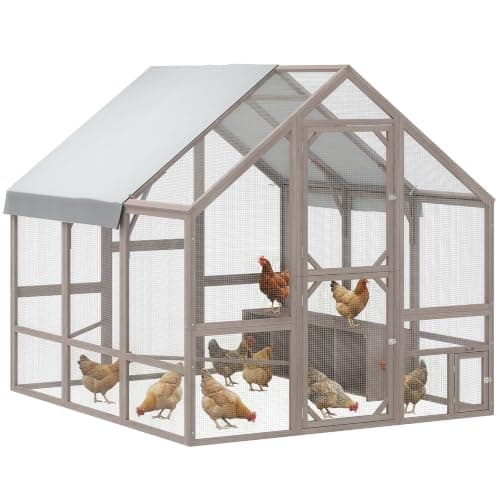
Chicken Coops
Chicken coop size per chicken: the real numbers
The sizing table the rest of this site is built on, with the extension sources and a method for checking any listing.
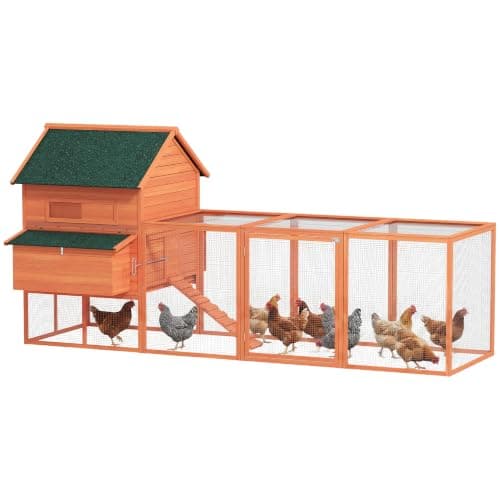
Chicken Coops
The best chicken coops with attached runs
Coop-and-run sets ranked on run space per bird — which is the figure these listings bury.
Chicken Coops
The best walk-in chicken coops and runs
Coops and runs with standing headroom, ranked on height, floor area and whether the mesh is actually hardware cloth.
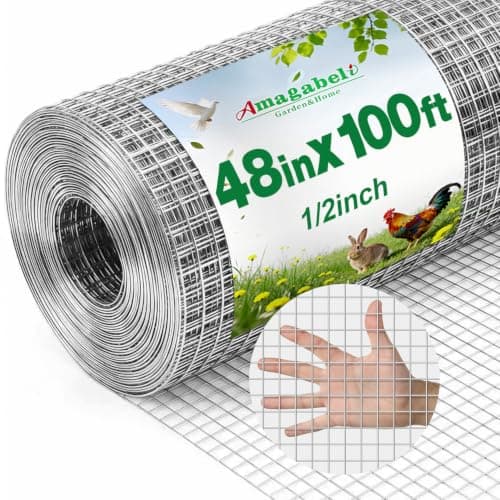
Predator Protection
Chicken wire vs hardware cloth
The single most useful distinction in predator protection, with the gauges, the openings and where each belongs.
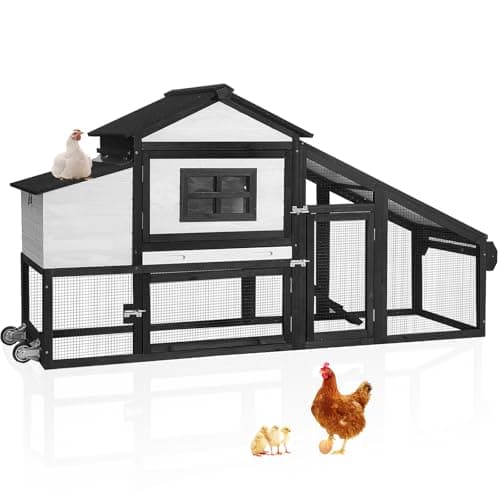
Chicken Coops
Chicken coop vs chicken tractor
The movable-versus-fixed decision worked through on ground damage, predator risk, weight and winter, with four tractors and the fixed-coop alternative.