Waterers
The best non-electric chicken waterers
No cord, no outlet, nothing to fail. A gravity waterer is the most reliable thing in a coop, and the only question is how it delivers the water.
Chickens & Coops earns a commission when you buy through our links, at no extra cost to you — from Amazon Associates and from brand partner programs. Prices come from the retailer and change; the date beside every price is when we last verified it. Full disclosure.
Best Non-Electric Waterer
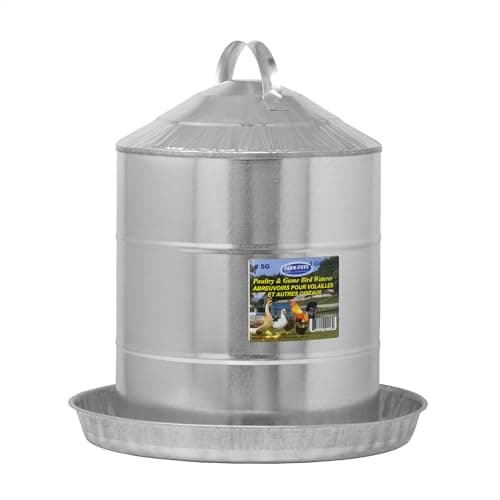
FARM-TUFF Galvanized Poultry Fountain, 5 Gallon
A double-wall galvanized cone-top fountain.
#ad How we are funded · Price as of November 18, 2026
Quick picks
| # | Product | Capacity | Score | Price |
|---|---|---|---|---|
| Rank 1 | FARM-TUFF Galvanized Poultry Fountain, 5 Gallon A gravity waterer that lasts a decade | 5 gallon | 8.7 | $57.99FARM-TUFF, 5 Gallon |
| Rank 2 | 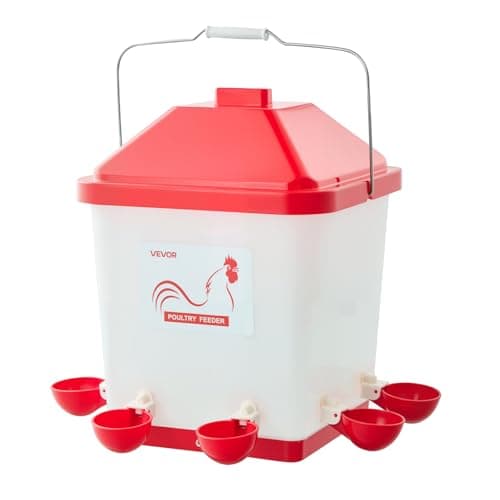 VEVOR 5 Gallon Automatic Waterer with 6 Cups Six automatic cups on one 5-gallon reservoir | 5 gallon | 9.0 | $38.90VEVOR 5 Gallon |
| Rank 3 | 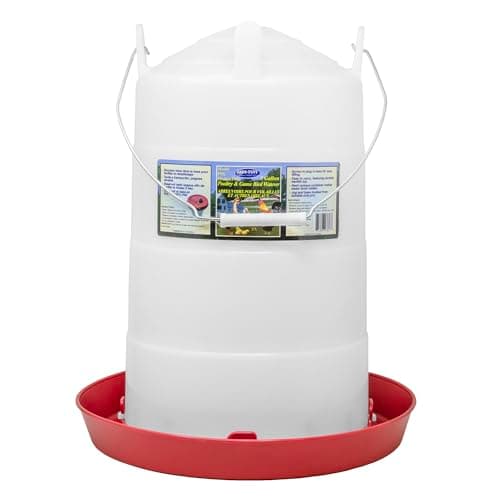 FARM-TUFF Easy Fill Plastic Poultry Waterer, 5 Gallon A cheap 5-gallon gravity fount you can actually clean | 5 gallon | 8.8 | $49.99FARM-TUFF, 5 Gallon |
| Rank 4 | 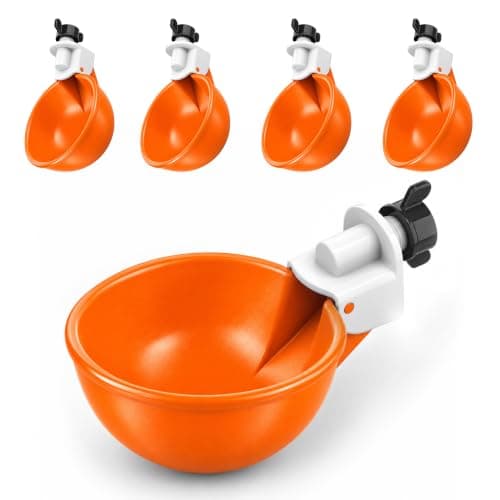 Lil'Clucker Large Automatic Waterer Cups Cups large enough for chicks and full-grown hens | Not published | 8.4 | $18.99Lil'Clucker Large |
| Rank 5 | 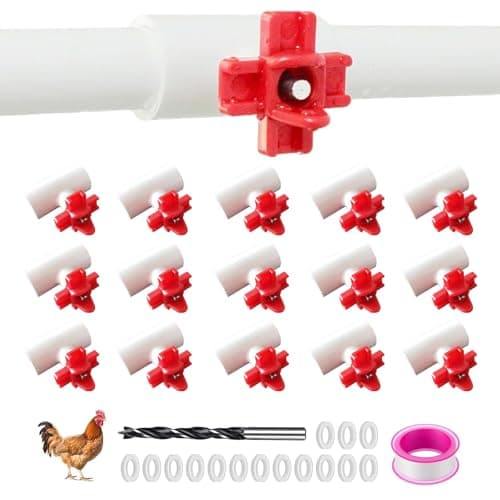 Horizontal Chicken Nipple Kit, 15-Pack with PVC Tee Fittings A DIY nipple system along a run wall | Not published | 8.8 | $16.99Horizontal Chicken |
| Rank 6 | 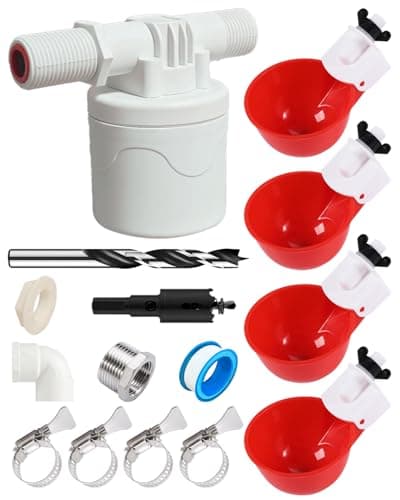 Psarnuk DIY Automatic Waterer Kit, 4 Cups with Float Valve Plumbing the waterer to a hose and forgetting it | Not published | 9.1 | $13.98Psarnuk DIY |
#ad Prices come from Amazon and change. How this site is funded. Scores are our own published rubric, not a lab test — see how we pick.
A non-electric chicken waterer is the default, not the compromise. Nothing in a coop is more reliable than a vessel that holds water and lets gravity do the rest: no cord to run out to the run, no outlet to find, no element to fail, and nothing that stops working in a power cut. The only genuine reason to add electricity is to stop water freezing, and that is a winter problem with its own category.
What separates these is not capacity — most hold about five gallons — but how the water gets from the vessel to the bird, and that decides how clean it stays and how often you are scrubbing something.
How we ranked these
Stays clean first, because an open trough of water in a run is a bedding, droppings and dust collector within a day, and dirty water is the single commonest avoidable health problem in a backyard flock. Capacity second, matched to a realistic refill interval. Ease of refill third — a waterer you dread carrying is one that gets topped up late. Freeze resistance fourth, because none of these are heated and some fare better than others. Then value.
The arithmetic behind the capacity column: a hen drinks roughly 6.4 fl oz a day in mild weather and about double that in heat. Six hens therefore get through about 2.4 quarts a day in April and nearly 5 in July, so a five-gallon fount that lasts eight days in spring lasts four in a heatwave. How much water chickens drink has the full figures.
The three delivery types, and which to pick
| Type | How it works | Stays clean? | Refill effort | Best for |
|---|---|---|---|---|
| Open fount | Gravity feeds a rim trough the birds drink from | No — bedding and droppings get in daily | Carry the whole vessel | A keeper who wants zero assembly and does not mind rinsing |
| Nipple | Bird pecks a valve; water comes out in drops | Yes — the water is sealed inside | Carry or hose the vessel | Almost everyone, once the birds have learned it |
| Cup | Bird presses a paddle; the cup refills from the reservoir | Mostly — an open cup still collects dust | Carry or hose the vessel | Birds that will not take to nipples, and hot weather |
The picks
Two open founts, a cup system, a nipple kit, a six-cup bucket waterer and a float kit that plumbs onto a hose — ordered by how little work each one leaves you.
#1 · A gravity waterer that lasts a decade
#ad How we are funded · Price as of November 18, 2026
FARM-TUFF Galvanized Poultry Fountain, 5 Gallon
FARM-TUFFA double-wall galvanized cone-top fountain. Metal is the right choice if you will ever want a heated base under it — plastic founts cannot sit on one.
| Capacity | 5 gallon |
|---|---|
| Material | Galvanized steel, double wall |
| Top | Cone top |
| Operation | Automatic gravity feed |
| Heated base compatible | Yes — metal fount |
Specifications per Manufacturer figures as published on the Amazon product listing, as published at the date above.
Why we picked it
- Galvanized metal is the only fount body you can legitimately put on a heated base
- Cone top stops hens roosting on it and fouling the water
- Double wall construction means it will outlast several plastic waterers
- 5 gallons is roughly a week for a small flock in mild weather
Good to know — Heavy when full — about 40 lb of water plus the fount
Our rubric
- Capacity
- 9.3
- Stays clean
- 9.3
- Freeze resistance
- 7.5
- Ease of refill
- 8.4
- Value
- 8.9
#2 · Six automatic cups on one 5-gallon reservoir
$45.99 15% off
#ad How we are funded · Price as of November 18, 2026
VEVOR 5 Gallon Automatic Waterer with 6 Cups
VEVORFive gallons feeding six auto-fill cups. Cups keep the bulk of the water sealed inside the drum, which is the main reason cup systems stay cleaner than open founts.
| Capacity | 5 gallon |
|---|---|
| Water ports | 6 automatic-fill cups |
| Operation | Automatic gravity, cup-fed |
| Handle | Carry handle fitted |
Specifications per Manufacturer figures as published on the Amazon product listing, as published at the date above.
Why we picked it
- Six cups means six hens drink at once without a queue
- The reservoir is sealed, so bedding and droppings cannot get into the bulk water
- 5 gallons on a carry handle is a sensible format for a shed-to-run trip
Good to know — Cups freeze solid before the reservoir does — this is a summer solution
Our rubric
- Capacity
- 9.3
- Stays clean
- 9.8
- Freeze resistance
- 6.5
- Ease of refill
- 9.3
- Value
- 9.8
#3 · A cheap 5-gallon gravity fount you can actually clean
#ad How we are funded · Price as of November 18, 2026
FARM-TUFF Easy Fill Plastic Poultry Waterer, 5 Gallon
FARM-TUFFA gravity-fed plastic fount with a top fill. Top filling is the feature worth paying for: you refill it without inverting five gallons of water over your boots.
| Capacity | 5 gallon |
|---|---|
| Material | Plastic |
| Filling | Top fill |
| Operation | Gravity fed |
| Heated base compatible | No — plastic body |
Specifications per Manufacturer figures as published on the Amazon product listing, as published at the date above.
Why we picked it
- Top fill means no inverting a full fount, which is the main reason people stop refilling properly
- Translucent plastic lets you see the level at a glance
- Light enough to carry full
- Easy to scrub out, unlike a cone-top metal fount
Good to know — Cannot be used on a heated base — plastic melts
Our rubric
- Capacity
- 9.3
- Stays clean
- 8.4
- Freeze resistance
- 6.5
- Ease of refill
- 9.8
- Value
- 9.8
#4 · Cups large enough for chicks and full-grown hens
#ad How we are funded · Price as of November 18, 2026
Lil'Clucker Large Automatic Waterer Cups
Lil'CluckerLarger-than-usual auto-fill cups, stated as suitable for chicks through to turkeys. Cup size matters: a tiny cup empties faster than the valve refills when a hen is really drinking.
| Type | Automatic water cups |
|---|---|
| Size | Large cup |
| Suitable for | Chicks, ducks, geese, turkeys |
| Pack size | Not published by manufacturer |
Specifications per Manufacturer figures as published on the Amazon product listing, as published at the date above.
Why we picked it
- Large cup holds enough that a thirsty hen is not waiting for the valve
- Shallow enough for chicks, which the deep nipple systems are not
- Works for mixed poultry, not just hens
Good to know — Pack size is not published on the listing
Our rubric
- Capacity
- 7.9
- Stays clean
- 8.9
- Freeze resistance
- 6.5
- Ease of refill
- 9.3
- Value
- 9.3
#5 · A DIY nipple system along a run wall
#ad How we are funded · Price as of November 18, 2026
Horizontal Chicken Nipple Kit, 15-Pack with PVC Tee Fittings
GenericFifteen horizontal nipples with half-inch PVC tees, which is enough to plumb a whole run. Horizontal nipples beat the vertical kind: they do not drip, so the bedding underneath stays dry.
| Pack | 15 nipples |
|---|---|
| Fittings | 1/2" PVC tees included |
| Type | Horizontal side-mount nipples |
| Leakage | Leakproof (manufacturer claim) |
Specifications per Manufacturer figures as published on the Amazon product listing, as published at the date above.
Why we picked it
- Horizontal nipples do not drip the way vertical ones do, so litter stays dry
- Tee fittings included means you can build a run of pipe, not just one bucket
- Fifteen nipples covers a large flock with spares
- Completely sealed water: nothing can foul it
Good to know — Hens have to learn nipples — keep the old waterer available for a week
Our rubric
- Capacity
- 8.4
- Stays clean
- 10.0
- Freeze resistance
- 6.5
- Ease of refill
- 8.9
- Value
- 9.8
#6 · Plumbing the waterer to a hose and forgetting it
$15.98 13% off
#ad How we are funded · Price as of November 18, 2026
Psarnuk DIY Automatic Waterer Kit, 4 Cups with Float Valve
PsarnukFour cups plus a float valve, which turns a container into a self-filling trough on a hose line. The only setup here that genuinely never needs carrying water to.
| Includes | 4 cups and a float valve |
|---|---|
| Type | DIY automatic waterer kit |
| Supply | Mains or gravity hose feed |
| Container | Not included |
Specifications per Manufacturer figures as published on the Amazon product listing, as published at the date above.
Why we picked it
- A float valve on a hose means the water level maintains itself indefinitely
- No carrying buckets, which is the single biggest daily chore in a flock
- Four cups for a small to mid-size flock
Good to know — A hose line must be drained before the first freeze or it splits
Our rubric
- Capacity
- 9.3
- Stays clean
- 9.3
- Freeze resistance
- 6.5
- Ease of refill
- 10.0
- Value
- 9.8
Galvanized, plastic or a bucket: what the vessel is made of
The material decides how long the waterer lasts, how easily it cleans and what it costs to replace. There is no universally right answer, and the trade-offs are straightforward.
| Material | Lifespan | Cleaning | Freeze behavior | The catch |
|---|---|---|---|---|
| Galvanized steel | A decade or more | Scrubs; will not stain | Takes a freeze without cracking | Heavy when full, and never use it with apple cider vinegar or any acid supplement, which strips the zinc |
| Rigid plastic fount | Several seasons | Easiest to rinse; can stain and scratch | Usually survives; can split at a narrow seam | Sunlight makes it brittle over time, so keep it shaded |
| Food-grade bucket | Years, and cheap to replace | Widest opening here, so the easiest to get a hand into | Survives, being a simple shape | You are drilling it yourself, and the hole size has to be right first time |
What non-electric does in winter
Honestly: it freezes. Every waterer on this page freezes at the same temperature as any other, and no design choice changes that. What differs is how badly the freeze damages it and how quickly you can get it working again.
- Galvanized founts take a freeze without cracking and can sit on a heated base later, which is the usual upgrade path.
- Plastic founts and buckets survive most freezes but can split at a seam if ice expands in a narrow channel.
- Nipples freeze first. The valve holds a tiny volume of water right at the outside air, so it ices over long before the reservoir does.
- Cups are in between, and a cup that freezes part-open drips the reservoir away overnight.
If winter is the reason you are reading this, how to stop chicken water freezing covers what works without power, and heated waterers covers what works with it.
The budget pick, and the one that does the most work
The cheapest way in is the Psarnuk four-cup float kit — a float valve and four cups that turn a bucket you already own into an automatic waterer, and the only option here that can plumb onto a hose and never need carrying at all. The compromise is that you supply the vessel and do the drilling, and a float valve is one more part that can stick.
The one that does the most work with the least thought is a galvanized five-gallon fount: no assembly, no training period, no valve to fail, and a vessel that takes a freeze and a decade. You pay for that with daily rinsing, because the trough is open to the run.
What actually fouls the water, and how often you are cleaning
The reason to care about delivery type is cleaning frequency, so it is worth being specific about what gets into an open fount and how fast.
| What gets in | How | How fast | What it means |
|---|---|---|---|
| Bedding | Scratched in from the litter around the vessel | Within hours | Raise the waterer to back height; this alone halves the problem |
| Droppings | From birds perching on the rim or above it | Daily | Nothing stops it on an open trough; a sealed reservoir does |
| Dust | Dust bathing and general scratching | Daily | Site the waterer away from the dust bath, not beside it |
| Algae | Sunlight on standing water | Days in summer | Shade the vessel; it also keeps the water cool enough to drink |
| Feed | Beaks move between feeder and drinker | Within hours | Separate the two by several feet |
The practical rule: raise the drinker to the height of a standing hen's back. It is the single change that most reduces what ends up in the water, it costs nothing beyond a paving slab or a hanging chain, and it works on every design on this page.
Buying one versus converting a bucket
Two of the picks above are kits rather than finished waterers, and the choice between them is worth making deliberately.
- A finished fount arrives working, needs no tools, and is the right answer if you want this decided today. You pay for the vessel, which is the cheap part.
- A nipple or cup kit on a food-grade bucket costs a fraction as much for the same capacity, lets you choose the vessel size, and makes every part replaceable. You supply the bucket and a drill with the right size bit, and a badly cut hole leaks continuously.
- A float-valve kit is the only one that plumbs onto a hose and never needs carrying. It is the most work to set up and the most satisfying afterward, and it is the right call if the run is within reach of an outside tap.
Our spec tables say which kits include the hardware and which assume you have it. Where a listing does not publish the hole size a fitting needs, the table says so rather than guessing — drilling the wrong diameter is the one mistake that cannot be undone on a bucket.
Sizing it to the flock
Pick by flock size and how often you want to refill
- 2-4 hensA 3 to 5 gallon fount, or a nipple kit on a 5-gallon bucket. Either lasts over a week in mild weather.
- 5-8 hens5 gallons with nipples or cups. An open fount at this flock size needs rinsing every day rather than every few. See the picks
- 9-15 hensTwo vessels rather than one bigger one, sited apart so a bullied bird can always drink. See the picks
- Any flock, hot climateCups over nipples, in shade, and plan on roughly double the daily intake. See the picks
Whatever the size, site it in shade and off the litter. Warm water is water hens drink less of, and a waterer standing in bedding is a waterer full of bedding by evening — how to keep chicken water clean is the short version of why that matters more than the model you buy.
Frequently asked questions
What is the best non-electric chicken waterer?
Do chicken waterers need electricity?
Are nipple waterers better than open founts?
How long does a 5 gallon chicken waterer last?
Can you use a non-electric waterer in winter?
What is the cheapest way to water chickens automatically?
Our recommendation
If you buy one thing from this page, buy the first one. The second is here because it is the alternative worth weighing against it, not because a list needs two entries.
Best Non-Electric Waterer
FARM-TUFF Galvanized Poultry Fountain, 5 Gallon
A gravity waterer that lasts a decade
#ad How we are funded · Price as of November 18, 2026
Runner-up
VEVOR 5 Gallon Automatic Waterer with 6 Cups
Six automatic cups on one 5-gallon reservoir
#ad How we are funded · Price as of November 18, 2026
Brands: want your product tested? For Brands.
Sources
Read next
Waterers
The best chicken waterers
Our main waterer ranking: open founts, cup systems and nipple kits, judged on cleanliness as much as capacity.
Waterers
Nipple vs cup chicken waterers
The sealed-versus-open watering decision, with the cases where each one is clearly right.
Waterers
Setting up a chicken nipple waterer
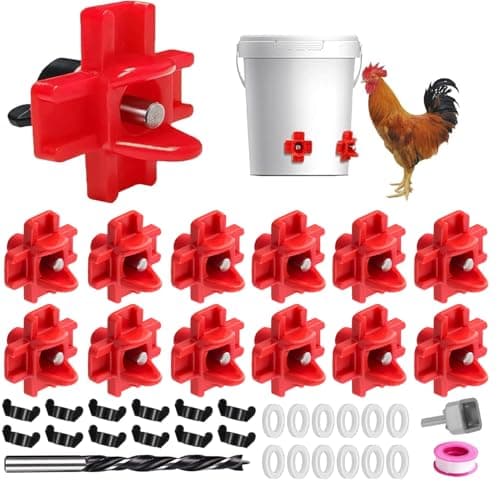
Mounting height, drilling and threading, the week hens need to learn, and the three causes of a leaking nipple — with the kits that include the right bit.
Waterers
The best heated chicken waterers
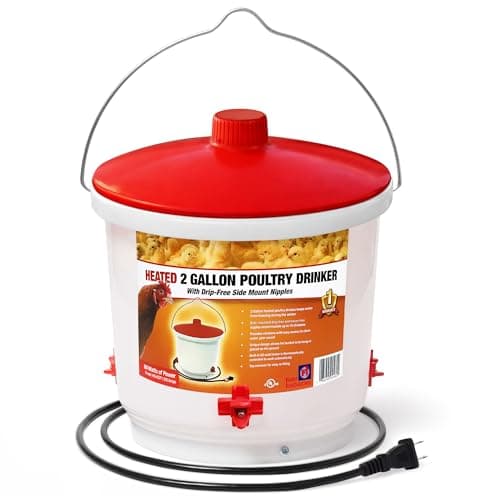
Heated drinkers and heated bases, ranked on published wattage and thermostat control — the two figures that matter.

Chicken Coops
The best chicken coops under $300
What $300 actually buys in a chicken coop, the capacity arithmetic that decides whether any of it is good value, and six picks with a live price on each.
Waterers
How much water do chickens drink?
The published water-intake figures, a table by flock size, and why hot weather is the number that matters.