Hatching & Brooding
Still air vs forced air incubators
A fan sounds like a minor feature. It changes where you measure the temperature and how forgiving the machine is.
Chickens & Coops earns a commission when you buy through our links, at no extra cost to you. Prices come from Amazon and change; the date beside every price is when we last verified it. Full disclosure.
Quick picks
| # | Product | Capacity | Score | Price |
|---|---|---|---|---|
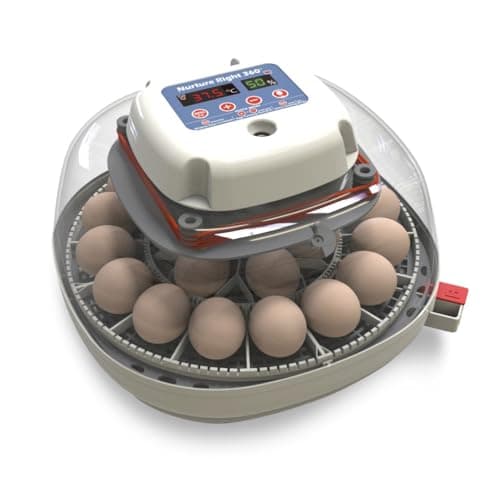
| Rank 1 | Harris Farms Nurture Right 360 Incubator, 22 Eggs The best first incubator for most people | 22 eggs | 8.2 | $124.99on Amazon |
| Rank 2 | 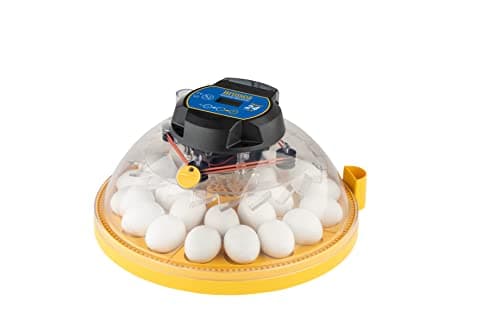 Brinsea Maxi 24 EX, 24 Eggs Serious hatching with automatic humidity | 24 eggs | 8.2 | $340.45on Amazon |
| Rank 3 | 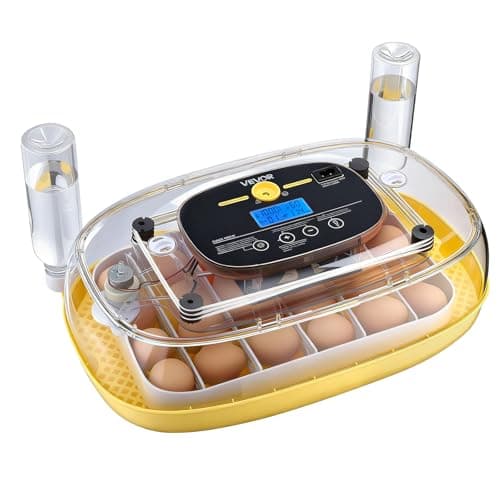 VEVOR 24 Egg Incubator with LED Candler Twenty-four eggs for the price of a bag of feed | 24 eggs | 7.6 | $42.99on Amazon |
| Rank 4 | 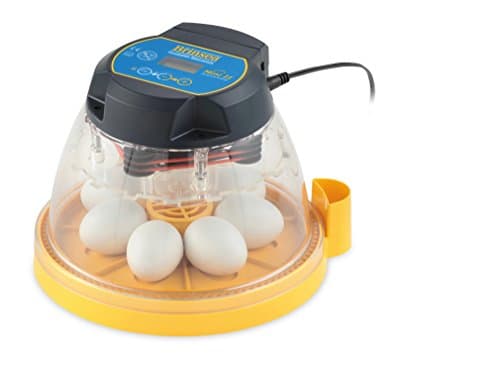 Brinsea Mini II Advance, 7 Eggs Seven eggs, hatched properly | 7 eggs | 7.0 | $249.99on Amazon |
#ad Prices come from Amazon and change. How this site is funded. Scores are our own published rubric, not a lab test — see how we pick.
The difference is a fan. A forced-air incubator circulates the air inside, so the temperature is broadly the same everywhere and the published 99.5 F figure applies throughout. A still-air incubator has no fan, so warm air rises and the inside stratifies — which means the target temperature is measured at a specific height and is higher than 99.5 F.
Head to head
| Forced air | Still air | |
|---|---|---|
| Fan | Yes | No |
| Temperature target | 99.5 F throughout (99-101 F acceptable) | Higher, measured at the top of the egg |
| Where to measure | Anywhere at egg level | At the top of the eggs, exactly |
| Even heating | Yes | No — stratified |
| Forgiving of thermometer placement | Yes | No — placement is critical |
| Typical modern machine | Almost all | A minority |
| Right for a first hatch | Yes | Harder to get right |
Why the measurement point matters so much
In a still-air incubator the air at the top of the egg is warmer than the air at the bottom of the tray. Published guidance for still-air machines therefore specifies a higher reading taken at the top of the eggs — and a thermometer lying on the floor of the incubator will read low, which leads people to turn the heat up and cook the eggs. In a forced-air machine the fan removes the gradient and the measurement point stops being critical.
The practical rule: in a still-air incubator, follow the manufacturer's stated temperature and their stated measurement height, exactly. In a forced-air machine, aim for 99.5 F at egg level.
| Stage | Temperature (forced air) | Humidity | Turning |
|---|---|---|---|
| Days 1-18 | 99.5 F (acceptable 99-101 F) | 55-60% | At least 3 times a day, or automatic |
| Days 18-21 (lockdown) | 99.5 F | 65-70% | Stop turning |
| Hatch | 99.5 F | 65-70% | Do not open the incubator |
Which to buy
For a backyard keeper, forced air, without much hesitation. It is more forgiving, it is what nearly all current machines are, and it removes one of the main ways a first hatch goes wrong. Still-air incubators are mostly older designs and some very cheap small machines.
The picks
All forced-air, ranked on control precision and capacity.
#1 · The best first incubator for most people
Harris Farms Nurture Right 360 Incubator, 22 Eggs
Harris Farms22 eggs, an automatic turner and a 360-degree view, from an established poultry-equipment brand. It sits exactly where a first incubator should: enough capacity to be worth running, simple enough to get right.
| Capacity | 22 eggs |
|---|---|
| Turning | Automatic turner |
| Viewing | 360-degree window |
| Humidity control | Not published by manufacturer |
| Candler | Not published by manufacturer |
Specifications per Manufacturer figures as published on the Amazon product listing, as published at the date above.
What it does well
- 22 eggs is a realistic backyard hatch — enough that a 60% hatch rate still gives you a flock
- Automatic turning removes the three-times-a-day job that sinks most first hatches
- 360-degree viewing means you can watch without lifting the lid and dumping the humidity
- Made by a poultry brand with a long track record rather than a marketplace label
Where it falls short
- Humidity control detail is not published; expect to top water channels manually
- No candler stated as included
- Costs more than the generic 24-egg incubators
Our rubric
- Temperature stability
- 9.0
- Humidity control
- 7.0
- Capacity
- 8.0
- Beginner friendliness
- 10.0
- Value
- 7.0
#2 · Serious hatching with automatic humidity
Brinsea Maxi 24 EX, 24 Eggs
Brinsea24 eggs with automatic turning and automatic humidity control. The humidity automation is what separates it from everything cheaper: no topping up water channels, no guessing.
| Capacity | 24 eggs |
|---|---|
| Turning | Automatic |
| Humidity control | Automatic |
| Brand class | Specialist incubator manufacturer |
Specifications per Brinsea published specifications, as published at the date above.
What it does well
- Automatic humidity control removes the biggest variable in a hatch after temperature
- 24 eggs is a real batch at full automation
- Built and supported as laboratory-grade equipment, not a consumer gadget
Where it falls short
- Among the most expensive incubators a backyard keeper will consider
- Overkill for one hatch a year
- Still needs a separate brooder once the chicks are dry
Our rubric
- Temperature stability
- 10.0
- Humidity control
- 10.0
- Capacity
- 8.0
- Beginner friendliness
- 9.0
- Value
- 4.0
#3 · Twenty-four eggs for the price of a bag of feed
VEVOR 24 Egg Incubator with LED Candler
VEVOR24 eggs, automatic turning, temperature and humidity control and an LED candler, at an entry-level price. The cheapest route to a meaningful batch, with the usual budget-machine caveat about stability.
| Capacity | 24 eggs |
|---|---|
| Turning | Automatic |
| Control | Temperature and humidity control |
| Candler | LED candler included |
| Viewing | 360-degree clear window |
Specifications per Manufacturer figures as published on the Amazon product listing, as published at the date above.
What it does well
- 24 eggs and a candler for roughly the price of two bags of layer feed
- Full 360-degree window means no lid-lifting to check progress
- Automatic turning included at this price
Where it falls short
- Budget machines drift with room temperature — site it somewhere thermally stable
- Verify the reading against a separate thermometer before you trust it with eggs
- No meaningful support if the controller fails
Our rubric
- Temperature stability
- 6.0
- Humidity control
- 6.0
- Capacity
- 8.0
- Beginner friendliness
- 8.0
- Value
- 10.0
#4 · Seven eggs, hatched properly
#ad How we are funded · Price as of October 5, 2026
Brinsea Mini II Advance, 7 Eggs
BrinseaThe reference small incubator. Seven eggs is a tiny batch, but Brinsea's temperature control is in a different class from the budget machines — and temperature stability is the whole ballgame.
| Capacity | 7 eggs |
|---|---|
| Turning | Automatic turner |
| Brand class | Specialist incubator manufacturer |
| Humidity control | Not published by manufacturer |
Specifications per Brinsea published specifications, as published at the date above.
What it does well
- Brinsea's temperature regulation is the benchmark small-incubator buyers compare against
- Automatic turning in a genuinely small footprint
- Supported product with available spares, unlike marketplace incubators
- Small batch suits anyone hatching from their own hens' eggs
Where it falls short
- Costs roughly ten times a generic 12-egg machine
- Seven eggs may yield only three or four chicks
- Humidity management is manual on this model
Our rubric
- Temperature stability
- 10.0
- Humidity control
- 8.0
- Capacity
- 4.0
- Beginner friendliness
- 9.0
- Value
- 4.0
How to check which one you have
- Listen. A forced-air incubator has an audible fan.
- Read the manual's temperature figure. 99.5 F suggests forced air; a higher figure with a stated measurement height suggests still air.
- Look for a fan housing on the lid or back wall.
- If the listing says nothing and it is a very cheap small machine, assume still air and follow the manufacturer's figure exactly.
Humidity is the same problem in both
Neither type helps with humidity by itself. 55-60% to day 18 and 65-70% for the final three days, per the extension guidance, achieved by filling water channels and adjusting surface area. Automatic humidity control is a separate feature and only appears on specialist machines.
Frequently asked questions
Is forced air or still air better for incubating eggs?
What temperature for a still air incubator?
How do I tell if my incubator is forced air?
Does the fan affect humidity?
Sources
Read next
Hatching & Brooding
Incubator temperature and humidity for chicken eggs
The published temperature and humidity targets, where they come from, and a troubleshooting table for missing them.
Hatching & Brooding
The best egg incubators
Our main incubator ranking, from a 7-egg Brinsea to a 56-egg budget machine, judged on stability first.
Hatching & Brooding
Incubating chicken eggs: a day-by-day schedule
The full 21-day schedule with the published temperature and humidity figures, plus the equipment each stage needs.
Hatching & Brooding
The best egg incubators for beginners
First-hatch incubators, chosen for the features that prevent beginner mistakes: auto-turning, humidity help, a candler.
Hatching & Brooding
The best small egg incubators
Incubators from 4 to 20 eggs, for people who want a few chicks rather than a flock replacement.