Hatching & Brooding
The best chick brooder bedding
A brooder floor has one job a coop floor does not: it has to be safe for a two-day-old chick that cannot yet tell bedding from feed.
Chickens & Coops earns a commission when you buy through our links, at no extra cost to you. Prices come from Amazon and change; the date beside every price is when we last verified it. Full disclosure.
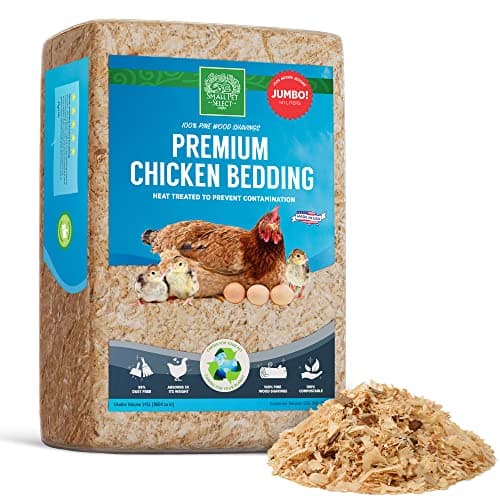
Best Brooder Bedding
Small Pet Select Pine Shavings Chicken Bedding
Kiln-dried pine shavings in a bag sized for a coop rather than a hamster cage.
#ad How we are funded · Price as of November 8, 2026
Quick picks
| # | Product | Material | Score | Price |
|---|---|---|---|---|
| Rank 1 | Small Pet Select Pine Shavings Chicken Bedding The default coop and nest-box bedding | Pine wood shavings | 9.2 | $35.99Small Pet Select |
| Rank 2 | 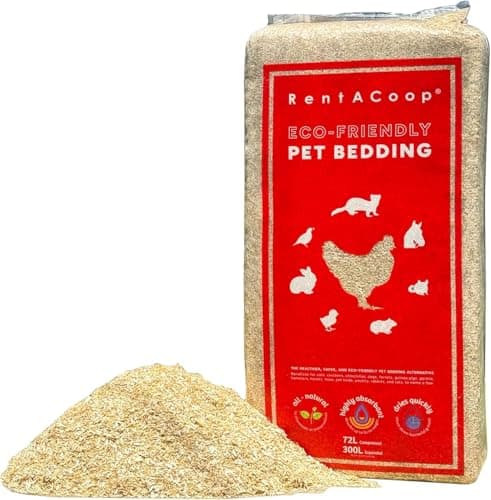 RentACoop Premium Hemp Bedding, 300L Low dust in a small or poorly ventilated coop | Hemp hurd | 9.3 | $74.95RentACoop, 300L |
| Rank 3 | 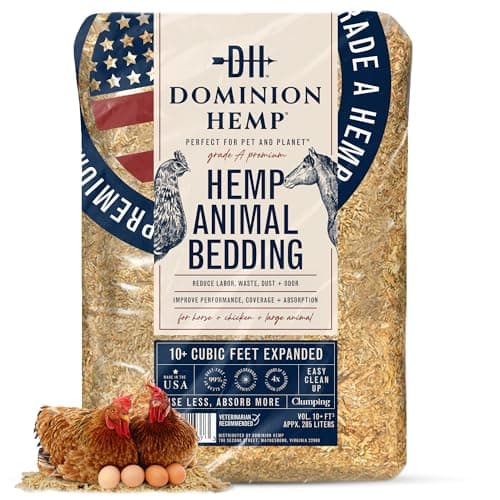 Dominion Hemp Premium Hemp Bedding, 285L Hemp bedding at a slightly lower cost per bale | Hemp bedding | 9.3 | $58.95Dominion Hemp, 285L |
#ad Prices come from Amazon and change. How this site is funded. Scores are our own published rubric, not a lab test — see how we pick.
For a brooder the answer is kiln-dried pine shavings, with paper towels over the top for the first two or three days. Pine is absorbent, cheap, and loose enough for chicks to scratch in; paper towels over it for the first days stop a newly hatched chick eating shavings before it has learned what feed is. If dust is a concern — a brooder in a garage, a utility room, or anywhere with poor air movement — hemp bedding is the upgrade, and the reason is dust rather than absorbency.
This is not the same question as coop bedding, even though some of the same bags appear. A coop floor has to buffer moisture for weeks under adult birds. A brooder floor has to be safe for a chick that weighs an ounce, cannot regulate its own temperature, will eat anything, and is standing in a space it also drinks and defecates in. Those constraints rule out materials that are perfectly fine in a coop.
What brooder bedding has to do
- Give grip. A chick on a slippery surface can develop splayed leg, which is a permanent deformity if it is not caught in the first days. This is the single most important criterion and it eliminates newspaper outright.
- Absorb moisture fast. Chicks tip water, and a damp patch under a heat source is where trouble starts. Extension's brooding guidance treats dry litter as a basic requirement of brooding.
- Be low in dust. Chicks have tiny airways and spend their lives at floor level, which is where dust sits.
- Not be edible, or not be harmful if eaten. Day-old chicks peck at everything. Large pine shavings are mostly ignored once they know where the feed is; fine, crumbly material is not.
- Be cheap enough to change often. A brooder gets filthy far faster than a coop, and the correct answer to a dirty brooder is fresh bedding, not a deodorizer.
The materials, compared
| Material | Grip | Absorbency | Dust | Verdict for a brooder |
|---|---|---|---|---|
| Kiln-dried pine shavings | Good | Good | Moderate | The default. Large flake, not fine |
| Hemp hurd | Good | Very good | Low | The upgrade where ventilation is poor |
| Paper towels | Good | Poor | None | First two or three days only, over shavings |
| Coarse sand | Good | Poor — holds moisture on top | Can be high if fine | Workable but chilly and heavy; not for week one |
| Shredded paper | Moderate | Moderate | Low | Mats into a damp sheet; needs changing constantly |
| Straw | Moderate | Poor | Moderate, often moldy | Too coarse and too slow to dry for chicks |
| Newspaper, flat | Very poor | Poor | None | Do not use — slippery, causes splayed legs |
| Cedar shavings | Good | Good | Moderate | Do not use — aromatic oils irritate airways |
Why pine and not cedar
Both are wood shavings and they are sold side by side. Cedar's aromatic oils — the thing that makes it smell pleasant and repel insects — irritate the respiratory tract, and a chick's airway is unforgiving. Kiln-dried pine is the standard for exactly this reason. If a bag does not say which wood it is, do not buy it for chicks.
Why paper towels for the first days, and not longer
A newly hatched chick does not yet distinguish bedding from feed. Paper towels over the shavings for two or three days, with starter crumble scattered on top, teaches it where food is before it has the chance to fill up on shavings. After that, take the towels out: they hold no moisture, they go sodden, and the chicks need the scratching surface underneath.
The picks
The default pine and the two hemp bales worth comparing on cost per liter. Paper towels you already own.
#1 · The default coop and nest-box bedding
#ad How we are funded · Price as of November 8, 2026
Small Pet Select Pine Shavings Chicken Bedding
Small Pet SelectKiln-dried pine shavings in a bag sized for a coop rather than a hamster cage. Pine is the baseline bedding for a reason: absorbent, cheap, compostable, and it does not mat.
| Material | Pine wood shavings |
|---|---|
| Intended use | Coop floor and nest boxes |
| Volume | Not published by manufacturer |
| Dust level | Not published by manufacturer |
Specifications per Manufacturer figures as published on the Amazon product listing, as published at the date above.
Why we picked it
- Absorbent enough to run a deep-litter floor for weeks between full changes
- Composts down with the manure into usable garden material
- Shavings stay loose, so hens can scratch and dust-bathe in them
Good to know — Dustier than hemp, which matters in a tight coop with poor ventilation
Our rubric
- Fit for purpose
- 9.8
- Mess and waste
- 8.4
- Quality
- 9.3
- Value
- 9.3
#2 · Low dust in a small or poorly ventilated coop
#ad How we are funded · Price as of November 8, 2026
RentACoop Premium Hemp Bedding, 300L
RentACoop300 liters of hemp hurd per 30 lb bale. Hemp costs more than pine up front but absorbs more per liter and throws far less dust — which is the thing that actually damages chicken lungs.
| Material | Hemp hurd |
|---|---|
| Volume | 300 L |
| Weight | 30 lb |
| Intended use | Chickens, rabbits, horses |
Specifications per Manufacturer figures as published on the Amazon product listing, as published at the date above.
Why we picked it
- Volume and weight both published, so the real cost per liter is comparable
- Markedly less dust than pine — the single biggest respiratory factor in a closed coop
- Absorbs more liquid per liter than shavings, so the litter stays drier between changes
- Composts readily
Good to know — Costs several times what an equivalent volume of pine does
Our rubric
- Fit for purpose
- 9.8
- Mess and waste
- 9.3
- Quality
- 9.8
- Value
- 8.4
#3 · Hemp bedding at a slightly lower cost per bale
#ad How we are funded · Price as of November 8, 2026
Dominion Hemp Premium Hemp Bedding, 285L
Dominion Hemp285 liters per 30 lb bale — effectively the same product as other hemp bales, usually a little cheaper. Buy whichever hemp is cheapest per liter on the day.
| Material | Hemp bedding |
|---|---|
| Volume | 285 L |
| Weight | 30 lb |
| Pack | 1-pack |
Specifications per Manufacturer figures as published on the Amazon product listing, as published at the date above.
Why we picked it
- Volume and weight published, which makes price-per-liter a fair comparison
- Same low-dust, high-absorbency behavior as any good hemp hurd
- Breaks down fast in a compost heap
Good to know — Nothing meaningfully distinguishes it from other hemp bales except price on the day
Our rubric
- Fit for purpose
- 9.8
- Mess and waste
- 9.3
- Quality
- 9.3
- Value
- 8.9
How deep, and how often to change
- One to two inches to start. Deeper than that and a day-old chick struggles to walk; shallower and it soaks through in hours.
- Top up daily. A brooder is a small space with a lot of output. Adding a handful of dry shavings over the damp patch, daily, is most of the work.
- Change the area under the waterer whenever it is wet, not on a schedule. This is where damp litter problems begin.
- Full change every few days in week one, stretching as the chicks grow and you deepen the litter.
- Never let it smell of ammonia. If it does, the litter is too wet or too old, and chicks are breathing it at floor level.
The hygiene part
Brooder bedding is the material chicks stand, sleep and peck in, and it is the main thing you will be handling. CDC's backyard poultry guidance applies in full: keep poultry out of food preparation areas, clean equipment outdoors rather than in the kitchen sink, wash hands with soap and running water after touching chicks, bedding or equipment, and do not let children under five handle the birds. A brooder in a kitchen is a specific thing CDC advises against — which is also an argument for the low-dust bedding, because wherever the brooder is, you are breathing the same air.
What we would set up
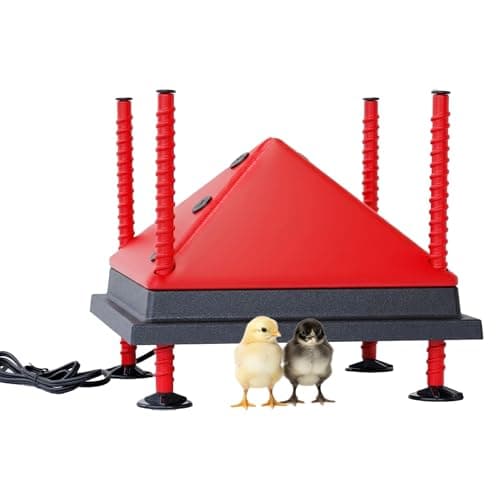
A large plastic tub or a brooder box, an inch and a half of kiln-dried pine shavings, paper towels over the top for three days with crumble scattered on them, a radiant heat plate rather than a lamp, and a chick feeder and waterer raised slightly on a block so the shavings stay out of them. Top up daily, change the wet patch as it happens, and move to hemp if the space is tight or poorly ventilated. The rest of the list is in what baby chicks need.
Frequently asked questions
What is the best bedding for a chick brooder?
Can I use newspaper in a brooder?
Is cedar bedding safe for chicks?
How deep should brooder bedding be?
How often should I change brooder bedding?
Can I use sand in a brooder?
Our recommendation
If you buy one thing from this page, buy the first one. The second is here because it is the alternative worth weighing against it, not because a list needs two entries.
Best Brooder Bedding
Small Pet Select Pine Shavings Chicken Bedding
The default coop and nest-box bedding
#ad How we are funded · Price as of November 8, 2026
Runner-up
RentACoop Premium Hemp Bedding, 300L
Low dust in a small or poorly ventilated coop
#ad How we are funded · Price as of November 8, 2026
Sources
Read next
Hatching & Brooding
What baby chicks need
The complete day-one-to-week-six checklist, with the CDC hygiene rules and the week-by-week changes.
Hatching & Brooding
The best chick brooders
Brooder heat plates, boxed kits and the chick feeder and waterer that go in — with the DIY option that works just as well.
Hatching & Brooding
The best brooder heat plates
Heat plates ranked on published capacity, anti-roost design and height adjustment — the three things that differ.
Hatching & Brooding
Brooder temperature by week
The week-by-week chick heat schedule from Extension's figures, where to measure it, how to read huddling and spreading, and the plates that make it easy.
Chicken Coops
The best chicken coop bedding
Pine, hemp and the ammonia binder that makes either work. Ranked on absorbency and dust, not bag price.