Hatching & Brooding
Brooder temperature by week
Two numbers run the whole six weeks: where you start, and how fast you come down. The chicks will correct you on both.
Chickens & Coops earns a commission when you buy through our links, at no extra cost to you. Prices come from Amazon and change; the date beside every price is when we last verified it. Full disclosure.
Quick picks
| # | Product | Plate size | Score | Price |
|---|---|---|---|---|
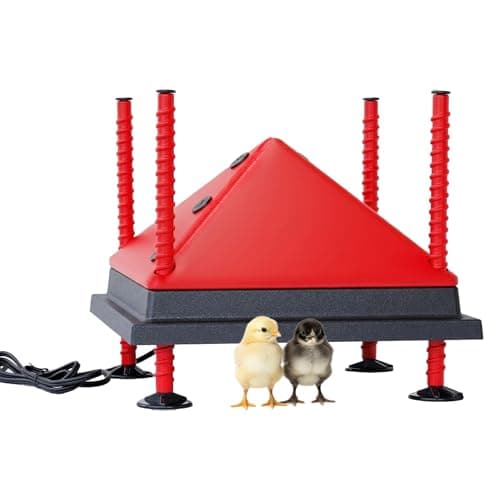
| Rank 1 | RentACoop 12x12in Adjustable Heating Plate with Anti-Roost Cone The safest brooder heat, with the roosting problem solved | 12 x 12 in | 8.0 | $59.95on Amazon |
| Rank 2 | 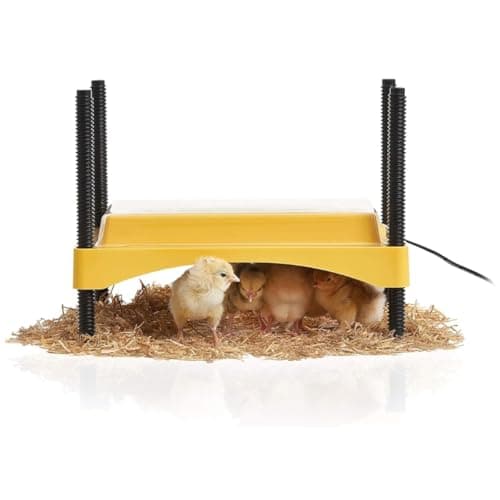 Brinsea EcoGlow Safety 600 Brooder, up to 20 chicks Twenty chicks, from the brand that invented the category | Not published | 8.2 | $79.99on Amazon |
| Rank 3 | 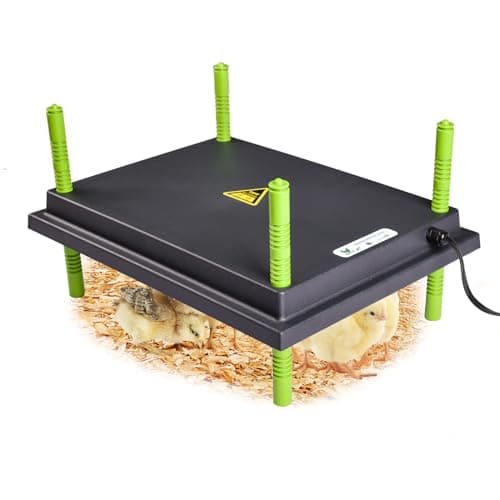 Tetuga Brooder Heat Plate, 12 x 16in for up to 30 chicks Thirty chicks on a budget | 12 x 16 in | 8.6 | $39.96on Amazon |
| Rank 4 | 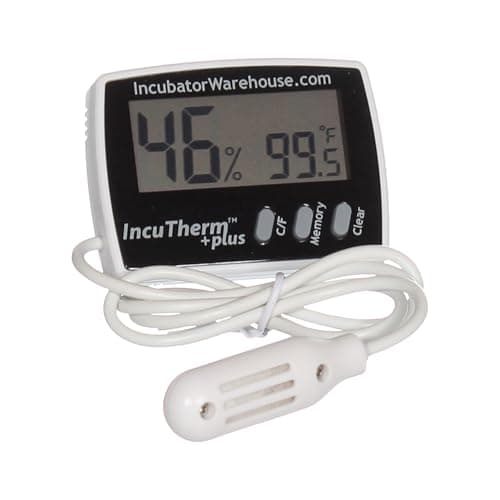 IncuTherm Plus Digital Thermometer and Hygrometer Checking what your incubator is actually doing | Not published | 9.0 | $28.99on Amazon |
#ad Prices come from Amazon and change. How this site is funded. Scores are our own published rubric, not a lab test — see how we pick.
Start at 90 to 95 degrees Fahrenheit and reduce by 5 degrees each week until supplemental heat is no longer needed. Extension's brooding guidance sets the initial temperature at 90F to 95F, measured 2 inches above the floor, under the edge of the hover, and says to reduce the temperature by 5F each week until supplemental heat is no longer required. That is the whole schedule, and the measuring point is as important as the number.
The part nobody tells first-time keepers is that the thermometer is the backup and the chicks are the instrument. A brooder at exactly the right temperature with chicks pressed together in a tight ball is a brooder that is too cold, whatever the display says.
The schedule
| Week | Target temperature in the warm zone | What you should see |
|---|---|---|
| Week 1 | 90-95F | Chicks moving freely in and out of the warm zone |
| Week 2 | 85-90F | More time spent away from the heat |
| Week 3 | 80-85F | First proper feathers on the wings |
| Week 4 | 75-80F | Noticeably more space needed; heat demand falling |
| Week 5 | 70-75F | Mostly feathered; short periods under heat only |
| Week 6 | 65-70F, or off | Many batches no longer use the warm zone at all |
Where to measure
Extension's instruction is specific: two inches above the floor, under the edge of the hover — that is, at chick height, at the margin of the heated area, not up near the heat source and not out in the corner of the tub. A thermometer taped to the wall at eye level is measuring nothing useful.
There is a further complication with lamps. Extension notes that because radiation from an infrared lamp does not warm the air but only the objects at which it is directed, measuring air temperature is not a good indication of bird comfort. With a heat lamp, air temperature readings mislead; with a radiant heat plate the chicks are warmed by contact and proximity rather than by heated air, so the same caution applies. In both cases behavior is the better signal.
Reading the chicks, which is more reliable
Extension's rule is two sentences and worth memorizing: if the hatchlings crowd together under the brooder they are cold and you should increase the heat; if they try to get as far away from the brooder as possible, the heat needs to be reduced.
| What you see | What it means | Do |
|---|---|---|
| Chicks in a tight ball under the heat, cheeping loudly | Too cold | Lower the plate or raise the temperature |
| Chicks pressed to the far corners, panting, wings out | Too hot | Raise the plate or reduce the temperature |
| Chicks spread evenly, some in, some out, quiet | Correct | Nothing |
| Chicks all along one wall | A draft from the other side | Block the draft, not the temperature |
Running the schedule with a heat plate
A radiant heat plate does not have a temperature dial in the way a lamp has a height. You run the schedule by height: set the plate so chicks just touch it with their backs when standing underneath, and raise it as they grow. That lowers the effective temperature in exactly the gradual way the schedule asks for, which is why an adjustable-height plate is worth the premium over a fixed one.
- Day one: plate low enough that a day-old chick's back brushes it.
- Weekly: raise it one notch, and watch the first evening after you do.
- By week four or five: the plate is near its highest setting and the chicks are using it only in short bursts.
- Fit the anti-roost cone. Chicks that can stand on top of a plate will, and they will foul it within days.
Brooder heat plates ranks the plates themselves, and heat plate vs heat lamp for chicks is the comparison — the short version being that a plate has no bulb to shatter into bedding and no element hot enough to ignite it.
What to use
Three adjustable radiant plates at different hatch sizes, and the thermometer that tells you what the brooder is actually doing.
#1 · The safest brooder heat, with the roosting problem solved
#ad How we are funded · Price as of October 10, 2026
RentACoop 12x12in Adjustable Heating Plate with Anti-Roost Cone
RentACoopA 12 x 12 inch adjustable-height heat plate with a foldable anti-roost cone. The cone is why this one is worth the premium: without it, chicks roost on top and foul the plate within days.
| Plate size | 12 x 12 in |
|---|---|
| Height | Adjustable |
| Anti-roost | Foldable cone included |
| Type | Radiant brooder heating plate |
| Wattage | Not published by manufacturer |
Specifications per RentACoop published specifications, as published at the date above.
What it does well
- Mimics a broody hen: chicks go under for warmth and come out to eat, which is how they self-regulate
- Anti-roost cone stops the plate becoming a perch and a toilet
- Height adjusts as the chicks grow, which they do fast
- No bulb, no light, so chicks sleep on a normal day-night cycle
Where it falls short
- Wattage is not published
- Plates warm the chicks, not the room — a very cold garage still needs ambient heat
- More expensive than a clamp lamp and a bulb
Our rubric
- Fire safety
- 10.0
- Temperature control
- 8.0
- Heat output
- 7.0
- Running cost
- 9.0
- Value
- 6.0
#2 · Twenty chicks, from the brand that invented the category
#ad How we are funded · Price as of October 10, 2026
Brinsea EcoGlow Safety 600 Brooder, up to 20 chicks
BrinseaA radiant brooder plate rated for up to 20 chicks. Brinsea published the capacity, which is more than most heat-plate listings manage, and the 'Safety' naming reflects a sealed low-temperature element.
| Capacity | Up to 20 chicks |
|---|---|
| Type | Radiant brooder plate |
| For | Chicks and ducklings |
| Wattage | Not published by manufacturer |
Specifications per Brinsea published specifications, as published at the date above.
What it does well
- Published chick capacity, so you are not guessing whether it covers your hatch
- Low-temperature radiant element — no fire risk from a dropped bulb
- No light, so chicks develop a normal sleep rhythm
- Supported product with spares available
Where it falls short
- Expensive relative to generic heat plates of the same size
- Wattage is not published
- Twenty chicks is the ceiling; a 56-egg hatch needs two
Our rubric
- Fire safety
- 10.0
- Temperature control
- 8.0
- Heat output
- 8.0
- Running cost
- 9.0
- Value
- 6.0
#3 · Thirty chicks on a budget
#ad How we are funded · Price as of October 10, 2026
Tetuga Brooder Heat Plate, 12 x 16in for up to 30 chicks
TetugaA 12 x 16 inch plate stated to warm up to 30 chicks. Both the dimensions and the chick count are published, which makes it the easiest heat plate here to size correctly.
| Plate size | 12 x 16 in |
|---|---|
| Capacity | Up to 30 chicks |
| Type | Radiant heating plate |
| Wattage | Not published by manufacturer |
Specifications per Manufacturer figures as published on the Amazon product listing, as published at the date above.
What it does well
- Both plate size and chick capacity published — rare, and exactly what you need to size it
- 30 chicks covers a large hatch at a fraction of the premium-brand price
- Radiant plate, so no bulb and no light
Where it falls short
- Wattage not published
- No anti-roost cone stated, so expect to clean the top
- Generic brand support
Our rubric
- Fire safety
- 9.0
- Temperature control
- 7.0
- Heat output
- 8.0
- Running cost
- 9.0
- Value
- 10.0
#4 · Checking what your incubator is actually doing
#ad How we are funded · Price as of October 10, 2026
IncuTherm Plus Digital Thermometer and Hygrometer
IncuThermA thermometer and hygrometer built for incubators. The single highest-value accessory in hatching: budget incubator displays can be out by several degrees, and a few degrees decides a hatch.
| Type | Digital thermometer and hygrometer |
|---|---|
| Designed for | Egg incubators |
| Accuracy | Not published by manufacturer |
Specifications per Manufacturer figures as published on the Amazon product listing, as published at the date above.
What it does well
- Lets you verify the incubator's own display instead of trusting it
- Reads humidity as well as temperature — both matter and both drift
- Purpose-built for incubator ranges rather than room comfort ranges
Where it falls short
- Stated accuracy is not published
- One more probe cable through the incubator's vent
- An extra purchase on top of the machine
Our rubric
- Fit for purpose
- 10.0
- Mess and waste
- 9.0
- Quality
- 9.0
- Value
- 8.0
Sizing the plate to the hatch
A plate too small for the batch means the outside chicks cannot get warm, which produces exactly the huddling that looks like a temperature problem. Published chick counts are rare, so where a listing gives one it is worth weighting:
| Hatch size | Plate | Note |
|---|---|---|
| 6-10 chicks | 10 x 10 in | Adequate; a cone matters more at this size than area |
| Up to 20 chicks | 12 x 12 in, or a plate rated for 20 | The common backyard case |
| Up to 30 chicks | 12 x 16 in | One of the few listings that publishes both size and chick count |
| More than 30 | Two plates | Better than one oversized one — gives two warm zones |
When to stop
Extension's end point is behavioral rather than a date: reduce by 5F a week until supplemental heat is no longer required. In practice that is around six weeks in a mild season and longer in a cold one, and the chicks tell you — when they stop using the warm zone, they are done with it.
Moving them outside is a separate decision from switching the heat off, and it comes later: fully feathered, in mild weather, into a coop you have already predator-proofed, at about six to eight weeks. Young birds get through gaps that adult hens cannot. What baby chicks need covers the whole brooder setup, and predator protection is the coop side.
The three mistakes worth avoiding
- Heating the whole brooder. Without a cool end the chicks cannot self-regulate, and you lose the only reliable signal you have.
- Trusting a single display. Budget thermometers and incubator readouts can be several degrees out. A second independent thermometer at chick height settles it.
- Dropping the heat on a calendar rather than on behavior. A cold snap in week three means you hold the temperature where it is for another week. The schedule is a default, not a law.
Frequently asked questions
What temperature should a brooder be in week 1?
How much should I lower the brooder temperature each week?
How do I know if my chicks are too hot or too cold?
Where do you measure brooder temperature?
What temperature do chicks need at 4 weeks?
When can chicks go without heat?
Sources
Read next
Hatching & Brooding
The best brooder heat plates
Heat plates ranked on published capacity, anti-roost design and height adjustment — the three things that differ.
Hatching & Brooding
What baby chicks need
The complete day-one-to-week-six checklist, with the CDC hygiene rules and the week-by-week changes.
Hatching & Brooding
Heat plate vs heat lamp for chicks
The brooder heat decision, with the narrow cases where a lamp is still the right tool.
Hatching & Brooding
The best chick brooders
Brooder heat plates, boxed kits and the chick feeder and waterer that go in — with the DIY option that works just as well.
Hatching & Brooding
The best egg candlers
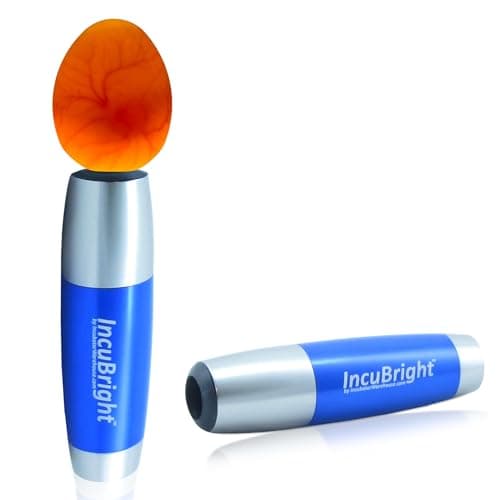
The standalone LED candler worth owning, three incubators that include one in the box, and the thermometer that matters at least as much.